








By Lakshya Rana
Published: Oct 15, 2026, 08:46 PM IST
In a major strategic pivot aimed at capturing a larger share of the burgeoning Indian automotive market, multinational automotive giant Stellantis has announced a robust investment plan. The company, which owns a diverse portfolio of global brands, has committed an additional Rs 4,000 crore (approximately 400 million euros) to be deployed over the next three years. This fresh capital infusion is set to propel the company’s cumulative investment in the Indian subcontinent to a staggering Rs 15,000 crore by 2030, signaling a long-term, high-conviction bet on the country’s manufacturing and consumer potential.
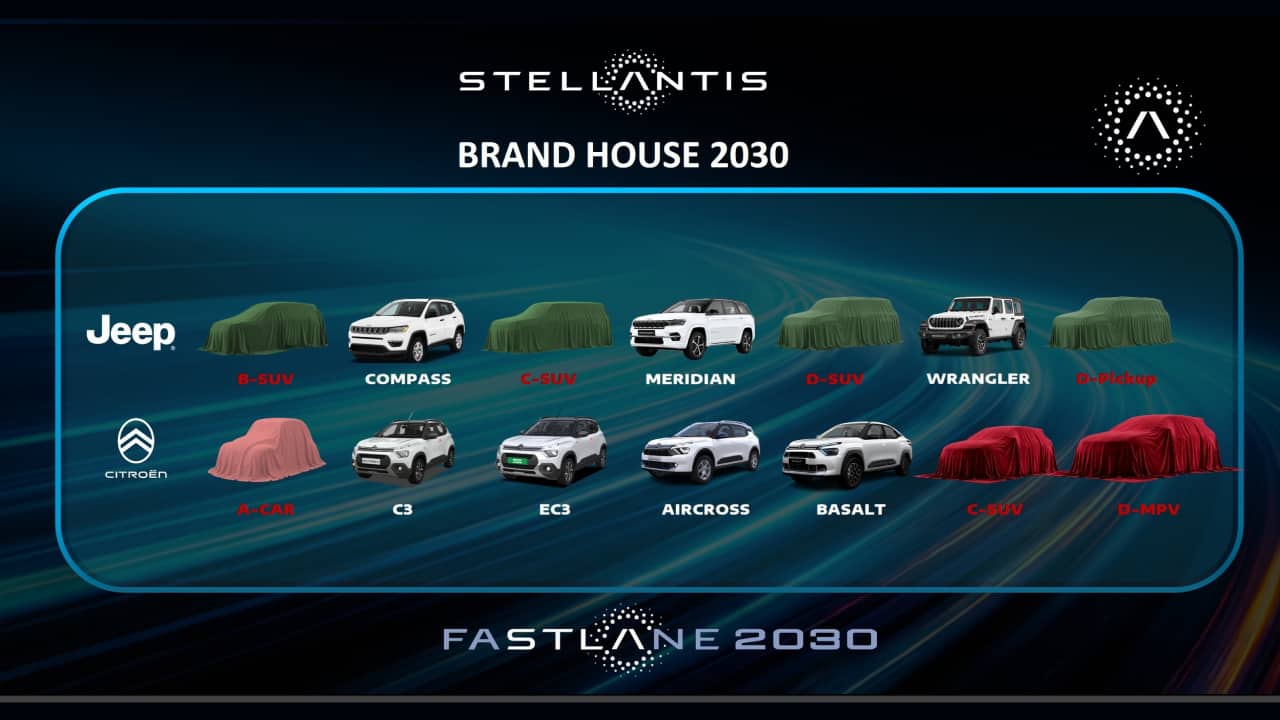
This aggressive financial roadmap is not merely a capital exercise; it serves as the foundation for an ambitious product offensive. Sources familiar with the company’s internal projections indicate that Stellantis plans to introduce 12 new models across its Jeep and Citroën brands by the end of the decade, targeting a spectrum of segments ranging from entry-level mobility to premium SUVs.
The Strategic Investment: Breaking Down the Numbers
The announcement of the Rs 4,000 crore investment marks a critical milestone for Stellantis’ Indian operations. Since its formation through the merger of Fiat Chrysler Automobiles and PSA Group, the company has consistently emphasized India’s role as a strategic hub for global exports and domestic growth.
The capital allocation is expected to be distributed across three primary pillars:
- Manufacturing Capacity Expansion: Enhancing the efficiency and throughput of existing production facilities to accommodate new platform architectures.
- R&D and Localization: Deepening the supply chain integration to achieve higher levels of domestic value addition, which is essential for price competitiveness in the highly cost-sensitive Indian market.
- Electrification Readiness: Preparing the infrastructure for a transition toward Battery Electric Vehicles (BEVs), aligning with the Indian government’s FAME-III and production-linked incentive (PLI) objectives.
By reaching the Rs 15,000 crore investment threshold by 2030, Stellantis is positioning itself to be among the most capitalized foreign original equipment manufacturers (OEMs) in India, moving beyond a niche player to a high-volume, multi-brand competitor.
Chronology: A Path to Market Maturity
To understand the weight of this announcement, one must look at the evolution of Stellantis in India. The company’s journey has been marked by a transition from experimental entries to a structured, long-term commitment.
- Pre-2021: The legacy of Fiat and the initial entry of the Jeep brand created a strong brand equity for the company in the premium SUV space.
- 2021-2022: The official formation of Stellantis accelerated the integration of French brand Citroën, which focused on the "C-Cubed" program—a strategy to design, develop, and manufacture cars specifically for the Indian consumer.
- 2023-2025: The company focused on expanding its dealer network and establishing a localized manufacturing footprint, successfully launching the Citroën C3 and C3 Aircross, and refreshing the Jeep Compass portfolio.
- 2026 (The Current Milestone): The announcement of the Rs 4,000 crore investment marks the shift into "Phase 2," where the focus moves from establishing a footprint to scaling market share through a wide product array.
- 2027–2030 (The Vision): The roadmap leads to the rollout of the 12 promised models, with a heavy emphasis on electric mobility and advanced driver-assistance systems (ADAS).
Supporting Data: The Indian Auto Landscape
The Indian automotive market is currently the third-largest in the world, and it is projected to grow significantly as urbanization and disposable incomes rise. Stellantis’ decision is backed by several macro-economic indicators:
- Premiumization Trend: Indian buyers are increasingly shifting toward SUVs. Jeep, with its strong heritage, is perfectly positioned to capture the mid-to-high-end SUV segment.
- Global Export Hub: Stellantis has already begun using India as an export base for engines and vehicles. The new investment will likely enhance this capability, allowing India to serve markets in the Middle East, Southeast Asia, and Africa.
- Supply Chain Resilience: With the government’s focus on the "Make in India" initiative, the company’s investment into local component sourcing reduces its exposure to global currency fluctuations and logistics bottlenecks.
Official Responses and Corporate Stance
While the company has not provided a line-item breakdown of the investment, the leadership at Stellantis India has repeatedly emphasized that the "India-first" approach is central to their global strategy.
"Our investment reflects our unwavering confidence in the Indian market," a spokesperson noted during the announcement. "By 2030, our goal is not just to sell cars, but to define mobility in India through technology-led, sustainable, and consumer-centric solutions. The synergy between Jeep’s legendary off-road capability and Citroën’s innovative design language will be the cornerstone of our product pipeline."
Industry analysts observe that the company is taking a "calibrated risk." Unlike some competitors who rushed into the market, Stellantis has focused on building a sustainable R&D base in Chennai and a robust manufacturing unit in Ranjangaon. This indicates a focus on profitability alongside market share, ensuring the brand stays resilient during cyclical downturns.
Implications: What This Means for the Industry and Consumers
The impact of this capital injection will be felt across several sectors:
1. For the Consumer: Increased Choice
With 12 new models in the pipeline, consumers can expect a wider variety of powertrain options. The "C-Cubed" program suggests that future Citroën models will continue to offer unique value propositions, while the Jeep brand is expected to explore more accessible price points to compete with established segment leaders.
2. For the Automotive Ecosystem: Job Creation
A project of this magnitude invariably leads to the creation of thousands of direct and indirect jobs. From engineering roles in R&D centers to skilled labor on the factory floor and an expanded sales/service network, the investment will act as an economic multiplier for the regions where Stellantis operates.
3. For the EV Transition
The Rs 15,000 crore total investment implies that a significant portion will be dedicated to the "Electrification of the Indian Road." As India targets a higher percentage of electric vehicles in total sales by 2030, Stellantis is expected to launch modular EV platforms that can adapt to both the Citroën and Jeep brand identities.
4. Competitive Dynamics
The Indian auto market is notoriously competitive, dominated by Maruti Suzuki, Hyundai, and the rising Tata-Mahindra duopoly. Stellantis’ decision to invest heavily suggests that they are not content with being a fringe player. By committing these funds, they are signaling their intent to challenge the incumbents, likely triggering a "product war" that will benefit the end user through better technology, safety features, and competitive pricing.
Conclusion
The Rs 4,000 crore investment is more than just a financial figure; it is a declaration of intent. As Stellantis navigates the complexities of the Indian market, its ability to marry its global technological prowess with local manufacturing ingenuity will determine its long-term success.
With a clear roadmap toward 2030 and a target of 12 new vehicle launches, the company is betting heavily on the fact that the Indian consumer’s appetite for high-quality, tech-forward, and reliable vehicles is only set to increase. As the automotive industry stands on the precipice of an electric revolution, Stellantis appears to have the capital, the brand portfolio, and the strategic foresight to ensure it remains a key player in India’s automotive future.
For now, all eyes are on the company’s upcoming model cycle, as the Indian market prepares to see the next generation of Jeep and Citroën vehicles take to the roads.