The Art and Architecture of High-Converting Landing Pages: A Comprehensive Industry Analysis
By the Digital Marketing Insights Desk Updated: February 3, 2026
In the hyper-competitive ecosystem of digital marketing, the line between a thriving digital enterprise and a failed campaign often comes down to a single, focused web asset: the landing page. Far more than a digital brochure, a modern landing page serves as a high-stakes conversion engine. According to recent benchmark studies compiled by optimization platforms like Unbounce, understanding the structural mechanics, psychological triggers, and design philosophies behind high-converting landing pages is no longer optional for brands seeking sustainable growth—it is an absolute necessity.
Main Facts: What Defines a High-Performing Landing Page?
At its core, a landing page is a standalone web page engineered specifically for a single marketing or advertising campaign. Unlike a traditional website homepage—which acts as a multi-directional hub for brand navigation, corporate history, and broad exploration—a landing page is singular in its focus. It represents the destination where traffic "lands" after a user interacts with a targeted digital ad, promotional email, or social media outreach.
The foundational principle of conversion-centered design is deceptively simple: a polished, professional landing page dramatically improves conversion rates, while a cluttered, unfocused page actively suppresses them.
Key attributes shared by elite landing pages include:
Single-Minded Focus: Elimination of distracting global navigation bars, external links, and extraneous choices that pull the user away from the primary goal.
Value-Driven Copywriting: Instant communication of a compelling value proposition "above the fold" (visible without scrolling).
Frictionless Conversion Paths: Short, clean forms and prominent, unmissable Calls-to-Action (CTAs).
Authentic Social Proof: Strategic use of testimonials, ratings, and trust badges to alleviate consumer anxiety.
Chronology: The Evolution of Conversion Architecture
The methodology of building dedicated conversion pages has transformed significantly over the past two decades, shifting from static HTML templates to dynamic, AI-assisted optimization systems.
The Early 2000s (The Era of Static Banners): Early digital advertising relied heavily on driving traffic directly to corporate homepages. Conversion rates suffered because users were forced to hunt for the specific promotion or product promised in the ad copy.
The Late 2000s to 2010s (The Rise of Dedicated Builders): Recognizing the massive drop-off rates on homepages, marketers began utilizing standalone landing pages. This era saw the emergence of specialized drag-and-drop builders, allowing marketing teams to launch dedicated campaigns in minutes without relying entirely on engineering departments.
The 2020s (Personalization and Dynamic Content): Modern landing page strategy expanded into full-funnel marketing. Agencies and enterprises began deploying hyper-targeted landing pages tailored to distinct audience segments, leveraging video backgrounds, localized targeting, and real-time A/B testing to continuously refine user experience and lower Customer Acquisition Costs (CAC).
Supporting Data: Benchmarks Across Industries
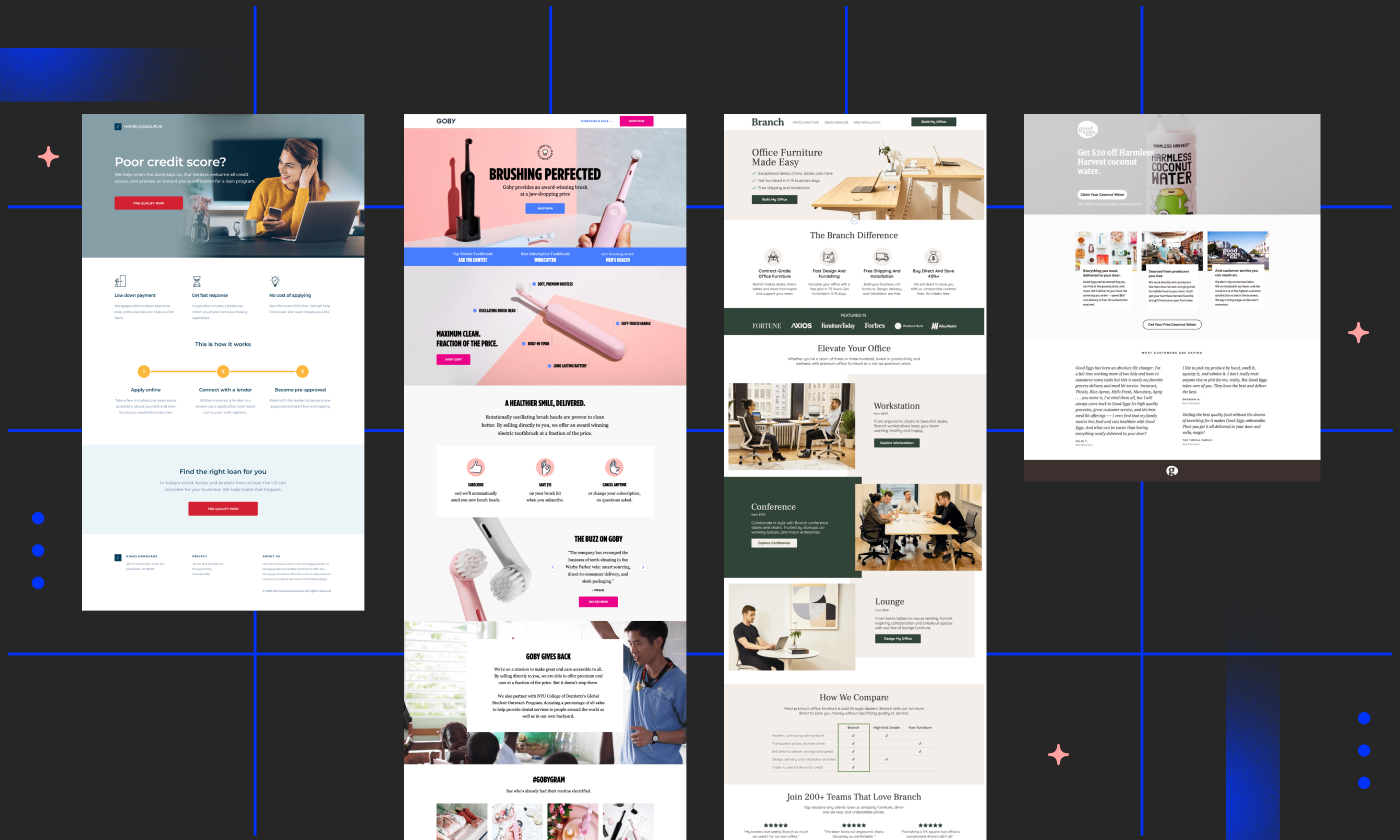
Analyzing real-world deployments reveals how different sectors leverage landing pages to achieve unique business goals. Industry case studies highlight distinct approaches across SaaS, e-commerce, and service-oriented verticals:
1. SaaS and Digital Subscriptions
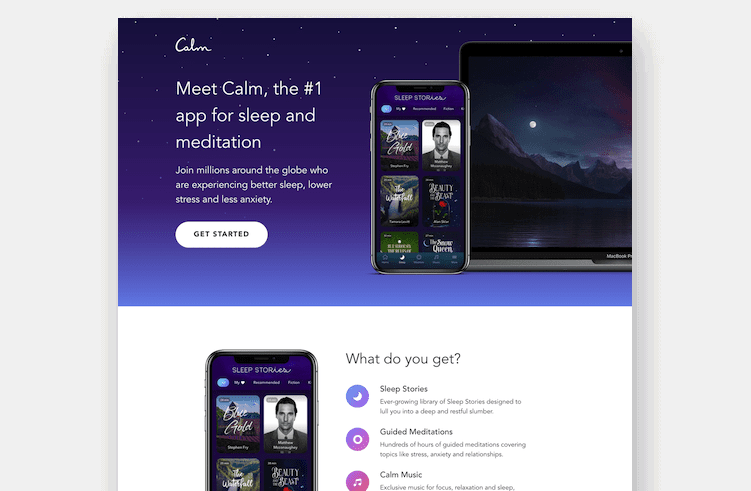
Calm & Netflix: These entertainment and wellness giants utilize minimalist landing pages that rely on crisp typography, high-impact emotional hooks, and frictionless sign-up flows. By focusing entirely on immediate user engagement and clear pricing structures, they scale to hundreds of millions of global subscribers.
SEM-Rush & Campaign Monitor: For B2B software, effective pages narrow their scope. Instead of overwhelming prospects with every tool feature, they isolate a single pain point—such as competitor analysis or email template design—to drive initial sign-ups.
2. E-Commerce and Direct-to-Consumer (DTC)
Zola & Coco Village: These brands excel at balancing multi-product collections with a single click-through goal. Utilizing specialized agency frameworks (such as J7 Media or MuteSix), DTC brands drive social ad traffic to landing pages that simulate a natural customer journey, moving visitors seamlessly from problem awareness to checkout.
Perfect Keto & Western Rise: High-resolution product imagery and video backgrounds are deployed to demonstrate tactile quality, reassuring online buyers and significantly reducing purchase hesitation.
3. Service Industries and Specialized Verticals
Roofing, Real Estate, and Finance (e.g., Sundae, HomeLoanGurus): In high-stakes transactions, landing pages succeed by neutralizing consumer anxiety. They use transparent copy to explain complex financial or real-time evaluation processes step-by-step, turning complex inquiries into qualified leads.
Official Perspectives and Expert Insights
Industry leaders emphasize that successful landing page optimization requires a balance of artistic presentation and rigorous data analysis.
Cameron Gawley, co-founder and CEO of digital agency BuzzShift, notes the importance of a full-funnel perspective when evaluating landing page performance:
"This specific page worked well in the consideration phase of our social ads. Our goal was to add value via a coupon, by capturing an email as a soft conversion and then nurture them forward in the rest of the journey. Most brands have a huge opportunity to lower their CPA and increase conversions by focusing more on awareness and consideration."
Similarly, optimization experts stress that no single layout is universally perfect. Because target audiences and traffic sources vary wildly, the cornerstone of professional digital marketing remains continuous experimentation through A/B testing.
Implications for Modern Marketers
The democratization of drag-and-drop landing page builders—such as those pioneered by Unbounce—has permanently altered the digital marketing landscape. Marketers no longer need extensive coding backgrounds to test disruptive design hypotheses, deploy interactive elements, or integrate multimedia backgrounds.
However, this accessibility brings its own challenges. As consumers become increasingly sophisticated, low-effort landing pages laden with generic stock photography and confusing copy are instantly filtered out by web users. Moving forward, the organizations that dominate their respective niches will be those that treat landing page design as an ongoing, iterative science rather than a one-time project.
Summary Checklist for Launching a High-Converting Page:
Define a Singular Goal: Decide whether the page exists to capture leads, sell a specific product, or register attendees.
Match the Message: Ensure the headline directly mirrors the language of the ad or email link that brought the user there.
Optimize for Mobile First: Ensure lightning-fast load times and flawless mobile responsiveness, as a massive share of traffic originates on handheld devices.
Test Relentlessly: Continuously run A/B tests on headlines, button colors, form lengths, and hero imagery to squeeze maximum value from every visitor.