By: Tech & Smart Home Desk
Published: October 2023 / Updated for Technical Review
Main Facts: What’s New for Vintage Nest Hardware?
In a move that will surely delight budget-conscious consumers and environmental advocates alike, Google has announced a surprise software update campaign targeting some of its most iconic and legacy smart home hardware. Firmware version 3.79.550760 is currently making its rounds through the Google Home Preview Program, signaling that Mountain View has not entirely abandoned the hardware base that built its smart speaker empire.
The update specifically targets a wide array of legacy hardware, including:
- The original Google Home (released way back in 2016)
- The massively popular Google Home Mini (2017)
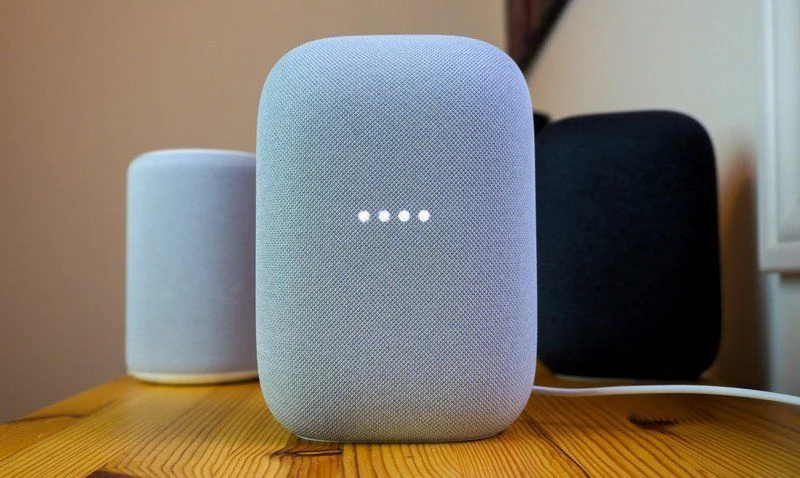
- The Nest Mini (2019)
- The Nest Audio (2020)
Noticeably absent from this current testing cycle is the larger, premium Google Home Max, leaving owners of that particular high-end legacy speaker wondering if their turn will come later.
While Google has kept official release notes relatively sparse regarding specific feature additions in version 3.79.550760, tech analysts and early testers indicate that the update focuses primarily on underlying performance stabilization, minor latency reductions in voice recognition handshakes, and improved backend compatibility with the broader, evolving Google Home ecosystem. This comes in tandem with Google’s broader October ecosystem push, which heavily emphasizes tighter Gemini integration for smart home voice commands, nuanced weather reporting, and streamlined device management panels within the main mobile app.
For millions of users who populated their kitchens, bedrooms, and hallways with these devices years ago, the update offers a practical lifeline—extending the operational runway of hardware that might otherwise have inched closer to technological obsolescence.
Chronology: The Evolution and Longevity of Google’s Smart Speakers
To truly understand the significance of Google supporting a 2016 smart speaker in the mid-2020s, it is worth looking back at the timeline of how these devices entered our homes and shaped the modern smart assistant landscape.
2016: The Dawn of Google Home
Google entered the dedicated smart speaker market to challenge Amazon’s early dominance with the original Google Home. Featuring a distinctive air-freshener-inspired cylindrical design with an angled top and customizable base accents, it introduced "OK Google" and "Hey Google" voice queries to living rooms across the globe. Powered by the nascent Google Assistant, it set a high standard for contextual conversational queries compared to early Alexa iterations.
2017: The Democratization of Voice AI via the Home Mini
Recognizing that consumers wanted smart assistants in every room without paying a premium price, Google launched the Google Home Mini in late 2017. Wrapped in a fabric mesh and shaped like a colorful pebble, it became an instant holiday bestseller. Its low barrier to entry flooded the market with affordable voice endpoints.
2019–2020: The Nest Rebrand and Audio Refinements
Following Google’s acquisition and integration of Nest, the smart home hardware division underwent a rebrand. The Nest Mini arrived in 2019, adding a wall-mount screw hole, a dedicated machine learning chip for on-device processing, and noticeably richer bass. A year later, in 2020, the Nest Audio replaced the original 2016 Google Home, offering vastly superior acoustic performance tailored for casual music lovers who still wanted robust voice assistant capabilities.
2023–Present: The Shift Toward AI and Legacy Maintenance
Fast forward to the current era, where generative AI models like Gemini are taking center stage. Google’s hardware strategy has naturally pivoted toward newer, more capable processing units designed to handle complex multimodal queries. However, because millions of legacy speakers remain active daily drivers for basic timers, alarms, lighting toggles, and casual music playback, Google faces a delicate balancing act: pushing the future of AI forward while maintaining backward compatibility for a massive, entrenched user base. The rollout of firmware 3.79.550760 is the latest chapter in this ongoing balancing act.
Supporting Data: The Lifecycle of Smart Home Devices
The consumer technology landscape is historically plagued by planned obsolescence. Smartphones typically see active support cycles of three to seven years, while smart home appliances and IoT (Internet of Things) devices often face even shorter support windows due to changing security standards, shifting cloud protocols, and component wear-and-tear.
- Hardware Longevity: Supporting the original 2016 Google Home well into the mid-2020s represents an impressive software lifecycle of roughly seven to eight years. For context, many first-generation smart home ecosystems from competing brands have long since been deprecated, bricked, or cut off from cloud server authentication.
- The Second-Hand and Hand-Me-Down Economy: Millions of Google Home Minis and Nest Minis currently reside in secondary locations—children’s rooms, guest bedrooms, workshops, and garages. Data from consumer research groups indicates that smart speakers have exceptionally low hardware turnover rates compared to smartphones because their core utility (playing music, checking the weather, turning off lights) does not fundamentally degrade over time unless the underlying software platform cuts support entirely.
- The Energy and E-Waste Crisis: Electronic waste is one of the fastest-growing municipal waste streams globally. By pushing performance and stability updates to older hardware, Google is directly mitigating immediate e-waste generation. Keeping a functional Nest Mini on a user’s desk for another year or two prevents thousands of tons of plastic, rare earth metals, and circuit boards from prematurely entering landfills.
Official Responses and Ecosystem Context
While Google has not published an exhaustive changelog for firmware 3.79.550760, the company’s ongoing communication via the Google Home Preview Program highlights a strategic shift toward community-driven testing and iterative improvements.
In documentation accompanying the release, Google emphasizes that while older hardware will benefit from stability patches, users should maintain realistic expectations. A 2016-era ARM processor paired with modest onboard memory simply lacks the physical hardware architecture required to locally process advanced generative AI models like Gemini. Instead, the updates are explicitly designed to ensure these legacy nodes continue to communicate seamlessly with Google’s cloud-based servers, even as those backend architectures are continually upgraded to support modern smart home protocols like Matter and Thread.
Concurrently, Google’s recent October updates to the core Google Home app showcase an aggressive push to unify the user experience. By refining how voice commands are interpreted across both legacy speakers and newer hardware—and by improving the integration of Gemini features for mobile app device controls—Google is attempting to build a cohesive bridge between its AI-driven future and its vast installed base of legacy hardware.
Industry analysts have praised this pragmatic approach. Rather than forcing a costly hardware upgrade cycle upon consumers who are largely satisfied with their basic audio and voice routing needs, Google is effectively protecting brand loyalty by keeping older devices functional and secure.
Implications: What This Means for Smart Home Owners
For the average consumer sitting on a collection of aging Google Home and Nest speakers, this update carries several distinct implications regarding daily usage, financial decisions, and the future of smart home automation.
1. Tempering Expectations: Evolution vs. Transformation
It is crucial for users to understand that firmware 3.79.550760 is a maintenance and stabilization patch, not a magical gateway to next-gen artificial intelligence. Your 2017 Home Mini will not suddenly gain the conversational fluidity of a Gemini-powered smartphone. It will still struggle with complex, multi-layered contextual prompts that newer hardware handles effortlessly. However, users can likely expect fewer dropped connections, more reliable response times to simple wake-word triggers, and prolonged harmony with modern Wi-Fi routers and mesh systems.
2. How to Access the Preview Program Today
For owners eager to test these updates ahead of the wider public rollout, Google has streamlined the opt-in process through the Google Home mobile application.
- Open the Google Home app on your iOS or Android device.
- Navigate to your device list and tap on the specific older speaker you wish to enroll.
- Tap the Settings gear icon in the top right corner.
- Select Device information.
- Tap on Preview program and follow the prompts to opt-in.
Note: Once enrolled, firmware updates typically deploy automatically during overnight maintenance windows. Google anticipates rolling out these improvements to the general public over the coming weeks, though no definitive, firm-wide calendar date has been locked in.
3. Financial and Environmental Sustainability
In an economic climate where consumers are increasingly scrutinizing discretionary tech purchases, the decision to extend support to legacy devices is a win for household budgets. There is little financial incentive to discard a perfectly functional Nest Audio or Nest Mini that successfully handles kitchen timers and morning news briefings simply because newer models exist. By keeping these speakers online and secure, Google allows consumers to allocate their tech dollars toward areas that require genuine hardware upgrades—such as smart displays, modern security cameras, or upgraded mesh routers.
4. The Broader Smart Home Landscape
Ultimately, Google’s ongoing commitment to its legacy ecosystem sets a positive precedent for the broader Internet of Things industry. As consumers grow fatigued by "planned obsolescence" and abruptly terminated cloud services (a frequent pain point in the smart home sector), manufacturers that demonstrate long-term software stewardship will naturally earn higher levels of consumer trust.
While the original Google Home from 2016 cannot live forever, firmware version 3.79.550760 proves that Google is willing to let its classic hardware age with grace—ensuring that your trusty old smart speaker still has plenty of life left in it.