







As search engines shift from traditional blue links to intelligent AI Overviews appearing above organic listings and paid advertisements, Answer Engine Optimization (AEO) has evolved from an experimental marketing tactic into an essential growth driver. For companies relying on search to generate leads and revenue, visibility in LLM-driven responses is no longer optional.
However, mastering AEO typically sounds like an enterprise-level undertaking—one requiring specialized teams, dedicated budgets, and complex data infrastructures. But what happens when your organization lacks the internal resources or budget to build a dedicated search department? How can lean teams—often consisting of just one to three marketers—effectively run and scale AEO without burning out?
Main Facts: The Reality of AEO for Lean Teams
The rapid ascent of AI search means that modern buyers are bypassing traditional search engines altogether. Over 30% of Gen Z consumers now discover information primarily through AI chatbots and answer engines, while 47% of modern marketers leverage AI tools for regular research.

Despite these seismic behavioral shifts, smaller marketing teams frequently struggle to keep pace. Answer engines do not rank pages based purely on keyword density or backlink counts; they synthesize information from diverse sources, prioritizing fresh, highly structured, authoritative content.
To bridge this gap without expanding headcount, lean teams can choose from three primary operational paths:
- The DIY Workflow: Utilizing free or low-cost tools and manual spreadsheets.
- Dedicated Software Solutions: Deploying centralized platforms (such as HubSpot AEO) to automate tracking and deliver actionable recommendations.
- Agency Support: Fully outsourcing monitoring and content strategies to external partners.
The right path depends entirely on your team’s weekly time allocation, available budget, and ability to consistently turn measurement into actionable content updates.

Chronology: How the Search Landscape Shifted to AI
To understand why AEO is disrupting lean marketing departments, it helps to examine how the search ecosystem arrived at its current state:
- The Traditional SEO Era (Pre-2023): Search engine optimization was governed by predictable rules. Marketers targeted keywords, built backlink profiles, optimized meta tags, and fought for position on page one of traditional search engine results pages (SERPs).
- The Generative AI Disruption (2023–2024): Conversational AI platforms like ChatGPT, Google Gemini, and Perplexity exploded into mainstream consumer habits. Search engines began integrating generative answers (such as Google AI Overviews) right at the top of the page, answering user queries instantly without requiring them to click through to external websites.
- The Rise of Zero-Click and Multi-Source Citations (2025–Present): Answer engines began drawing heavily from third-party reviews, forums, social media content, and recent blog posts rather than traditional authority metrics alone. Brands found themselves either cited as trusted sources in AI-generated answers or rendered entirely invisible to modern buyers.
- The Democratization of AEO (Present): Specialized software solutions and diagnostic platforms emerged, allowing lean teams to track brand visibility, sentiment, and competitor performance across multiple AI engines without requiring enterprise data science teams.
Supporting Data: What the Metrics Tell Us
Data from recent digital marketing and search visibility studies highlight why tactical adjustments are critical for lean teams:
- The Recency Imperative: A comprehensive study by Seer Interactive revealed that 94% of LLM crawler hits go to content published within the last five years, with the vast majority of those citations favoring content published in the past 12 months. Old evergreen blog posts can no longer rely on past reputation alone to earn AI citations.
- Industry Variations: The Seer Interactive study also uncovered distinct industry patterns regarding update cadence. Fast-moving industries require near-constant content refreshes to maintain AI visibility, whereas stable B2B niches can sustain longer update cycles.
- The Danger of Branded Blind Spots: Relying solely on branded search queries creates a false sense of security. Because buyers rarely start their discovery journey by typing a specific brand name, AEO strategies must prioritize non-brand category prompts to reflect true market performance.
Official Perspectives and Industry Insights
Industry analysts emphasize that running AEO efficiently is less about outspending competitors and more about operational efficiency.

"A lean team cannot afford to waste hours manually logging prompt variations into static spreadsheets," notes search operations experts. "To make AEO sustainable, measurement must be automated, and data must immediately point to a specific content fix or page update."
According to HubSpot’s AI Trends research, marketers who integrate automated tools into their reporting and optimization workflows shrink reporting times significantly. This efficiency allows small teams to focus on high-impact creative tasks—such as objection-handling and use-case content creation—rather than getting bogged down in data collection.
Furthermore, industry guidance suggests that when selecting software or agency support, marketing leaders should prioritize tools that integrate seamlessly with existing SEO workflows. Because traditional SEO and AEO share fundamental requirements—such as clear content structures, topic authority, and technical optimization—unifying these initiatives prevents resource fragmentation.

Implications: Building a Sustainable AEO Workflow
For organizations operating with limited personnel, executing a successful AEO strategy requires a structured, step-by-step framework that can be embedded into an existing weekly schedule.
1. Conduct a Baseline Visibility Check
Before making any strategic changes, establish your brand’s current standing in AI-generated answers. A useful baseline must answer three fundamental questions:
- Is your brand mentioned at all in relevant AI responses?
- How is your brand described when it does appear (sentiment and positioning)?
- Which competitors are showing up in your place?
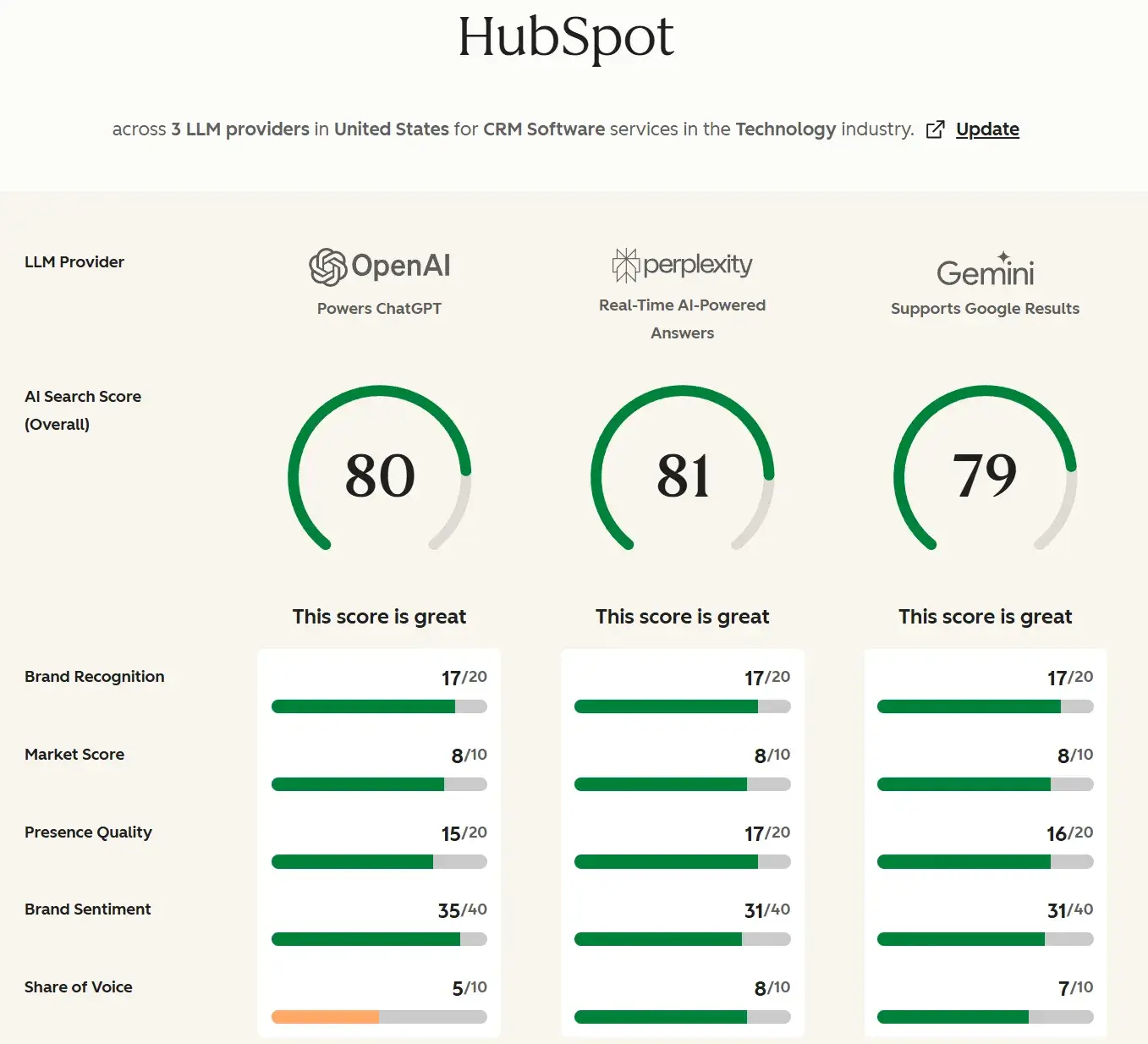
Lean teams can leverage fast diagnostic utilities like the AI Search Grader to evaluate brand metrics across ChatGPT, Perplexity, and Gemini instantly without complex setup or tool overhead.

2. Build a Starter Prompt Set
Develop a balanced portfolio of 15 to 20 prompts categorized across four essential pillars:
- Category Prompts: Testing broad queries where buyers haven’t named a brand yet (e.g., "Best CRM software for small businesses").
- Competitor Prompts: Monitoring direct market rivals to uncover share-of-voice gaps.
- Product and Use-Case Prompts: Focusing on specific scenarios (e.g., "Best inventory tracking tool for a 5-person retail team").
- Objection-Handling Prompts: Addressing real buyer hesitations and friction points.
Note: Keep your prompt set consistent week over week to ensure accurate, long-term comparisons.
3. Schedule Weekly Reviews and Content Loops
Tracking data without taking action is a waste of resources. Establish a weekly review habit to monitor visibility shifts, sentiment changes, and competitor movements. Pair this tracking directly with a content update cycle. Ensure that your highest-value pages are regularly updated with fresh statistics, modern examples, and clear, structured markup that LLM crawlers can easily parse and cite.

Choosing Your Path Forward
| Approach | Cost in Dollars | Time Investment | Control | Best Suited For |
|---|---|---|---|---|
| DIY Workflow | Lowest | Highest | Full Control | Initial testing and very early-stage startups with more time than budget. |
| Software Solution | Moderate | Low to Moderate | High Control | Lean marketing teams needing recurring automated tracking and actionable recommendations. |
| Agency Support | Highest | Lowest | Lower Control | Companies with ample budget seeking complete outsourcing of search operations. |
For most lean teams, dedicated software solutions strike the optimal balance. By automating prompt tracking, centralizing competitor analysis, and connecting visibility insights directly to content management platforms, tools like HubSpot AEO transform answer engine optimization from an overwhelming chore into a repeatable, sustainable growth engine.
Ultimately, whether you choose a DIY approach, deploy specialized software, or partner with an agency, the key to winning the AI search era is consistency. By establishing a fast baseline, maintaining a disciplined prompt tracking routine, and keeping your content fresh, even the leanest marketing team can secure top-tier visibility in the age of AI.