







Main Facts
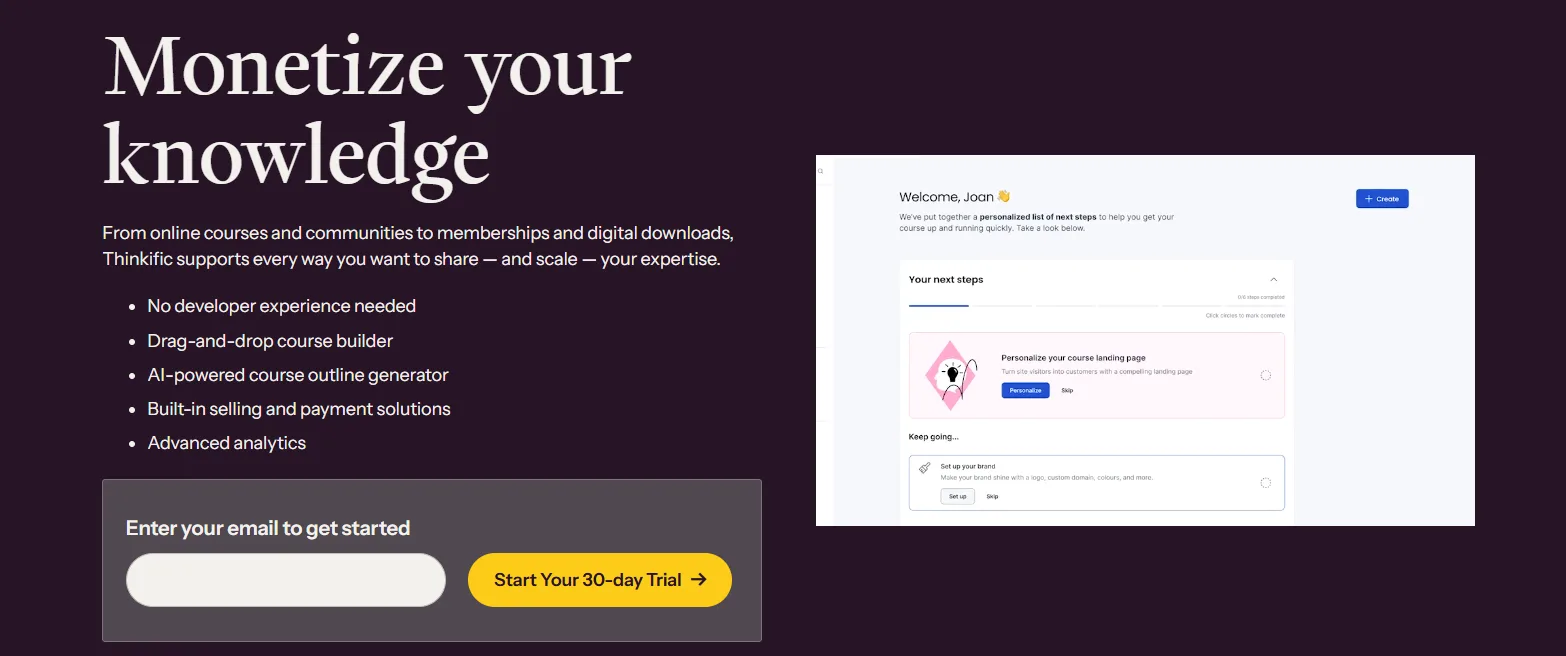
In the rapidly expanding multi-billion-dollar e-learning market, platforms that bridge the gap between technical complexity and entrepreneurial ambition are in high demand. Thinkific stands out as a prominent all-in-one software-as-a-service (SaaS) solution designed for educators, coaches, consultants, and enterprise businesses seeking to monetize their expertise without building a custom learning management system (LMS) from scratch.
At its core, Thinkific provides a centralized dashboard encompassing drag-and-drop course creation, website and landing page design, secure payment processing, and comprehensive student management. However, its expansive utility comes with a prominent price tag. The platform’s tiered subscription model scales aggressively from entry-level options to enterprise solutions, forcing modern digital creators to carefully calculate their operating margins, customer acquisition costs, and actual feature requirements before taking the plunge.
Chronology: The Evolution of Course Platforms and Thinkific’s Market Position
The democratization of online education began in earnest over a decade ago when early creators were forced to stitch together fragmented ecosystems—combining WordPress plugins, standalone video hosting, independent membership software, and third-party payment gateways. This complex web of technical dependencies created high barrier-to-entry friction for subject-matter experts who lacked web development skills.
As the creator economy matured, platforms like Thinkific emerged to streamline this infrastructure into a single pane of glass. Over the subsequent years, Thinkific expanded its feature set well beyond simple self-paced video lessons. The timeline of its platform development reflects the changing demands of the digital economy:
- Phase 1 (Core LMS): Focus shifted heavily toward foundational course delivery, digital downloads, and basic student tracking.
- Phase 2 (Commerce & Community): Introduction of robust checkout capabilities, order bumps, upsells, tiered memberships, and integrated community spaces to combat dwindling course completion rates and foster engagement.
- Phase 3 (Automation & AI Integration): Recent updates have introduced AI-powered course outline generators and quiz assistants, coupled with advanced business-to-business (B2B) sales tools, API access, and webhooks designed to satisfy corporate training departments.
Supporting Data: Breaking Down Thinkific’s Pricing Tiers
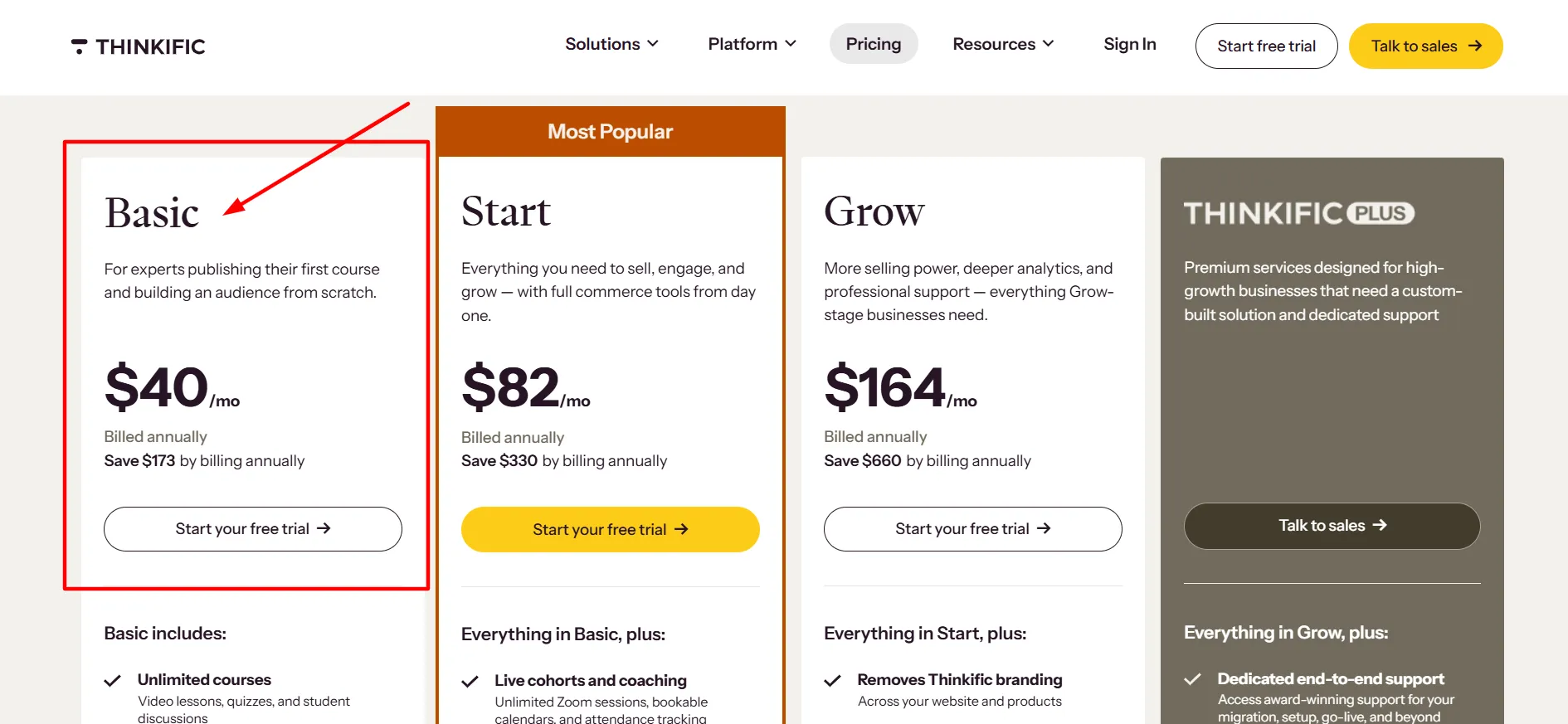
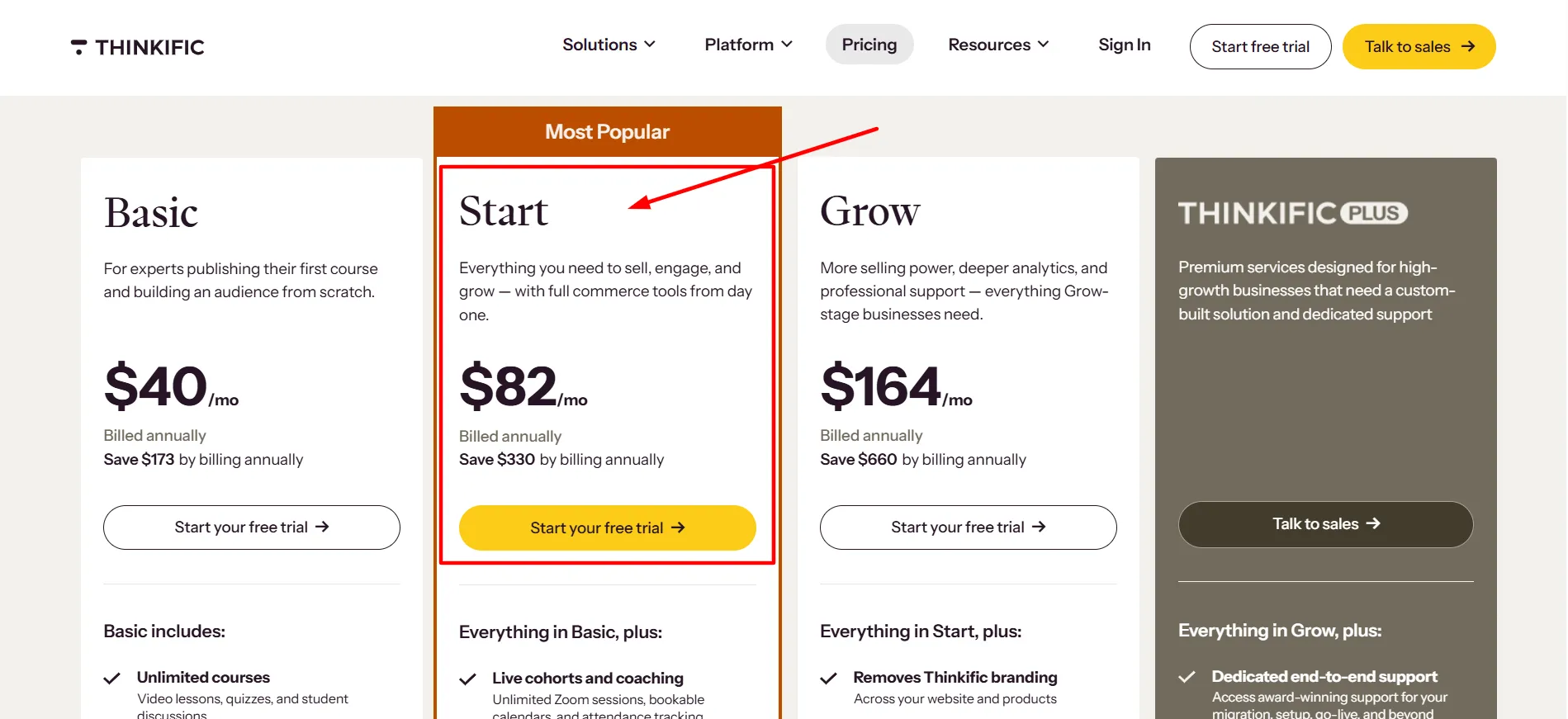
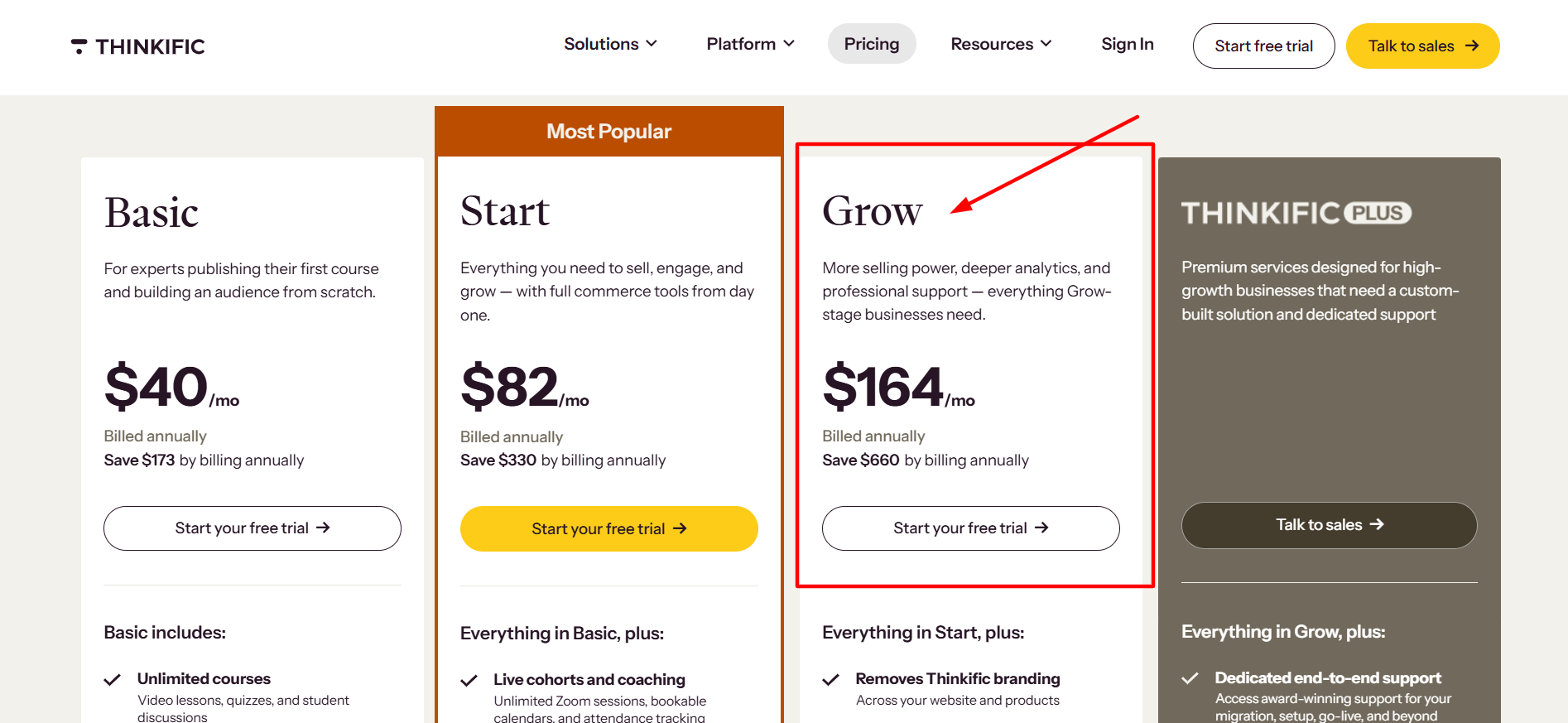
Navigating Thinkific requires a transparent look at its financial commitments. The platform structures its pricing across monthly and annual billing schedules, targeting distinct maturity levels within the creator economy.
| Plan | Monthly Billing | Annual Billing (Avg. Monthly) | Upfront Annual Cost | Target Audience |
|---|---|---|---|---|
| Basic | $54 / month | ~$40 / month | $475 / year | First-time creators launching their debut course. |
| Start | $109 / month | ~$82 / month | $978 / year | Growing creators offering live cohorts, bundles, and memberships. |
| Grow | $219 / month | ~$164 / month | $1,968 / year | Established businesses scaling operations and B2B sales. |
| Expand | $499 / month | Contact Thinkific | Contact Thinkific | Large organizations requiring advanced administrative and SCORM tools. |
Beyond the subscription sticker prices, digital entrepreneurs must budget for indirect operational expenditures. Payment processing fees, third-party marketing and email automation software, video hosting bandwidth (though largely managed by Thinkific), and paid advertising all contribute to the true total cost of ownership.
Official Responses and Platform Capabilities: What Works and Where It Falls Short
To evaluate whether Thinkific justifies its cost, industry analysts and platform users consistently test its primary functional pillars.
1. The Course Builder and Lesson Creation Suite
Thinkific allows instructors to structure multi-chapter curriculums utilizing a rich mix of video files, audio tracks, text documents, downloadable PDFs, and interactive presentations. The incorporation of AI-driven course outline and quiz generators aims to accelerate the production timeline.
- The Catch: While technology can organize information, the heavy lifting of content creation, scriptwriting, and pedagogical testing rests entirely on the creator. Furthermore, custom styling limitations can frustrate designers seeking absolute control over visual presentation.
2. Website and Branding Tools
Users can construct professional storefronts and sales pages complete with custom domain mapping. This ensures that the educational brand remains front-and-center rather than being entirely subordinated by the platform’s corporate identity.
- The Catch: Thinkific’s website builder is fundamentally optimized for conversion and sales rather than expansive, multi-page content publishing. Creators requiring complex blogs, intricate web architecture, or advanced layout designs frequently opt to pair Thinkific with an external CMS like WordPress.
3. Monetization and Checkout Flexibility
Depending on the chosen tier, Thinkific empowers sellers with promotional coupons, product bundles, order bumps, one-click upsells, flexible payment plans, and recurring subscription models.
- The Catch: Gated features mean that entry-level subscribers are locked out of advanced sales mechanisms. Upgrading to unlock memberships or payment plans instantly inflates monthly overhead, requiring higher transaction volumes to maintain profitability.
4. Student Management, Communities, and Reporting
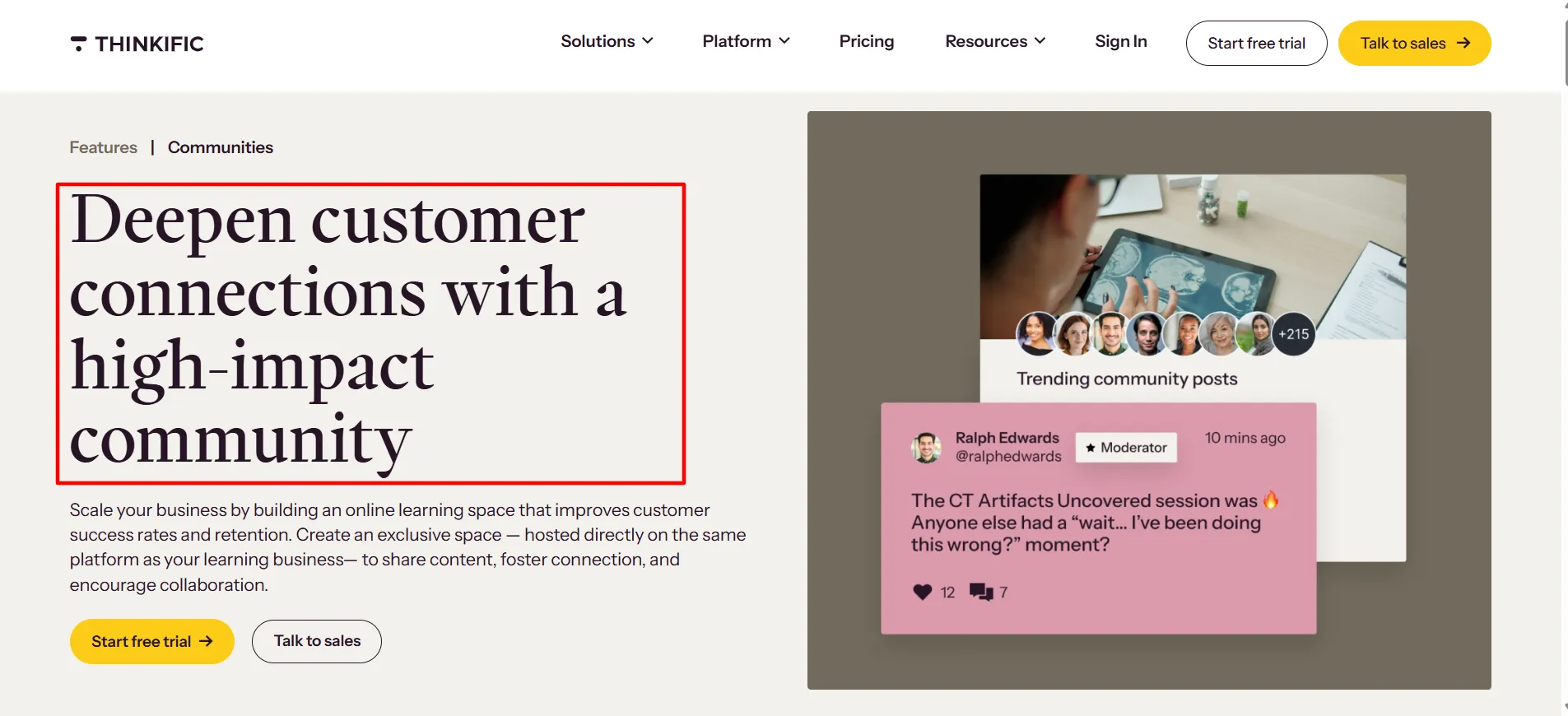
Engagement tools—including interactive discussions, assignments, automated completion certificates, and dedicated community hubs—allow educators to build sticky, long-term learning environments.
- The Catch: Maintaining an active community demands immense time and moderation resources. If a cohort is sluggish or unengaged, community features risk becoming an expensive, underutilized digital ghost town.
Implications for Digital Entrepreneurs and Educators
The financial and operational implications of adopting Thinkific ripple across every stage of an online business lifecycle. For established coaches and educators with pre-existing audiences, the platform acts as an efficiency engine. By consolidating website management, student enrollment, content delivery, and payment processing into a single dashboard, Thinkific drastically reduces administrative fatigue.
Conversely, for novice creators who are still validating their market demand or operating on a shoestring budget, committing to a recurring SaaS subscription can introduce high financial stress. Launching a digital product is rarely an "if you build it, they will come" scenario; it requires intensive marketing, funnel optimization, and audience trust. Committing to an annual upfront plan ($475 to nearly $2,000) prior to securing a single paying customer can quickly deplete startup capital.
Strategic Alternatives to Consider
Before finalizing a software commitment, savvy operators typically benchmark Thinkific against competing alternatives in the e-learning space:
- Kajabi: A more expensive, heavy-duty competitor that bundles advanced email marketing automation natively into the platform.
- Teachable: A direct competitor with structurally similar course-building capabilities, often evaluated side-by-side on pricing and user interface preferences.
- Podia: A budget-friendly alternative known for its simplicity in selling digital downloads, webinars, and modest courses without aggressive feature-gating.
- Self-Hosted Solutions (WordPress + LearnDash): Ideal for technical users who prioritize absolute ownership, custom data control, and lower software subscription fees at the expense of higher maintenance overhead.
Conclusion and Final Verdict
Thinkific occupies a respected, powerful position within the e-learning ecosystem. It successfully eliminates the traditional technical barriers of course creation, providing a professional, scalable environment for educators to monetize their expertise.
However, it is not a magic bullet for profitability. The platform demands a clear-eyed financial assessment. Creators must weigh the subscription costs against their projected revenue, select a tier that precisely matches their immediate operational requirements—avoiding premature upgrades to expensive plans—and test the waters thoroughly during the trial phase.
Ultimately, Thinkific is a robust catalyst for an established business, but it requires strategic validation, diligent budgeting, and active content marketing to truly justify its cost.
Affiliate Disclosure: In full transparency, some of the links on our website are affiliate links. If you use them to make a purchase, we will earn a commission at no additional cost to you whatsoever.