











While global markets remain transfixed by the meteoric rise of artificial intelligence and the semiconductor race, a more foundational, long-term transformation is quietly reshaping the Indian economy. According to a comprehensive new report by financial services firm Jefferies, India’s structural growth story is not merely a byproduct of global tech trends, but a robust, homegrown evolution fueled by energy transition, industrial expansion, and a significant uptick in private-sector capital expenditure.
As the global discourse on AI eventually stabilizes, Jefferies posits that India’s domestic economic drivers will prove far more resilient, positioning the nation as a unique investment destination decoupled from the volatile cycles of the global technology sector.
1. Main Facts: The Pillars of India’s Growth
The Jefferies report identifies a multi-pronged approach to India’s economic trajectory. At its core, the thesis is that India is entering a cycle of massive electrification and industrialization. Key drivers include:
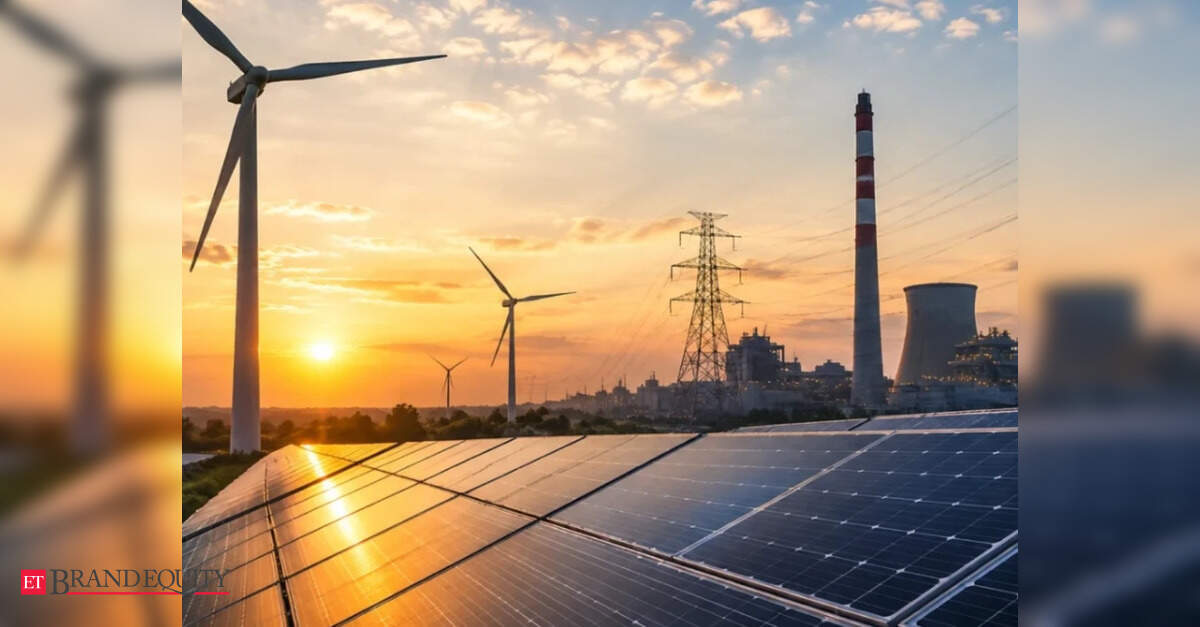
- Energy Transition: The shift toward renewable power, particularly solar energy, is viewed as the most significant long-term opportunity for the private sector.
- Manufacturing Renaissance: Moving beyond the traditional perception that India is purely a services-led economy, the report highlights that India is already a global manufacturing powerhouse in sectors like steel, cement, ammonia, and mobile phone assembly.
- Private-Sector Capex: There is a clear, measurable increase in capital expenditure, evidenced by a rising gross fixed capital formation (GFCF) to GDP ratio and a surge in machinery imports.
- Electrification: Electricity is projected to play a much larger role in the nation’s total energy mix, rising from 19% in 2023 to 25% by 2035.
2. Chronology of Economic Transition
To understand where India is heading, one must look at the recent timeline of industrial policy and capital investment:
- Pre-2021 Phase: The Indian economy was largely characterized by service-led exports and domestic consumption, with manufacturing growth often hampered by legacy infrastructure hurdles.
- FY21–FY24 (The Acceleration Phase): Post-pandemic, the government’s focus on the "Make in India" initiative, combined with Production Linked Incentive (PLI) schemes, began to bear fruit. Machinery imports, a vital proxy for industrial expansion, began their ascent from USD 29 billion in FY21 to reach USD 62 billion by FY26.
- Current Momentum (2024–Present): The last 12 months, ending in August, saw machinery imports hit USD 66 billion, signaling that the momentum of private-sector investment is not slowing down despite global geopolitical uncertainties.
- The 2035 Horizon: Projections indicate that as battery storage technology reaches parity with coal, the cost of power will drop, potentially unlocking a new phase of hyper-competitive manufacturing.
3. Supporting Data: The Case for Resilience
The Jefferies analysis relies on hard data to challenge the notion that India is merely a niche player in the global market.
The Scale of Manufacturing
While China remains the undisputed global leader in manufacturing volume, India’s progress is significant. The report notes that India is already the second-largest global producer in critical areas:
- Crude Steel: India produces approximately 164.9 million tonnes annually.
- Cement: Annual production stands at 470 million tonnes.
- Consumer Goods: India has emerged as a major hub for mobile phone and solar module assembly.
However, the report is candid about the "scale gap." China’s output—960.8 million tonnes of steel and 1,700 million tonnes of cement—highlights the massive runway for growth that India still possesses.
Capital Expenditure Metrics
The most compelling evidence of India’s structural shift is the rise in the GFCF-to-GDP ratio. It moved from 31.4% in the four quarters ending December 2023 to 32.4% by June 2024. This 100-basis-point jump is indicative of a systemic, rather than cyclical, shift in corporate and government spending patterns.
4. Official Perspectives and Analytical Insights
Jefferies analysts argue that the obsession with "AI-centric" growth often blinds investors to the realities of physical infrastructure. They suggest that India’s growth is fundamentally different because it is rooted in the "real economy."
The report draws a parallel to China’s historical experience with grid expansion. By leveraging large-scale grid infrastructure and advanced battery storage, China successfully made solar power cheaper than coal. Jefferies suggests that if India mirrors this trajectory, it will not just be a consumer of energy, but a leader in low-cost, sustainable industrial manufacturing.
Furthermore, the integration of "smart demand management" in electricity is expected to be a key pillar of this growth. As India’s energy demand shifts toward a more electric-centric model, the efficiency gains from grid upgrades and battery storage will act as a force multiplier for the manufacturing sector, which has historically been stifled by the high cost and intermittent nature of power.
5. Implications: The "Non-AI" Growth Opportunity
The implications for global investors and domestic stakeholders are profound.

Decoupling from Tech Volatility
By emphasizing energy and manufacturing, India offers a hedge against the global tech cycle. While the AI sector is prone to boom-and-bust cycles driven by massive R&D spending and fluctuating demand for compute, India’s growth is driven by the fundamental need for infrastructure—power plants, factories, and machinery. This is a "real-asset" story, which is inherently more stable.
The Energy-Manufacturing Nexus
The report underscores that India’s energy transition is not just an environmental goal; it is an industrial necessity. As the country moves toward a 25% electricity-in-final-energy-demand target, the cost-efficiency of renewable energy will become the primary determinant of India’s export competitiveness. If the cost of power drops as projected, Indian goods will become significantly more competitive in the global market, allowing the country to capture market share from other manufacturing hubs.
A Call for Long-term Strategy
For policymakers, the Jefferies report reinforces the need to continue investing in the "hard" side of the economy. The data shows that the private sector is already responding to the improved environment. The sharp increase in machinery imports suggests that corporate India is no longer waiting for the perfect market conditions; it is aggressively expanding capacity to meet both domestic demand and the growing export appetite.
Conclusion: The Quiet Revolution
The narrative emerging from the Jefferies report is one of quiet, persistent strength. While the world watches the screens of Silicon Valley, the Indian economy is building in the physical realm. With a strategic focus on renewable energy, grid modernization, and a scaling of traditional manufacturing, India is positioning itself to be a primary architect of the next phase of global industrial growth.
For those looking beyond the hype of AI, the Indian story is one of structural transformation. It is a story of steel, cement, solar cells, and an unprecedented commitment to capital expenditure—a combination that suggests that India’s growth is not just a passing trend, but a foundational shift that will endure long after the current AI fervor settles.



