










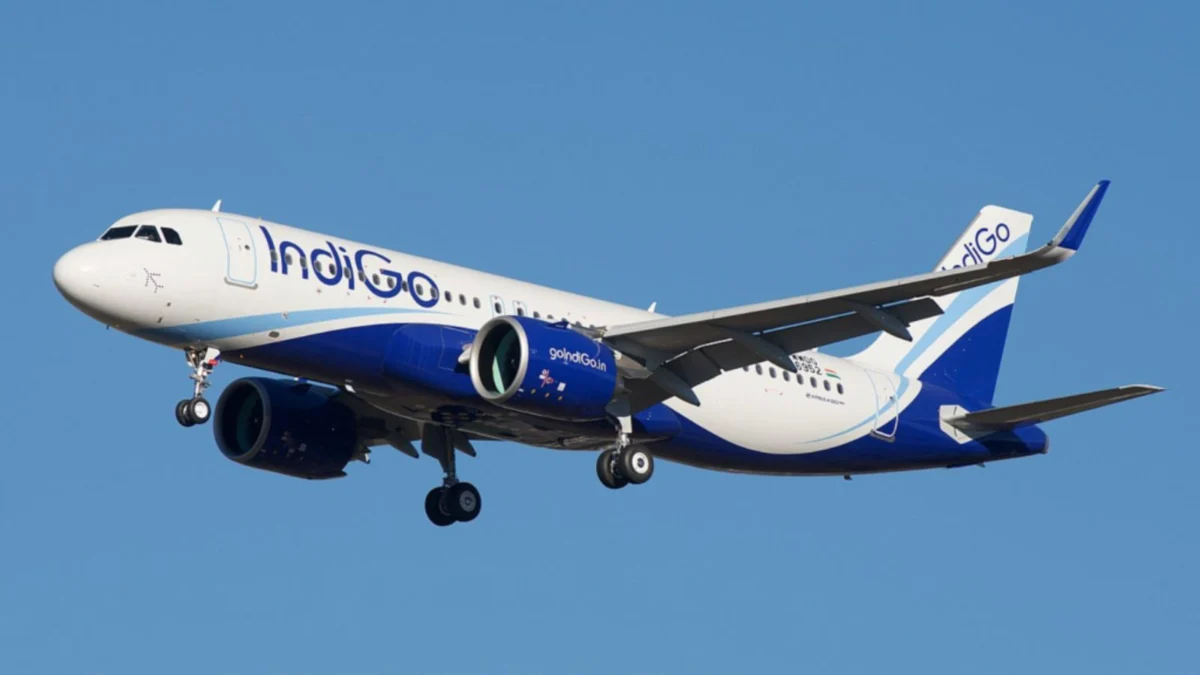
LUCKNOW — In a dramatic turn of events that underscores the unpredictable hazards of aviation meteorology, an IndiGo flight traveling from Patna to Lucknow made a safe emergency landing on Wednesday night after being struck by a powerful bolt of lightning mid-air.
The aircraft, carrying a total of 110 souls on board—comprising 104 passengers and six crew members—sustained visible structural damage to its radome, the protective nose cone housing the plane’s weather radar system. Despite the severity of the strike and the compromised exterior of the aircraft, the flight touched down safely at the Chaudhary Charan Singh International Airport in Lucknow. Remarkably, the landing occurred eight minutes ahead of its scheduled arrival time, and authorities confirmed that no injuries were reported among passengers or crew.
The incident has once again brought aviation safety protocols, severe weather tracking, and the resilience of modern commercial aircraft under the spotlight.
Main Facts
The operational details of the incident paint a picture of a routine domestic flight that quickly escalated into a critical weather emergency:
- Flight Route: Patna (PAT) to Lucknow (LKO).
- Airline & Equipment: IndiGo, operating a domestic passenger service.
- Occupants: 104 passengers and 6 crew members (totaling 110 individuals).
- Nature of Incident: Direct lightning strike during the cruise or approach phase of the flight.
- Damage Sustained: Severe impact damage to the aircraft’s nose cone (radome).
- Outcome: Safe emergency landing at Lucknow airport; zero casualties or injuries reported.
- Schedule Variance: Landed eight minutes ahead of the scheduled arrival time.
- Date of Occurrence: Wednesday, October 7, 2026.
According to preliminary reports released by airport authorities and airline representatives, the aircraft encountered severe localized convective weather systems as it traversed regional airspace over Uttar Pradesh. The lightning bolt made direct contact with the front of the aircraft, delivering a massive electrical discharge that compromised the structural integrity of the radome.
Despite the alarming nature of a lightning strike at high altitudes, commercial aircraft are engineered as Faraday cages—meaning their aluminum or composite fuselages are designed to safely conduct electrical currents around the exterior of the cabin and out through the extremities (such as the trailing edges of the wings) without harming those inside. However, physical impact damage to composite parts like the nose cone is not uncommon during high-intensity strikes, necessitating immediate post-landing inspections and grounding of the aircraft.
Chronology of Events
While the entire ordeal lasted only a fraction of an hour in terms of critical danger, the sequence of events unfolded rapidly as the flight crew managed both the meteorological challenge and the technical emergency.
Pre-Flight and Departure
The flight departed Patna on a routine schedule, with weather conditions at the origin point appearing manageable. Meteorological forecasts for the regional corridor, however, indicated active monsoon-like or post-monsoon convective activity, characterized by towering cumulonimbus clouds—the primary culprits behind severe atmospheric electrical charges.
En-Route Encounter
As the aircraft cruised toward Lucknow, it intersected an active weather cell. According to flight tracking data and preliminary debriefs from the cockpit crew, the aircraft was subjected to sudden, heavy turbulence accompanied by intense electrical activity. Without warning, a high-voltage lightning bolt struck the nose of the plane.
The impact would have produced a blinding flash of light and a deafening crack within the cockpit and forward galley, immediately drawing the attention of the flight crew to potential instrumentation and structural anomalies.
Cockpit Response and Emergency Declaration
Upon taking the strike, the captain and first officer immediately executed standard operating procedures (SOPs) for electrical storms and lightning impacts. They verified that the primary flight controls, engines, and critical avionics systems remained functional. However, because the nose cone houses the weather radar—a critical tool for navigating around storms—the crew opted to declare an urgency/emergency status with Air Traffic Control (ATC) in Lucknow to secure priority landing clearance and ensure emergency ground services were standing by upon arrival.
Descent and Safe Touchdown
Guided by ATC vectors, the aircraft descended through the overcast skies surrounding Lucknow. Despite the compromised nose structure and the psychological strain on the occupants, the pilot executed a smooth approach. The aircraft touched down safely at Chaudhary Charan Singh International Airport. In a testament to the efficiency of the approach and the minimal disruption to the flight path prior to the final descent, the wheels met the tarmac a full eight minutes ahead of the timetable.
Post-Landing Evacuation and Inspection
Upon coming to a complete stop on the taxiway, the aircraft was met by airport rescue and firefighting (ARFF) vehicles, a standard precaution following any declared emergency. Engineers and safety inspectors boarded the plane to assess the damage. Passengers were safely deplaned via mobile stairs and bussed to the terminal terminal, where airline ground staff provided assistance, refreshment, and reassurance.
Supporting Data and Meteorological Context
To understand the gravity of the October 7 incident, it is essential to examine the frequency and physics of lightning strikes in aviation, as well as IndiGo’s operational footprint in the region.
The Physics of Aviation Lightning Strikes
Aviation statistics compiled by organizations such as the Federal Aviation Administration (FAA) and the International Air Transport Association (IATA) indicate that every commercial aircraft is struck by lightning, on average, at least once or twice a year. Modern commercial airliners are specifically designed and certified to withstand such strikes.
- The Faraday Cage Effect: The metallic skin of an aircraft acts as a conductive shield. When a lightning bolt strikes, the electrical current travels along the exterior skin, through the metal frame, and exits the aircraft—often via static wicks on the wings or tail—without penetrating the passenger cabin.
- Vulnerable Areas: While the frame is protected, non-metallic composite components—such as the radome (nose cone) and wing tips—are more susceptible to physical damage, burning, or puncturing because they do not conduct electricity as easily as aluminum. The damage observed on the IndiGo flight’s nose is a textbook example of this phenomenon.
Regional Weather Dynamics over Northern India
The month of October in northern Uttar Pradesh often marks a transitional meteorological period. Residual monsoon moisture interacting with shifting upper-level wind patterns frequently spawns sudden, isolated cumulonimbus clouds. These clouds are electrical powerhouses, capable of generating massive potential differences between cloud bases and the ground, or between different cloud layers.
IndiGo’s Operational Scale
As India’s largest domestic carrier, IndiGo operates thousands of flights weekly, connecting tier-1, tier-2, and tier-3 cities across the subcontinent. Managing a fleet consisting predominantly of Airbus A320 family and ATR aircraft, the airline logs millions of flight hours annually. Incidents involving severe weather encounters, while statistically rare in terms of structural damage, require robust contingency frameworks—a system that was thoroughly tested and proven effective during the Patna-Lucknow flight.
Official Responses
In the wake of the incident, official statements from the airline, airport management, and aviation authorities shed light on the handling of the emergency and the condition of the aircraft.
IndiGo Management Statement
IndiGo released an official statement confirming the incident, emphasizing passenger safety above all else:
"An IndiGo flight operating from Patna to Lucknow experienced a lightning strike during its en-route journey on Wednesday. The aircraft sustained damage to its radome area due to the impact. The pilot in command followed all standard operating procedures and successfully landed the aircraft at Lucknow airport ahead of schedule. All 104 passengers and 6 crew members are safe. Our engineering teams are currently inspecting the aircraft, and alternate travel arrangements or support are being provided as necessary."
Airport Authority and Air Traffic Control Reactions
Officials at Chaudhary Charan Singh International Airport praised the calm and professional demeanor of the flight crew. An airport spokesperson noted:
- "The pilot notified ATC of the lightning strike and requested standard landing priority. Emergency services were mobilized immediately as a precautionary measure, but the landing was executed smoothly. The aircraft cleared the runway without incident, and passengers were safely escorted to the terminal building."
Directorate General of Civil Aviation (DGCA) Oversight
While routine lightning strikes that result in safe landings do not always trigger full-scale accident investigations, India’s aviation regulator, the Directorate General of Civil Aviation (DGCA), routinely reviews incident reports involving structural damage. IndiGo’s engineering department has been tasked with submitting a detailed technical report regarding the extent of the radome damage and the operational status of the onboard weather radar system at the time of the strike.
Implications and Aviation Safety Takeaways
While the October 7 incident concluded without casualties, it carries significant implications for airline operations, meteorological forecasting, and passenger perception of air travel safety.
1. Reaffirming Aircraft Design and Engineering Resilience
The safe landing of the IndiGo flight serves as a practical demonstration of the efficacy of modern aeronautical engineering. For passengers experiencing a lightning strike for the first time—often described as a blinding flash accompanied by a deafening bang and sudden vibration—the psychological impact can be traumatic. Public awareness campaigns by airlines and aviation safety bodies regarding the "Faraday cage" principle remain vital in demystifying these events and reducing panic.
2. The Limits of Onboard Radar and Meteorological Forecasting
While commercial aircraft are equipped with sophisticated weather radar systems housed within the very radome that was damaged in this incident, detecting and avoiding micro-scale electrical phenomena or clear-air lightning remains challenging. The incident highlights the need for continuous upgrades in real-time satellite weather monitoring and cockpit-ground communication channels, allowing pilots to receive immediate updates on developing convective cells along their flight paths.
3. Crew Training and Emergency Protocols
The prompt actions of the IndiGo flight crew validate the rigorous simulation training mandated for commercial pilots. Handling an electrical strike requires compartmentalized thinking: assessing immediate system failures, communicating with ATC, managing passenger anxiety through calm public address announcements, and executing a precision landing with a potentially compromised nose structure. The fact that the flight landed eight minutes ahead of schedule speaks volumes about the crew’s composure and professional competence.
4. Ground Maintenance and Turnaround Protocols
For IndiGo and maintenance provider networks, incidents like this trigger rapid-response engineering evaluations. The damaged aircraft must undergo non-destructive testing (NDT) to ensure that the underlying avionics, wiring harnesses, and bulkhead structures behind the radome escaped structural stress. Until a certified repair or component replacement is completed, the aircraft will remain grounded, impacting airline scheduling and underscoring the importance of robust fleet redundancy.
Conclusion
The harrowing journey of the IndiGo flight from Patna to Lucknow on October 7, 2026, serves as a dramatic reminder of the raw power of nature and the uncompromising standards of modern aviation safety. Through a combination of resilient aircraft design, disciplined pilot training, and swift air traffic coordination, a potential disaster was averted, ensuring that all 110 people on board stepped off the tarmac unharmed. As aviation authorities review the technical data from the flight, the incident stands as a testament to the fact that even when struck by the elements, commercial aviation continues to prioritize its ultimate mandate: bringing every passenger safely home.



