








In a landmark event for the mobile industry, OPPO has officially pulled the curtain back on its highly anticipated flagship smartphone series: the Find X10 and the Find X10 Pro Max. Following months of speculation and a well-orchestrated teaser campaign, these devices represent a significant leap forward in mobile imaging, processing efficiency, and long-term hardware durability. Co-developed with legendary photography brand Hasselblad, the new series is positioned not just as a consumer smartphone, but as a professional-grade creative tool designed for the modern content creator.
Main Facts: A New Benchmark for Mobile Imaging
The Find X10 series arrives with a singular mission: to eliminate the compromises traditionally associated with mobile photography. At the heart of the flagship Find X10 Pro Max lies an industry-first triple 200MP camera system. By utilizing high-resolution sensors across the ultra-wide, wide, and telephoto focal lengths, OPPO has ensured that every shot, regardless of zoom level, maintains unprecedented levels of detail.
The standard Find X10, while more compact, features a potent dual 200MP setup. Both models introduce a 26MP default capture resolution—a clever middle ground that offers higher fidelity than standard 12MP binned images without the massive file size overhead of 200MP shots. For enthusiasts, a dedicated "Hasselblad Hi-Res Mode" allows users to tap into the full potential of these massive sensors.
Beyond hardware, the LUMO True Image Engine manages the computational heavy lifting. OPPO has pivoted away from the industry trend of over-sharpening and aggressive HDR tone-mapping, focusing instead on preserving natural contrast, organic optical textures, and true-to-life skin tones.
Chronology of Development and Launch
The journey to the Find X10 began over 18 months ago, with a strategic focus on integrating professional photography workflows into a mobile form factor.

- Q1 2026: Initial R&D focus shifts to the 2nm MediaTek architecture for the Pro Max variant.
- Q2 2026: Partnership expansion with Hasselblad to fine-tune the multispectral True Color Camera sensors.
- Early October 2026: OPPO confirms the October 21 global launch date, building market anticipation through technical leaks regarding the silicon-carbon battery technology.
- October 21, 2026: Official Global Launch event. The devices are unveiled to international press, accompanied by demonstrations of the Tilta Khronos Creator Kit and Blackmagic Camera integration.
Supporting Data: Performance and Technical Specifications
OPPO has spared no expense in ensuring that the internal architecture of the Find X10 series matches its external luxury.
The Power Beneath the Glass
The Find X10 is powered by the 3nm MediaTek Dimensity 9600M, while the top-tier Find X10 Pro Max leverages the cutting-edge 2nm MediaTek Dimensity 9600 Pro. These chips are complemented by massive 8,000mAh silicon-carbon batteries—a feat of engineering that provides longevity without excessive weight.
| Feature | Find X10 | Find X10 Pro Max |
|---|---|---|
| Processor | MediaTek Dimensity 9600M (3nm) | MediaTek Dimensity 9600 Pro (2nm) |
| Battery | 8,000mAh | 8,000mAh |
| Charging | 80W Wired / 50W Wireless | 80W Wired / 50W Wireless |
| Durability | IP66/68/69 | IP66/68/69 |
Display Mastery
The display technology utilized in both models supports the broad BT.2020 color space, ensuring that what the user captures is exactly what they see on screen. With industry-leading peak brightness and color accuracy, these panels are designed to compete with high-end reference monitors used in professional color grading.
Official Responses and Strategic Vision
During the launch, OPPO’s leadership emphasized the "Creator-First" philosophy. By collaborating with Blackmagic Design, OPPO has brought the professional UI and workflow of cinema cameras to the Find X10 Pro Max.
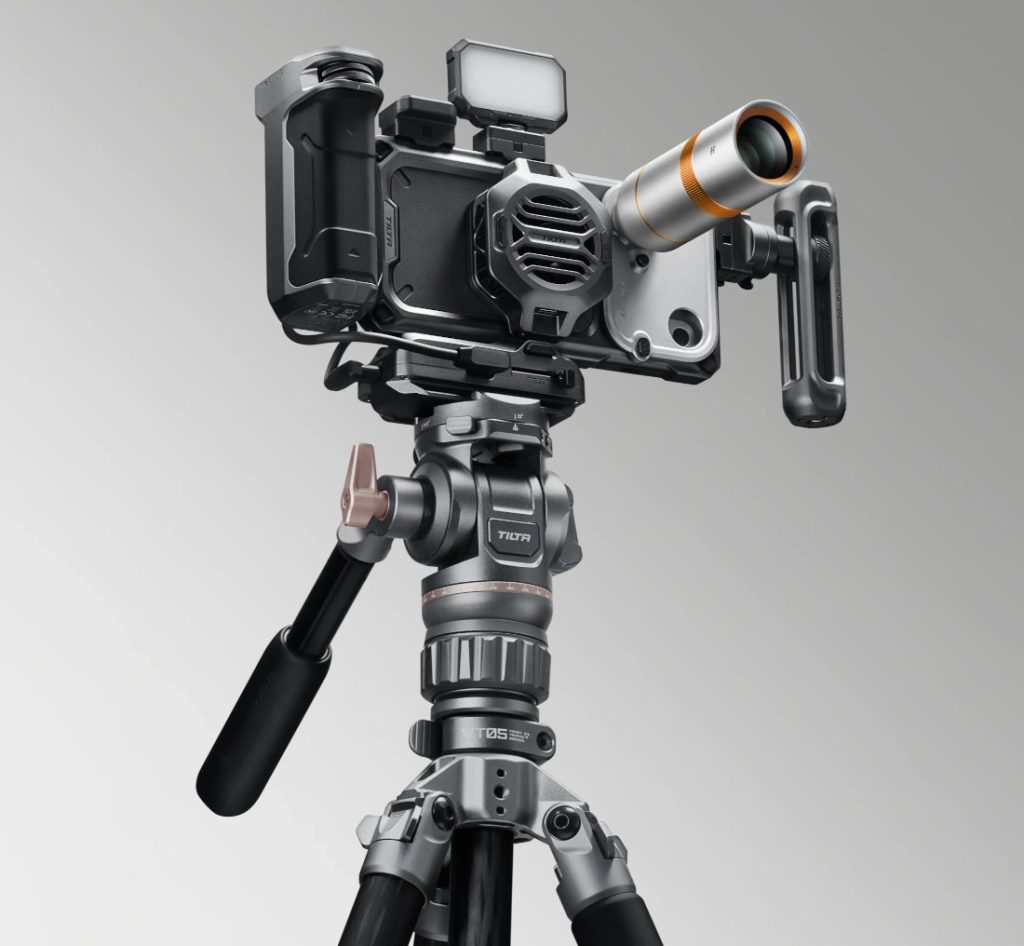
"We are not just selling a phone; we are providing a modular creative studio that fits in your pocket," stated an OPPO representative during the keynote. This is most evident in the Tilta Khronos Creator Kit, a bespoke modular frame for the Pro Max that includes a 67mm filter ring and active cooling fans—features historically reserved for specialized mirrorless camera rigs.
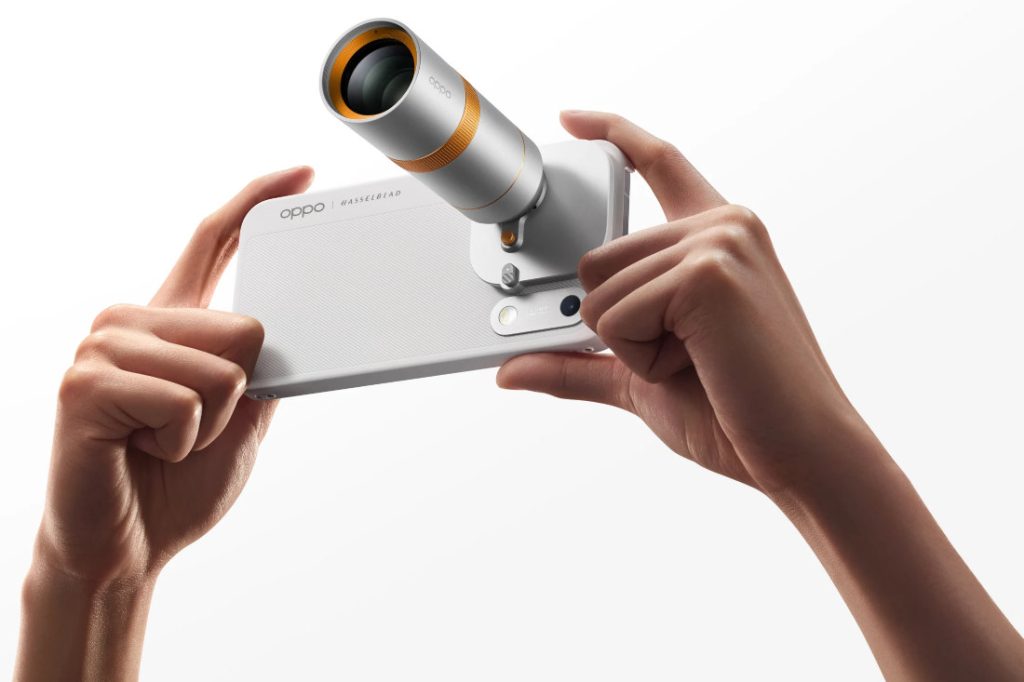
Furthermore, the collaboration with Meta to optimize the compression pipeline for Instagram ensures that the "high-fidelity" promise of the hardware isn’t lost during the social media upload process—a common pain point for creators worldwide.
Implications for the Mobile Market
The release of the Find X10 series has profound implications for the industry.
1. The Death of the "12MP Standard"
By setting the default capture at 26MP, OPPO is challenging the industry standard of 12MP binned images. This suggests a shift toward sensors that can handle high-resolution output without relying solely on pixel binning, moving closer to the "DSLR-in-a-pocket" ideal.
2. AI-Driven Privacy
With the introduction of the "Private Computing Cloud," OPPO is addressing the growing consumer anxiety regarding AI data handling. By utilizing post-quantum cryptographic standards, the company is positioning itself as a leader in secure, on-device and cloud-hybrid AI processing. This will likely set a new benchmark for how manufacturers communicate security in the age of generative AI.
3. Sustainability and Longevity
The inclusion of IP69 water/dust resistance—the highest rating for consumer electronics—combined with SGS Five-Star Drop Resistance, suggests that OPPO is designing these devices for multi-year lifecycles. In a market plagued by planned obsolescence, the robust build quality and the high-density battery signify a commitment to hardware that is meant to last.
4. Integration of Pro-Grade Workflows
By supporting ACES-certified O-Log2 and Open Gate Capture, OPPO is courting the professional film community. The ability to use the entire sensor surface (Open Gate) means that creators can shoot a single clip and export it for various aspect ratios—vertical for TikTok, horizontal for YouTube, or square for Instagram—without losing significant resolution.
ColorOS 17: A Software Revolution
The software experience is equally critical. ColorOS 17 introduces the Luminous Rendering Engine and Laminar Flow Engine, which combined offer a 55% improvement in app launch stability. For power users, the 25% increase in background app retention means that multitasking between heavy creative apps, such as Adobe Lightroom and Blackmagic Camera, will be seamless.
The AI suite within ColorOS 17, including AI Eraser, AI Reflection Removal, and AI Detail Boost, is designed to be intuitive rather than intrusive. Unlike many competitors who hide their AI features behind complex menus, OPPO has integrated these tools directly into the native gallery, allowing for one-tap edits that maintain the integrity of the original RAW data.
Pricing and Market Availability
The Find X10 series is positioned at the premium end of the market, reflecting its high-end specifications.
- Find X10: Starting at 1299 Euros, the device is available in Glacier Blue, Glow Coral, and Mist Grey.
- Find X10 Pro Max: Starting at 1799 Euros, it is available in Titanium Grey and a sophisticated dual-tone Luna White.
Global distribution is scheduled to begin in late October through authorized retailers and carrier partners. As the market digests these specifications, one thing is clear: OPPO has successfully transitioned from a high-volume manufacturer to a dominant player in the professional imaging segment. Whether these devices can truly replace dedicated cameras for professional cinematographers remains to be seen, but the Find X10 series is undoubtedly the closest any smartphone has come to achieving that goal.

Author: Srivatsan Sridhar
Srivatsan is a veteran technology analyst focusing on the intersection of mobile hardware and professional-grade software. His reviews are based on rigorous, long-term testing in real-world creative environments.