







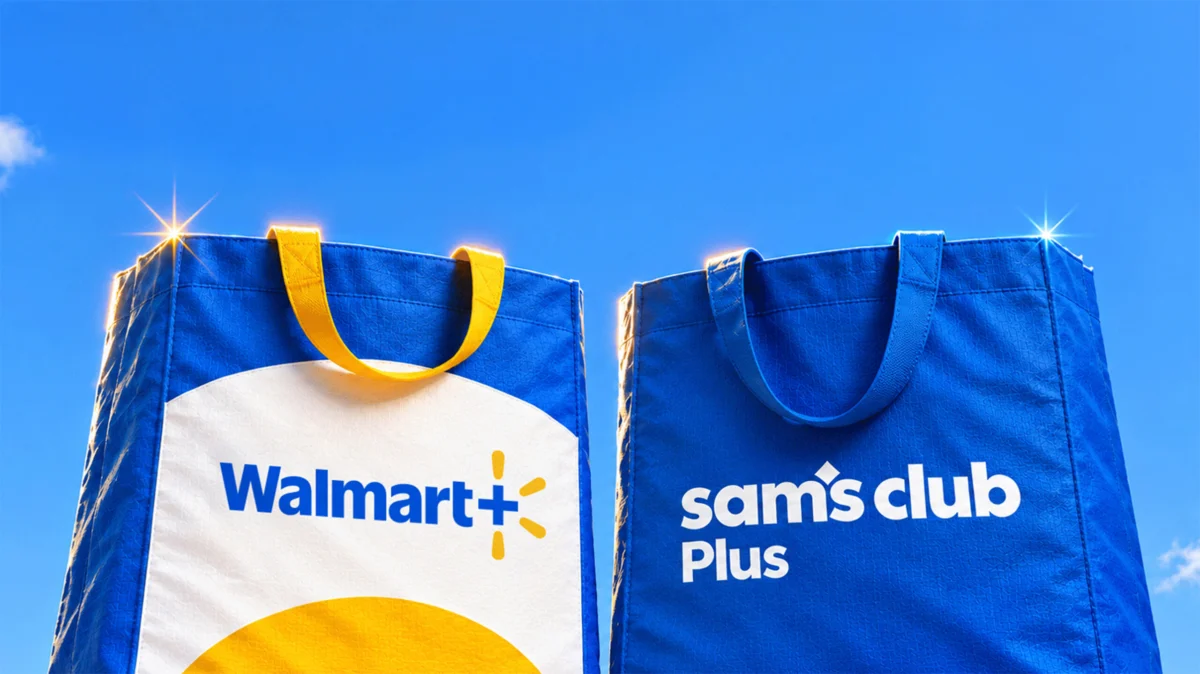
In a bold move designed to cement its dominance in the retail sector and redefine consumer loyalty, Walmart Inc. has announced the launch of a combined membership bundle. By merging its flagship Walmart+ service with the Sam’s Club Plus program, the retail giant is betting that it can capture a larger share of household spending by offering a consolidated value proposition. This initiative, priced at an annual fee of $120, represents a significant escalation in the ongoing battle for subscription-based retail supremacy against rivals like Amazon Prime and Target Circle 360.
The Core Strategy: A Unified Value Proposition
The logic behind the bundle is straightforward: provide convenience and substantial savings to entice the modern, value-conscious shopper. For $120 a year, members gain access to a comprehensive suite of benefits that previously required separate subscriptions.
Walmart Inc., which currently holds the No. 2 spot in Digital Commerce 360’s Top 1000 Database—a definitive ranking of North America’s largest online retailers—is leveraging its massive brick-and-mortar footprint to augment its digital reach. The company is also making significant strides in artificial intelligence, ranking No. 37 in Digital Commerce 360 and ReFiBuy’s AI Commerce Rankings, signaling a tech-forward approach to retail logistics and customer experience.
By bundling these services, Walmart is effectively creating a "one-stop-shop" ecosystem. The combined membership package boasts 26 unique perks. While many are drawn from the existing individual plans, the bundle introduces four exclusive features that are not available to standalone subscribers, creating a powerful incentive for current members to upgrade and for non-members to sign up.
A Chronology of Membership Evolution
To understand the significance of this bundle, one must look at the recent history of Walmart’s membership strategy.
- The Rise of Walmart+: Launched to challenge the hegemony of Amazon Prime, Walmart+ focused on free unlimited delivery from local stores, fuel discounts, and mobile scan-and-go technology.
- The Sam’s Club Plus Advantage: Sam’s Club, the company’s wholesale warehouse arm, has long utilized its "Plus" tier to offer early shopping hours, free shipping, and pharmacy discounts.
- Strategic Partnerships: In recent years, both programs have pivoted toward aggressive expansion. In 2024, Walmart integrated savings for Burger King purchases into its membership, signaling an intent to move beyond groceries into lifestyle perks.
- Recent Enhancements: Over the summer, Sam’s Club added Weight Watchers options to its program, demonstrating a commitment to health and wellness as a pillar of customer retention.
- The Consolidation Phase: The announcement of the $120 bundle marks the culmination of these efforts, positioning Walmart as a multifaceted service provider rather than just a traditional retailer.
Supporting Data: Economic Implications for the Consumer
The financial breakdown of the new bundle is designed to be highly attractive to existing customers.
- For Walmart+ Annual Subscribers: Those currently paying for the standalone Walmart+ service will see a $22 increase in their annual costs. However, the value added by the Sam’s Club Plus component—which typically costs more on its own—far outweighs this marginal increase.
- For Existing Sam’s Club Plus Members: The news is even better for this group. These members can now add Walmart+ to their existing subscription at no additional cost, effectively receiving a major service upgrade for free.
- For Standard Sam’s Club Members: Customers who have a basic Sam’s Club membership but do not subscribe to the "Plus" tier will be charged $60 more per year to bridge the gap to the combined bundle.
The aggregate savings potential for the consumer is estimated to be nearly $100 annually, depending on their shopping habits and utilization of fuel and streaming perks. With the current economic climate marked by inflationary pressures, this $120 price point is a strategic "sweet spot" intended to keep customers locked within the Walmart ecosystem.
Official Responses: "Raising Expectations"
The corporate messaging from Bentonville has been clear: the goal is to redefine what a customer can expect from a retail membership.
John Furner, president and CEO of Walmart, emphasized that the move is fundamentally about customer empowerment. "We’re giving people a reason to expect more from their memberships," Furner stated. "For $120 a year, we’re raising expectations for what a membership can deliver: more money in their pockets and more time to call their own."
This rhetoric highlights a shift in focus from mere product delivery to "time-saving" as a luxury service. By integrating streaming access to major platforms like Peacock or Paramount+, as well as fuel discounts at over 17,000 participating stations, Walmart is positioning its membership as an essential utility for the American household.
Competitive Implications: The War of the Subscriptions
The retail landscape is currently defined by a "membership war." Amazon Prime, the gold standard of subscription retail, has long dominated the space with its massive video library and rapid shipping. Target, through its Circle 360 program, has also sought to capture the loyalty of the suburban family demographic.
Walmart’s new bundle is a direct shot across the bow of these competitors. By effectively bridging the gap between its wholesale warehouse model (Sam’s Club) and its general retail model (Walmart), the company is creating a moat that is difficult for pure-play e-commerce companies to replicate.
1. The Power of Synergy
The primary advantage here is the integration of physical and digital assets. While Amazon must rely on logistics networks to deliver goods, Walmart’s thousands of stores act as hubs for grocery pickup, pharmacy services, and warehouse club access. The bundle forces the consumer to consolidate their spending with one parent entity, reducing the likelihood of them "churning" to a competitor.
2. Diversifying the Benefit Portfolio
The inclusion of non-retail perks—such as streaming entertainment and fuel discounts—is a classic strategy to increase the "stickiness" of the subscription. When a consumer uses a service for entertainment (Peacock/Paramount+) and utility (gas), the membership becomes an integrated part of their daily life rather than a discretionary purchase.
3. Impact on Market Share
If the bundle succeeds, it will likely lead to a significant boost in "share of wallet." By enticing shoppers to use both the retail and wholesale sides of the business, Walmart increases the frequency of contact with its customers. Increased frequency usually correlates with higher lifetime value (LTV), a metric that is critical for the company’s long-term stock performance and market dominance.
Future Outlook: What’s Next?
As the retail industry continues to evolve, the focus will likely remain on ecosystem expansion. Industry analysts suggest that we may see further integration of healthcare services, financial tools, and perhaps even travel perks in future iterations of the Walmart/Sam’s Club bundle.
For now, the $120 price point is an experiment in scale. By making the barrier to entry low and the value proposition high, Walmart is effectively testing the limits of consumer loyalty. The success of this initiative will be measured not just by the number of new sign-ups, but by the retention rates of these bundled users over the next 12 to 24 months.
As retailers scramble to navigate the complexities of AI-driven personalization and changing consumer behaviors, Walmart’s latest move serves as a reminder that in the world of modern commerce, the winner will be the entity that can offer the most comprehensive solution to the customer’s daily needs. For now, Walmart has placed its bet, and the retail industry is watching closely to see if it pays off.
Do you rank in our databases? Submit your data to Digital Commerce 360 and we’ll see where you fit in our next ranking update. For more insights into the online retail industry, sign up for a complimentary subscription to Digital Commerce 360 Retail News and follow us on LinkedIn, X, Facebook, and YouTube.