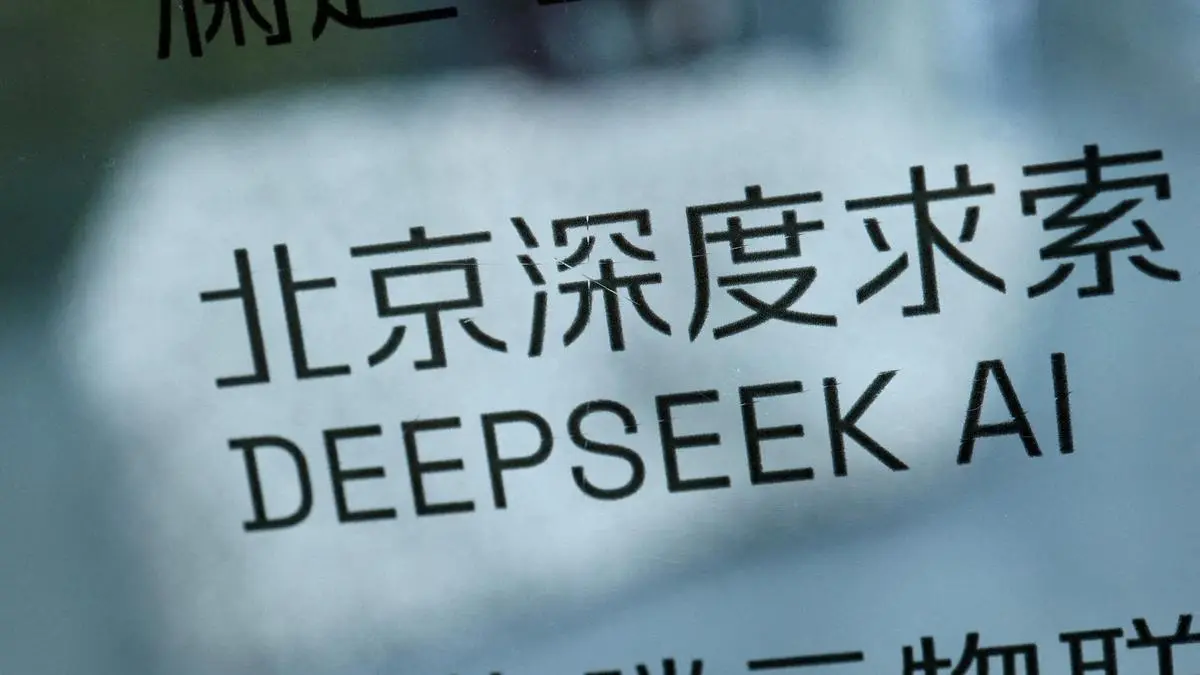
HANGZHOU — In a landmark transaction that underscores the shifting gravitational pull of the global artificial intelligence landscape, Chinese AI trailblazer DeepSeek has successfully secured approximately 100 billion yuan ($15 billion) in its latest fundraising round. This capital injection stands as one of the largest private fundraising efforts in Chinese corporate history, powerfully signaling the Hangzhou-based startup’s definitive ambition to lock horns directly with Western industry titans such as OpenAI and Anthropic PBC.
The transaction not only bridges a historical funding gap between Silicon Valley’s multi-billion-dollar darlings and their Asian counterparts, but it also lays the groundwork for what market analysts anticipate will be one of the most consequential initial public offerings (IPOs) in the modern history of Chinese capital markets.
Main Facts: The Anatomy of a Megaround
The magnitude of DeepSeek’s latest financing cannot be overstated. According to insiders familiar with the matter who spoke on the condition of anonymity, the Hangzhou-based firm steadily raised its financial expectations throughout the negotiation process. Initially setting out to secure a substantial 50 billion yuan, the startup quickly doubled down as investor appetite intensified, shifting its sights to 80 billion yuan before finally sealing the monumental 100 billion yuan ($15 billion) tally.
The syndicate of backers reads like a roll call of industrial and technological royalty. Battery manufacturing pioneer Contemporary Amperex Technology Co. Ltd. (CATL) and tech behemoth Tencent Holdings Ltd.—the operator of the ubiquitous WeChat ecosystem—emerged as the primary anchor investors in this historic round.
This financial muscle alters DeepSeek’s operational trajectory. Historically, the company’s primary disruption of the global AI market was achieved through exceptional architectural efficiency rather than brute financial force. By proving that high-performance large language models could be built and trained at a fraction of the cost incurred by American frontier labs, DeepSeek sparked a profound $1 trillion market correction across global stock exchanges. However, despite its technical brilliance, the startup previously operated with a fraction of the fiscal reserves enjoyed by its U.S. competitors.
This 100 billion yuan windfall effectively narrows that resource chasm, providing DeepSeek with the capital required to scale its infrastructure, aggressively construct advanced AI data centers, and accelerate the development of open-source models tailored for both domestic and international deployment.
Chronology: From Cost-Cutting Disruptor to IPO-Bound Heavyweight
To understand DeepSeek’s meteoric rise is to trace a rapid, calculated evolution across the past several years—a timeline defined by technical breakthroughs, market shocks, and aggressive scaling.
Phase 1: The Cost Revolution and Global Shockwaves
The defining chapter of DeepSeek’s modern narrative unfolded when the upstart introduced models capable of rivaling Silicon Valley benchmarks at a tiny fraction of the traditional capital expenditure. This paradigm shift triggered a massive $1 trillion valuation meltdown across global technology markets, as investors abruptly realized that the moat of high-cost computing dominance built by American firms might be structurally vulnerable.
Phase 2: Scaling Up the Financing Strategy
Recognizing the need to capitalize on its newfound global prominence, DeepSeek quietly initiated discussions for a massive private funding round. As word spread through venture capital and institutional circles, demand outstripped initial estimates. The target was escalated from 50 billion yuan to 80 billion yuan, and finally capped at the staggering 100 billion yuan mark, backed by giants like Tencent and CATL.
Phase 3: Product Dominance and Domestic Pressure
Armed with expanding resources, DeepSeek maintained a relentless product rollout schedule. In September, the firm dropped the V4.1 Flash model, a high-performance, low-cost offering that immediately disrupted the domestic landscape. The release precipitated sharp drops in the share prices of local competitors, including MiniMax Group Inc. and Z.AI Co., illustrating the fierce Darwinian pressures now governing China’s AI sector.
Phase 4: Preparing for Public Markets
With its war chest secured and its technological dominance established, DeepSeek—alongside domestic rival Moonshot—has pivoted toward preparations for a high-profile initial public offering. Market watchers widely regard this impending market debut as a critical litmus test for the liquidity, maturity, and global competitiveness of Chinese tech equities.
Supporting Data: The "DeepSeek Death Zone" and Market Dynamics
The quantitative realities of DeepSeek’s rise are illustrated across various industry benchmarks and market adjustments. While Anthropic and OpenAI have individually vacuumed up cumulative funding in excess of $100 billion each, DeepSeek’s newly acquired $15 billion positions it as a heavily funded contender capable of challenging Western dominance without relying on equivalent capital outlays.
Furthermore, the broader Chinese AI ecosystem has rapidly decentralized into a low-cost, open-source paradigm. Industry heavyweights—spanning from e-commerce titan Alibaba Group Holding Ltd. to social media giant ByteDance Ltd.—have systematically introduced budget-friendly AI services. Crucially, these offerings are frequently released as open-source projects, enabling enterprise customers to modify, fine-tune, and deploy models locally according to their exact security and operational needs.
This aggressive pricing and open-source strategy have given rise to new analytical frameworks. A widely shared benchmark chart compiled by Artificial Analysis introduced a concept now colloquially referred to in tech circles as the "DeepSeek death zone." This metaphorical threshold delineates a brutal competitive reality: companies that fail to match DeepSeek’s blistering performance metrics—or conversely, fail to undercut or match its disruptive pricing structures—face profound existential risks. In this environment, mid-tier competitors unable to pivot toward extreme efficiency are being systematically squeezed out of market viability.
Official Responses and Stakeholder Silence
In the wake of the funding announcement and the intensifying market rivalry, official communication from the primary corporate entities involved has remained sparse.
Representatives for DeepSeek, Tencent Holdings Ltd., and Contemporary Amperex Technology Co. Ltd. (CATL) all declined or failed to respond to multiple emailed requests for comment from major journalistic outlets. This corporate reticence is characteristic of Chinese technology firms operating during sensitive pre-IPO phases, where regulatory scrutiny from entities such as the China Securities Regulatory Commission (CSRC) and strategic positioning often mandate strict confidentiality regarding financial valuations and structural milestones.
Despite the silence from corporate headquarters, industry analysts and venture capital insiders have been vocal. Market observers note that the participation of industrial giants like CATL—a titan in the electric vehicle and green energy supply chain—indicates that AI is no longer viewed merely as a software play in China. Instead, it is increasingly treated as foundational infrastructure, deeply intertwined with advanced manufacturing, robotics, and national industrial policy.
Implications: A Bipolar AI Future and Geopolitical Realities
The closure of DeepSeek’s 100 billion yuan funding round carries profound, long-term implications for the trajectory of artificial intelligence, international economics, and technological sovereignty.
1. The Maturation of the Bipolar AI Economy
For years, the narrative surrounding artificial intelligence was defined by a distinct American unipolarity, characterized by massive capital expenditures, proprietary Western models, and Silicon Valley hegemony. DeepSeek’s ability to raise $15 billion while maintaining cost-efficiency models shatters this paradigm. The global AI ecosystem is rapidly crystallizing into a bipolar structure, where Western frontier labs and Chinese algorithmic powerhouses run neck-and-neck in capability, albeit utilizing drastically different capital models.
2. Intensified Pressure on Western Giants
While OpenAI and Anthropic still maintain an advantage in total cumulative capital raised, DeepSeek’s newfound financial resources neutralize the primary advantage Western labs held: sheer runway. With $15 billion added to its balance sheet, DeepSeek can aggressively subsidize inference costs, hire elite global talent, and build massive data center clusters. This puts intense pressure on Silicon Valley executives to justify their soaring infrastructure costs and immense subscription pricing models to enterprise clients who are increasingly cost-conscious.
3. The Re-shaping of Domestic Competition
Within China, DeepSeek’s dominance acts as both a rising tide and a destructive storm. While the open-source philosophy democratizes access to cutting-edge AI for Chinese enterprises and startups, it simultaneously creates an unforgiving market environment. Companies lacking the scale of Tencent, Alibaba, ByteDance, or DeepSeek itself risk falling into the "DeepSeek death zone," unable to compete against models that offer superior performance at near-zero marginal costs.
4. A Benchmark IPO for Chinese Markets
As DeepSeek and Moonshot ready themselves for public market debuts, the success or failure of these offerings will reverberate far beyond the tech sector. A successful listing on domestic or international exchanges will provide a vital injection of confidence into Chinese capital markets, proving that homegrown technology firms can achieve global scale and profitability despite tightening geopolitical export controls and regulatory hurdles.
Ultimately, DeepSeek’s monumental fundraising round marks the end of the era where AI dominance could be bought simply by outspending the competition. By combining algorithmic elegance with newly acquired financial firepower, DeepSeek has transformed from an agile market disruptor into a formidable, well-capitalized global superpower—forever altering the destiny of artificial intelligence.