




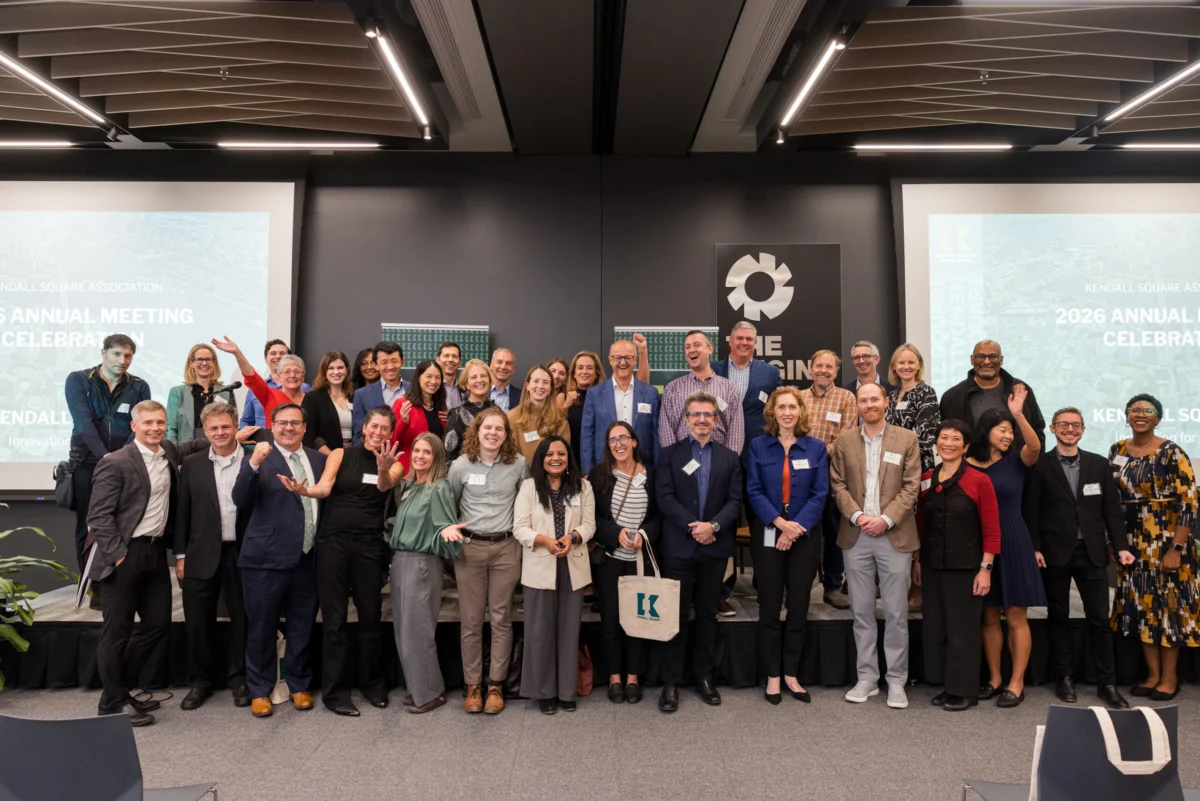
Kendall Square, often heralded as "the most innovative square mile on the planet," has long been defined by its skyline of laboratories, the intellectual gravity of the Massachusetts Institute of Technology (MIT), and the relentless pursuit of life-saving biotech breakthroughs. However, at its 18th Annual Meeting held this past Thursday, the Kendall Square Association (KSA) signaled a fundamental pivot in the district’s identity. The message was clear: in an era of rapid technological disruption, the true measure of innovation is no longer just the efficiency of a patent or the valuation of a startup, but the resilience and cohesion of the community that produces them.
Hosted at The Engine—a venture firm and incubator designed for "tough tech"—the event drew a cross-section of Cambridge society. From high-level executives and policymakers to neighborhood residents and university students, the gathering transformed a hub of cold science into a warm, intentional forum for civic discourse.
A Chronology of the 18th Annual Meeting
The evening was choreographed to balance celebration with introspection, reflecting the multifaceted nature of the KSA’s 150-member network.
The event commenced with an opening address by Beth O’Neill Maloney, Executive Director of the KSA, who set the tone for the night. She framed the district not merely as an economic engine, but as a human-centric experiment. Following her remarks, the agenda moved through a series of presentations that grounded the lofty concept of "innovation" in the daily realities of the Cambridge workforce.
The midpoint of the event was anchored by the keynote address from Daron Acemoglu, an MIT Institute Professor and recipient of the 2024 Nobel Prize in Economics. His presence provided a scholarly weight to the evening, as he bridged the gap between macroeconomic trends and the localized concerns of the Kendall Square workforce.
As the night progressed, the atmosphere lightened with performances by the Kendall Square Orchestra, a unique collective of musicians who work within the local tech and biotech industries. This was followed by the procedural business of the KSA, including the formal election of new board members and the presentation of annual awards to organizations recognized for their commitment to social impact. The event concluded with a panel discussion featuring Cambridge Mayor Sumbul Siddiqui and Lee McGuire of the Broad Institute, who focused on the historical and future trajectory of the Square.
The Human-Centric AI Frontier
Central to the discourse was the looming shadow of Artificial Intelligence. While much of the global conversation around AI revolves around market disruption or existential risk, the KSA meeting focused on the "worker-centric" narrative.
Professor Daron Acemoglu, whose recent work delves into the institutional foundations of prosperity, issued a call to action for the tech leaders in the room. "How can we make AI not an enemy of work, but a tool for workers to expand their capabilities and build new expertise or do new things?" he challenged.
Acemoglu argued that the current trajectory of AI development, which often prioritizes the automation of labor over the enhancement of human productivity, is a choice rather than an inevitability. "The world is at a point in time where we need new innovations and new adaptations to growing challenges," he noted. For the assembled crowd—many of whom are actively developing the next generation of AI tools—the challenge was clear: innovation must be measured by how it elevates the workforce, not just how it scales corporate profit.
Defending the Liberal Democratic Experiment
Beyond the technical, Acemoglu provided a sobering look at the sociopolitical context in which Kendall Square’s innovations exist. Drawing from his latest book, What Happened to Liberal Democracy?, he addressed the decline of trust in institutional structures—the very structures that enable a place like Kendall Square to thrive.
"I believe liberal democratic institutions, together with the norms that support them, are one of the greatest human achievements," Acemoglu stated. He lamented the rise of political polarization and the erosion of faith in elected officials, acknowledging that the promises of shared prosperity have, in many sectors, gone unfulfilled over the last half-century.
However, he remained steadfast in his defense of the democratic model. He pointed out that the ability for millions of people with diverse interests to coexist, compromise, and build systems that provide services and opportunities is a historical anomaly that must be nurtured. For the Kendall Square community, this was a reminder that their technological output is inextricably linked to the health of the society that consumes and governs it.
The Cambridge Model: Lessons from History
Mayor Sumbul Siddiqui provided a historical grounding for the evening, reminding attendees that the "Kendall spirit" was not born in a boardroom, but in the community. She recounted the pivotal 1970s controversy surrounding recombinant DNA research in Cambridge.
At the time, the prospect of genetic engineering sparked deep anxiety among local residents. Instead of forcing the technology through or retreating, Cambridge residents, scientists, and officials engaged in a groundbreaking collaborative policy-making process. That act of democratic deliberation not only mitigated fears but also created a regulatory environment that eventually allowed the life sciences industry to flourish safely and ethically.
"All these years later, I think that story captures what makes Kendall Square so special: It’s our willingness to work together even when we face big challenges," Mayor Siddiqui remarked. "It isn’t just the universities or labs; it’s also the culture of collaboration among nonprofits, governments, and residents."
Supporting Data: Why Kendall Remains a Global Powerhouse
Lee McGuire, Chief Communications Officer of the Broad Institute, offered an analytical lens to the proceedings. He revisited a seminal 2009 report commissioned to diagnose why Kendall Square had become such a potent catalyst for global innovation.
The report identified three pillars:
- Talent Density: The unique proximity of top-tier academic institutions and private industry.
- Educational Infrastructure: A pipeline of high-level researchers and students that keeps the district at the cutting edge.
- Collective Voice: The ability of the KSA and similar bodies to represent the interests of diverse stakeholders.
McGuire argued that while the tech stack has changed since 2009, these core pillars have only strengthened. "It is the job of the Kendall Square Association and all of us to help protect those things," McGuire said. "Make sure we name them, understand them, and see them as essential elements of making sure this community stays what it is… As long as there’s a good idea, this is the place that’s going to get that idea moving and scale it up to change the world."
Implications for the Future: A New Definition of Success
The 18th Annual Meeting of the KSA marks a shift in the philosophy of the "innovation district." As the square enters a new phase of growth, the emphasis is moving from "building density" to "building community."
1. The Social License to Operate
The recurring theme of the night was the concept of the "social license." Kendall Square companies are increasingly aware that their ability to innovate depends on the support of the local community. By engaging residents and ensuring that the fruits of innovation reach the wider population, the KSA is aiming to prevent the "ivory tower" isolation that has plagued other tech hubs.
2. The AI-Human Symbiosis
The implications of Acemoglu’s keynote are likely to influence the KSA’s future policy advocacy. We can expect to see the association prioritize programs that focus on reskilling and upskilling, ensuring that the local workforce is prepared for the AI transition.
3. Institutional Stewardship
By positioning liberal democracy as a "human achievement" that requires active maintenance, the KSA is positioning itself as a defender of the broader societal framework. This suggests that future KSA events may place a greater emphasis on civic participation, ethical AI development, and the role of the private sector in reinforcing public institutions.
In conclusion, the 18th Annual Meeting was more than a status report; it was a manifesto for a more thoughtful, collaborative, and human-centric approach to progress. As Beth O’Neill Maloney noted in her opening remarks: "People come to Kendall Square to make the world better. People come here to improve the human condition." By centering community at the heart of their strategy, Kendall Square is ensuring that while the technology may change, the core purpose of their innovation remains constant: to build a future that is not just smarter, but better for everyone.