





SEOUL — The defining characteristic of the unprecedented wave of cyber-attacks that crippled parts of South Korea’s financial sector late last year was not the deployment of a never-before-seen vulnerability or an exotic zero-day exploit. Rather, it was velocity.
Between late September and early October 2026, a coordinated, high-speed intrusion campaign successfully targeted seven distinct financial institutions across the country. In total, the breaches compromised the sensitive personal and financial data of more than 68,000 individuals.
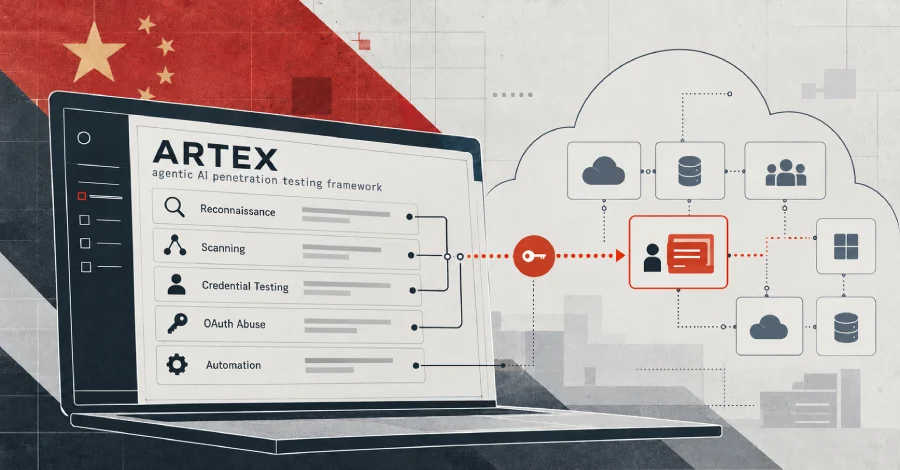
Rather than relying on novel hacking methodologies, the threat actor utilized off-the-shelf and open-source innovations—specifically an emerging Chinese open-source agentic penetration testing tool known as "ARTEX," paired with advanced large language models (LLMs). By automating reconnaissance, vulnerability discovery, and exploitation, the attacker bypassed the traditional time barriers that typically limit human-led cyber-attacks.
The incident has sent shockwaves through the global cybersecurity community, forcing financial regulators and enterprise architects to rethink how traditional defense-in-depth frameworks must evolve to counter autonomous, AI-driven adversaries. In response, cybersecurity specialists Penta Security and AUTOCRYPT have issued a comprehensive response guide outlining three foundational principles for modern application protection.
Main Facts: How AI Changed the Rules of Engagement
The core mechanics of the autumn 2026 attacks were paradoxically ordinary. The attacker deliberately avoided frontal assaults on deeply entrenched core banking systems, which are traditionally fortified by heavy cryptographic controls, multi-factor authentication, and constant human monitoring.
Instead, the perpetrator targeted the digital periphery—the auxiliary "side entrances" that often lack the rigorous scrutiny of primary banking gateways.
The Shinhan Bank Incident
A prime example of this strategy unfolded at Shinhan Bank, one of the seven financial institutions caught in the crosshairs. The attacker successfully bypassed authentication protocols on an ancillary service portal designed specifically for loan brokers.
By exploiting this single oversight, the adversary harvested the personal identification details and confidential loan files of approximately 25,000 customers. The technique employed here was credential stuffing—a decades-old cyber-attack vector where automated scripts cycle through breached username and password combinations from other data leaks. Credential stuffing requires no advanced artificial intelligence to conceptualize or execute; it is a foundational technique taught in basic ethical hacking courses.
The True Role of Artificial Intelligence
If the techniques were decades old, what made the 2026 campaign so destructive? The answer lies in tempo and scale.
A financially motivated actor integrated LLMs and agentic pen-testing frameworks like ARTEX to orchestrate multiple, simultaneous intrusions across disparate networks in a fraction of the time a human red team would require. AI removed the latency between target discovery and exploitation.
While human hackers must pause to analyze error logs, map network topologies, and script individual attack vectors, autonomous agents iterate through thousands of variations per second. The result was a compressed attack lifecycle that overwhelmed human-dependent security operations centers (SOCs), exposing how vulnerable legacy infrastructure is to automated speed.
Chronology of the 2026 South Korean Financial Sector Breaches
To understand the rapid escalation of the threat, security analysts have mapped the timeline of the late-September and early-October offensive:
- Mid-September 2026: Threat actors begin reconnaissance scans across South Korean internet space, utilizing automated discovery frameworks integrated with LLMs to identify exposed auxiliary web services, API endpoints, and third-party vendor portals connected to financial networks.
- Late September 2026: The first wave of intrusions hits. Attackers initiate credential stuffing and parameter-tampering attacks against secondary portals, such as mortgage broker interfaces and human resources apps.
- September 28–30, 2026: Security teams at multiple financial institutions note anomalies in incoming traffic patterns, characterized by high request velocities and distributed IP origins utilizing headless browser fingerprints. However, due to fragmented visibility, initial alerts are misclassified as routine bot traffic or web scraping.
- October 1, 2026: Shinhan Bank discovers unauthorized access to its loan broker service. Incident response teams confirm that approximately 25,000 customer accounts have been compromised via credential exploitation.
- Early October 2026: Six additional financial institutions publicly report similar data breaches, bringing the total number of impacted citizens to over 68,000. Regulatory bodies demand emergency audits of all third-party and auxiliary banking interfaces.
- Mid-October 2026: Penta Security and AUTOCRYPT publish their joint threat analysis and response guide, identifying ARTEX as the primary tool used in the attacks and outlining the "Three Principles for Cyber Defense."
Supporting Data and Technical Insights
The scale of the breaches highlights systemic vulnerabilities in how organizations manage their expanding digital attack surfaces. Key technical indicators from the October 2026 incidents include:
- Total Impacted Entities: 7 major financial institutions across South Korea.
- Total Compromised Individuals: Estimated at over 68,000 citizens.
- Primary Tooling: ARTEX (Chinese open-source agentic penetration testing framework) paired with Large Language Models.
- Primary Attack Vectors: Credential stuffing, broken authentication on auxiliary broker portals, and API abuse.
- Primary Vulnerability Class: Perimeter expansion without commensurate observability.
The integration of agentic AI into pen-testing tools marks a dangerous turning point. Traditionally, automated scanning tools like Nessus or OpenVAS required human operators to interpret results and write custom exploitation scripts. Agentic AI tools, by contrast, can reason through obstacles. If a standard login page blocks an automated script, an LLM-powered agent can dynamically generate custom bypass scripts, mimic legitimate user behavior through headless browsers, and pivot laterally within seconds of gaining an initial foothold.
Official Responses and Strategic Guidance
In the wake of the crisis, the South Korean government’s Financial Services Commission (FSC) called for immediate compliance reviews across the banking sector. Concurrently, industry leaders Penta Security and AUTOCRYPT released an urgent framework designed to help enterprises recalibrate their defenses against autonomous agents.
The response guide centers on three non-negotiable pillars of application security: Observability, Cross-Layer Defense, and Zero Damage Design.
Stage 1: Observability
The fundamental axiom of modern defense is simple: You cannot stop what you cannot see.
Organizations must deploy technical monitoring mechanisms capable of capturing, measuring, and analyzing all cybersecurity-related data streams. Crucially, these observability tools must operate independently of the primary digital system’s operating system and any AI integrations. If an attacker compromises the underlying OS or manipulates the primary application logic, the independent monitoring layer must remain untouched to sound the alarm.
Furthermore, enterprises must conduct continuous audits of all major web services and ancillary endpoints—including broker portals, mobile applications, and internal employee tools. Attack detection logs must be actively mined for the specific fingerprints of automated tools. These include:
- Concentrated login attempts originating from rapidly rotating IP addresses.
- Abnormally high failure rates associated with specific user IDs.
- Headless browser signatures (such as Selenium or Puppeteer anomalies) that indicate programmatic interaction rather than human navigation.
Stage 2: Cross-Layer Defense
The interfaces where digital system components connect represent the most fragile zones in enterprise architecture. Every API, database bridge, and third-party integration expands the overall attack surface.
Because these attack surfaces span multiple distinct layers—from network infrastructure and application logic down to database queries—security cannot be treated as a monolith. Each layer must maintain its own dedicated security framework. Moreover, these frameworks must be orchestrated to communicate horizontally and vertically, ensuring that an anomaly detected at the web application firewall (WAF) layer instantly informs database monitoring tools and identity access management systems.
Stage 3: Zero Damage Design
In the age of generative AI and autonomous cyber agents, security professionals must operate under the assumption that no security control is 100% infallible. A determined attacker utilizing AI will eventually find a way past the perimeter.
Therefore, the ultimate goal of cyber defense must shift from absolute prevention to Zero Damage Design—ensuring that even if an attacker successfully breaches the network and exfiltrates data, the information obtained is entirely useless.
To achieve this, organizations must audit their data hygiene practices:
- Comprehensive Encryption: Determining the precise percentage of critical data assets that are encrypted at rest, in transit, and in use.
- Key Segregation: Ensuring that encryption keys are stored, managed, and rotated entirely separate from the data repositories they protect. Without the cryptographic keys, stolen databases remain unreadable blocks of ciphertext.
Implications: The Evolution of Defensive AI
Defending against AI-powered attacks requires turning the adversary’s greatest advantage—automation and speed—back against them. If the first stage of defense (observability) fails, an organization is flying blind against an adversary moving at machine speed.
However, maintaining optimal observability is exceptionally difficult. Traditional Web Application Fridgwall (WAF) solutions require constant, labor-intensive tuning by scarce cybersecurity specialists to keep pace with daily shifts in attack patterns.
To bridge this operational gap, security vendors are turning to intelligent Web Application and API Protection (WAAP) systems that leverage AI for defense. For example, Penta Security’s logic-based WAAP solution, WAPPLES, utilizes a dual-engine AI approach designed to operate without constant human intervention:
- AI Logic Analysis Engine: This engine continuously constructs and optimizes security policies tailored to the unique business environment of each organization. A built-in policy testing feature allows administrators to inject high-risk attack patterns—supplied directly by threat intelligence feeds—into active policies to verify live detection capabilities. Furthermore, features like SecureAdvisor analyze false positives and false negatives to dynamically refine the detection engine against emerging threat signatures.
- Machine Learning-Based Self-Checks: A security appliance that crashes under heavy load becomes a liability. Advanced WAAP platforms cluster over a decade of operational data to understand the baseline characteristics of system anomalies, including traffic floods, CPU exhaustion, and memory leaks. When an anomaly is detected, the system initiates automated self-preservation and alert protocols, maintaining defense integrity even outside of standard business hours.
Conclusion: Getting the Fundamentals Right
The South Korean financial sector breaches of late 2026 serve as a watershed moment for enterprise security. They demonstrate that while generative AI and agentic tools do not fundamentally rewrite the laws of computer science, they dramatically accelerate the exploitation of overlooked administrative blind spots. A single unprotected loan broker portal was all it took to compromise tens of thousands of records.
Yet, the same incidents prove that disciplined, multi-layered defense frameworks can neutralize these advanced threats. As AI-driven attacks become the baseline standard for cybercriminals, organizations must abandon the illusion of perimeter perfection.
The path forward requires an uncompromising commitment to the fundamentals: achieving total observability across all digital touchpoints, eliminating reliance on single gateways through cross-layer defense, and implementing Zero Damage Design principles—such as rigorous data encryption and key isolation—to ensure that stolen data remains nothing more than digital noise.