



In an era where consumer technology is increasingly homogenized—dominated by sleek, sealed glass slabs and cloud-dependent services that offer little room for personal expression—the global DIY maker community continues to carve out a rebellious niche of charm, utility, and analog nostalgia. From custom-built macro pads to weather-forecasting paper displays, hobbyists are proving that technology doesn’t always need to scream for our attention to be brilliant.
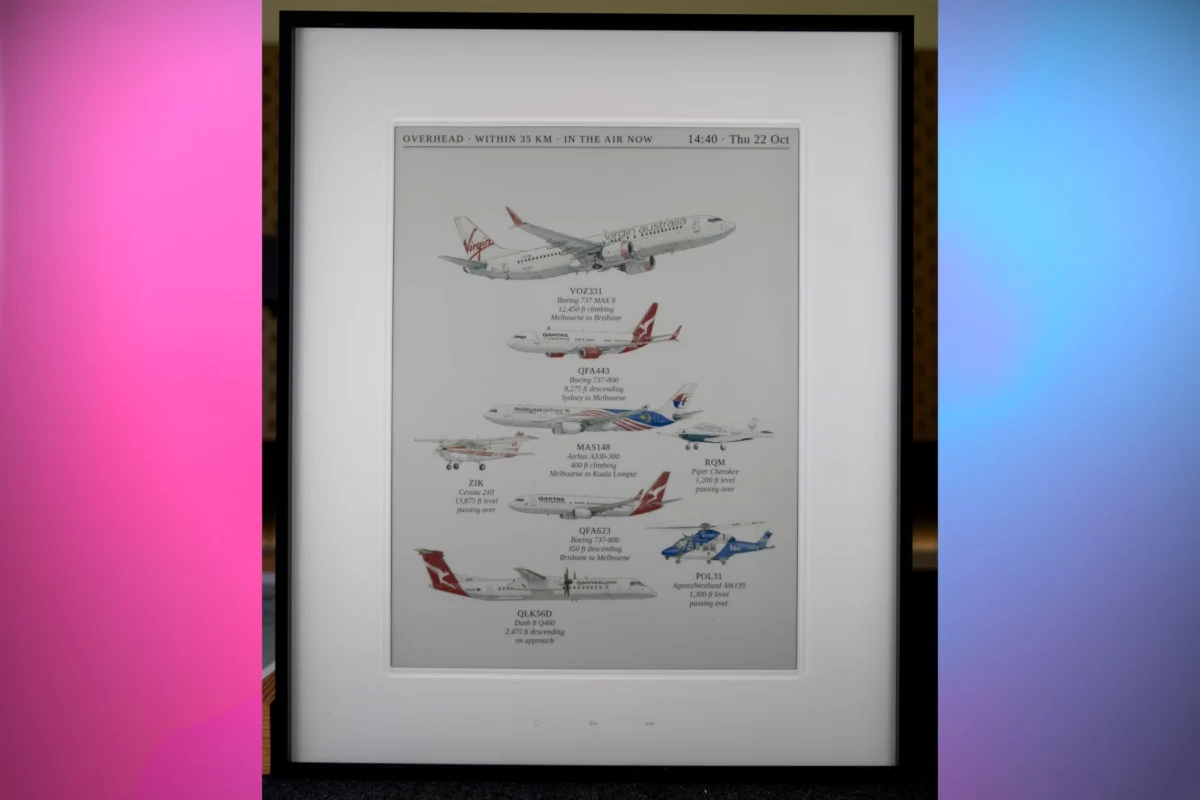
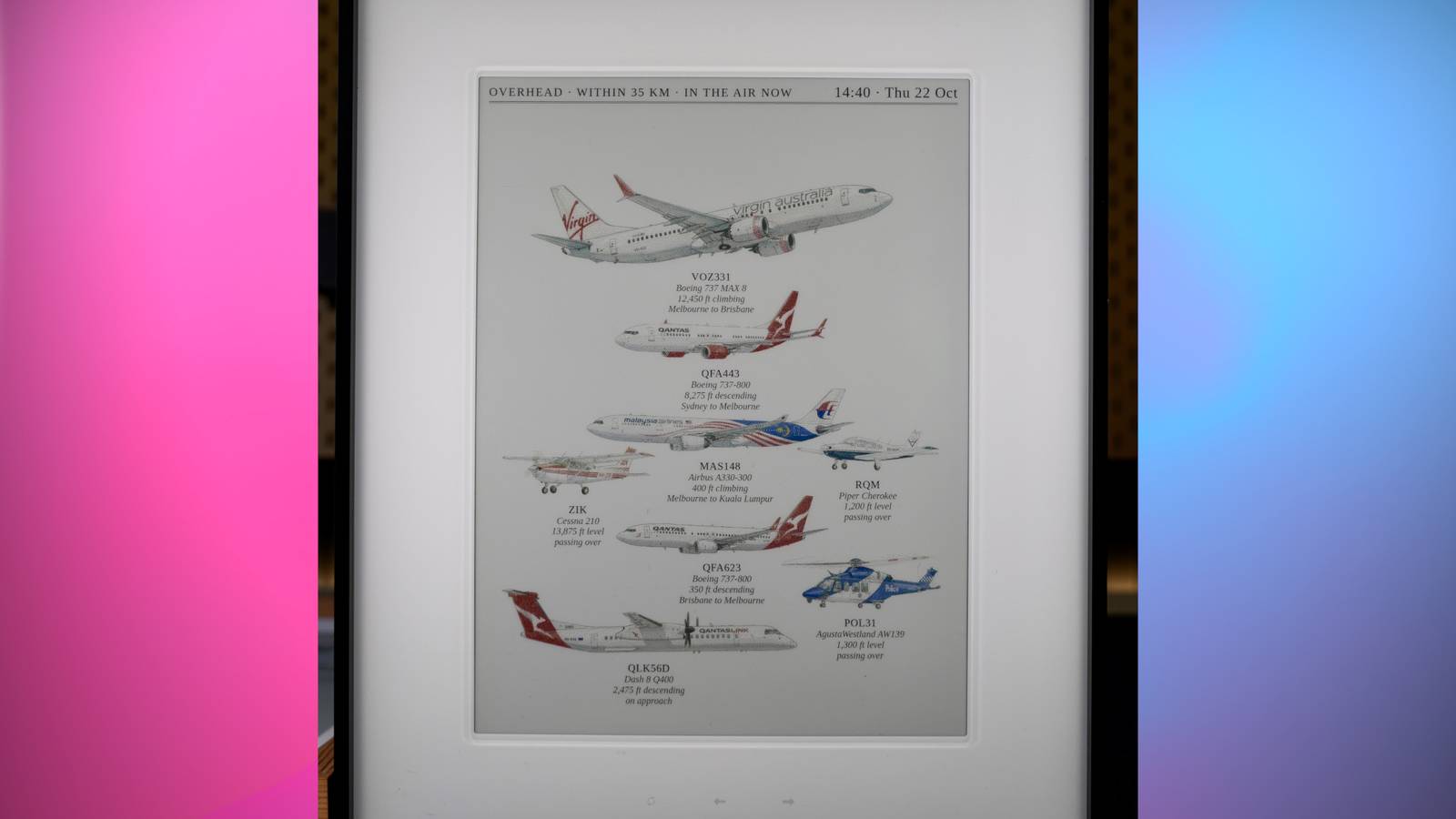
The latest innovation to capture the imagination of the tinkering community sits precisely at this intersection of form and function. Known as "Overhead Tesserae," a new open-source project created by Reddit user and developer xDaftTurtle merges two wildly popular maker trends—real-time aviation tracking and ultra-low-power electronic paper (e-ink) displays. The result is a desktop art piece that visually renders live air traffic soaring directly overhead, complete with custom artistic renderings, wingspan-accurate scaling, and an aesthetic that transforms cold aviation data into a living gallery.
Main Facts: What is "Overhead Tesserae"?
At its core, Overhead Tesserae is a modular dashboard software designed to run on resource-constrained microcontrollers, most notably the versatile and ubiquitous ESP32. The system interfaces with public air traffic databases to monitor the skies within a user-defined radius of a specific geographical coordinate—typically someone’s home.
When an aircraft enters the monitored airspace, the system fetches the aircraft’s metadata, calculates its relative size based on actual engineering specifications (such as wingspan), and generates a visual representation on an e-ink screen.
Unlike traditional aviation tracking apps like Flightradar24—which bombard the user with cluttered maps, vector lines, altitude graphs, and endless streams of telemetry data—Overhead Tesserae strips away the digital noise. It presents information through an artistic, ambient lens.
Key features of the project include:
- Dynamic Artistic Rendering: Utilizing cached imagery sourced from planespotters.net, the software runs illustrations through a customizable rendering pipeline. Users can choose from 26 distinct artistic styles—ranging from vintage airline posters and woodblock prints to risograph, pixel art, and watercolor—or write their own custom image generation prompts.
- Proportional Scaling: The visual size of the aircraft icon on the e-ink display scales dynamically in accordance with the real-world wingspan of the plane. A soaring Boeing 747 appears vastly different from a buzzing Cessna 172.
- Hardware Efficiency: Powered by energy-efficient e-ink technology, the display only draws power when refreshing its image. This makes it an ideal candidate for long-term desktop placement, ambient wall art, or even battery-powered deployments.
- Open-Source Accessibility: The entire project code, along with detailed configuration documentation, has been made publicly available via GitHub, allowing makers worldwide to replicate or expand upon the build.
Chronology: The Evolution of the Build
To understand how Overhead Tesserae came to life, it is necessary to retrace the recent trajectory of xDaftTurtle’s public maker projects, which have steadily pushed the boundaries of what low-cost microcontrollers and bistable displays can achieve.
Phase 1: The Mobile Microcontroller Breakthrough
Months prior to the release of Overhead Tesserae, the maker community took notice when xDaftTurtle successfully engineered a portable, battery-optimized setup using the Inky Impression e-ink display driven by a Raspberry Pi Pico Plus 2 W. This project demonstrated a rigorous focus on power management, solving the notoriously difficult challenge of keeping multi-color e-ink panels running efficiently on restricted battery supplies without sacrificing visual fidelity.
Phase 2: The Convergence of Trends
Within the DIY and maker ecosystem, two distinct trends had been running parallel courses. On one hand, hobbyists were deploying ESP32 chips connected to small LCD or e-ink screens to pull live ADS-B (Automatic Dependent Surveillance–Broadcast) data, allowing them to glance at their desks and see what commercial airliner was cruising at 35,000 feet above their roof. On the other hand, aesthetic-driven projects—such as e-ink frames that query local databases to display illustrations of native birds spotted in the user’s zip code—were gaining massive traction for their quiet, contemplative utility.
Recognizing the conceptual overlap, xDaftTurtle began developing Tesserae, a modular dashboard software framework. By writing a specialized aviation module for Tesserae, the developer bridged the gap between raw flight telemetry and artistic display systems.
Phase 3: The Public Release and Community Reception
In late October 2026, xDaftTurtle formally unveiled the project to the Reddit community via the dedicated r/eink and r/ESP32 subreddits. Demonstrating the live air traffic system rendering above their home, the post instantly viralized within niche tech circles. Fellow makers immediately praised the system’s flexibility—specifically its array of aesthetic modes, which ranges from classical fine-art watercolor treatments to crisp, nostalgic pixel art.
Supporting Data: Hardware and Software Architecture
Building an Overhead Tesserae unit requires a modest investment in off-the-shelf maker components, making it an accessible weekend project for anyone with basic soldering or wiring knowledge.
The ESP32 Microcontroller
At the heart of the operation is the ESP32. This low-cost, low-power system-on-a-chip (SoC) features integrated Wi-Fi and dual-mode Bluetooth. Its popularity in the Internet of Things (IoT) landscape stems from its robust processing power, tiny footprint, and extensive support within the Arduino IDE and MicroPython development environments. For this project, the ESP32 is responsible for maintaining a continuous or scheduled Wi-Fi connection, polling external flight APIs, processing data packets, and driving the e-ink display controller.
E-Ink (Electrophoretic Display) Technology
The choice of an e-ink display is central to the project’s aesthetic and functional success. Unlike traditional LCD or OLED panels that emit light directly and require constant refreshing to maintain an image, e-ink displays use microscopic charged pigment particles suspended in fluid. When an electric field is applied, the particles move to the surface, making the display visible.
This confers two massive advantages:
- Zero Power Standby: Once the image is drawn, the screen requires zero electrical current to maintain it. It can display a Cessna passing overhead all day long without consuming a single additional milliamp of power.
- Paper-Like Legibility: E-ink reflects ambient light just like real paper, making it completely glare-free and visually indistinguishable from a physical print. This eliminates the harsh, glowing distraction typical of secondary desk monitors.
Data Pipelines and Rendering Engine
The software framework operates through a clear sequence of operations:
- Data Ingestion: The ESP32 queries a localized or public flight tracking endpoint (such as ADS-B Exchange or custom feeder nodes) using JSON payloads over Wi-Fi.
- Filtering: The software filters data points based on latitude, longitude, and a maximum radius parameter (e.g., all aircraft within a 5-mile perimeter).
- Asset Fetching & Transformation: For every unique airframe identified, the system pairs the aircraft type with reference imagery from planespotters.net.
- The Style Pipeline: Users can configure how the raw photograph is processed. Explaining the system’s flexibility, xDaftTurtle noted:
"The illustrations are painted once per airframe from a credited planespotters.net photo, then kept. You can pick from 26 styles (vintage airline poster, engraving, woodblock, risograph, pixel art and more) or write your own prompt. This one’s watercolour, which is my favourite. There’s also a mode that shows the photos themselves."
Official Responses and Community Reactions
The maker community’s response to Overhead Tesserae has been overwhelmingly enthusiastic, highlighting a growing fatigue with high-stimulation, notification-heavy smart home devices.
In discussion threads across Reddit and GitHub, users commended the project for treating data visualization as an artistic medium rather than an engineering dashboard. Traditional flight trackers prioritize operational speed—speed over ground, exact vertical rates, squawk codes, and destination airport abbreviations. While valuable for aviation enthusiasts and plane spotters in the field, this data is often overwhelming for casual observers sitting in a living room or home office.
By converting telemetry into curated watercolor illustrations or minimalist engravings, Overhead Tesserae converts an invisible background phenomenon—commercial aviation—into an engaging, calm point of connection with the outside world.
Furthermore, open-source contributors have already begun discussing potential expansions for the Tesserae framework. Suggestions range from integrating weather warnings and satellite passes (such as tracking the International Space Station when it crosses local skies) to incorporating historical aviation trivia tied to specific tail numbers.
Implications: The Rise of Ambient, Mindful Technology
Projects like Overhead Tesserae point toward a broader, highly encouraging shift in how individual developers and consumers think about smart technology. For over a decade, the "smart home" and IoT movements were defined by screens that demanded attention: tablets mounted to kitchen walls displaying dense calendars, smart bulbs flashing colors for notifications, and glowing hubs tracking every metric of daily life.
Ambient computing—exemplified by e-ink dashboards, kinetic art pieces, and low-power microcontrollers—represents a deliberate counter-movement. It asks a fundamentally different design question: How can technology inform us without interrupting us?
By utilizing e-ink, developers can build devices that blend seamlessly into domestic spaces, respecting the human need for quietude and visual rest. When a quiet click announces that a massive cargo plane is gliding through the clouds three thousand feet above your chimney, and a delicate watercolor rendering of that exact aircraft quietly materializes on a piece of electronic paper on your desk, technology feels less like a corporate leash and more like a window to the world.
How to Get Started
For makers, developers, and aviation enthusiasts interested in building their own unit, xDaftTurtle has published comprehensive documentation, wiring diagrams, and source code. You can explore the repository, review setup instructions, and contribute to the ongoing software development by visiting the Overhead Tesserae GitHub page.