







By Editorial Desk
October 23, 2026
In a significant move underscoring the volatile political climate in the national capital, the Union Ministry of Home Affairs (MHA) has officially extended the deployment of 273 companies of the Central Armed Police Forces (CAPF) until October 31. This marks the second such extension in as many weeks, signaling a heightened state of alert as authorities brace for what they describe as a potential wave of "flash protests" by various political entities and interest groups.
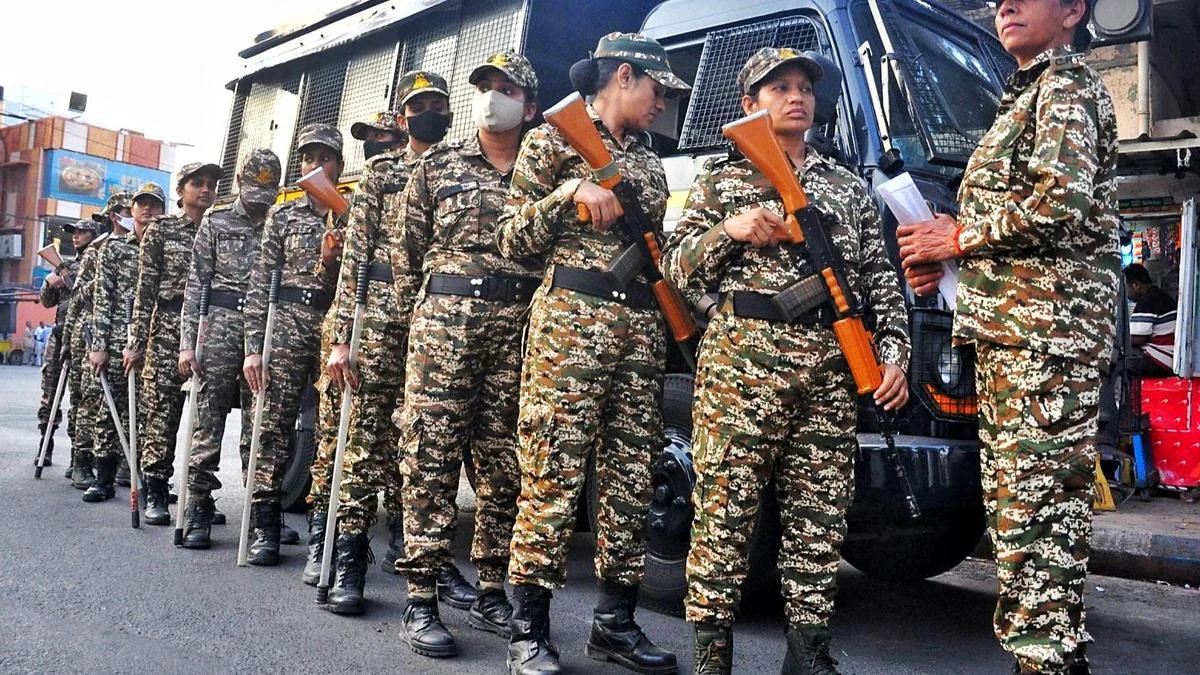
The massive security deployment, which constitutes thousands of personnel patrolling the city’s streets alongside the Delhi Police, was originally mobilized to counter the demonstrations led by the Cockroach Janta Party (CJP). However, the mandate has since shifted to maintaining broader public order amid mounting political tensions.
The Core Mandate: Maintaining Public Order
The decision to retain the paramilitary presence was finalized on October 22, following a formal request submitted by the Delhi Police. Sources within the MHA confirmed that the security establishment is operating under a "preemptive posture," wary of the impact that recurring demonstrations could have on the functionality of the capital.
"The Delhi Police informed the ministry that there remains a tangible possibility of flash protests being undertaken by political and other outfits in various ‘sensitive’ locations of the city," an official source stated on condition of anonymity. "The extension is essential to ensure that law and order remains uncompromised, and that critical infrastructure and public movement are not disrupted by sudden, unannounced mass gatherings."
The MHA, acknowledging the intelligence reports and the assessment provided by local law enforcement, promptly sanctioned the extension. This ensures that the capital remains under a security blanket through the end of October, covering a period that traditionally sees high footfall and public activity.
A Chronology of Unrest
To understand the current security posture, one must look at the timeline of events that precipitated this deployment.
- Early October 2026: Tensions began to simmer as allegations regarding irregularities in the Special Intensive Revision (SIR) of electoral rolls surfaced.
- October 9, 2026: The Cockroach Janta Party (CJP) launched a series of high-profile protests across Delhi. The demonstrators specifically demanded the immediate resignation of Chief Election Commissioner (CEC) Gyanesh Kumar, citing grievances over the electoral roll process.
- Mid-October 2026: As the CJP protests gained traction, several opposition political parties joined the fray, adopting the same demand for the CEC’s resignation. This convergence of different political factions under a single cause created a complex security scenario for the Delhi Police.
- October 16, 2026: The atmosphere grew more charged when the CJP organized the ‘Lehra Do Tiranga’ demonstration, a move that brought significant numbers of protesters into the city’s central zones.
- October 22, 2026: Following a review of the city’s security status, the MHA approved the second extension of CAPF deployment, pushing the mandate to October 31.
Anatomy of the Security Force
The scale of the deployment is unprecedented for a non-election period. Each CAPF company, while having a sanctioned strength of 100 personnel, operates with an effective field strength of approximately 70–72 officers. With 273 companies stationed in the capital, the total number of paramilitary personnel exceeds 19,000.
The composition of this force reflects a diverse range of specialized units, each contributing to the city’s security grid:

- Central Reserve Police Force (CRPF): The backbone of the operation with 125 companies, including 20 specialized units comprising women personnel.
- Border Security Force (BSF): Providing 46 companies for city-wide patrolling and perimeter security.
- Indo-Tibetan Border Police (ITBP): Contributing 39 companies to the security cordon.
- Sashastra Seema Bal (SSB): Stationed with 31 companies to assist local law enforcement.
- Rapid Action Force (RAF): A specialized wing of the CRPF, with 20 companies deployed specifically to handle riot-control and crowd-dispersal scenarios.
- Central Industrial Security Force (CISF): Providing 12 companies, largely focused on protecting critical government installations and key transit hubs.
These forces are integrated into the Delhi Police’s command structure, acting as a force multiplier for local officers who are managing localized traffic diversions and barricading of sensitive zones.
Official Responses and Political Implications
The political ramifications of the government’s decision are substantial. While the ruling administration maintains that the deployment is a purely administrative necessity to prevent anarchy, opposition leaders have voiced concerns regarding the "militarization" of the capital’s public spaces.
"The presence of nearly 20,000 paramilitary troops in the heart of our democracy is a reflection of the government’s inability to engage in dialogue," a spokesperson for an opposition party noted earlier this week. "Instead of addressing the grievances regarding electoral roll integrity, the administration has chosen to deploy force."
Conversely, government officials argue that the ‘flash protest’ model—where groups assemble without prior notice—poses a significant threat to public safety and the safety of the protesters themselves. "Our duty is to prevent the city from grinding to a halt," an official source remarked. "The intelligence input suggests that certain groups are planning to create an environment of sustained agitation. The security presence acts as a deterrent against violence and property damage."
Strategic Implications: What Happens After October 31?
As the capital heads toward the end of October, the question remains: will the situation stabilize? The extension to October 31 provides the administration with a buffer period to engage with the agitating groups, yet the core demands—specifically those regarding the CEC—remain unresolved.
If the protests continue beyond the current deadline, the MHA faces a difficult choice: further extending the deployment, which carries both financial and logistical costs, or transitioning to a more localized security model. The financial burden of maintaining 273 companies in the national capital is significant, involving daily logistics, boarding, and operational costs for thousands of personnel drawn from different parts of the country.
Furthermore, the fatigue factor cannot be overlooked. Sustained high-alert duty, particularly for units like the Rapid Action Force, requires immense psychological and physical resilience. The Delhi Police, which has been working in tandem with these units, is also under strain as it juggles routine law-and-order duties alongside the high-stakes management of political protests.
Conclusion: A City in Flux
The events of October 2026 will likely be studied as a case study in urban security management. The convergence of electoral grievances, political activism, and the state’s heavy-handed response has created a unique atmosphere in Delhi. As the city moves toward the final days of the month, the presence of the CAPF will continue to be the most visible manifestation of the government’s resolve to keep the streets clear of unauthorized demonstrations.
For now, the capital remains under a watchful eye. The effectiveness of this strategy will be tested in the coming week, as both the protesters and the security forces navigate a delicate balance between the right to assemble and the mandate to maintain public peace. Whether this leads to a resolution or a new phase of escalation remains the critical question on the minds of residents and observers alike.