







By Renewable Energy Desk
October 24, 2026
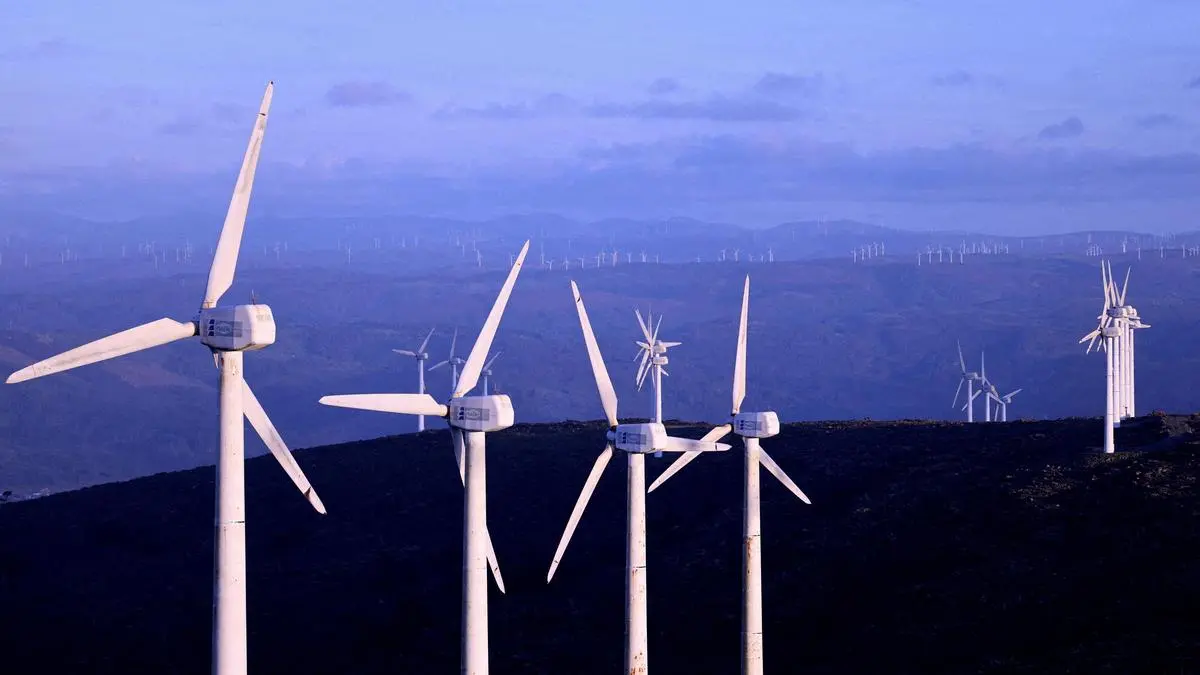
In a decisive move that signals a structural shift in India’s renewable energy landscape, Adani Wind—the wind energy manufacturing arm of Adani New Industries Ltd (ANIL)—has secured a massive tranche of new orders totaling 696.2 megawatts (MW). This development is more than just a volume milestone; it represents a strategic evolution for the company, as it successfully transitions from an internal utility provider to a dominant player in the competitive, third-party independent power producer (IPP) market.
The fresh contracts, awarded by five of India’s most prominent energy producers, underscore the growing appetite for high-capacity, technologically advanced wind turbine generators (WTGs) as the nation accelerates its transition toward a net-zero future.
The Core Data: A Multi-Client Expansion
The 696.2 MW order book is spread across a diverse client base, effectively breaking the perception that Adani Wind exists primarily to serve the internal requirements of the Adani Group. According to industry insiders, the breakdown of these orders is as follows:
- Purvah Green Power (RP-Sanjiv Goenka Group): 300 MW, utilizing 60 turbines of the 5 MW platform, destined for Bellary, Karnataka.
- Jindal India Power (BC Jindal Group): 155 MW, utilizing 31 turbines of the 5 MW platform, slated for installation in Davanagere, Karnataka.
- NTPC Renewable Energy: 109.2 MW, featuring 21 units of the robust 5.2 MW platform, to be deployed at the flagship Khavda renewable park in Gujarat.
- Aditya Birla Renewables: 82.5 MW, utilizing the 3.3 MW platform for projects in Bhuj, Gujarat.
- Integrum Energy: 49.5 MW, also utilizing the 3.3 MW platform, for expansion in Nandurbar, Maharashtra.
This diverse geographic footprint—spanning the wind-rich corridors of Gujarat, Karnataka, and Maharashtra—demonstrates the operational versatility of Adani Wind’s product portfolio, which ranges from 3.3 MW to 5.2 MW platforms.
Chronology and Evolution of the Order Book
The journey to this milestone has been methodical. For years, the Indian wind energy sector was dominated by a handful of established global and domestic players. Adani Wind entered this space with the clear intent of indigenizing high-capacity turbine manufacturing.
By early 2026, the company’s internal demand had provided the necessary volume to stabilize manufacturing processes at its Mundra facility. However, the true test of a manufacturer is market acceptance by third-party peers. With these latest wins, Adani Wind’s cumulative order book from independent power producers outside the Adani Group has officially crossed the 1-gigawatt (GW) threshold.
This accomplishment comes on the heels of the company’s sustained focus on the Ministry of New and Renewable Energy’s (MNRE) Approved List of Models and Manufacturers (ALMM). By ensuring that its entire suite of 3 MW to 5 MW platforms met these stringent criteria, Adani Wind positioned itself as a "safe and compliant" choice for public sector undertakings (PSUs) like NTPC and large corporate conglomerates alike.
Technological Superiority: Why Size Matters
The Indian wind industry is currently undergoing a "capacity upgrade" phase. Developers are increasingly moving away from legacy 2 MW or smaller turbines in favor of larger machines that offer better energy yields and land-use efficiency.
The 5.2 MW MWL-160 Platform
This platform has become a cornerstone of Adani’s success. As one of the highest-capacity onshore turbines currently available in the Indian market, it is optimized for the vast, high-wind landscapes of Khavda. With over 2 GW of cumulative installations already operational or under development at Khavda alone, the platform has proven its reliability at scale.
The 5 MW MWL-185 Platform
Designed specifically for the low-to-moderate wind conditions common in regions like Bellary, this turbine features a massive 185-metre rotor diameter and a 140-metre hub height. By capturing wind at higher altitudes, these turbines significantly improve project economics, allowing developers to generate more power from a smaller physical footprint—a critical factor given the rising costs and complexity of land acquisition in India.
Strategic Implications: Scaling for Global Dominance
The recent order wins are not just a revenue driver; they are the catalyst for Adani Wind’s aggressive manufacturing expansion. The company is currently scaling its Mundra facility from an annual capacity of 2.25 GW to 5 GW, with a long-term roadmap that targets 10 GW.
The Global Ambition
Adani Wind is no longer looking solely at the domestic market. The company has already begun exporting blade sets equipped with advanced anti-icing technology to European markets. Furthermore, active engagements are underway with energy developers in the United States, Australia, Brazil, and Southeast Asia.
Being the only Indian manufacturer to feature in BloombergNEF’s global top 15 ranking for 2025 has provided the company with the brand equity required to compete in these international markets. Analysts suggest that if Adani can maintain the delivery schedules for these 700 MW of new orders, the "Made in India" wind turbine will become a staple in emerging market energy grids across the globe.
The Macro Picture: India’s Wind Renaissance
The success of Adani Wind mirrors the broader trajectory of the Indian wind power sector.
- Capacity Surge: India currently boasts 59.2 GW of installed wind capacity, with another 43 GW in the pipeline.
- Manufacturing Growth: Domestic manufacturing capacity has seen a meteoric rise, more than doubling from 12 GW in fiscal 2023 to over 24 GW in 2026.
- Policy Tailwinds: With a record 6.05 GW installed in fiscal 2026 alone, the industry is firing on all cylinders. The government’s goal of reaching 13.2 GW of annual additions by fiscal 2031 is increasingly viewed as achievable, provided the supply chain remains resilient.
The sector’s shift toward larger turbines is essentially a response to the "energy density" challenge. By utilizing larger rotors and taller towers, developers are maximizing the output of every hectare of land, which is vital for the viability of large-scale renewable projects.
Analyst Perspective: A Balancing Act
Industry observers note that while these order wins are a significant win for Adani Wind, the next 18–24 months will be the true test. "Securing the order is one thing; executing it within the stipulated timelines, managing supply chain costs, and ensuring commissioning efficiency is where the real value is created," says an energy sector analyst at a leading Mumbai-based brokerage.
However, the fact that Adani Wind has managed to secure repeat orders and contracts from entities like NTPC suggests that the "commercial acceptance" barrier has been breached. The company is no longer a newcomer experimenting with technology; it is now a foundational pillar of the domestic wind ecosystem.
Conclusion: A New Competitive Era
As India races toward its ambitious 2030 renewable energy targets, the wind sector is evolving from a fragmented, small-scale industry into a high-tech, industrialized powerhouse. Adani Wind’s ability to secure 696.2 MW from five diverse entities proves that the market is ready for a new generation of high-capacity turbines.
With its Mundra facility scaling up and a clear roadmap for international expansion, Adani Wind is positioned to be a central player in the global energy transition. As the dust settles on these contracts, the focus now shifts to execution. If the past few months of performance are any indication, the company is well-equipped to handle the heavy lifting required to keep India’s wind turbines turning.