







By Tech Insights Desk
Published: October 2026
As global regulatory bodies intensify pressure on big tech to safeguard minors in digital spaces, Meta-owned instant messaging giant WhatsApp has introduced a comprehensive suite of advanced parental controls. Designed specifically for teenage accounts, the new features aim to strike a delicate balance between proactive online safety and the fundamental right to digital privacy.
While parents will soon have unprecedented oversight regarding who their teenagers interact with, how they engage with broadcast channels, and how they utilize integrated artificial intelligence, WhatsApp’s core security architecture remains firmly intact: end-to-end encryption ensures that personal text messages will stay completely private.

Main Facts
The newly introduced parental controls represent a massive shift in how WhatsApp manages accounts belonging to younger users. Mirroring safety guardrails previously rolled out across Meta’s broader ecosystem—such as Instagram’s strict direct-messaging regulations and Snapchat’s group-chat restrictions—this update gives designated guardians actionable visibility over key areas of a teenager’s digital experience.
Key pillars of the new update include:
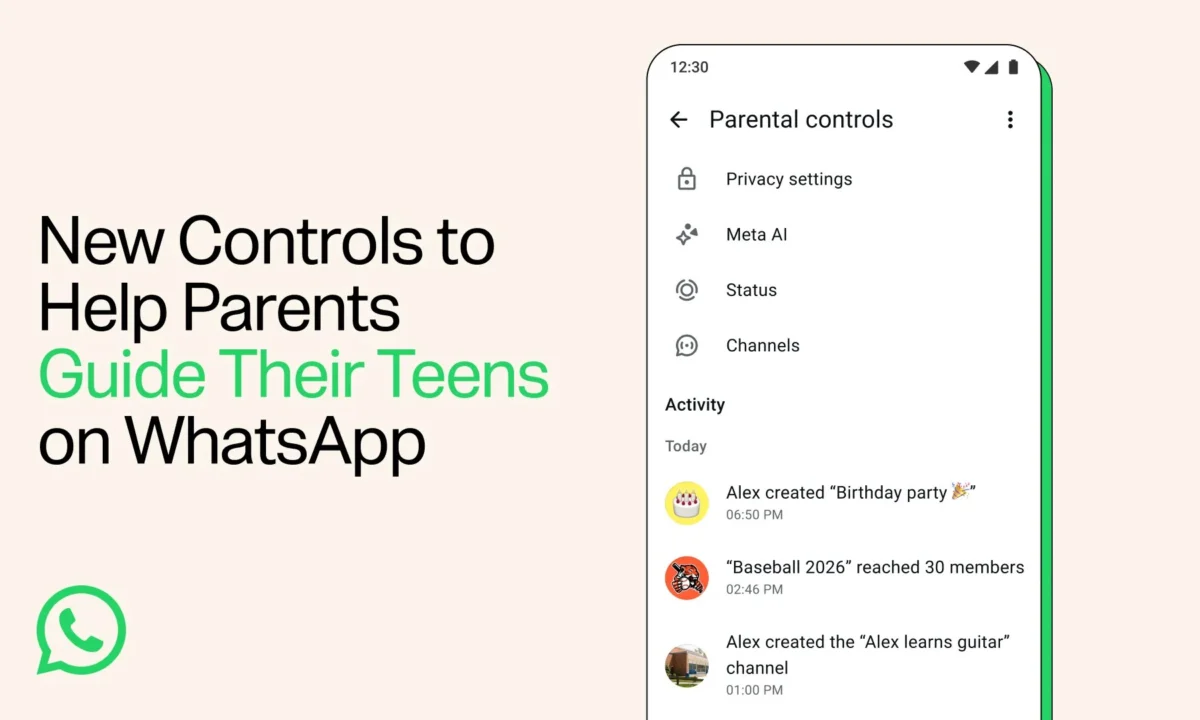
- Group Chat Oversight: Parents are immediately notified when their teenager joins or leaves a group chat. Furthermore, alerts are triggered if a group chat surpasses specific member-count thresholds.
- Status and Channel Management: Guardians can regulate which status updates their teens can view and publish, alongside managing interactions within WhatsApp’s broadcast channels (similar to Telegram’s channel features).
- Meta AI Restrictions: Parents gain granular control over whether their teenagers can access the full breadth of the Meta AI experience, allowing them to apply specific guardrails.
- Locked Privacy Settings: To modify sensitive settings—such as who can view a teenager’s profile photo or add them to groups—teens must secure explicit approval from a parent via a designated parent-set PIN.
- Strict Confidentiality: Despite the introduction of these protective measures, all personal text messages remain fiercely protected by end-to-end encryption. Parents cannot read the actual contents of their children’s chats.
Chronology: The Road to Strict Minors’ Safety
The path toward these enhanced parental controls has been shaped by years of mounting legal, political, and societal pressure directed at major social media and communication networks.

2021–2023: The Rising Tide of Regulatory Scrutiny
For years, platforms like Instagram, TikTok, YouTube, and WhatsApp operated with minimal systemic oversight regarding age classification. However, a series of explosive congressional hearings, whistleblower leaks, and investigative journalism reports exposed the profound mental health risks and vulnerabilities young users faced online. Lawmakers worldwide began drafting aggressive legislation aimed at holding tech giants liable for algorithmic harms and predatory online behavior.
2023–2025: Meta’s Ecosystem-Wide Crackdown
Reacting to the looming threat of heavy regulatory fines, Meta began shifting its product development strategy toward "safety-by-design" frameworks. Instagram pioneered major overhauls by restricting direct messages between adults and teens who do not follow each other, locking down default account visibility, and introducing native parental supervision dashboards. Facebook and Messenger followed suit with analogous updates.
Late 2026: WhatsApp Extends the Framework
Having successfully tested and deployed restrictions on its sister platforms, Meta formally turned its attention to WhatsApp. Used by billions globally, WhatsApp presented a unique architectural challenge: because messages are locked behind strict end-to-end encryption, traditional content-moderation tools could not be applied to private text conversations. Consequently, developers focused on behavioral metadata, structural boundaries, and interaction controls—culminating in the rollout of the new teen account management tools.

Supporting Data and Technical Architecture
Implementing robust safety features on an app with billions of global users requires careful technical calibration. According to technical documentation and support pages released by WhatsApp, the system relies on a linked-account framework.
- Account Linking: To activate and maintain these controls, a guardian must actively link their personal WhatsApp account to their teenager’s account through a verification process.
- The Parent PIN System: Autonomy is carefully managed through a PIN protocol. If a teenager attempts to relax baseline privacy settings—such as opening up their profile visibility or loosening group invitation permissions—the app locks the action behind a multi-digit PIN chosen and managed exclusively by the parent.
- The Privacy Boundary: Independent cybersecurity audits continually confirm that WhatsApp’s zero-knowledge architecture regarding message contents remains uncompromised. The app’s encryption keys reside solely on the endpoints (the users’ devices), meaning neither Meta nor parents can intercept, read, or analyze message payloads. Oversight is strictly confined to structural touchpoints: group memberships, status views, channel participation, and AI engagement parameters.
Official Responses and Industry Reactions
The announcement has elicited diverse reactions from digital rights advocates, child safety organizations, and technology analysts.
In an official corporate press release, WhatsApp emphasized its ongoing commitment to empowering families:

"Parents will be able to choose the right privacy settings for their teen, like who can see their profile photo or add them to groups. If a teen wants to relax any of those settings, they’ll need their parent’s approval via a parent-set PIN."
Child safety advocates have generally welcomed the updates, viewing them as a necessary step forward, particularly given the risks associated with unvetted group chats and open-ended generative AI platforms. However, some privacy purists have expressed cautious concern over the creeping expansion of parental surveillance tools, warning that normalized family-level monitoring could set a precarious precedent for broader digital tracking.
Industry analysts note that these rollouts are defensive maneuvers designed to head off impending statutory bans and massive class-action settlements. Over the past several years, major tech firms have collectively paid billions of dollars to resolve lawsuits tied to youth safety failures, making proactive parental control features an economic necessity as much as an ethical one.

Implications for the Future of Digital Communication
The launch of WhatsApp’s new parental controls signals a profound evolution in how global tech platforms manage generational boundaries. As governments from the European Union to various U.S. states push for mandatory age-verification laws and strict digital curfews, platforms are compelled to redesign their user experiences entirely.
- The Normalization of Family Supervision: Apps are no longer viewed strictly as bilateral tools connecting individual users; they are increasingly treated as shared ecosystems where families require administrative oversight structures akin to digital households.
- AI Integration Guardrails: As generative AI like Meta AI becomes embedded into daily communication tools, managing how minors interact with synthetic conversational partners will remain a primary regulatory battleground. WhatsApp’s decision to let parents gatekeep AI access establishes a vital benchmark for the industry.
- Preserving Encryption Amid Pressure: By threading the needle—introducing structural safety alerts and metadata controls while fiercely defending message encryption—WhatsApp has demonstrated that privacy and protection do not have to be mutually exclusive.
Ultimately, these changes mark a definitive end to the era of the "wild west" digital experience for teenagers on mainstream messaging apps, heralding a heavily supervised, structurally guarded digital landscape for the foreseeable future.