




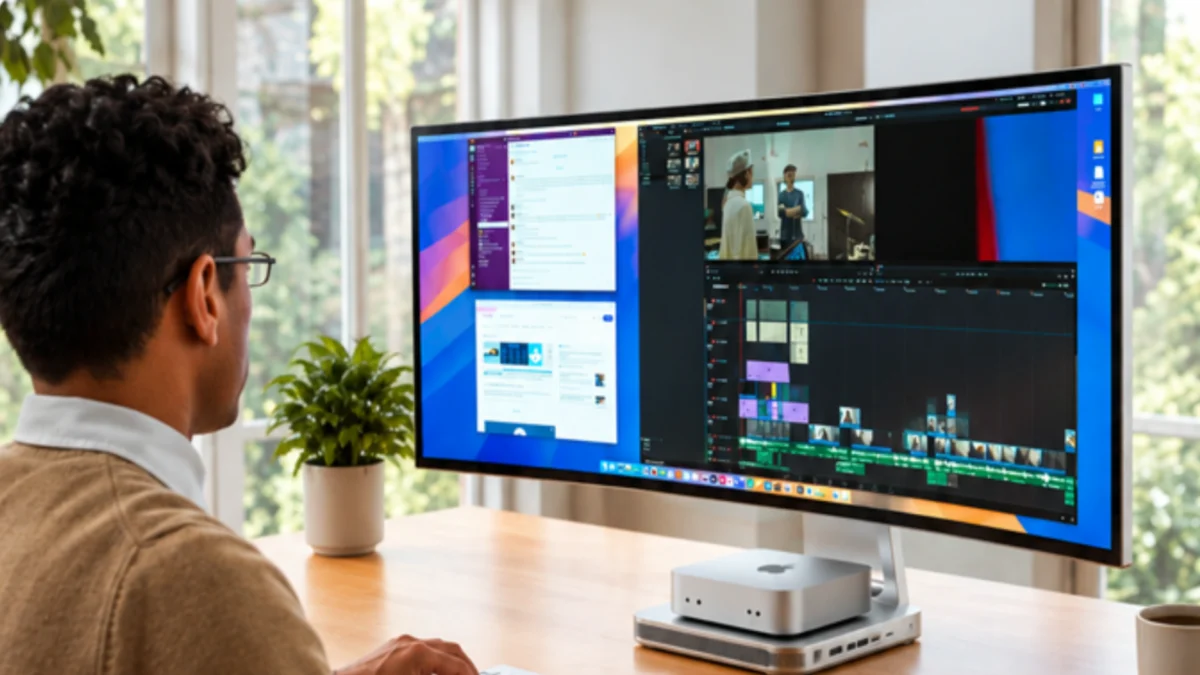
In an era where the modern desktop setup is often a chaotic sprawl of dongles, external hubs, and tangled cabling, Mobile Pixels (MP) has emerged with a bold vision for streamlined productivity. The company has officially unveiled the "Prisma," a 40-inch curved 5K monitor that aims to function as the central nervous system of a professional workstation. By integrating a dedicated cradle for Apple’s Mac mini and Mac Studio, alongside a suite of high-end connectivity options, the Prisma represents an ambitious attempt to consolidate the entire desktop ecosystem into a single, cohesive hardware unit.
The Core Proposition: A Masterclass in Desktop Consolidation
The Mobile Pixels Prisma is not merely a display; it is a hardware-integrated hub designed for professionals who demand both high-fidelity visuals and extreme organizational efficiency. At its heart lies an LG IPS Black panel, renowned for its deep blacks and superior contrast ratios compared to traditional IPS displays. With a resolution of 5120 x 2160 (5K), the monitor provides an expansive horizontal canvas that is particularly well-suited for timeline-heavy applications like video editing, complex financial modeling, or multi-window multitasking.
The panel itself is a 40-inch curved display that supports a 120Hz refresh rate, ensuring fluid motion for daily interface navigation. Furthermore, the monitor offers quasi-10-bit color reproduction—capable of rendering approximately 1.07 billion colors—and covers 99% of the DCI-P3 color gamut. For the creative professional, this means the Prisma is not just a productivity tool, but a color-accurate display suitable for photo editing and professional content production.
Beyond the visuals, the Prisma addresses the "port-starvation" that plagues many modern compact workstations. Its integrated docking station features a versatile array of I/O, including USB-C, USB-A, and USB-B ports. It also incorporates dedicated SD and microSD card readers, catering directly to photographers and videographers who frequently offload high-resolution media. An onboard KVM switch rounds out the connectivity package, allowing users to toggle a single set of peripherals—keyboard, mouse, and external drives—between two connected computers seamlessly.
Chronology of Development and Crowdfunding Ambitions
The launch of the Prisma has followed the well-trodden path of high-tech hardware innovation through the Kickstarter platform. While Mobile Pixels has established a reputation for its portable monitor solutions, the Prisma marks a significant pivot toward high-end, stationary professional gear.
The campaign, which launched with a modest funding goal of $15,000, quickly eclipsed expectations. Within a short window, the project garnered over $434,000 in pledges from nearly 400 backers. This rapid influx of capital serves as a testament to the market’s hunger for integrated solutions that simplify the Apple workstation experience.
However, the timeline for this ambitious project is extensive. According to the company’s current roadmap, product deliveries are not estimated to begin until January 2027. This long lead time reflects the complexity of manufacturing a device that combines high-performance display technology with structural engineering for a computer cradle and active cooling systems. As with all crowdfunding endeavors, this extended duration introduces a degree of uncertainty, requiring potential backers to balance the allure of a $601 savings against the risks inherent in long-term product development.
Supporting Technical Data: Beneath the Surface
The true innovation of the Prisma lies in its structural design. By integrating a dedicated cradle for the Mac mini and Mac Studio, Mobile Pixels has effectively removed the computer enclosure from the desk surface, freeing up valuable real estate.
Key Technical Specifications:
- Display Panel: 40-inch Curved LG IPS Black
- Resolution: 5120 x 2160 (5K)
- Refresh Rate: 120Hz
- Color Accuracy: 99% DCI-P3 coverage
- Connectivity: USB-C, USB-A, USB-B, SD/microSD card slots
- Integrated Power: 15W wireless charging pad in the base
- Expansion: Internal M.2 SSD slot for additional storage
- Smart Features: Retractable iPhone mount for Apple Continuity Camera (Center Stage/Desk View)
The inclusion of an active cooling fan within the cradle is a notable inclusion. While specific thermal performance data is currently sparse, the cooling solution is designed to adjust dynamically based on the thermal output of the docked Mac. By providing a dedicated cooling channel, Mobile Pixels aims to ensure that even under sustained professional workloads—such as 4K video rendering or 3D modeling—the Mac remains within its optimal operating temperature range without the need for additional desk-cluttering cooling pads.
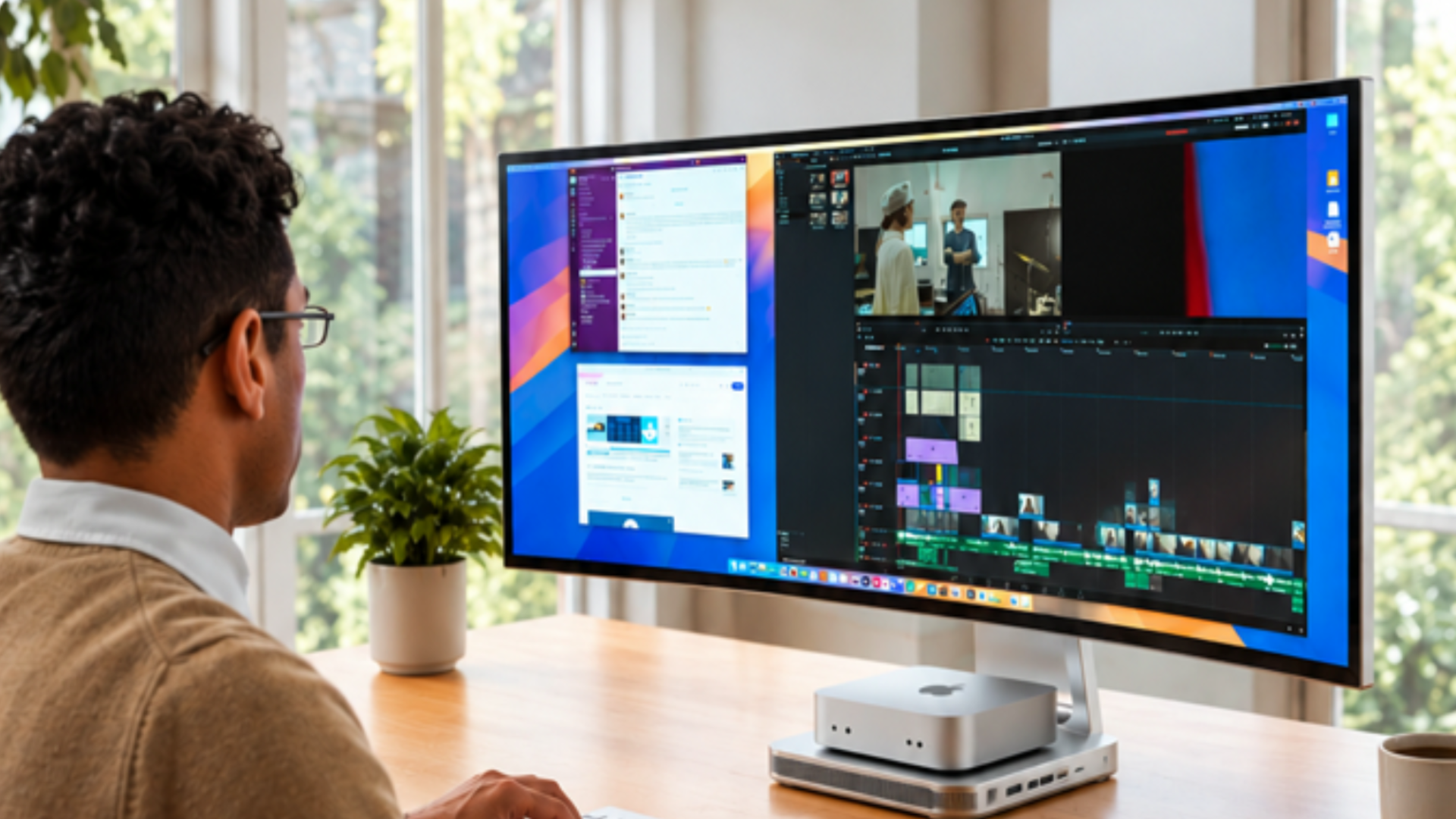
Furthermore, the integration of an M.2 SSD slot is a game-changer for those limited by the internal storage configurations of Apple’s silicon hardware. By allowing users to install their own NVMe storage directly into the monitor, Mobile Pixels provides a seamless way to expand storage capacity without resorting to external enclosures or unsightly USB-connected drives.
Industry Implications and Potential Hurdles
The introduction of the Prisma signals a shift in how manufacturers view the desktop monitor. Historically, monitors have been passive conduits for video signals. The Prisma treats the monitor as a foundational piece of office infrastructure. If successful, this "all-in-one" approach could disrupt the peripheral market, potentially rendering standalone docking stations and desktop stands obsolete for Mac mini and Studio users.
However, the industry is watching with a mix of excitement and skepticism. The primary concern among analysts is the longevity of such an integrated unit. If the monitor panel fails, the user loses their docking station, their storage expansion, and their computer mount. Conversely, if the Mac hardware architecture changes significantly in the coming years, the physical cradle could potentially become obsolete, turning a premium workstation tool into a legacy piece of hardware.
Moreover, the reliance on a crowdfunding model for such a complex, high-cost piece of equipment is not without precedent for failure. While Mobile Pixels has a track record of delivering products, the scale of the Prisma—a 40-inch specialized display—is vastly more complex than the portable screens they are known for. Logistics, shipping costs (which can reach $80 depending on the region), and international supply chain stability for high-end panels present significant challenges between now and the projected 2027 delivery date.
Expert Perspective: Is the Prisma for You?
For the creative professional, the Prisma offers a seductive proposition: a minimalist desk setup that doesn’t compromise on power. By consolidating the docking, storage, cooling, and display into one sleek unit, the user gains a cleaner workflow, which is often a critical factor in maintaining focus and productivity.
The ability to use the monitor as a base for Apple’s Continuity Camera is another standout feature. As remote and hybrid work becomes the standard, the ability to utilize an iPhone as a high-quality webcam—with the mount built directly into the display—removes the need for cumbersome third-party mounting arms.
However, prospective buyers must perform a rigorous cost-benefit analysis. At a retail price point of $1,600, the Prisma sits in the high-end tier of monitors. The $999 introductory price through Kickstarter is highly competitive for a 5K ultrawide with these integrated features, but it necessitates a leap of faith.
A Note on Risk Management
As with all high-value crowdfunding campaigns, it is vital for potential backers to exercise caution. The disclaimer provided by industry observers remains pertinent: crowdfunding contributions are not traditional retail purchases. They are investments in a vision. The risk of product delay, design iteration, or in rare cases, non-delivery, is a reality that every backer must weigh against the promised utility of the device.
Conclusion: The Future of the Desktop
Mobile Pixels has successfully identified a specific pain point in the Apple ecosystem: the struggle to maintain a clean, high-performance workspace without a forest of cables and hubs. The Prisma is an audacious attempt to solve this with a single, elegant solution.
Whether it becomes the gold standard for home and office workstations or remains a niche experiment in hardware integration, the Prisma proves that the era of the "dumb monitor" is coming to a close. As we look toward 2027, the success of this project will likely hinge on the company’s ability to maintain the high build quality required of a $1,600 professional tool. For now, the tech community watches with great interest, waiting to see if Mobile Pixels can truly deliver the "whole workstation in one display."