

In the rapidly evolving landscape of consumer electronics, we often focus on the flagship devices—the latest smartphones, high-performance laptops, and cutting-edge tablets. Yet, the unsung hero of our digital lives remains the humble charging brick. For years, these were utilitarian, "set-it-and-forget-it" blocks of plastic. However, a significant shift is underway. As we move into late 2026, we are witnessing the democratization of premium features in power delivery, with the Baseus PicoGo Pro AH22 100W USB-C Charger standing at the forefront of this transformation. Currently available with a compelling 30% discount on Amazon, bringing its price down to just $42, this device is more than just a power adapter—it is a glimpse into the future of intelligent charging.
The Main Facts: Power, Intelligence, and Design
The Baseus PicoGo Pro AH22 is engineered to address the modern user’s primary pain point: the chaotic management of power across multiple high-draw devices. With a robust 100W total output, it is capable of fast-charging everything from a power-hungry MacBook Pro or Windows ultrabook to a flagship smartphone or wireless earbud case.
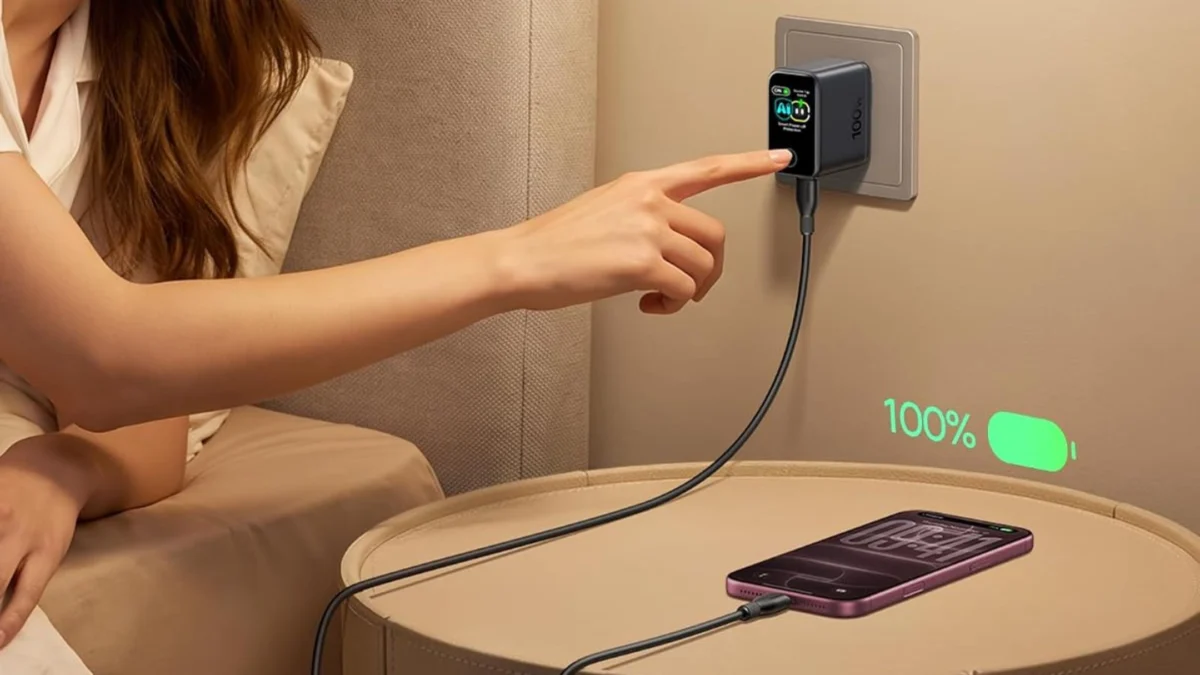
What distinguishes the PicoGo Pro from the sea of generic adapters is its integrated smart display. This is no longer a luxury reserved for industrial laboratory equipment; it is now a consumer-facing feature that provides real-time telemetry. Users can monitor charging speeds, temperature fluctuations, and even device-specific battery health indicators directly on the charger’s face. Furthermore, the unit features a sophisticated control interface, allowing users to toggle between three distinct power delivery modes: Smart, Gentle, and Turbo. This level of granular control—previously unheard of at this price point—empowers users to tailor their charging experience to their specific device’s needs.
A Chronological Shift in Charging Tech
To understand why the PicoGo Pro matters, one must look at the timeline of the industry over the last decade.

- 2015–2018 (The USB-C Adoption Era): This period was defined by the transition from proprietary ports to USB-C. Chargers were primarily single-purpose, and "fast charging" was an inconsistent landscape of proprietary protocols.
- 2019–2022 (The GaN Revolution): The introduction of Gallium Nitride (GaN) technology allowed manufacturers to shrink the size of chargers significantly while maintaining high wattages. This made multi-port chargers portable for the first time.
- 2023–2025 (The Diversification Phase): During this time, the market became saturated with "standard" GaN chargers. Prices plummeted, but innovation stagnated as brands competed solely on price.
- 2026–Present (The Intelligent Era): We are now seeing the integration of active monitoring. As users become more tech-literate, the demand for transparency—knowing exactly how much power a device is drawing and if it is overheating—has driven companies like Baseus to integrate OLED and LED interfaces into their hardware.
Supporting Data: Why "Smart" Charging Matters
The integration of digital displays is not merely an aesthetic choice; it serves a functional purpose in preserving the longevity of our devices. Modern lithium-ion batteries are sensitive to heat and irregular voltage inputs.
According to industry data, constant high-voltage charging without thermal management can degrade a battery’s total capacity by up to 15% over an 18-month period. The PicoGo Pro’s "Gentle" mode acts as a safety valve. By throttling the input power during the final stages of a charging cycle—or when the charger detects high ambient temperatures—the system reduces thermal stress on the connected device’s battery chemistry.
When users connect three devices simultaneously, the PicoGo Pro utilizes its onboard controller to dynamically distribute the 100W load. The display allows the user to see exactly how that power is divided. If a user notices a laptop is drawing 65W while a phone is drawing 20W, they can adjust their usage patterns in real-time, ensuring that critical devices receive priority.
Official Perspectives and Market Positioning
Baseus has carved out a unique space in the accessory market by bridging the gap between "white-label" budget hardware and premium, expensive tier-one peripherals. By consistently delivering high-quality GaN components while undercutting major competitors, Baseus has become a reliable name for enthusiasts.

Industry analysts note that Baseus’s move to include a high-quality USB-C to USB-C cable in the box is a strategic decision. By controlling both the adapter and the cable, the company ensures that the entire power delivery chain meets the stringent safety standards required for 100W operation. This is a critical point; many budget-tier chargers fail not because of the brick itself, but because users pair them with low-quality, high-resistance cables that cannot handle the electrical load.
Implications for the Future of Consumer Electronics
The implications of this shift are profound. As chargers become "smarter," they are transitioning from passive components to active network nodes. We are already seeing the early stages of this, where chargers provide feedback on power efficiency.
1. The Death of "Mystery" Charging
For years, users have been forced to trust that their charger was working correctly. With visual feedback, the "mystery" is removed. If a device isn’t charging at the expected speed, the display tells the user immediately, eliminating the need to guess if the issue lies with the device, the cable, or the brick.
2. Sustainability and Longevity
By allowing users to monitor their battery health and charging behavior, devices like the PicoGo Pro encourage better charging habits. Features like "Gentle" mode encourage users to slow-charge overnight, which significantly extends the overall lifespan of the device’s battery. In an era where electronic waste is a global concern, any technology that extends the life of a smartphone or laptop by even six months has a massive positive environmental impact.

3. The Normalization of High-Power Efficiency
The 100W benchmark is significant. It represents the "Goldilocks zone" for modern mobile computing. A single 100W charger can replace the dedicated power bricks for a laptop, a tablet, and a phone. As the Baseus PicoGo Pro demonstrates, the industry is reaching a point where this level of power is not only compact but also affordable for the average consumer.
Conclusion: A Worthwhile Investment
The Baseus PicoGo Pro AH22 is a testament to how far charging technology has come. At its current price point of $42, it offers a level of safety, transparency, and versatility that was virtually impossible to find just a few years ago.
Whether you are a professional who needs to keep a workstation powered on the go, or a casual user tired of carrying multiple heavy adapters, this charger provides a streamlined, intelligent solution. It reminds us that while the devices we hold in our hands get all the headlines, the technology that keeps them alive is just as vital. For those looking to upgrade their home or travel setup, the PicoGo Pro is an easy recommendation—a high-performance, smart-enabled accessory that defines the new standard for the modern power user.