





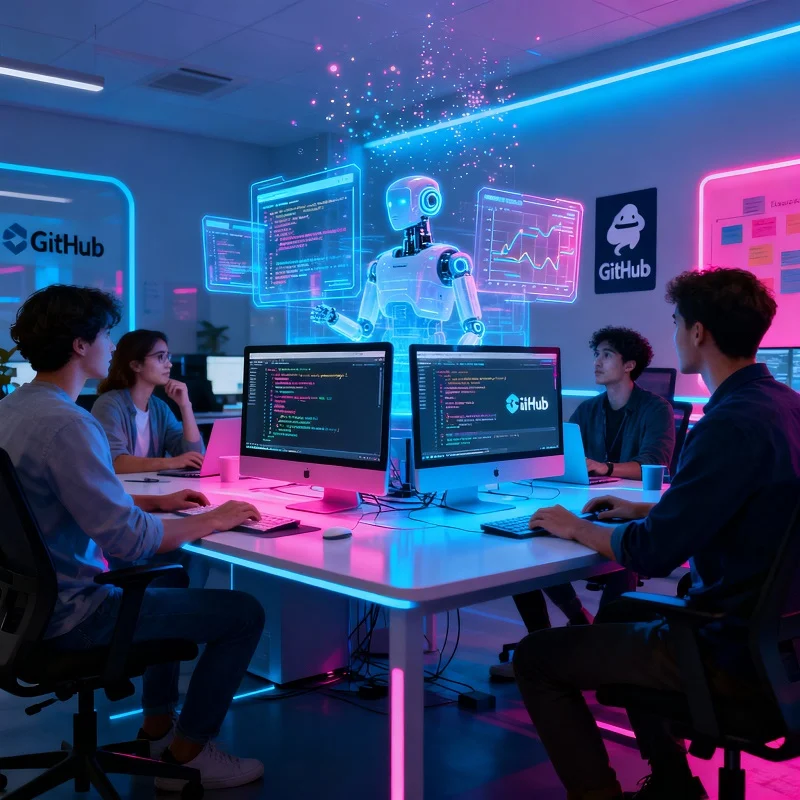
The software development landscape is undergoing its most significant shift since the advent of cloud computing. As projects grow in complexity and distributed teams become the global standard, the traditional "local environment" model—plagued by "it works on my machine" syndromes and hours of configuration—is rapidly becoming an impediment to innovation. In response, GitHub has unveiled Copilot Spaces, a transformative service that integrates cloud-hosted development environments with deep, context-aware artificial intelligence. This evolution marks a departure from simple code-completion tools toward a future where the IDE itself acts as a proactive, knowledgeable teammate.
The Evolution of the Development Workflow
For decades, the developer’s workflow was tethered to the local machine. Setting up a new project often involved a labyrinthine process of installing dependencies, configuring environment variables, and ensuring local toolchains matched production specifications. This overhead was compounded when working in teams, where onboarding a new developer could take days, if not weeks.
The arrival of cloud-based development environments (CDEs) began to solve the portability issue, but they lacked the cognitive intelligence to assist with the complexities of large-scale codebases. GitHub Copilot Spaces bridges this gap. By hosting the workspace in the cloud, GitHub ensures that the environment is identical for every member of a team. By embedding Copilot directly into the fabric of this workspace, GitHub has moved beyond predictive text to create a development experience that understands the architecture, intent, and historical context of a project.
Chronology: From AI Assistant to Contextual Partner
The journey toward Copilot Spaces is rooted in the rapid iteration of AI-assisted coding:
- 2021: The Introduction of GitHub Copilot: GitHub launched the initial version of Copilot, powered by OpenAI’s Codex. At this stage, the tool functioned primarily as a high-level autocomplete, suggesting lines or functions based on surrounding syntax.
- 2022-2023: Expanding the Intelligence: GitHub introduced Copilot Chat, allowing developers to interact with their code using natural language. This was the first step toward "conversational" coding, where the AI could explain blocks of code or help debug issues.
- 2024: The Shift to Context-Awareness: GitHub began refining the AI’s ability to "read" entire repositories rather than just active files. This allowed for cross-file suggestions and a deeper understanding of project-wide dependencies.
- 2025: The Launch of Copilot Spaces: Recognizing that environment parity and AI intelligence are two sides of the same coin, GitHub merged these concepts. Copilot Spaces was released as a unified platform where the workspace and the AI model exist as a single, cohesive entity.
Supporting Data: The Cost of Fragmented Development
The necessity for Copilot Spaces is underscored by the hidden costs of modern development. Industry research indicates that developers spend, on average, 30% to 40% of their time on non-coding tasks—environment configuration, context switching, and debugging infrastructure issues.
- Onboarding Efficiency: Teams utilizing integrated cloud environments report an onboarding time reduction of up to 70%. What once took days of local setup now happens in minutes, as the environment is pre-configured with all necessary dependencies and secrets.
- Context Switching: Studies suggest it takes a developer approximately 23 minutes to return to a deep work state after a distraction. By centralizing the workflow and providing AI that understands the current task, Copilot Spaces minimizes the need to jump between documentation, Stack Overflow, and the IDE.
- Codebase Complexity: As microservices architectures dominate, the average codebase size has ballooned. The "cognitive load" on a developer—the amount of information they must keep in their head—has reached an all-time high. AI-driven context awareness acts as an external memory, lowering this cognitive load and reducing the frequency of errors.
Official Perspectives: The Vision for "The Flow"
GitHub’s leadership has framed Copilot Spaces as the ultimate realization of their "developer-first" philosophy. In various press briefings, executives have emphasized that the goal is to remove the "friction of existence" from the coding experience.
"We want to move developers from a state of ‘managing infrastructure’ to ‘creating solutions,’" said a GitHub representative. "When you have to worry about your local Node.js version, your Docker container settings, or your path variables, you aren’t thinking about the architecture of your application. Copilot Spaces handles the mundane, so the developer can stay in the flow."
GitHub’s product roadmap suggests that the platform is not merely a tool for speed, but for quality. By ensuring that every developer is working in a unified, AI-verified environment, the risk of production deployment failures—often caused by environmental discrepancies—is significantly mitigated.
Implications for Solo Developers and Enterprise Teams
The implications of this technology vary depending on the scale of the user, but the benefits are universal.
For Solo Developers
For the independent creator, Copilot Spaces acts as a force multiplier. In the past, solo developers had to be experts in DevOps to manage their own cloud deployments and local environments. With Spaces, the platform abstracts the complexity. The developer can switch from a laptop to a tablet or a thin client, pick up exactly where they left off, and have the AI act as a "pair programmer" that understands the entire scope of their side project.
For Enterprise Teams
For large organizations, the benefits are more strategic. Standardizing on Copilot Spaces means:
- Security and Compliance: Code and sensitive configurations never leave the secure cloud environment, reducing the risk of data leaks on local machines.
- Unified Standards: Teams can enforce coding standards and environment configurations at the "Space" level, ensuring that every developer follows the same practices.
- Faster Feature Velocity: With the ability to spin up "preview environments" instantly, QA and testing can happen in parallel with development, shortening the feedback loop.
Strategic Adoption: How to Succeed with Spaces
For organizations looking to integrate Copilot Spaces, success requires a shift in mindset. It is not enough to simply switch platforms; teams must adapt their workflows:
- Adopt Infrastructure-as-Code (IaC): Ensure that project dependencies are clearly defined in configuration files (e.g., devcontainer.json). This allows Copilot Spaces to recreate the environment automatically for any user.
- Invest in AI Literacy: Developers should be trained on how to interact with the AI. Prompt engineering—learning how to ask the AI for architectural advice rather than just syntax—is becoming a critical skill.
- Establish "Space" Hygiene: Just as teams maintain a clean codebase, they must maintain clean "Spaces." Regular pruning of unused environments and managing access controls ensures the platform remains performant and secure.
The Future: Toward Autonomous Development
The trajectory of Copilot Spaces points toward a future where the developer acts more as an architect and editor than a manual coder. Future iterations are expected to introduce:
- Proactive Remediation: Instead of waiting for a developer to ask for help, the AI might flag a security vulnerability or a performance bottleneck in real-time as the code is being written.
- Autonomous Testing: Copilot Spaces could automatically generate and execute unit tests, analyzing the coverage gap and suggesting modifications before the developer even commits the code.
- Deep Integration with Project Management: The "Space" could be linked directly to issue trackers like Jira or GitHub Issues, allowing the AI to understand the business requirements behind a specific pull request, offering context that goes beyond the technical scope.
Conclusion: A New Standard for Collaboration
The introduction of GitHub Copilot Spaces represents a maturation of the AI-coding movement. By solving the dual challenges of environment fragmentation and cognitive overload, GitHub has set a new standard for what it means to be a developer in the mid-2020s.
As organizations grapple with the increasing demands of digital transformation, the ability to iterate quickly, maintain high code quality, and seamlessly onboard talent is a competitive advantage. Copilot Spaces provides the infrastructure to achieve this, turning the IDE into an intelligent, collaborative workspace. While the human element—creativity, judgment, and strategic thinking—remains the core of software engineering, the tools we use have finally caught up to the complexity of the problems we are trying to solve. The era of the "siloed developer" is ending; the era of the "context-aware, AI-augmented team" has begun.