








For years, the Android version of X (formerly Twitter) existed in a state of digital purgatory. While iOS users enjoyed a polished, responsive, and feature-rich interface, those on the world’s most popular mobile operating system were often relegated to a secondary experience defined by stuttering scrolls, sluggish loading times, and a persistent, nagging lack of polish. After years of mounting user frustration and technical debt that made the app feel like a relic of a bygone era, the company has finally executed a radical move: it has completely rebuilt the X Android app from the ground up.
This wasn’t a simple patch or a superficial UI facelift. Following nearly a year of intensive development, the new iteration represents a total purge of the old codebase. For the millions of users who rely on the platform to consume real-time news, engage in discourse, or manage their personal brands, this update marks the end of a long-standing grievance.
The Chronology: From Technical Debt to Modernization
To understand why this rebuild is being hailed as a milestone, one must look at the trajectory of the app over the last three years. Since the platform’s transition to X, the engineering team has been balancing the rapid introduction of new features—such as long-form posts, video streaming, and expanded monetization tools—with the weight of an aging, fragmented codebase.
The "Android Gap" became a point of contention among the platform’s power users. Throughout 2025, reports of the app failing to open links correctly, crashing during high-traffic events, and struggling with basic navigation became routine. At one point, the app faced a critical failure where it struggled to render posts when users clicked through from external links—an existential threat to a platform that relies on viral sharing.
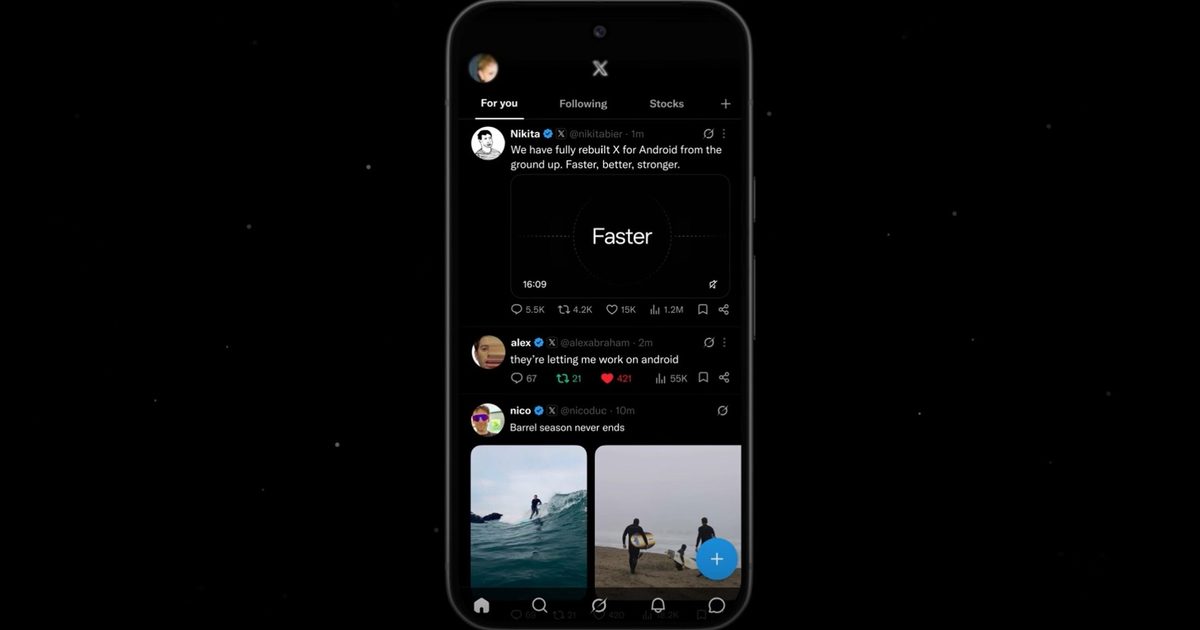
By late 2025, the internal consensus at X shifted. The engineering team, led by product head Nikita Bier, concluded that the existing foundation was too compromised to sustain the ambitious "everything app" roadmap envisioned by Elon Musk. Instead of trying to patch the cracks in the foundation, they decided to tear it down. The project, which took roughly ten months of intensive labor, involved rewriting the app’s architecture to support modern performance standards, ensuring that it could handle the heavy data loads required by modern social media interactions.
The Technical Shift: Why a Rewrite Was Necessary
The primary goal of the rebuild was not just to make the app look better, but to make it work better. The new version, now available via the Google Play Store for all existing users, focuses on three pillars of performance:
- Faster Rendering: By optimizing how the app fetches and displays text, images, and videos, the team has significantly reduced the time it takes for the timeline to become interactive.
- Fluid Scrolling: Through a complete overhaul of the UI thread management, the notorious "jank" or stuttering during scrolling has been largely eliminated, bringing the Android experience in line with the smooth performance of high-end mobile applications.
- Reliability in Notifications: The push notification architecture was redesigned to ensure that alerts—often the lifeblood of the X experience—are delivered in real-time without the synchronization delays that plagued the previous version.
Nikita Bier, in an official statement, described the rewrite as "one of the largest engineering projects in the platform’s history." By starting from scratch, the team removed years of "dead code" and legacy dependencies that were slowing down the application, effectively clearing the path for future feature deployments.
Implications for the "Everything App" Vision
The decision to rebuild the Android app is not merely an act of goodwill toward users; it is a strategic necessity for the company’s broader business model. X has signaled its intent to evolve beyond a microblogging platform into a comprehensive ecosystem that includes high-definition video, encrypted private messaging, and even financial services.
If the app’s core foundation was unstable, attempting to integrate these complex new features would have resulted in an unusable experience. By creating a modular, robust, and scalable codebase, the engineering team has created the necessary infrastructure for the next phase of X’s development.
This is particularly relevant as the company expands its financial and communication tools. With the launch of XChat earlier this year—which provides encrypted messaging and calling—the need for a unified, high-performance mobile environment has never been greater. The new Android app is designed to integrate seamlessly with these peripheral services, ensuring that the transition from reading a post to conducting a private conversation or a financial transaction is frictionless.
The Reality Check: What’s Still Missing?
Despite the fanfare surrounding the launch, it is important to temper expectations with the reality of the current release. The "Version 2.0" of the Android app is a work in progress. While the foundation is solid, several features remain in the queue.
Most notably, the platform’s live-audio feature, "Spaces," is currently unsupported in this new build. For many journalists, creators, and activists who use X to host live discussions, this is a glaring omission. Furthermore, power-user features such as custom timelines, advanced cashtags, and the highly anticipated new video-reaction suite are slated for subsequent updates.

The company has also acknowledged that performance on legacy Android devices—specifically those running older versions of the OS or using low-tier processors—is still a work in progress. While the rewrite is optimized for modern hardware, the team is still fine-tuning the app to ensure that it remains accessible to users in emerging markets who may not be using the latest flagship smartphones.
The Competitive Landscape
The timing of this update is not coincidental. X is competing in an increasingly crowded social media landscape where reliability is the baseline requirement. As platforms like Bluesky, Threads, and various decentralized alternatives attempt to lure away disenfranchised users, X cannot afford to have a substandard mobile experience.
For the average user, the improvement is immediate and tangible. The "snappiness" of the interface, the reduction in background battery drain, and the reliability of the notification feed are the types of improvements that prevent user churn. In an industry where user attention is the most valuable currency, these "boring" engineering achievements—speed, stability, and reliability—are often the most important features of all.
A Look Ahead: What’s Next?
The engineering team has promised that the new architecture will allow them to "ship features faster." In the world of software development, this is a significant claim. It suggests that the bottleneck for innovation at X was not the ideas themselves, but the inability of the old code to support rapid iteration.
We can expect to see a wave of updates in the coming months as the team migrates the missing features into the new app. The successful deployment of this rewrite suggests that the leadership at X is finally prioritizing long-term technical health over short-term "hacks."
For the Android community, which has felt like a second-class citizen for nearly a decade, this is a turning point. It is an acknowledgment that a global platform cannot thrive if its mobile experience is fragmented or broken. As X continues to push into the realms of video, payments, and encrypted communication, this new, rebuilt app will be the proving ground for whether the platform can truly transform into the "everything app" it aspires to be.
For now, the message to the user base is clear: the foundation is finally stable. The platform has been ripped apart and put back together, and for the first time in years, the Android experience is no longer a liability—it is a launchpad. Whether this technical prowess can be matched by continued innovation and community engagement remains the next big question for the company to answer. But for today, the scrolling is smooth, the notifications are fast, and for millions of users, that is a victory worth celebrating.