










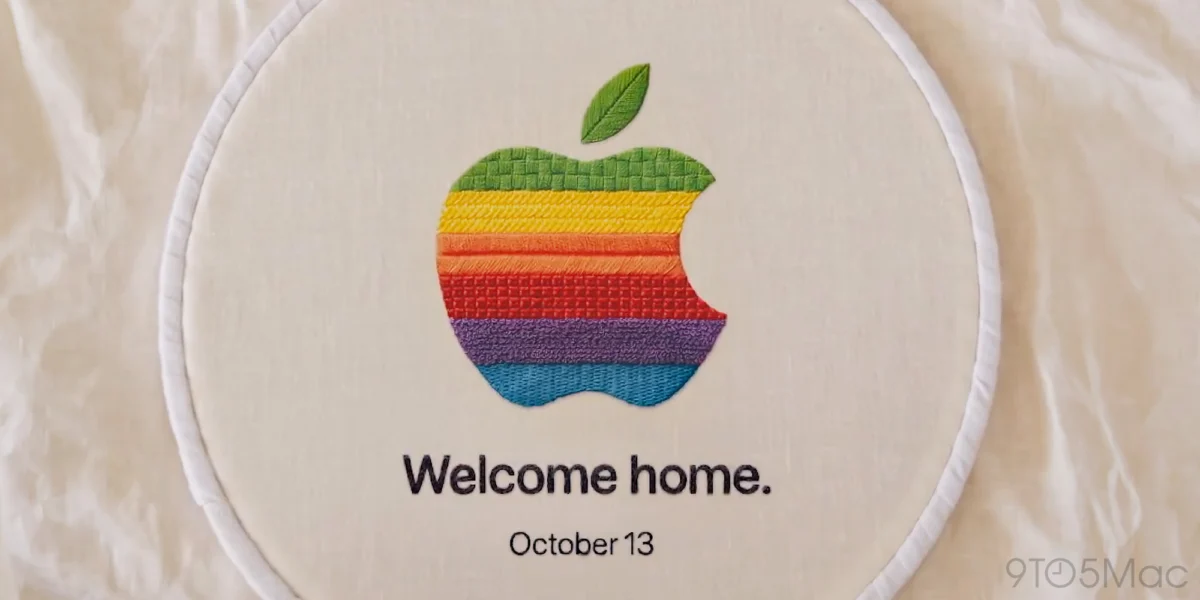
Apple has officially confirmed that it will host a special product showcase tomorrow, October 13, under the evocative tagline "Welcome Home." While the Cupertino-based tech giant has kept specific details under wraps, industry insiders, supply chain leaks, and reports from outlets like Bloomberg paint a clear picture: Apple is finally ready to make a serious, long-overdue push into the smart home ecosystem.
The event will feature a hybrid format, combining an exclusive in-person experience for members of the press in New York City with a pre-recorded online video presentation expected to drop around 9:00 a.m. ET / 6:00 a.m. PT. With a redesigned hardware lineup spearheaded by an entirely new product category, tomorrow’s announcements could redefine how consumers interact with their living spaces.
Main Facts: What Apple is Expected to Announce
The "Welcome Home" event is projected to be one of the most hardware-dense minor events Apple has held in recent years, centering entirely around ambient computing, artificial intelligence, and domestic automation.
- The "HomeView" Smart Display: Apple’s rumored dedicated home hub will finally break cover, acting as the centerpiece of the company’s refreshed smart home strategy. Powered by Apple Intelligence and advanced Siri capabilities, the device is designed to act as a central dashboard for household automation, media control, and communication.
- Upgraded Apple TV 4K: The first update to Apple’s set-top box since November 2022 is on the horizon, featuring next-generation processing power to bring advanced artificial intelligence features directly to the television screen.
- HomePod mini 2: The pocket-sized smart speaker is receiving its first major internal overhaul, trading its aging processor for a modern chip capable of running localized AI models.
- Co-Developed "Second-Party" Accessories: In a rare strategic pivot, Apple has reportedly collaborated with electronics giant LG to co-develop a suite of native HomeKit accessories, including smart locks, thermostats, video doorbells, and security cameras.
Chronology: How Apple’s Smart Home Ambitions Developed
Apple’s journey to tomorrow’s event has been years in the making, marked by internal pivots, shifting consumer trends, and fierce competition from Amazon and Google.
The Early Years: Fragmented Beginnings
Apple initially entered the smart home arena in 2014 with the introduction of HomeKit, a developer framework designed to secure and control connected home devices via iOS. However, HomeKit struggled with strict hardware certification requirements and a lack of first-party hardware anchors. While the original HomePod launched in 2018 with a heavy focus on high-fidelity audio, its high price tag limited its adoption as a mass-market smart home controller.
The Pivot to Affordability and the Hub Strategy
Realizing it needed a broader footprint, Apple introduced the HomePod mini in 2020 at a more accessible $99 price point. Equipped with Thread networking and Home Hub capabilities, the mini became the silent backbone of many automated homes. Yet, industry analysts continually noted a glaring hole in Apple’s portfolio: the absence of a wall-mounted or tabletop smart display to compete with Amazon’s Echo Show or Google’s Nest Hub.
The Rumor Mill Accelerates (Late 2025 – October 2026)
- Late September 2026: Reports surface that Apple has finalized production on a square-form-factor smart display internally codenamed or slated for the consumer moniker "HomeView."
- Early October 2026: Code leaks within early developer betas of forthcoming software updates reveal references to a revamped Apple TV 4K, an S10-powered HomePod mini, and deep collaborative hardware efforts with LG.
- October 8, 2026: Apple sends out media invites featuring the "Welcome Home" tagline, confirming the October 13 date.
- October 11–12, 2026: Final leaks confirm multi-person facial and voice recognition features for the HomeView, alongside details of a November shipping window for the new hardware.
Supporting Data & Hardware Breakdown
A closer examination of the leaked specifications reveals how Apple plans to differentiate its upcoming ecosystem from entrenched competitors.
1. The "HomeView" Smart Display
- Design & Form Factor: According to supply chain reports, the HomeView features a 6-inch square display mounted on a half-dome weighted base via a sleek metal arm. Industry observers have quickly drawn aesthetic comparisons to Apple’s iconic, pivoting iMac G4. It will reportedly ship in two configurations: a countertop version and a wall-mountable variant.
- Software Ecosystem ("homeOS"): The operating system is said to be a hybrid of watchOS, tvOS, and iPadOS. It utilizes iPad-style app layouts, Apple Watch-style app pickers, and heavily leverages iPhone-like interactive widgets and StandBy mode functionality.
- Intelligence & Multi-User Awareness: Powered by Apple Intelligence, the HomeView will reportedly use onboard sensors and machine learning to dynamically recognize who is speaking to it or approaching the screen, adjusting displayed calendar events, messages, and reminders based on the specific household member.
- Pricing & Availability: While officially unveiled tomorrow, consumer availability is pegged for sometime in November, giving developers a brief window to optimize apps for the new display format.
2. New Apple TV 4K
- Performance Upgrades: The physical enclosure is expected to remain largely identical to the 2022 model. However, the internal architecture will leap forward with the integration of either the A19 or A19 Pro chip.
- AI Integration: This silicon upgrade marks a milestone, bringing Apple Intelligence and advanced conversational Siri features to the television for the first time.
- Hardware Tweaks: Rumors suggest the updated Apple TV box may include built-in microphones for hands-free Siri queries, while the accompanying Siri Remote could feature an integrated speaker to aid in finding the device when lost between couch cushions. Furthermore, hidden code references point toward a forthcoming "surround sound party mode" capable of linking up to four full-sized HomePods in tandem with the Apple TV.
3. HomePod mini 2
- Silicon Leap: The original HomePod mini relies on the S5 chip—the exact processor that debuted in the Apple Watch Series 5 back in 2019. The second-generation model will upgrade to a modern S10 processor, unlocking drastically faster response times and localized Siri AI processing capabilities.
- Aesthetics: Alongside internal performance gains, leaked assets indicate the HomePod mini 2 will debut in a refreshed palette of color options.
4. "Second-Party" LG HomeKit Accessories
In an unusual break from its traditionally closed-garden hardware manufacturing model, Apple has reportedly partnered with LG to co-develop branded smart home infrastructure. This includes smart door locks, thermostats, multi-room security cameras, and intelligent doorbells natively integrated into the Apple Home ecosystem. While these devices are not expected to ship immediately, they will likely be previewed as part of Apple’s broader multi-year domestic strategy.
Official Responses and Industry Outlook
Apple has maintained its customary pre-event silence regarding leaked specifications, but corporate communications emphasize a renewed focus on ambient domestic computing. Executives have increasingly framed Apple Intelligence not merely as a smartphone productivity tool, but as an omnipresent context engine designed to streamline daily life across all living spaces.
Competitors in the smart home space—namely Amazon, Google, and Samsung—are watching closely. While Amazon and Google have held dominant market shares in smart displays and voice assistants for years, consumer trust regarding data privacy has frequently been a friction point. Apple’s persistent positioning around on-device processing and user privacy via Apple Intelligence could serve as a powerful differentiator for consumers wary of constant cloud recording.

Implications: Why This Event Matters for Apple
For years, analysts have categorized the smart home as a missed opportunity for Apple. While the company enjoyed immense success with iPhones, iPads, and wearables, its domestic product offerings felt fragmented, iterative, and occasionally abandoned.
Tomorrow’s "Welcome Home" event signals a structural shift. By introducing a dedicated hardware hub (HomeView), modernizing its audio lineup (HomePod mini 2, Apple TV 4K), and expanding its ecosystem partnerships, Apple is attempting to weave its devices into the literal fabric of consumer homes.
If execution matches ambition, Apple will no longer just be a vendor of devices you carry in your pocket or wear on your wrist; it will become the literal operating system of your household. As consumers and industry watchers tune in tomorrow morning, the central question will not be whether Apple can build a smart home device, but whether it can finally convince the mass market that Cupertino’s vision of the modern home is worth buying into.



