










By Global Business & Media Insights Staff
Published: January 2025
Main Facts
In the modern digital economy, the traditional boundaries separating independent journalism from commercial enterprise have fundamentally shifted. Earlier this year, prominent industry expert and affiliate marketing strategist-turned-commentator weighed in on a growing phenomenon that has captivated both digital marketers and everyday shoppers: the explosion of product recommendation roundups published by legacy media institutions.
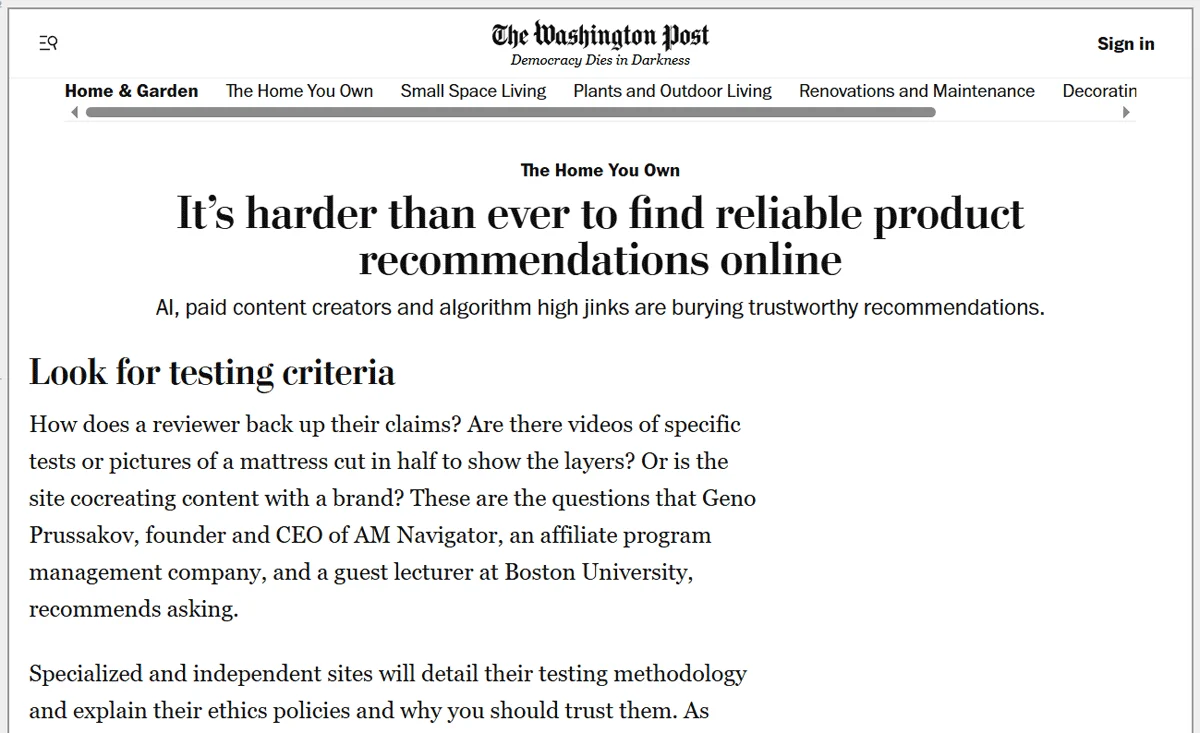
When The Washington Post published an in-depth feature examining the mechanics behind online shopping guides and product lists curated by major media outlets, it highlighted a multi-billion-dollar shift in how household-name publishers generate revenue. No longer relying solely on print subscriptions, display advertisements, or paywalls, names once synonymous strictly with hard-hitting news—ranging from legacy newspapers to niche enthusiast magazines—are now leveraging their immense domain authority to tap into lucrative affiliate marketing streams.
The core facts of this modern publishing ecosystem include:
- The Authority Leverage: Major media brands possess high domain authority built over decades of trust, making their product roundups rank exceptionally well on search engine results pages (SERPs).
- Affiliate Monetization: When readers click on a recommended product link within these articles and complete a purchase, the publisher earns a commission via affiliate networks.
- The Trust Paradox: While many publishing houses maintain strict editorial independence and rigorous testing protocols, the financial incentive to prioritize products with higher payouts or specific advertising partnerships creates an inherent conflict of interest.
- Consumer Vulnerability: Shoppers frequently mistake search engine visibility and brand prestige for objective consumer advocacy, often remaining unaware of the financial arrangements underpinning a "Best Of" list.
Chronology: The Evolution of Media-Driven Commerce
To understand how traditional newsrooms became product-recommendation engines, it is necessary to examine the timeline of digital media monetization over the past two decades.
1. The Early Digital Era (Late 1990s – 2000s)
In the infancy of the commercial internet, news organizations viewed websites primarily as digital billboards for their print editions. Revenue was almost exclusively driven by banner ads, classifieds, and early forms of display advertising. Affiliate marketing—pioneered largely by e-commerce giants like Amazon—was viewed as the domain of niche bloggers, coupon sites, and price-comparison engines, far beneath the dignity of mainstream journalistic institutions.
2. The Great Advertising Collapse and the Paywall Experiment (2008 – 2015)
The 2008 global financial crisis, followed by the rapid rise of ad-blockers and social media aggregation, devastated traditional newspaper and magazine revenue models. As print circulation plummeted, digital ad rates crashed due to programmatic ad networks. Publishers scrambled for sustainable revenue models, experimenting with hard paywalls, meter walls, and native advertising. During this period, a few forward-thinking digital-native publications demonstrated that commerce content could be integrated seamlessly into editorial without alienating audiences.
3. The Mainstreaming of Commerce Content (2016 – 2020)
By the mid-2010s, legacy media outlets recognized that their readers were already turning to the internet for buying advice. Rather than letting third-party blogs capture that search traffic, major publishing houses began establishing dedicated "commerce teams." These internal desks were tasked with producing gift guides, holiday shopping roundups, and product reviews. The integration of affiliate links transformed everyday editorial staff into active participants in e-commerce pipelines.
4. The Modern Ecosystem and Search Dominance (2021 – Present)
Today, commerce content is no longer a peripheral experiment; it is often a core financial pillar keeping newsrooms afloat. Major publishers regularly dominate high-intent search queries—such as "best vacuum cleaner" or "best mattress for back pain"—outranking independent testing laboratories and consumer advocacy groups simply due to their superior domain authority. This dominance has drawn scrutiny from antitrust regulators, search engine architects, and consumer watchdogs alike, prompting ongoing debates about transparency, editorial integrity, and the future of online shopping guides.
Supporting Data: The Mechanics of Media Affiliate Programs
To properly evaluate online product lists, it is essential to look at the behind-the-scenes mechanics that govern how major publishers operate. Industry insiders note that while commerce desks are often structurally separated from newsrooms, the operational framework relies on strict guidelines, alongside occasional commercial pressures.

How Major Media Outlets Vetted Products
According to experienced affiliate marketing professionals who manage relationships between merchants and media publishers, reputable media organizations do not simply slap affiliate links onto random items. Before endorsing a product, diligent commerce teams generally follow a multi-step vetting process:
- Editorial Guidelines and Testing: High-tier publishers often employ dedicated product testers who physically handle, test, and evaluate items over weeks or months, ensuring basic functional standards are met.
- Brand Reputation Checks: Outlets investigate manufacturer histories, consumer complaint databases, and return rates to avoid recommending substandard or scam-oriented goods that could damage the publisher’s reputation.
- Legal and Compliance Reviews: Legal teams frequently review affiliate partnerships to ensure compliance with federal trade regulations (such as FTC disclosure guidelines regarding sponsored content and affiliate compensation).
- Data-Driven Performance Analysis: Editors analyze historical click-through rates (CTR) and conversion metrics to determine which product categories resonate best with their specific audience demographic.
The Commercial Pressures Behind the Rankings
Despite these safeguards, industry observers acknowledge that the financial relationship between merchants and publishers can occasionally skew editorial objectivity. Financial arrangements that influence product placement include:
- Placement Fees: Direct payments made by manufacturers to secure a spot in a high-visibility holiday gift guide or top-ten list.
- Inflated Affiliate Commission Rates: Offering a higher-than-average percentage of the sale price to publishers willing to feature a specific brand prominently.
- Earnings Per Click (EPC) Guarantees: Agreements where merchants guarantee a minimum payout based on traffic conversion, incentivizing publishers to prioritize those links over superior, lower-paying alternatives.
- Cooperative Marketing Deals: Broad partnerships involving display advertising buys coupled with guaranteed editorial inclusion.
Official Responses and Industry Perspectives
The intersection of journalism and commerce has generated intense debate among media executives, consumer advocates, and digital marketing experts.
Media Publishers’ Defense:
Representatives from major media commerce divisions consistently argue that affiliate monetization subsidizes expensive investigative journalism. In official statements and industry panels, publishing executives maintain that a clear "church and state" separation exists between their newsrooms and commerce desks. They emphasize that product recommendations are designed to save consumers time and money, and that disclosures are placed transparently at the top or bottom of articles to inform readers that the publisher may earn a commission.
Digital Marketing Specialists:
Industry consultants who bridge the gap between e-commerce brands and publishers offer a pragmatic view. Experts note that while the business model is inherently commercial, most established media brands understand that their most valuable asset is consumer trust. Consequently, they have a vested interest in ensuring that the products they recommend actually function well, as a series of bad recommendations can rapidly erode audience loyalty and ruin search engine trust metrics.
Consumer Protection Advocates:
Conversely, consumer watchdogs raise concerns over the opacity of search engine results. Critics argue that average internet users are largely unaware that a media outlet’s glowing review of a kitchen appliance or tech gadget may be driven, in part, by financial incentives rather than pure consumer advocacy. Calls for stricter regulatory enforcement and more prominent, plain-language disclosures continue to grow louder as commerce content colonizes search engine result pages.
Implications for Consumers and the Future of Digital Commerce
As online shopping roundups continue to dominate search engines, what does this mean for the everyday consumer looking to make an informed purchase?
Four Practical Steps for Smart Shoppers
To navigate the complex landscape of media-driven product recommendations, experts recommend that consumers adopt a critical, multi-source approach before hitting "buy":
- Look Beyond the Top Result: Recognize that a media outlet ranking first on Google for a product category often owes its position to domain authority rather than exhaustive, unbiased testing. Dig deeper into page two or specialized forum discussions.
- Check for Clear Disclosures: Legitimate publishers will explicitly state near the beginning of the article that they may earn commissions from links on the page. Be wary of sites that hide or omit these disclosures entirely.
- Cross-Reference Multiple Sources: Never rely on a single "Best Of" list. Compare recommendations across traditional media outlets, specialized enthusiast forums (such as Reddit communities dedicated to specific hobbies), and independent consumer testing labs.
- Evaluate the Depth of the Review: A trustworthy review typically includes specific, granular details about testing methodology—such as how a product was tested, its specific flaws, and who it won’t work for—rather than vague, overly glowing praise pulled straight from marketing brochures.
The Road Ahead
The integration of commerce and media is a permanent fixture of the digital publishing landscape. As artificial intelligence begins to churn out automated product roundups at scale, the value of authentic, human-vetted journalism and transparent curation will only increase.
Ultimately, the burden falls on both publishers to maintain rigorous ethical standards and consumers to remain vigilant, critical participants in the digital marketplace.



