










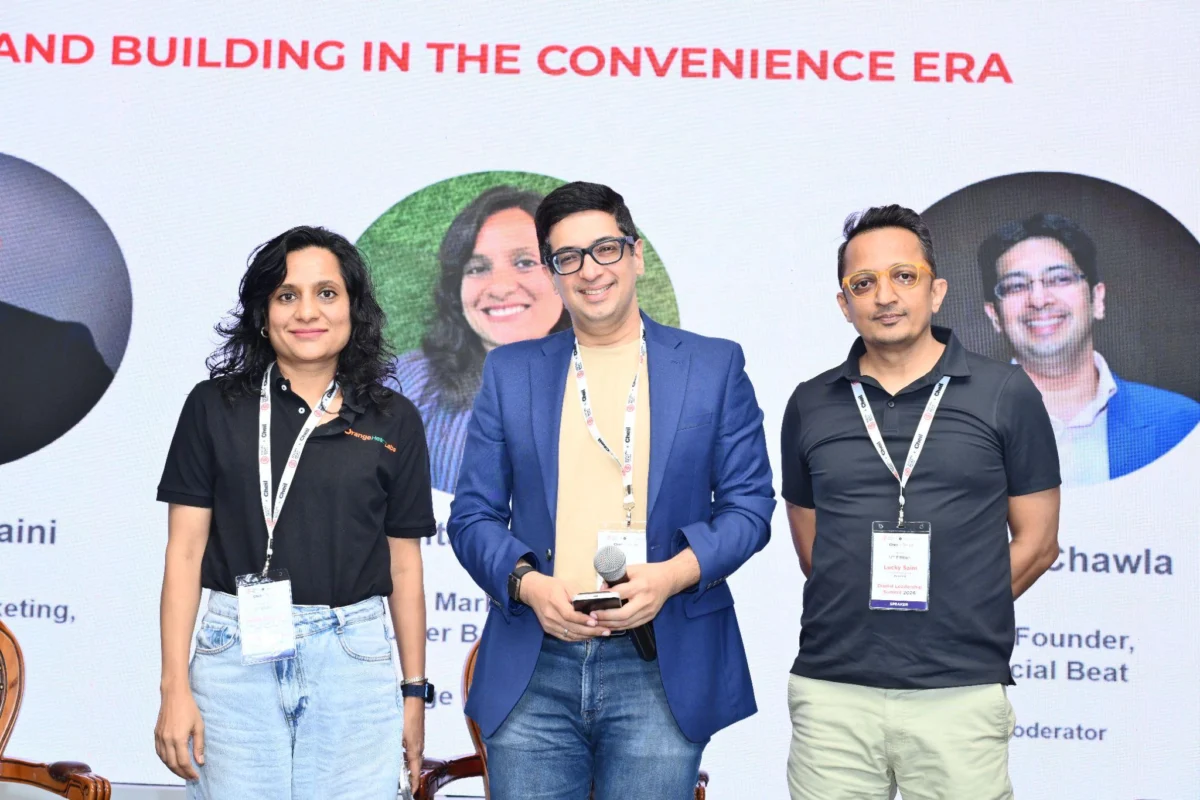
Bengaluru, 31 July 2026 — For years, the gold standard of Indian consumer-facing business was measured in minutes. From groceries to diagnostics, the race to "ten-minute delivery" redefined the convenience economy. However, as the 17th Digital Leadership Summit concluded in Bengaluru this week, a clear consensus emerged: the race for speed has reached its finish line, and the true battle for the Indian consumer has only just begun.
In a series of panel discussions featuring the architects of India’s most successful brands, a recurring theme surfaced. Speed, once the primary wedge for market entry, has been commoditized. It is no longer a competitive advantage; it is the price of admission. The industry is currently witnessing a massive, structural pivot—a repositioning exercise that seeks to answer a difficult question: What comes after fast?
The Chronology of a Shift: From Novelty to Necessity
The timeline of the current quick commerce evolution is marked by three distinct phases.
Phase One: The Speed Wedge (2021–2024)
During the post-pandemic recovery, the focus was entirely on logistical prowess. Brands like First Club and Orange Health Labs built their identities on being the fastest. Speed was the product. It was the "hook" that allowed these companies to capture share from traditional, legacy retailers who were hampered by slower, centralized supply chains.
Phase Two: The Saturation of Convenience (2025)
As the infrastructure for hyperlocal dark stores matured across India’s Tier-1 cities, 10-minute delivery became a standard expectation. When every player in the market promises the same delivery window, the "speed" marketing message loses its potency. Customers ceased being impressed by the arrival time and began to take it for granted.
Phase Three: The Quality Pivot (2026–Present)
We are now in the third phase. As highlighted by the speakers at the Summit, the leading brands have begun to strip "speed" out of their core marketing narratives. They are moving toward "The Second Promise"—a focus on quality, curation, and the underlying mechanism that makes the speed possible.
Supporting Data: The Complaint as a Metric
One of the most profound insights shared at the Summit came from Lucky Saini, Head of Marketing at First Club, and Smita Murarka, who oversees marketing and the consumer business at Orange Health Labs. Both executives argued that the most accurate brand-track study isn’t found in a consultant’s presentation; it is found in the customer support ticket queue.
The Evolution of Feedback
In the early days of First Club, the bulk of customer complaints centered on logistics: Why is my order late? Today, that conversation has shifted entirely. Modern customers are remarkably forgiving if a delivery is five minutes late, provided the product meets their expectations. The current discourse is focused on the product: Why is this apple bruised? Why is this mango not sweet?
This shift is a milestone for brand maturity. When a customer stops complaining about the service and starts holding the brand accountable for the quality of the item, the brand has effectively "landed" in the consumer’s mind.
Retention vs. Acquisition
Data from Orange Health Labs reinforces this. With retention rates hovering above 50%—a figure that is remarkably high for a category often treated as a one-off utility—it is clear that while the first promise (speed) buys the initial trial, the second promise (clinical accuracy and professional standards) earns the repeat.
Official Responses: Strategies for the New Era
The Art of Contrast: First Club’s "Curated Slow"
First Club has taken the bold step of positioning itself as "curated slow, delivered fast." According to Saini, the inclusion of the word "slow" is a strategic choice designed to create cognitive friction. In a market where every D2C brand is screaming "fastest" or "purest," the challenger who uses the same vocabulary is easily ignored. By introducing contrast, the brand forces the consumer to pause. That quarter-second pause is the most valuable real estate in digital marketing.
The Mechanism of Trust: Orange Health Labs
Smita Murarka explained that Orange Health’s transition from "India’s fastest lab" to "Speed Meets Science" was not a mere branding exercise. It was a move to provide a "reason to believe." Speed, she noted, becomes defensible only when the brand explains the process behind it—in their case, automated diagnostics and minimized manual handling. The message is no longer "we are fast because we are hurried," but "we are fast because we are efficient."
The Incumbent’s Perspective: TTK Prestige and MTR
The transformation is not limited to D2C startups. Akila Chandrasekar of TTK Prestige noted that for legacy brands, the quick commerce app has transitioned from a delivery channel to a "discovery surface." Consumers are increasingly using the search bars of these platforms to perform the research, comparison, and decision-making that was previously the domain of Google.
Furthermore, Vibhor Ronge of MTR (Orkla India) highlighted the collapse of the sales funnel. In the quick commerce ecosystem, the "impression" and the "conversion" happen on the same screen, in the same session. This necessitates a shift in budget allocation: away from massive, long-term brand building and toward smaller, data-driven bets that can be scaled upon receiving immediate market signals.
Strategic Implications: The Floor, Not the Finish
For the Indian D2C ecosystem, the implications of these findings are significant. Brands that continue to treat speed as their primary differentiator are likely to find themselves in a race to the bottom, competing on margins rather than value.
1. Realigning Data Sets
Marketing teams and CX (Customer Experience) teams must break down their silos. If the marketing deck claims the brand is "premium" but the support tickets are filled with complaints about basic product quality, the brand promise is effectively dead. Alignment between these departments is no longer optional.
2. Moving Beyond Comparatives
"Fastest" is a comparative; it is a moving target that can be easily outspent by a competitor with a larger war chest. A brand identity, however, should be a contrast. Whether it is "curated slow" or "science-backed," the message must define a category of one.
3. Price Hygiene and Omnichannel Reality
Incumbent brands face the unique challenge of maintaining price hygiene. As Akila Chandrasekar pointed out, legacy brands cannot offer deep discounts online without cannibalizing the offline retail relationships they have spent decades cultivating. This perceived "slowness" is often a strategic choice to protect long-term business health, rather than a lack of digital agility.
Conclusion: The Question for Monday Morning
The convenience era in India has not ended; it has simply become the floor. For every brand leader returning to their desk this week, the question is no longer "How do we get there faster?" but rather: If your category matched your fastest promise tomorrow, what would you sell on instead, and would your customers already believe it?
The brands that survive the next five years will be those that realize that while speed buys the customer’s time, it is the quality of the product and the transparency of the process that will earn their loyalty. The era of the "fast-track" is over; the era of the "trust-track" has begun.
Quick Commerce Glossary & FAQs
What is the current state of Quick Commerce in India?
Quick commerce has evolved from a novelty service to a default infrastructure for urban households. The market is now shifting from a volume-led "delivery race" to a value-led "quality race."
Why are brands moving away from "speed" marketing?
Because speed has become a commodity. When every major player offers delivery in under 20 minutes, speed no longer serves as a unique selling proposition (USP). Brands are now pivoting to emphasize product curation, quality, and brand values.
How do you measure if a brand repositioning is successful?
Success is found in the nature of consumer complaints. If the primary source of feedback shifts from "delivery time" to "product attributes" (e.g., freshness, quality, accuracy), it indicates that the brand has successfully set a new standard of expectation with its customer base.
What is the biggest challenge for legacy brands in this space?
Maintaining "price hygiene." Legacy brands must balance the aggressive discounting expectations of quick commerce apps with the need to protect their established offline distribution networks and retail partnerships.
Why is "Contrast" better than "Comparison" in branding?
Comparatives (e.g., "we are faster") invite direct price or service wars with competitors. Contrast (e.g., "we are curated") creates a unique value proposition that is harder for competitors to copy and creates a stronger, more distinct brand memory for the consumer.



