










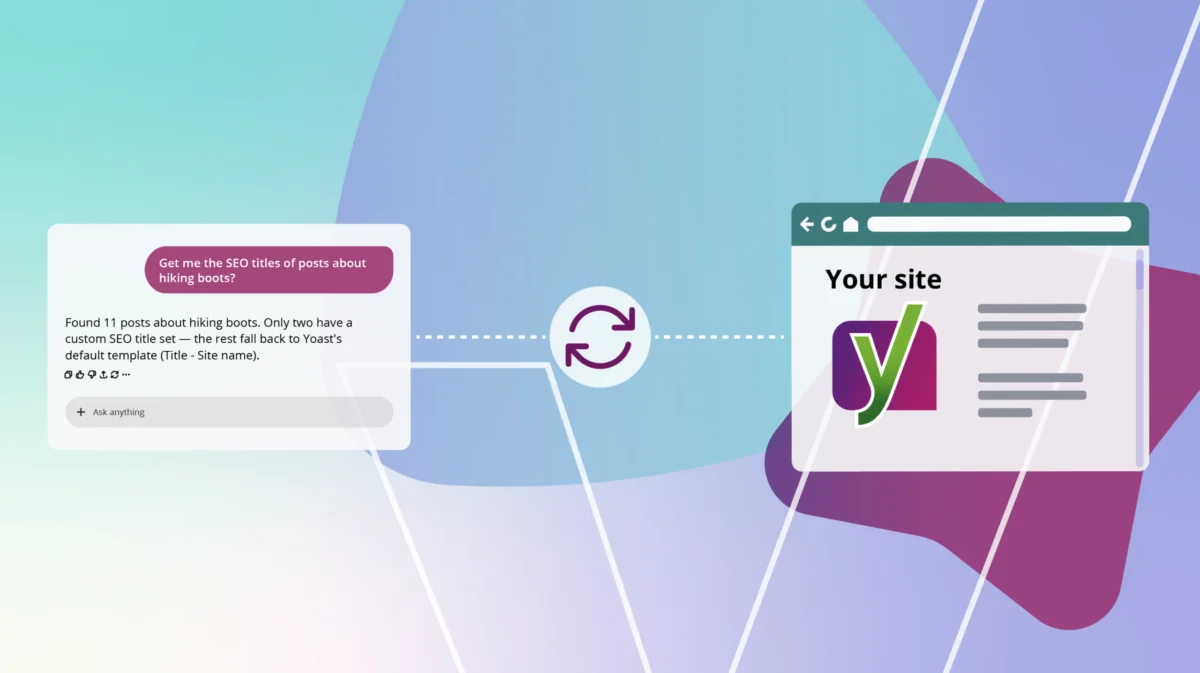
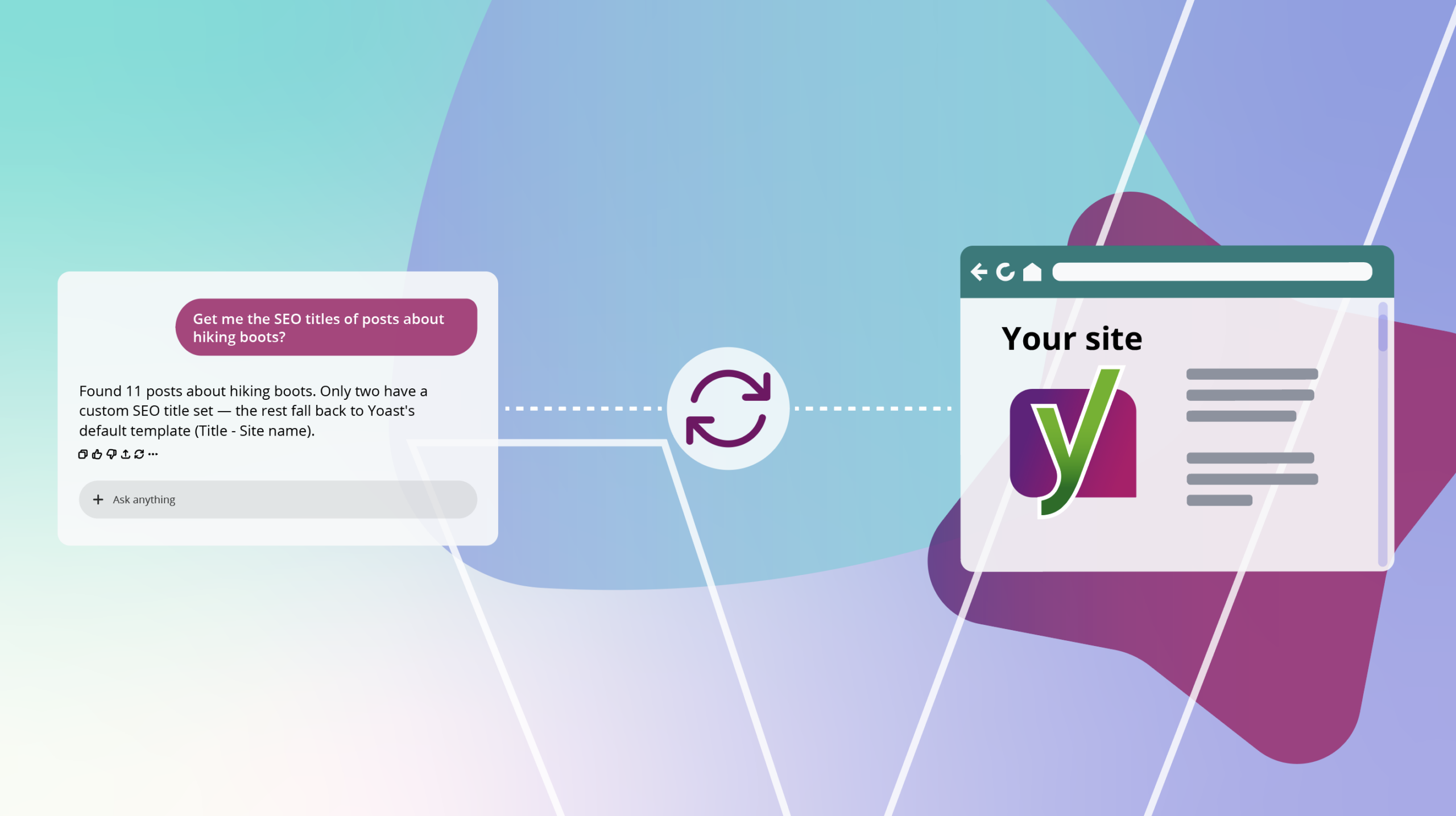
In the rapidly evolving landscape of search engine optimization (SEO), the bridge between identifying a problem and fixing it has long been a manual, labor-intensive trek. For years, webmasters and content strategists have relied on automated tools to audit their websites, only to be met with a list of "to-dos" that required hours of manual labor in the backend of their WordPress installations. Today, that paradigm shifts fundamentally. Yoast SEO has announced a significant update to its integration capabilities, enabling AI agents not just to flag technical SEO errors, but to execute the necessary fixes directly.
By leveraging the WordPress Abilities API, Yoast SEO is transforming AI from a passive consultant into an active site manager. This development marks a milestone in agentic workflows, allowing users to move from "diagnose and report" to "diagnose and resolve" in a single, seamless interaction.
The Evolution of AI in the WordPress Ecosystem
To understand the significance of this update, one must look at the recent history of AI integration within the WordPress environment. Since the introduction of the WordPress Abilities API in late 2025, the community has seen a push toward standardizing how external AI models interact with the vast, decentralized architecture of WordPress sites.
A Chronology of Integration
- November 2025: The WordPress community introduces the Abilities API, establishing a standardized framework for AI agents to interact with site data.
- April 2026: Yoast SEO makes its initial debut with the API, registering three core "abilities": reading SEO, readability, and inclusive language scores. While ground-breaking, these were strictly observational; the AI could tell you your post was poorly optimized, but it could not touch the settings.
- September 2026 (The Current Release): Yoast SEO expands its footprint, moving from read-only data to write-enabled technical management. This update allows for the full read/write cycle of core SEO fields, effectively closing the loop on automated site maintenance.
Understanding "Abilities": The New Standard for Agentic Workflows
The core of this release lies in the "Abilities" framework. In the context of the Model Context Protocol (MCP), an "Ability" is a defined, secure, and standardized way for an AI agent to perform a specific action on a website.
Previously, if an agent identified that a product page was incorrectly categorized as a "recipe" in Google’s schema, or if it found a broken canonical link, the user was left with the final, manual step. Now, through yoast-seo/get-post-seo-data and subsequent write-enabled functions, the agent can fetch the full SEO metadata, identify the discrepancy, and apply the correction.
Technical Capabilities
The new update provides granular control over the most critical technical SEO fields, including:
- Canonical URL Management: Ensuring search engines index the correct version of a page.
- Robots Meta Tags: Controlling how search engine crawlers interact with sensitive or redundant content.
- Schema Type Definition: Correctly informing search engines about the nature of the content (e.g., product, article, event).
- Cornerstone Content Flags: Allowing agents to prioritize high-value content for search rankings.
By standardizing these inputs and outputs, Yoast ensures that the agent is not simply "guessing" where to change a setting, but interacting with the WordPress database through a secure, documented interface.
Implications for Agencies and Webmasters
For professional agencies managing hundreds of client sites, this update is more than a quality-of-life improvement—it is a scalability revolution. The ability to perform bulk operations means that an agent could theoretically audit an entire site, identify common issues (such as incorrect robots tags on legacy pages), and rectify them in a single, verified batch.
Efficiency and Error Reduction
Manual site management is prone to human error—a misplaced checkmark or a typo in a canonical tag can have catastrophic impacts on search visibility. By moving these tasks to an agentic workflow, Yoast allows for:
- Uniformity: Every site under management can follow the same "Best Practice" protocols defined by the agency’s AI configuration.
- Speed: The time between identifying a technical SEO regression and fixing it is reduced from hours to seconds.
- Auditable Logs: Because these actions are performed via the WordPress Abilities API, every change is traceable through standard WordPress administrative audit trails.
The Human-in-the-Loop Safeguard
Despite the move toward automation, Yoast has been careful to preserve the boundary between "technical settings" and "content strategy." The focus keyphrase remains strictly read-only. This decision is deliberate; the focus keyphrase is the cornerstone of a human-led content strategy. Automating its change would risk invalidating human-curated marketing workflows and distorting the long-term analytics of content performance. By keeping the "what" (the strategy) in human hands and the "how" (the implementation) in the hands of the agent, Yoast maintains a necessary balance.
Security and Permission Architecture
A common concern with AI agents is the risk of unauthorized access or "runaway" automation. Yoast has mitigated this by anchoring their implementation to the native WordPress capability system.
There is no "separate" permission layer to learn. If an administrator can edit a post via the standard WordPress dashboard, an AI agent granted that same credential level can perform the action. This allows site owners to utilize standard WordPress security audits to monitor agent activity. Furthermore, the "roll-back" capability is a critical safety feature: provided the agent maintains context, the state of the post can be reverted, ensuring that if an AI makes a logic error, the site owner is not left in a compromised position.
The Future of the WordPress MCP Adapter
The reliance on the WordPress MCP (Model Context Protocol) Adapter is a strategic choice that positions Yoast at the center of the future of web development. By using this open-source standard, Yoast ensures that its tools are compatible with any MCP-aware environment, including:
- Claude Desktop: For localized, personal content management.
- Cursor and VS Code: For developers building custom automation workflows directly within their coding environments.
- Enterprise-Grade AI Dashboards: For large-scale reporting and management tools.
This interoperability means that agencies are no longer locked into a single proprietary ecosystem. The "standard setup" for one site is now the "standard setup" for all, significantly reducing the overhead of manual per-site configuration.
Getting Started: A New Dashboard Experience
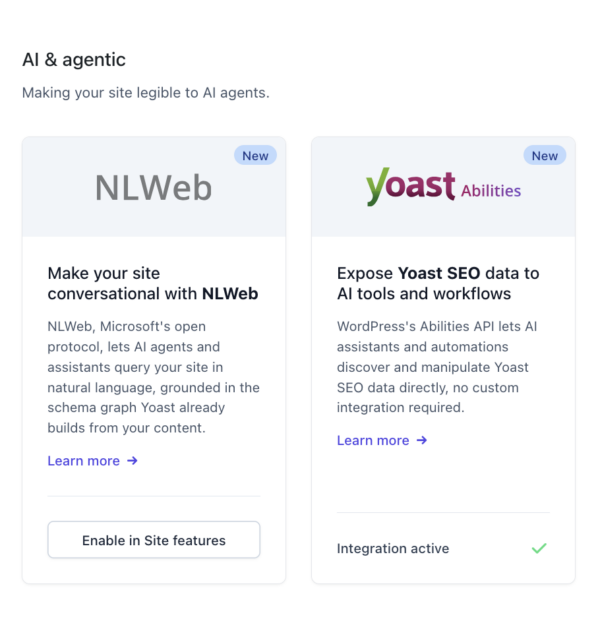
To reflect these changes, the Yoast SEO interface has undergone a reorganization. The "Integrations" page now features a dedicated "AI & Agentic" group. This is not merely an aesthetic choice; it signals a shift in how Yoast views the product—as a platform that is increasingly meant to be interfaced with by machines, not just humans.
For users ready to begin, the process involves:
- Connecting an LLM Subscription: Yoast requires a connection to a supported Large Language Model.
- Configuring the WordPress MCP Adapter: This allows the AI agent to "see" and "act" upon the WordPress instance.
- Reviewing the Developer Documentation: Because of the power inherent in these tools, understanding the typed input and output schemas is essential for any user looking to build custom agentic workflows.
Conclusion: The New Frontier of SEO
The integration of agentic workflows into Yoast SEO represents the end of the "passive" era of search engine optimization. We are entering an era where the tool does not just whisper advice in our ears, but picks up the tools to perform the work itself.
While the technology is sophisticated, the philosophy remains grounded: automation should serve the user, not replace their strategic intent. By keeping the content strategy in human hands while delegating the technical implementation to high-speed AI agents, Yoast is providing a blueprint for the future of digital management. As more agencies and site owners adopt these workflows, the standard for "site health" will inevitably rise, driven by agents that never sleep, never tire, and—thanks to the new WordPress Abilities API—never leave a technical debt unpaid.



