










Securing C-suite buy-in has never been about passion—it is about proof. In an era of shrinking marketing budgets and hyper-saturated social feeds, decision-makers are no longer swayed by the "nice-to-have" appeal of social media trends. To land your vision, you must lead with the numbers.
As we move through 2026, the shift from traditional top-down corporate messaging to decentralized, human-led advocacy has reached a critical tipping point. For CMOs and VPs of Marketing, the question is no longer whether employee advocacy works, but how quickly it can be formalized into a high-ROI growth engine.

The State of Play: Why Advocacy is the New Standard
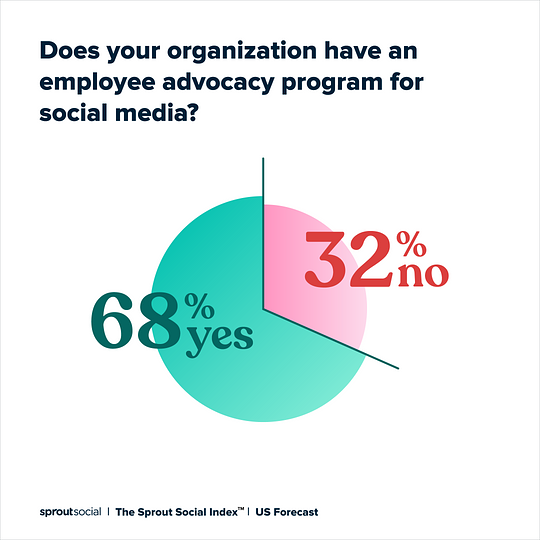
Before you step into the boardroom, you must reframe the narrative. Employee advocacy is not a "side project" or an informal experiment; it is a proven strategic standard. Research confirms that 68% of modern marketing organizations have already integrated formal advocacy programs into their overarching social strategy.
The rationale is clear: traditional paid social tactics are losing their edge. As organic reach declines and consumer trust in polished corporate accounts wanes, the human element becomes your most valuable asset. Sophisticated brands are now moving beyond ad-hoc efforts, instead formalizing their programs through dedicated staff, streamlined tools, and robust training protocols.
The Chronology of an Advocacy Strategy
To successfully launch an advocacy initiative, organizations typically follow a four-stage maturity model:
- The Informal Phase: Marketing teams encourage employees to share company news organically. Participation is low, inconsistent, and difficult to measure.
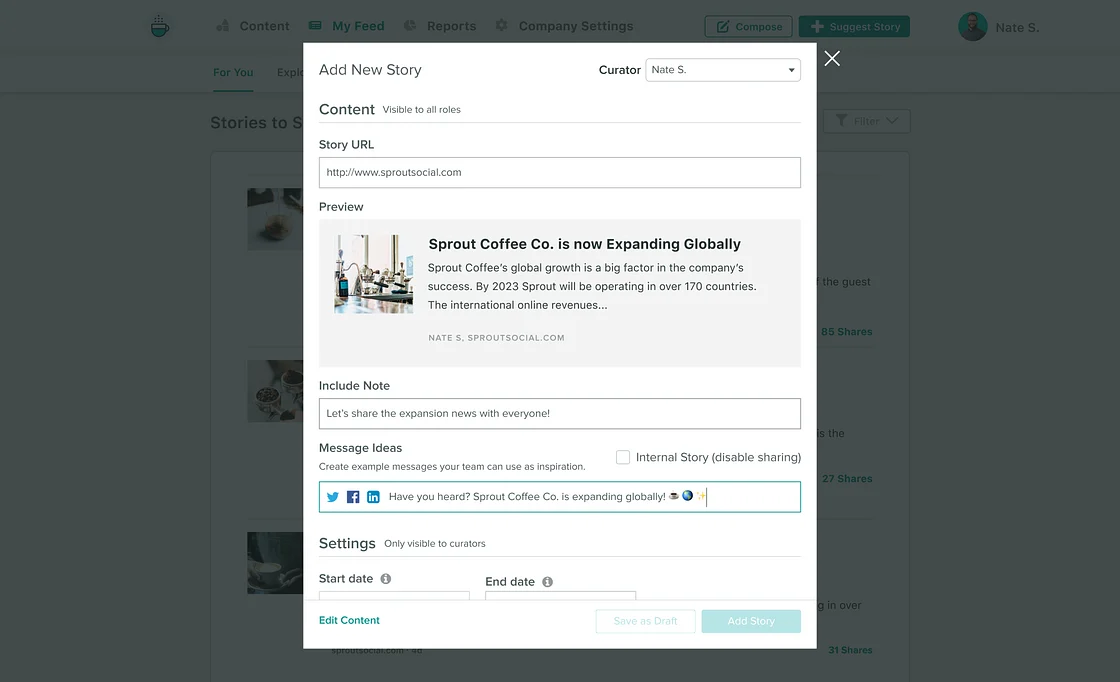
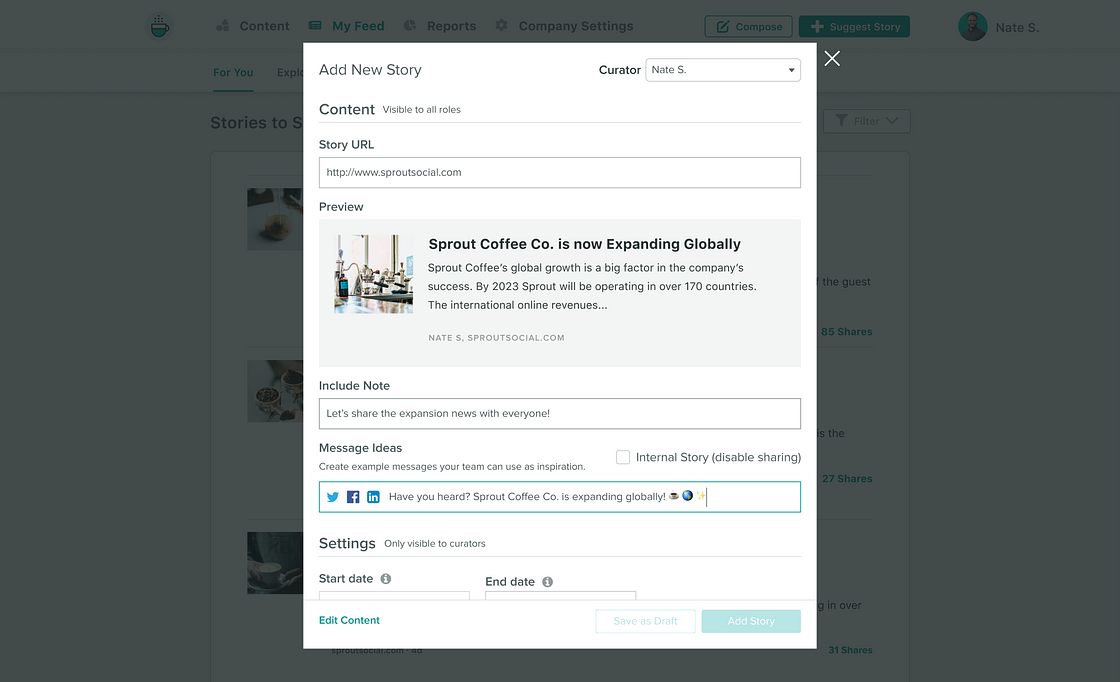
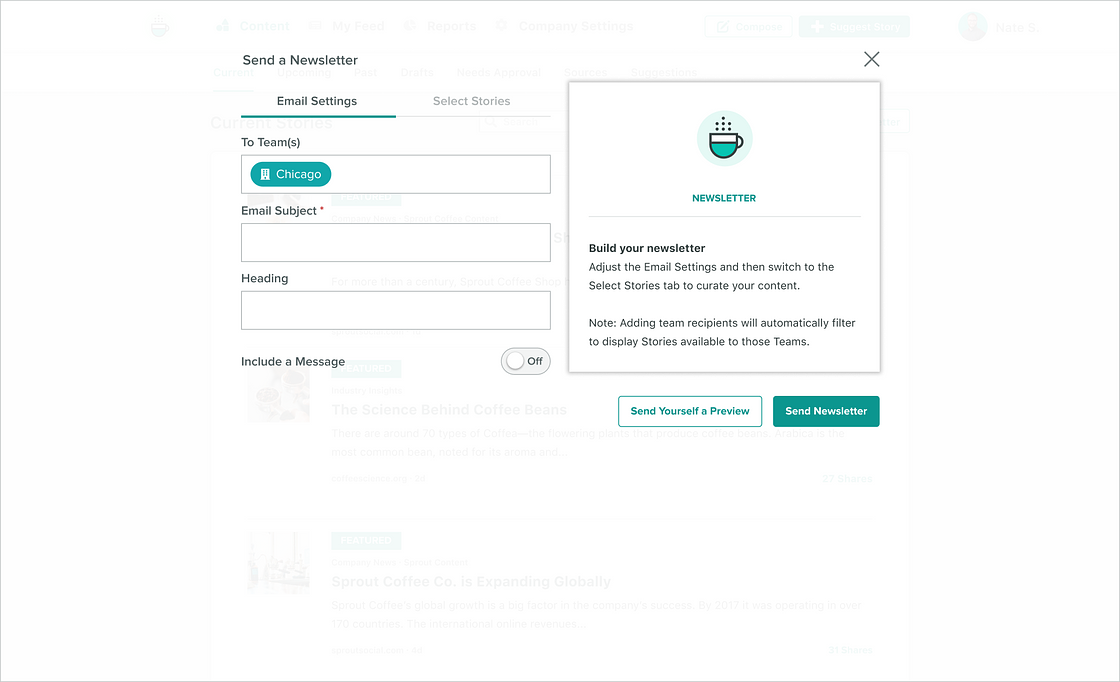
- The Tooling Phase: The organization adopts a centralized platform, such as Sprout Social’s Employee Advocacy solution. Content curation begins, and a "content-supply" rhythm is established.
- The Integration Phase: Advocacy is mapped to business objectives. Recruitment teams, sales departments, and internal comms leaders begin feeding content into the engine.
- The Optimized Phase: Advocacy is treated as a core channel. ROI is calculated in real-time, shares are tied to pipeline in the CRM, and the program is optimized based on high-converting content and high-performing advocates.
Supporting Data: The Case for Bottom-Up Trust
The most compelling argument for the C-suite is the decline of trust in institutional voices. According to Sprout Social’s 2026 research, 46% of consumers explicitly state a preference for hearing from frontline staff, compared to a mere 10% who value insights from C-suite executives.
This is the "Trust Gap." By leveraging your workforce, you bridge this gap with authenticity. Consider these statistics that act as the backbone of your pitch:
- The Reach Multiplier: 40% of consumers discover new products through employee-generated content on a monthly basis.
- The Participation Factor: 85% of onboarded employees actively share content on their personal channels when provided with a curated, frictionless tool.
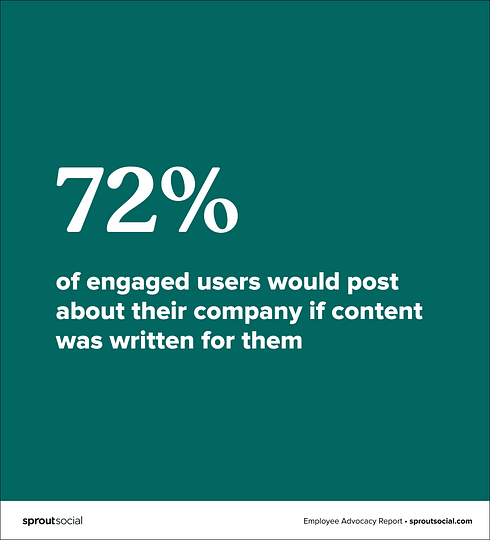
- The Content Gap: 72% of engaged employees would post company content if their marketing teams simply wrote it for them.
These numbers suggest that low participation is rarely a lack of desire; it is a content-supply problem. When you eliminate the friction—by providing pre-approved, easy-to-share messaging—you unlock a massive, dormant distribution network.
Amplification and the ROI of Earned Media
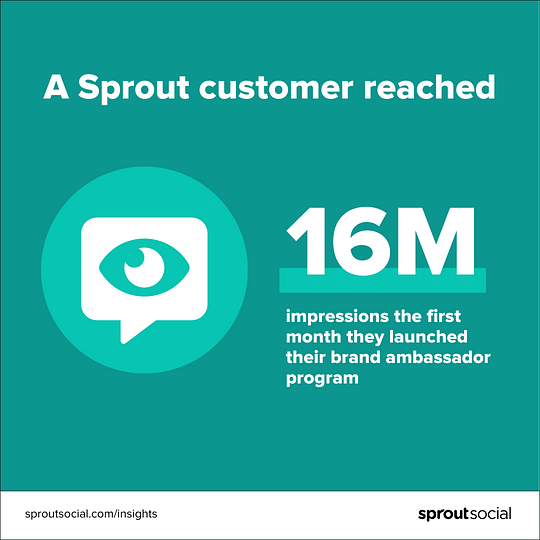
The impact on brand amplification is immediate and measurable. When an organization like IT software leader Ivanti launched its brand ambassador program using Sprout Social, the results were staggering: 16 million in incremental reach within the first 30 days.
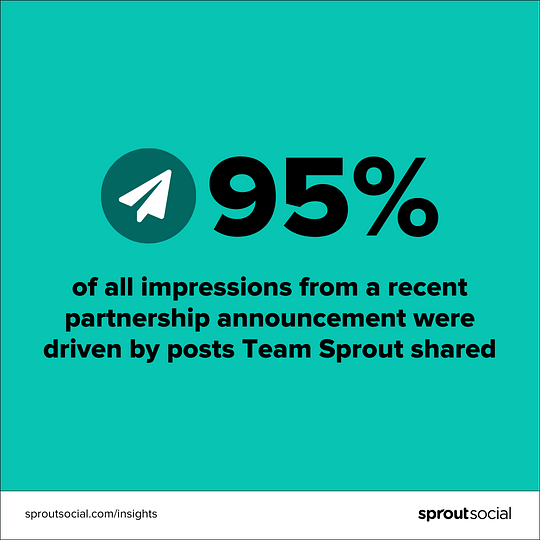
This is not an outlier. During a major global partnership announcement for Sprout Social, 95% of the 740,000 total impressions were driven not by the company’s main corporate account, but by the personal posts shared by the team.
Translating Reach into Revenue
The C-suite cares about the bottom line, and advocacy delivers. The financial impact manifests in three ways:
- Cost Efficiency: You generate qualified leads without increasing your paid media budget. Infor, for instance, generated $100,000 in earned media value (EMV) in a single month through their advocacy program.
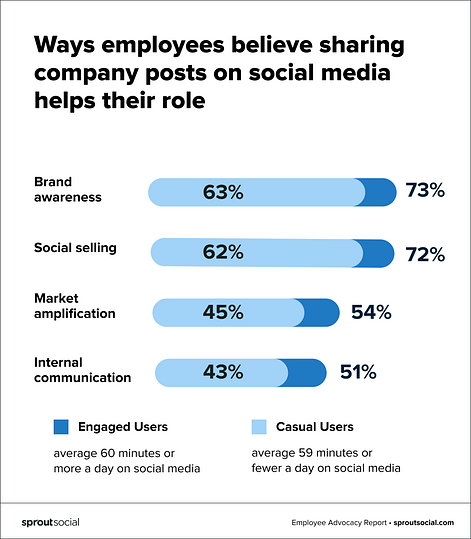
- Social Selling: Data from LinkedIn’s Social Selling Index reveals that sales professionals who regularly share company content are 51% more likely to reach their quota. It positions the salesperson as a thought leader rather than a cold-caller.
- Internal Alignment: 72% of engaged users report that advocacy platforms directly support their sales efforts, providing them with the professional collateral they need to engage prospects.
Official Perspectives: The Strategic Mandate
In the words of industry leaders, the integration of advocacy is the most effective way to combat the rising costs of paid digital advertising. "Paid reach is increasingly expensive and increasingly ignored," says the marketing leadership at Sprout Social. "Activating employees scales the one asset audiences still reward: authentic, human credibility, at no added media cost."
The implications for the organization are twofold:
- Recruitment: Potential hires treat social media as their primary research tool. When employees celebrate the company culture, they strengthen the employer brand in ways that HR-led recruitment campaigns cannot.
- Retention: Advocacy fosters a sense of ownership. When employees become the voice of the brand, their morale, engagement, and sense of belonging increase significantly.
Implications for the Future
The decision to formalize an advocacy program carries long-term strategic implications for the business.
1. The Death of the "Corporate Filter"
As AI-generated content floods the web, human authenticity will command a premium. Companies that hide behind sterile, overly-curated corporate accounts will find themselves increasingly invisible. Advocacy programs ensure your brand voice remains human-centric.
2. Data-Driven Channel Management
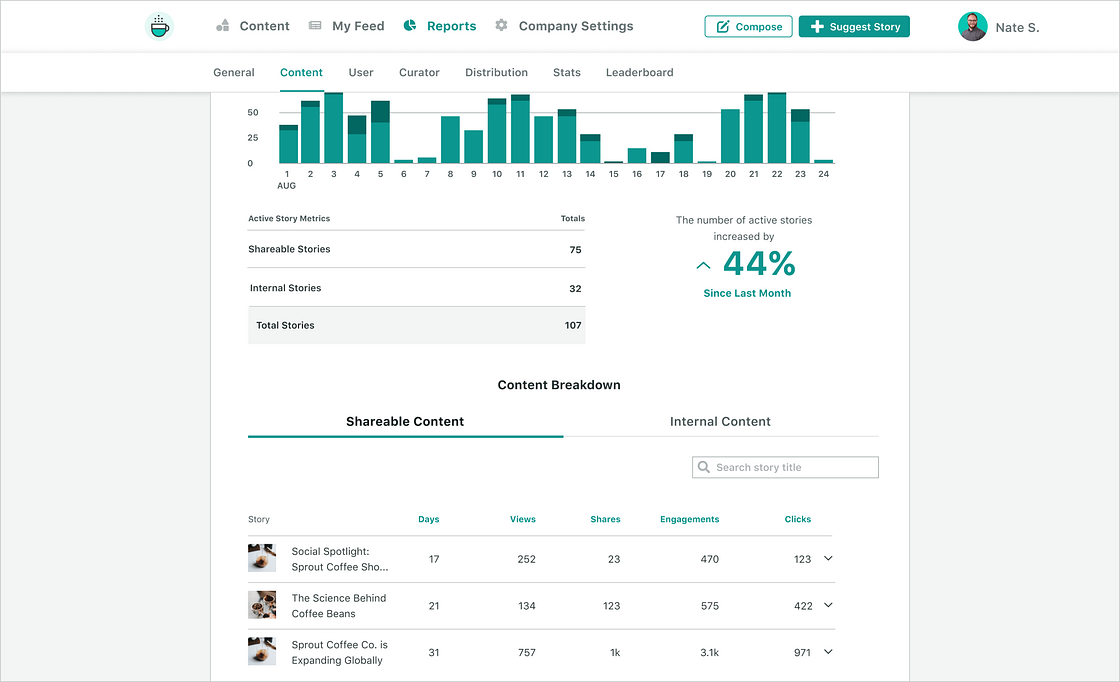
By using platforms that track engagement, reach, and clicks in real-time, marketing leaders can treat employee networks as a formal media channel. You can now report on "Employee-Driven Pipeline" in the same way you report on "Paid Search Pipeline."
3. Cultural Stewardship
An advocacy program is the ultimate test of company culture. If employees are willing to share your content, you have a healthy, engaged workforce. If they aren’t, the data will point to a fundamental issue that requires leadership intervention—making the advocacy tool a diagnostic instrument for the health of the organization.
Final Word: The Path Forward
The business case is ironclad. Whether the goal is to drive top-of-funnel demand, boost sales conversion, or attract elite talent, employee advocacy serves as the force multiplier for your existing resources.
The question for leadership is no longer "should we do this?" but "how fast can we scale it?" By utilizing specialized tools like Sprout Social’s Advocacy platform, companies can move from fragmented, informal sharing to a streamlined, high-output engine. The data is clear: your employees are your most trusted voice. The only task remaining is to give them the tools to speak.
Frequently Asked Questions (FAQ)
What is the defining characteristic of a successful employee advocacy program?
A successful program moves from voluntary, sporadic posting to a structured ecosystem where employees are provided with high-quality, pre-approved content that they feel comfortable sharing in their own voice.
How do I measure the ROI of my advocacy efforts?
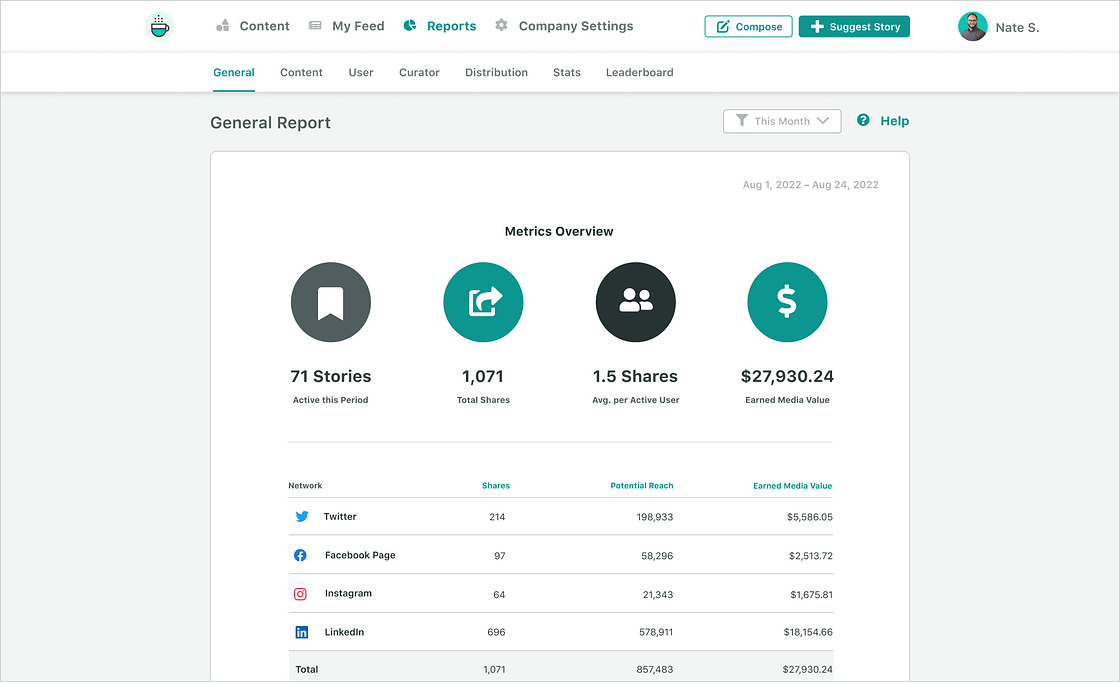
Measure the "Earned Media Value" (the cost equivalent of the organic reach you generated), the number of qualified leads tied to employee shares in your CRM, and the decrease in your cost-per-acquisition (CPA) for recruiting.
What if employees are afraid to post?
Most employees fear looking "unprofessional" or getting in trouble with HR. Formal programs solve this by providing pre-approved, "safe" content and clear social media guidelines, removing the fear factor and allowing them to share with confidence.
How does advocacy impact the sales cycle?
It accelerates the cycle by building trust earlier. A prospect who sees a solution shared by a peer or a subject-matter expert is significantly more likely to engage with that company than one who sees a generic paid advertisement.



