









Main Facts
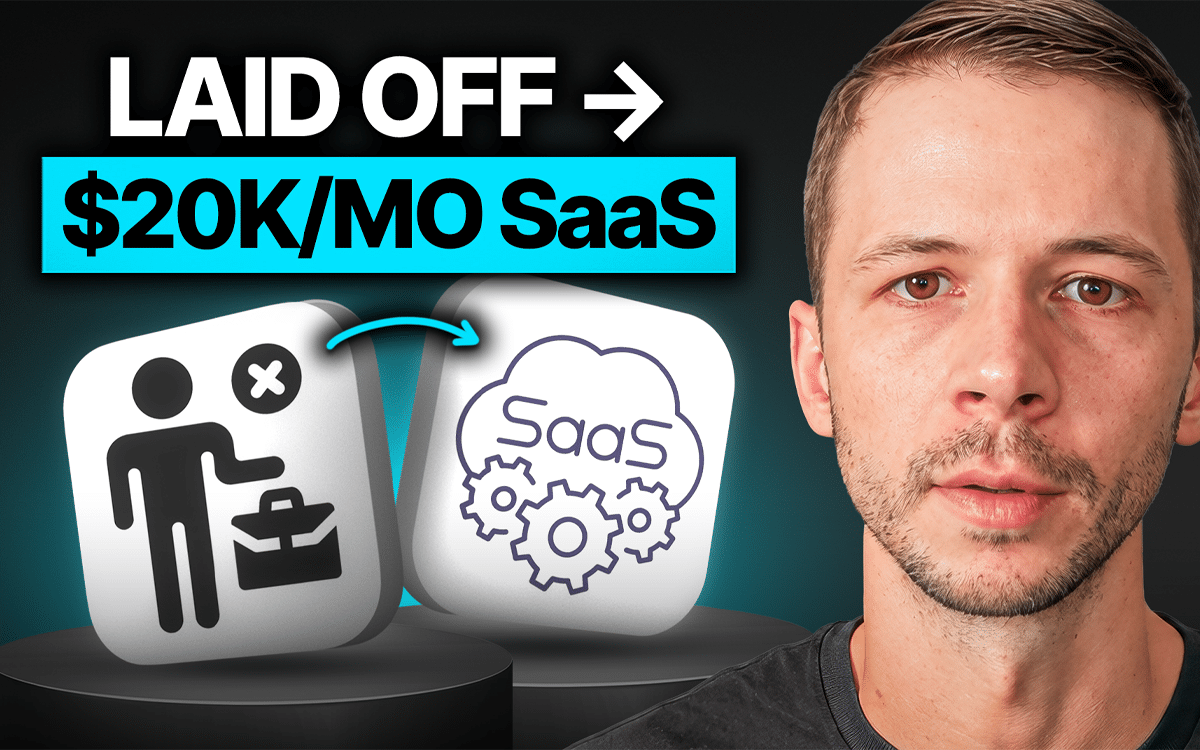
In the latest installment of the Niche Pursuits podcast, host Ben Adler sits down with Ben Bozzay, the solo founder behind Tech Lockdown. What began as a personal quest to curb excessive screen time during the 2020 COVID-19 lockdowns has evolved into a thriving software-as-a-service (SaaS) enterprise generating $20,000 in monthly recurring revenue (MRR).
Operating primarily as a one-person business supported by strategic contractors, Tech Lockdown bridges the gap between enterprise-grade cybersecurity tools and consumer digital wellbeing. By adapting corporate-level network controls—such as advanced DNS filtering and mobile device management (MDM) profiles—for individual use, Bozzay has carved out a unique niche. Rather than focusing on the traditional parental-control market, Tech Lockdown caters directly to adults seeking self-imposed accountability and robust internet restriction tools.
Chronology of a Bootstrap Success
The trajectory of Tech Lockdown demonstrates a rare blueprint of organic business evolution. The venture did not start in a boardroom with venture capital; it emerged iteratively over several years through a structured progression:
1. The Genesis: Personal Experimentation (2020)
Working from home during the pandemic, Bozzay recognized that his own internet habits were deteriorating. Being a technically proficient software engineer with a background in cybersecurity and marketing, standard consumer website-blocking applications were inadequate. He knew how to bypass them. Consequently, he began implementing enterprise-style controls on his personal hardware to establish rigorous guardrails.
2. Public Documentation and Content Experiments
Without commercial intentions, Bozzay began documenting his methodologies on Medium, Reddit, and YouTube. He outlined how everyday users could leverage network-level configurations to curb digital distractions. The response was immediate and overwhelming, validating a broader market demand for advanced digital boundary enforcement.
3. Monetization via Paid Content (2021)
As search engines began indexing his technical guides, organic traffic surged. To capture this value, Bozzay introduced a paid membership model. This served as productized consulting—comprehensive, step-by-step guides that saved users hours of frustrating troubleshooting. This phase established vital trust and early revenue streams.
4. The Shift to SaaS (2022)
While profitable, static guides presented a retention challenge: customers rarely renewed their subscriptions once their systems were successfully configured. Recognizing this limitation, Bozzay integrated a DNS filtering product into his offerings. This pivot transformed a static knowledge base into an ongoing software subscription, cementing the foundation of a true SaaS business model.
5. The Catalyst: Corporate Layoffs and Full-Time Transition (2023)
In 2023, amid widespread tech industry downsizing, Bozzay was laid off. At that juncture, Tech Lockdown supported roughly 300 customers, yielding less than $2,000 in monthly profit—barely enough to cover healthcare and basic living expenses. Despite receiving lucrative corporate job offers, Bozzay—encouraged by his wife—committed to building Tech Lockdown full-time.
Supporting Data and Business Metrics
Bozzay’s journey is underlined by metrics that highlight the power of targeted organic marketing and high-intent niche authority:
- Revenue Milestone: The business successfully reached $20,000 in Monthly Recurring Revenue (MRR) as a solo founder operation.
- Organic Traffic Peak: At its height, Tech Lockdown captured approximately 70,000 organic visitors per month through focused search engine optimization (SEO).
- Lean Operations: The company operates with minimal overhead, relying solely on Bozzay for core development and strategy, supplemented by a single contractor handling customer support.
- Product Ecosystem Expansion: Beyond Tech Lockdown, Bozzay has introduced "LivingRoom," a companion application utilizing AI to detect inappropriate content and provide screen activity visibility, diversifying his portfolio into accountability monitoring.
The Growth Engine: SEO Strategy and Funnel Architecture
While many digital publishers struggled with fluctuating search engine algorithms and the rise of AI-generated search summaries, Tech Lockdown maintained strong organic growth. Bozzay’s content strategy defied conventional keyword-volume logic.
Instead of targeting generic, highly competitive terms like "website blocker," he wrote hyper-specific technical guides addressing obscure problems. For example, rather than a broad guide, he targeted scenarios like preventing users from terminating a blocking application via the Windows Task Manager.
The Content Tree Framework
Bozzay constructed a structured "content tree" that interconnected his resources:
- Top-of-Funnel Content: Broad guides regarding digital productivity and general website restriction.
- Mid-Funnel Content: Specific operating system configurations and hardware-level restrictions.
- Bottom-of-Funnel Content: Direct integration guides for Tech Lockdown’s proprietary DNS filters and SaaS solutions.
By utilizing descriptive internal linking, Bozzay helped search engine crawlers understand the semantic relationship between pages, establishing authority in a specialized corner of cybersecurity. Furthermore, early engagement on platforms like Reddit and YouTube created a trustworthy brand footprint, proving that transparent, value-driven free content naturally funnels users toward paid tools.
Implications for Founders and Digital Entrepreneurs
The story of Tech Lockdown offers valuable lessons for modern SaaS founders, indie hackers, and niche site developers:
1. Document, Do Not Just Build
Bozzay did not begin with a fully articulated software product. He began by solving an acute personal pain point and publicly recording the solution. By sharing the documentation, he discovered an audience willing to pay for convenience and structure.
2. Target Underserved Demographics
While the vast majority of digital wellness tools target parents managing children’s internet access, Bozzay identified the adult demographic. Adults possess administrative privileges over their own devices, rendering traditional software blockers ineffective. By solving the harder technical challenge of restricting a savvy user who holds the master keys, he captured a loyal, high-retention market.
3. The Power of Branded Search in the Age of AI
As artificial intelligence reshapes search engine results pages (SERPs), Bozzay emphasizes the importance of building recognizable, branded terminology. When AI-generated summaries prompt follow-up queries, owning proprietary phrasing and establishing deep category authority ensures that a brand remains the definitive answer.
4. Patience in Transitions
Going full-time on a bootstrap venture does not guarantee overnight acceleration. Bozzay experienced months of flat revenue growth following his layoff, reinforcing the reality that sustainable SaaS growth requires sustained operational endurance and iterative product enhancement.
Future Outlook
Looking ahead, Bozzay is continuing to innovate within the digital wellbeing space. His current roadmap includes developing a seamless, no-reset iPhone management solution—a feature that has historically challenged developers due to Apple’s stringent Mobile Device Management (MDM) enrollment requirements.
Concurrently, the scaling of the LivingRoom application allows him to address a complementary market need: visual accountability versus hard restrictions. By balancing restriction (Tech Lockdown) with visibility (LivingRoom), Bozzay is positioning his business footprint to capture a comprehensive share of the modern digital wellness landscape.