Google is fundamentally reshaping the landscape of its generative AI ecosystem. Following a significant shift toward compute-based usage metrics implemented in May, the technology giant has officially announced a new, more granular structure for how its Gemini models are distributed across user tiers. Starting October 9, the accessibility of specific models—ranging from the efficient Flash-Lite to the highly sophisticated Pro—will be restricted based on subscription status.
This strategic pivot aims to align model performance with specific user needs while incentivizing movement toward higher-tier subscriptions. As Google continues to iterate on its flagship AI, the distinction between "casual" and "power" users has become increasingly defined by the underlying compute capabilities of the models they can access.
Main Facts: The New Model Access Matrix
The core of Google’s announcement centers on a revised distribution of its Gemini 3.x series. According to an updated support document, Google is establishing a clear hierarchy of availability.
Tiered Availability Summary
- Free Tier (No Subscription): Users will be restricted exclusively to the Gemini 3.5 Flash-Lite model. Access to the 3.6 Flash and 3.1 Pro models will be deprecated for non-paying users effective October 9.
- AI Plus ($4.99/month): Subscribers will have access to Flash-Lite and Flash. Notably, the 3.1 Pro model is being removed from this tier. Google has confirmed that affected subscribers will receive direct communications regarding the timeline for this transition.
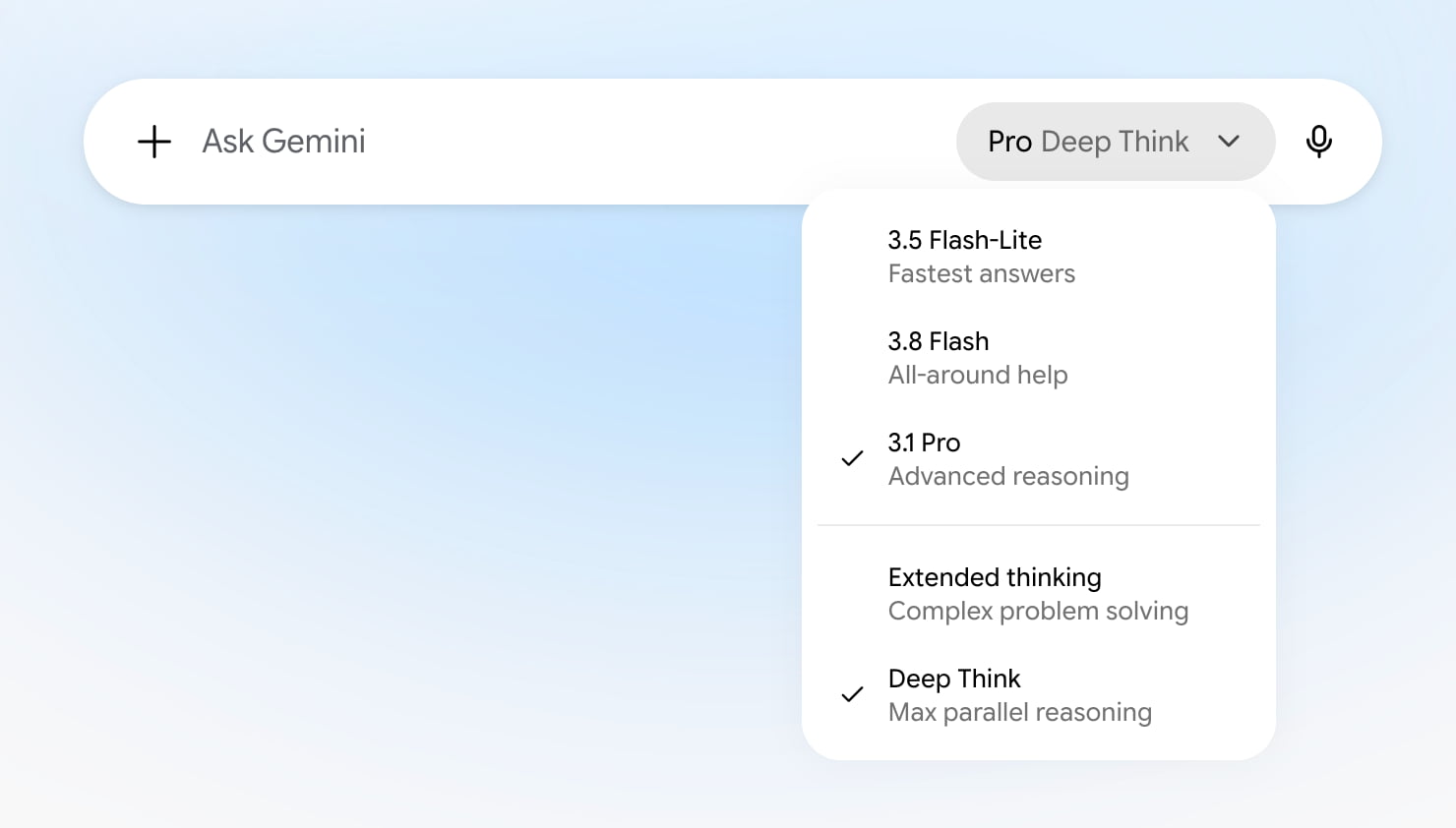
- AI Pro ($19.99/month): These users will maintain access to Flash-Lite, Flash, and Pro. Furthermore, they gain a significant upgrade: access to the "Deep Think" reasoning engine—a feature previously gated behind the premium $99.99 and $199.99 tiers.
- AI Ultra ($99.99+): These power users retain access to the full spectrum of models, including the most advanced Pro and Deep Think capabilities, without any regression in service.
Chronology of Changes
The road to this current restructuring began earlier this year, marking a transition from unlimited access to a more sustainable, compute-aware model.
- May 2026: Google introduces compute-based usage limits, setting the stage for more stringent model gating. This initial change moved the industry away from "unlimited" promises toward a more nuanced understanding of token consumption and processing power.
- February 2026: The company announces Gemini 3.1 Pro, specifically targeting complex problem-solving. At the time, this was positioned as a high-end tool, setting the precedent for the "Deep Think" capabilities now being trickled down to the Pro tier.
- October 3, 2026: Google updates its official support documentation, outlining the hard cutoff dates for model access across various subscription levels.
- October 9, 2026: The effective date for the removal of Pro and Flash access from lower-tier plans.
Supporting Data and Technical Context
The shift is not merely about exclusivity; it is about "effort levels." Alongside the tier restructuring, Google is introducing a new user-facing control system for model responses. In the coming weeks, the Gemini app will implement three distinct effort levels: Low, Medium, and High.
Understanding Effort Levels
Currently, users are familiar with a binary "Extended thinking" toggle for complex problem-solving. The new system will allow users to modulate how much "compute budget" they wish to allocate to a single prompt.
- Low/Medium/High: These settings allow the model to dedicate varying degrees of internal chain-of-thought processing to a query.
- Trade-offs: While higher effort levels yield more thorough, logically sound, and accurate responses, they consume significantly more of the user’s allotted usage limit.
- Parity with Ecosystem: This system mirrors the functionality already present in Google AI Studio and Antigravity, effectively unifying the user experience across both professional development tools and consumer-facing applications.
Implications for the AI Landscape
The decision to restrict access to the Pro model for $4.99/month subscribers suggests that Google is attempting to create a "middle class" of AI users. By reserving the Pro and Deep Think models for the $19.99/month tier and above, Google is signaling that high-end logical reasoning and multi-step inference are premium resources, not baseline utilities.
The "Argon" Variable
One of the most significant lingering questions involves the upcoming Gemini 4 Argon model. Google has confirmed that this model will be available to AI Ultra subscribers, but the company has remained coy about its wider distribution. It is unclear if Argon will exist as a sub-category of the "Pro" line or if it represents the first step toward a new, higher-level tier of AI performance that sits above the current flagship models.
For the average user, the implications are twofold:
- Increased Efficiency: The reliance on Flash-Lite for free users forces Google to optimize its smallest models for high performance, potentially leading to faster, more responsive interactions for the largest demographic of users.
- Cost of Intelligence: For professional developers and heavy researchers, the $19.99/month tier has arguably become more valuable. By bundling "Deep Think" into the Pro subscription, Google has lowered the barrier to entry for advanced reasoning tools, potentially making the AI Pro plan the "sweet spot" for productivity enthusiasts.
Official Responses and Strategic Direction
While Google has not released a public statement beyond the updated support documentation, the move is consistent with the company’s broader "AI-first" strategy. By managing compute resources more tightly, Google is likely attempting to balance the immense server costs of running Large Language Models (LLMs) with the necessity of maintaining a large user base to provide the reinforcement learning feedback (RLHF) required to improve the models.
The move to inform $4.99/month subscribers via email demonstrates a desire to mitigate churn. By framing the transition as a shift in available tools rather than a simple feature removal, Google hopes to retain users who may be persuaded to upgrade to the Pro tier as they realize the limitations of the Flash-based models for complex tasks.
Conclusion: The Future of Compute-Based Access
The restructuring of Gemini model access reflects a maturing industry. We are moving past the era of "free, unlimited AI" into a period of nuanced consumption where the depth of an AI’s reasoning is a tiered commodity.

As of October 2026, the Gemini app has become a laboratory for this tiered approach. Whether this strategy will successfully push the average consumer toward higher monthly spending remains to be seen. However, by providing transparent controls like "effort levels," Google is empowering users to manage their own compute consumption—a necessary evolution as models become increasingly capable, and correspondingly, more expensive to run.
For now, users on the free and Plus plans should prepare for a transition that prioritizes speed and efficiency over deep, exhaustive reasoning. For those who rely on Gemini for high-stakes problem-solving, the path forward is clear: the AI Pro tier now offers the best balance of model complexity and specialized reasoning capabilities currently available in the Google ecosystem.