










As traditional organic search traffic faces continuous pressure and fluctuations, modern businesses are aggressively forced to diversify their digital marketing ecosystems. Social media has long stood as a bedrock for cultivating brand awareness, fostering community engagement, and driving direct sales. However, a persistent friction point has always plagued digital marketers: the siloed nature of platform analytics. While prominent social media networks offer robust native analytics tools to monitor follower growth and immediate engagement, those metrics stop abruptly at the platform’s edge, offering zero insight into how that social content performs within broader search engines.
That paradigm is now shifting. Following a gradual, much-anticipated rollout, Google Search Console has officially opened its doors to everyone, introducing a powerful new capability that allows account holders to track organic search activity directly for their social profiles. Treating social accounts with the same gravity as traditional websites, this new integration supports professional accounts across YouTube, TikTok, X (formerly Twitter), and Instagram, marking a massive leap forward for cross-channel performance attribution.
Main Facts: What Is a "Platform Property"?
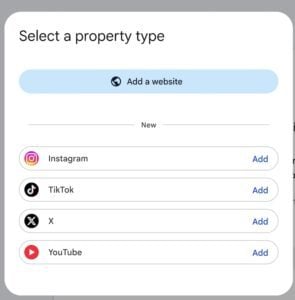
At its core, the newly expanded Google Search Console introduces the concept of "platform properties." Instead of restricting properties strictly to traditional domains and mobile apps, Search Console now treats verified social media profiles as standalone digital assets.
To activate this feature, users simply navigate to the top-left drop-down menu within Search Console, click "Add property," and follow the straightforward authentication steps required to link their professional social profiles. Once verified, the system begins processing data, with comprehensive analytics typically populating within 36 hours.
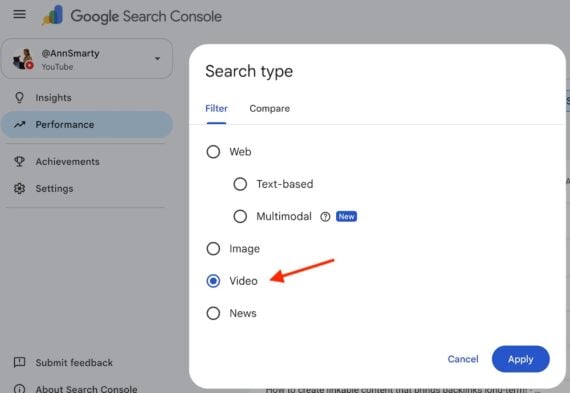
The newly minted social-media-profile dashboard is streamlined, housing two primary components: the Insights tab and the Performance section. The latter is particularly robust, featuring comprehensive Search metrics that can be meticulously filtered by text or multimodal web search, image search, video search, and News, alongside visibility tracking for Google Discover.
Crucially, this development addresses a long-standing blind spot. Marketers no longer have to guess whether their social media content is spilling over into Google’s traditional search engine results pages (SERPs). They can now measure impressions, clicks, average position, and click-through rates (CTR) for their social properties with the exact same precision applied to traditional web properties.
Chronology: The Evolution Toward Unified Search Tracking
The journey toward integrated social and search analytics has developed in distinct phases over the past several years:
- The Siloed Era: For over a decade, Google Search Console remained strictly walled off, indexing web pages while major social platforms kept their algorithmic mechanics and external search visibility under tight wraps. Marketers relied on third-party scrapers or fragmented UTM tagging to bridge the gap.
- The Rise of Multimodal and AI Search: As Google evolved beyond simple keyword matching into multimodal search (processing images, text, and video simultaneously) and integrated generative AI features like AI Overviews and Gemini, video and image content began dominating SERPs. YouTube content, in particular, achieved unprecedented prominence in Google search results.
- The Rollout of Platform Properties: Recognizing the interconnected nature of modern digital discovery, Google quietly initiated a limited beta test allowing select users to link non-website properties.
- General Availability: Following iterative testing and infrastructure scaling, Google has completed a slow rollout, making platform property tracking universally available for professional accounts across YouTube, TikTok, X, and Instagram.
Supporting Data and Deep Dive: Unlocking YouTube and Instagram Metrics
The true power of this update lies within its granular filtering options, which offer unprecedented visibility into specific media types.
The YouTube Advantage and Video SEO
The inclusion of YouTube as a trackable platform property is arguably the update’s most impactful feature. Because YouTube content natively ranks exceptionally well in Google Search—and is now routinely cited within AI Overviews, AI Mode, and Google Gemini—tracking individual video performance has historically been an exhaustive, manual burden.
With the new update, the process is streamlined:
- Add your YouTube channel via the property drop-down menu.
- Navigate to the Performance dashboard section.
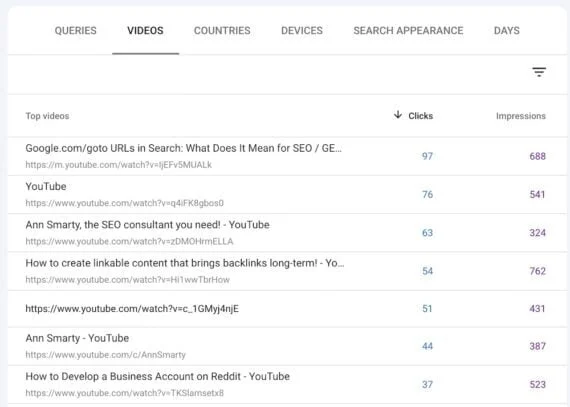
- Select the "Videos" search type filter to instantly isolate which YouTube videos are actively ranking in Google Search and driving clicks.
- Click on individual video links within the list to uncover the exact search queries prompting those impressions.
This opens up sophisticated Video SEO tactics. Content creators and ecommerce brands can now cross-reference data to identify queries characterized by high view counts, low click-through rates, and an average position lower than 4. By injecting those specific high-intent queries directly into video titles, or experimenting with variations in titles and descriptions based on top-ranking query reports, marketers can aggressively optimize their video assets for maximum search visibility. Furthermore, this data stream naturally uncovers fresh, high-value target keywords that businesses may not have discovered through traditional website keyword research.
Multimodal Search and Instagram
For ecommerce brands heavily reliant on visual marketing, Instagram integration provides a vital new lens. Merchants who routinely publish product photos to Instagram can now monitor the "Multimodal search" performance filter within their Instagram property dashboard. This specific filter explicitly reveals whether and how often those social images are appearing and earning clicks within Google Image Search, closing the loop on visual commerce tracking.
Official Perspectives and Technical Nuances
While the integration is robust, digital marketing professionals should note a few technical nuances currently inherent to the platform properties update:
- Absence of Branded Filters: The new social metrics do not currently feature the dedicated Branded search filter found in traditional web properties. However, marketers can effortlessly bypass this limitation by manually filtering queries to evaluate how their social profiles and updates rank for brand names and brand variations.
- Holistic Cross-Channel Strategy: Industry experts emphasize that this feature elevates cross-channel marketing from a theoretical goal to a measurable science. For instance, a digital strategist can orchestrate a synchronized campaign—publishing a comprehensive blog post, launching a companion YouTube video, and distributing related product imagery on Instagram. By annotating Search Console with the exact go-live dates for each asset, teams can accurately track how each channel influences organic search performance and reinforces the others.
Implications for the Future of Digital Marketing
The rollout of platform properties in Google Search Console signals a profound philosophical shift in how search engines and marketers view the digital ecosystem. Boundaries between "social media marketing" and "search engine optimization" are officially dissolving.
As organic search traffic becomes increasingly competitive and influenced by AI-driven discovery engines, businesses can no longer afford to treat social channels as isolated brand-awareness playgrounds. Every tweet, TikTok video, Instagram post, and YouTube upload contributes to an overarching digital footprint that Google indexes, evaluates, and serves to consumers.
By centralizing performance data, Google is empowering brands to optimize their entire content matrix through a single analytical pane of glass. For ecommerce merchants, content creators, and enterprise digital marketers alike, mastering this new cross-channel Search Console capability will be essential for capturing visibility, maximizing ROI, and staying ahead in the rapidly evolving landscape of modern search.



