






New Delhi & Bengaluru — In the rapidly evolving landscape of artificial intelligence, the line between national technological sovereignty and global open-source commercialism is razor-thin. Bengaluru-based generative AI startup Sarvam AI has recently found itself at the epicenter of a fierce online controversy following the launch of its commercial inference platform, Token Factory.
While the platform was designed to give developers, enterprises, and startups seamless, cost-effective access to global AI models running on localized Indian computing infrastructure, it has inadvertently triggered a nationwide debate. Critics are questioning whether a company backed by government grants and tasked with spearheading India’s sovereign AI ambitions should be profiting from hosting foreign—specifically Chinese—open-weight models.
The backlash highlights broader tensions within emerging tech economies: How should local companies balance national expectations with commercial viability, and what does it truly mean to build a "sovereign" AI ecosystem?
Main Facts: What is Token Factory and Why the Uproar?
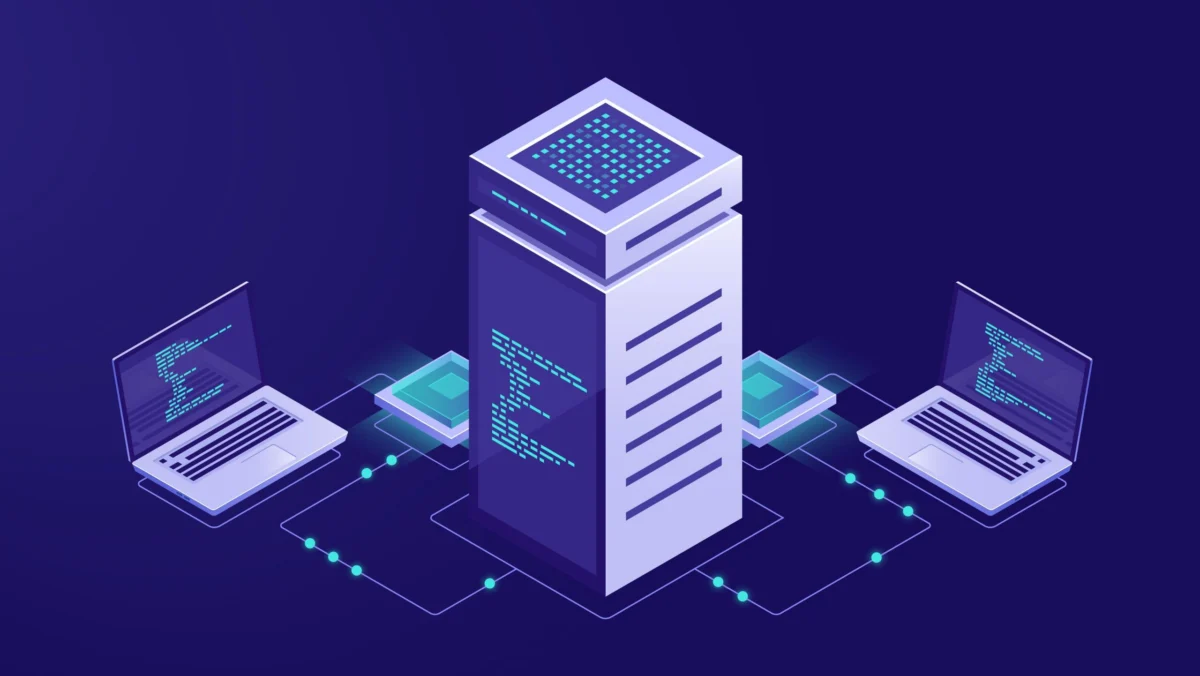
Launched on November 18, Token Factory is a commercial inference stack. In technical terms, an inference platform allows software applications to run pre-trained AI models to generate text, code, or data ("tokens") in response to user prompts. Building an AI product from scratch is exceptionally expensive, requiring deep coding expertise, massive data sets, and intensive graphics processing units (GPUs). Token Factory seeks to bridge this gap by offering a single Application Programming Interface (API) that enables businesses to build agents, copilots, and workflows without massive upfront hardware investments.
However, the catalog of models hosted on Token Factory is what drew immediate scrutiny. Alongside its indigenous models—such as Sarvam 105B, Sarvam 105B Conversations, and Sarvam Prism—the platform hosts a suite of prominent international models. These include Google’s Gemma series and six Chinese AI models developed by major Asian labs, including DeepSeek V4.1 Flash, DeepSeek V4 Pro, Kimi K3.1 Pro, Qwen 3.8 27B, and GLM 5.3.
Sarvam markets the platform as a way to make leading open-weight models faster and cheaper to run within India, offering aggressive introductory pricing—Rs 14 per million input tokens and Rs 55 per million output tokens—while ensuring local data residency and rupee-based transactions.
Despite these practical business advantages, critics argue that a company flagged as a champion of India’s indigenous tech movement should not be spending its compute power serving foreign-developed systems.
Chronology of Events: From Defense Pacts to Digital Backlash
To understand how the controversy escalated so quickly, it is necessary to examine the timeline of Sarvam AI’s recent high-profile milestones:
- April 2025: As part of the broader IndiaAI Mission, Sarvam AI is selected by the Indian government to help build the nation’s foundational models. Under this initiative, the startup receives subsidized, discounted access to high-end compute infrastructure to train indigenous models.
- June 2025: Sarvam secures massive commercial validation, raising $234 million in a funding round that values the company at an estimated $1.5 billion.
- March 2026: Sarvam’s contractual, government-subsidized GPU access under the IndiaAI Mission officially concludes. During this period, the company successfully develops and publishes open-weight models on repositories like HuggingFace and AIKosh.
- October 22, 2026: Sarvam announces a landmark strategic partnership with the Headquarters Integrated Defence Staff (HQ IDS) of the Ministry of Defence. The deal tasks Sarvam with developing and deploying advanced generative AI applications for the Indian Army, Navy, and Air Force.
- November 18, 2026: Sarvam officially rolls out Token Factory, opening the platform to the public and enterprise market. Within hours of the launch, the inclusion of Chinese open-weight models triggers a public storm on social media platforms like X (formerly Twitter).
Supporting Data and Technical Architecture
The technical core of Token Factory addresses a critical bottleneck in the global AI economy: the chronic shortage and high cost of GPUs. Sarvam’s platform is engineered to circumvent the need for developers to route their queries through overseas APIs.
According to Sarvam’s official documentation and technical FAQs:
- Infrastructure Location: All inference operations run exclusively on Sarvam-operated GPUs physically located within India.
- Data Privacy: User requests and prompts are processed domestically and are not forwarded to the original model developers’ overseas servers.
- Cost Efficiency: By pooling resources and optimizing inference pipelines, Sarvam claims to deliver significant latency and cost reductions for domestic developers who previously relied on expensive foreign cloud services.
Yet, market analysts point out that Token Factory enters a crowded and fiercely competitive market. Industry experts note that pricing for models like DeepSeek V4.1 Flash on Sarvam’s stack closely mirrors existing market rates on alternative platforms, leaving some developers questioning whether switching to Token Factory offers a distinct enough value proposition beyond local billing.
Official Responses and Stakeholder Defense
As the debate intensified online, executives from Sarvam AI, alongside its venture capital backers and independent industry observers, stepped forward to defend the platform and clarify its business model.
Sarvam AI Clarifies the Subsidy Question
Addressing accusations that public funds were being diverted to serve foreign code, Sarvam co-founder Pratyush Kumar clarified that Token Factory operates entirely on privately procured GPUs and has zero reliance on ongoing government subsidies.
"Through the IndiaAI Mission, Sarvam had received subsidised access (40% discount) to GPUs in India to train models. The outcome was the creation of open weight models, which are published on HuggingFace and AIKosh… Our access to these GPUs ended in March 2026," Kumar stated in an interview with The Hindu businessline.
Kumar emphasized that Token Factory was built to provide a reliable domestic alternative to foreign inference giants, giving Indian enterprises data sovereignty and predictable local currency billing.
Backers and Observers Push Back
Nikhil Pahwa, founder and editor-in-chief of MediaNama, defended Sarvam’s right to commercialize its technology, noting that a private enterprise must pursue market viability and shareholder returns.
"You have to check what the Indian government got contractually for giving Sarvam discounted GPUs. They’re a business, and they have to work in shareholder interest. Nationalism is the pitch that got them the GPUs, but they’re not expected to deliver anything beyond their contract," Pahwa remarked, adding that launching an inference stack does not signal an abandonment of foundational research.
Hemant Mohapatra, a partner at Lightspeed India (an investor in Sarvam), echoed these sentiments on social media. Amid a worldwide hardware crunch, Mohapatra argued that hosting diverse global models on Indian soil is a pragmatic business maneuver that leverages local infrastructure to capture international value.
Broader Implications: Sovereignty vs. Free-Market Pragmatism
The Sarvam Token Factory controversy serves as a microcosm for a much larger global dilemma facing emerging tech hubs: What does "technological sovereignty" actually require?
-
The Nationalist Expectation vs. Commercial Reality:
Governments pouring billions into domestic AI initiatives often envision closed-loop ecosystems where local labs build every layer of the stack—from hardware to foundational models to applications. However, the modern AI ecosystem is fundamentally collaborative, built on open-weights and global model sharing. Forcing startups to restrict their commercial offerings exclusively to home-grown models risks cutting them off from the tools developers actually want to use. -
The Infrastructure Centralization Debate:
Critics like Srikanth Lakshmanan of CashlessConsumer raised valid governance concerns, warning that consolidating inference power within a single dominant private entity risks creating a "national inference corporation." He argues that public GPU incentives should instead be decentralized down to district levels to ensure equitable, grassroots technological growth. -
The Geopolitical Tightrope:
By hosting models from Chinese labs like DeepSeek and Moonshot AI alongside American architectures like Google’s Gemma, Sarvam has exposed the friction of operating in a multipolar tech world. While Indian policymakers strive to decouple critical systems from foreign dependencies (as seen in Sarvam’s defense deals), Indian startups must simultaneously compete globally by offering the most efficient, versatile tools available—regardless of where the underlying base architecture originated.
Ultimately, Sarvam’s Token Factory underscores that building an AI economy is not a linear sprint. As India navigates its ambitions to become a global AI powerhouse, the friction between patriotic software mandates and capitalist market realities will only intensify, forcing both startups and regulators to define the boundaries of digital independence anew.