





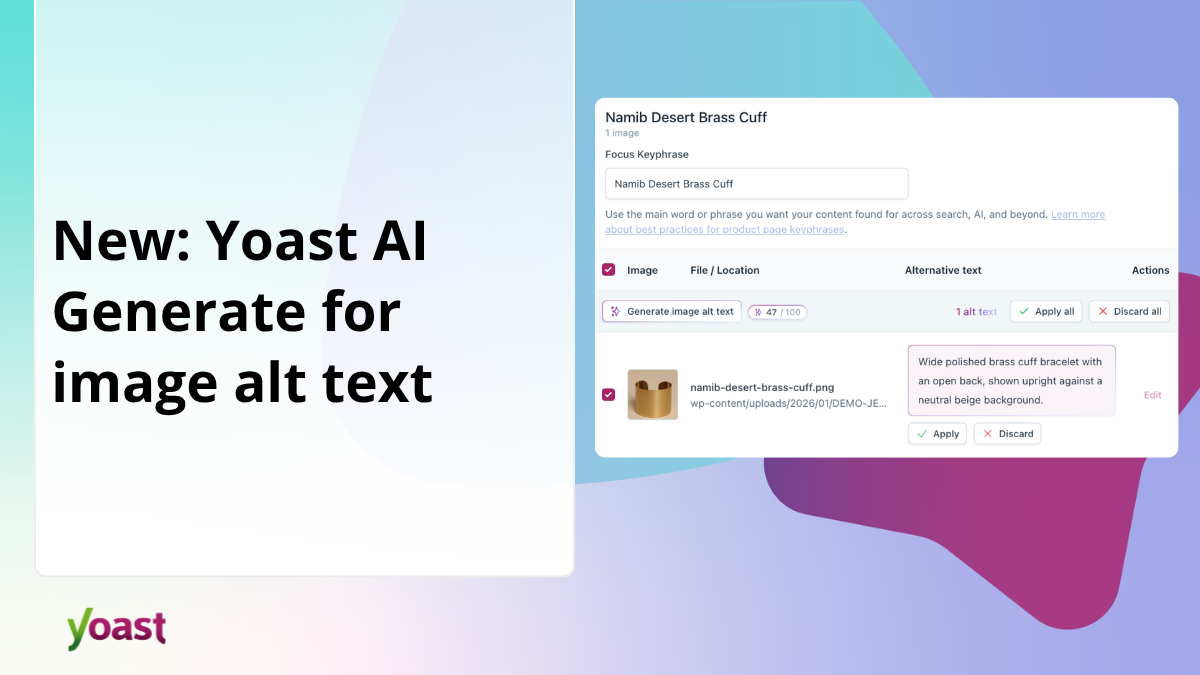
The landscape of e-commerce search engine optimization (SEO) is undergoing a significant transformation. Today, Yoast, a leader in WordPress SEO tools, announced the launch of "Yoast AI Generate for image alt text." This groundbreaking feature arrives as part of Yoast WooCommerce SEO 17.0, released in tandem with updates to Yoast SEO and Yoast SEO Premium (version 28.8).
For store owners struggling with the tedious, manual labor of tagging thousands of product images, this update promises to eliminate the "alt text backlog" while simultaneously boosting accessibility and search engine discoverability.
The Core Innovation: Automating the Invisible
For years, Yoast has provided tools that highlight missing alt attributes—the descriptive text that informs screen readers and search engines about the contents of an image. However, identifying a problem is only half the battle. The manual creation of hundreds or thousands of unique, descriptive alt tags has long been a significant barrier for busy merchants.
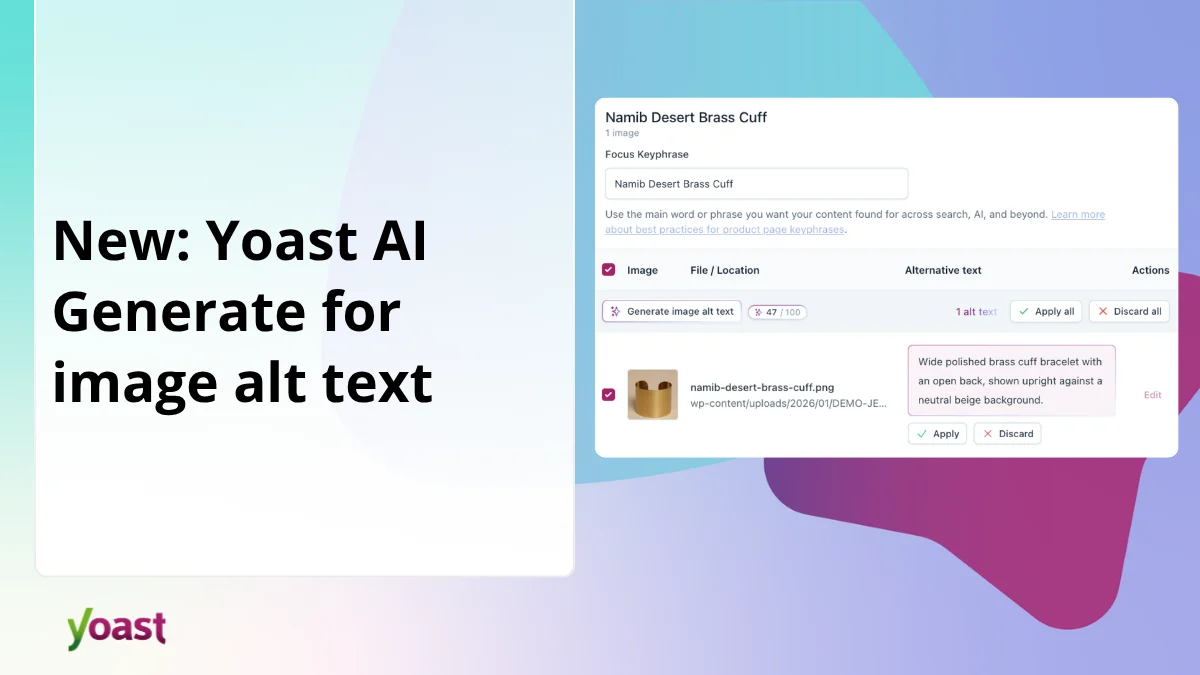
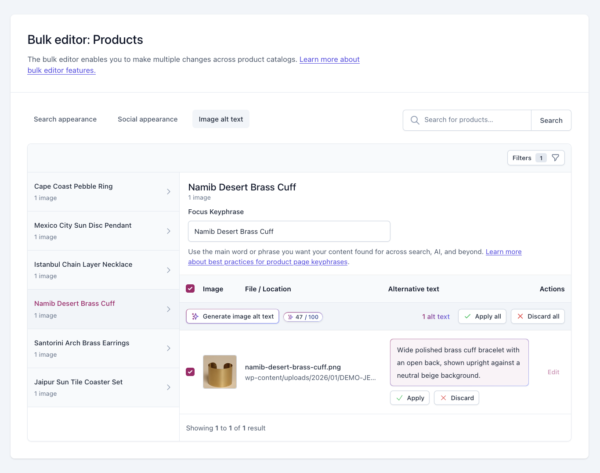
The new AI-driven tool bridges this gap by analyzing a triad of data: the product’s core metadata, the established focus keyphrase, and the visual content of the photograph itself. By synthesizing this information, the AI produces highly relevant, descriptive alt text that store owners can then review, edit, or approve with a single click.
Why Alt Text Matters in the Modern Web Era
While alt text was once viewed as a "nice-to-have" element for SEO, it has evolved into a critical component of digital infrastructure. Its importance now sits at the intersection of three major trends:
1. Accessibility and Legal Compliance
Accessibility is no longer optional. With the EU’s European Accessibility Act and similar legislation in the UK and North America becoming increasingly stringent, businesses are under greater pressure to ensure their digital storefronts are usable by everyone. For users relying on screen readers, alt text is the singular bridge between the visual product and their understanding of it. Without it, the product image effectively does not exist.
2. The Rise of AI-Driven Discovery
Search engines have moved beyond simple keyword matching. Modern algorithms, powered by artificial intelligence and computer vision, are increasingly prioritizing visual search. When a search engine crawls a page, descriptive alt text—such as "men’s brown leather lace-up boots, side view"—serves as a primary signal, allowing the search engine to index the image for specific, high-intent queries.
3. User Experience (UX)
A well-optimized image is a signal of brand professionalism. When a product image fails to load, or when a user relies on assistive technology, the descriptive text provided by alt tags ensures that the narrative of the product remains intact. It prevents the "dead air" of missing descriptions, keeping the shopper engaged and informed throughout the buying journey.
A Deep Dive into the Technology: How It Works
The intelligence behind this feature is designed to be seamless. By leveraging existing WooCommerce product data—such as product titles, descriptions, and categories—combined with the visual analysis of the product image, the AI generates context-aware suggestions.
Unlike generic auto-tagging software that might simply label an image as "brown shoe," the Yoast AI is calibrated to understand the context of the store. It recognizes the difference between a "lifestyle shot" and a "product detail shot," providing nuances that satisfy both the technical requirements of Google’s search bots and the practical needs of visually impaired customers.
Implementation and Workflow
The rollout within the WordPress dashboard is designed for high-volume efficiency. Users can access the AI image alt text functionality in two primary ways:
- The Individual Editor: For those making specific, high-priority changes to a single product page, the tool is integrated directly into the image editing interface, allowing for real-time generation and application.
- The Bulk Editor: This is the flagship utility for established stores. The bulk editor allows merchants to identify dozens or hundreds of images missing alt text at once and trigger the AI generation process, clearing years of technical debt in minutes.
The feature is fully supported across all languages, though Yoast notes that performance may show slight variance in less widely spoken languages. Users can track their usage through the "Sparks" counter, ensuring complete transparency regarding how much of their AI allocation is being utilized.
Financial and Technical Requirements
A common concern with the integration of AI tools is the potential for hidden costs or complex add-on structures. Yoast has taken a streamlined approach: the AI image alt text generator is included at no additional cost for users of Yoast WooCommerce SEO and those subscribed to Yoast SEO AI+.
There is no "pay-per-tag" model here; it is bundled into existing subscriptions. However, it is important to note that this feature is exclusive to the WordPress/WooCommerce ecosystem and is currently not available for those using Yoast SEO for Shopify.
Implications for the E-commerce Sector
The release of this tool has broad implications for the competitive landscape of online retail.
Bridging the Knowledge Gap
Many small-to-medium enterprise (SME) owners are not SEO experts. They often struggle to balance the demands of inventory management, order fulfillment, and marketing. By automating the technical task of alt text generation, Yoast is essentially providing a "leveling of the playing field." Smaller stores can now achieve the same level of accessibility and SEO optimization as large, enterprise-level e-commerce sites that employ dedicated SEO teams.
The Future of AI in SEO
This move signals a broader shift in the SEO plugin market. We are moving away from tools that simply report errors toward tools that resolve them autonomously. This transition toward "autonomous SEO" is likely to define the next decade of digital marketing. As algorithms become more complex, the ability for plugins to act as a proactive steward of a website’s health will become the primary differentiator for vendors like Yoast.
Addressing the Backlog
For established stores, the "backlog" is a major pain point. It is common to find stores with thousands of legacy product images that were uploaded years ago without any SEO forethought. The ability to bulk-process these images allows for a "site-wide cleanup" that could potentially lead to a measurable lift in image-search traffic within weeks of implementation.
What Else is New in Version 28.8?
Beyond the AI image feature, the 28.8 update for Yoast SEO brings a suite of maintenance improvements. These include:
- Refined Schema Implementation: Continued improvements to how the plugin generates JSON-LD data, ensuring that search engines can better parse the relationship between product variations and stock availability.
- Compatibility Patches: Enhanced stability for the latest version of WordPress, ensuring that the plugin remains performant under high-load conditions.
- Performance Upgrades: Reduced database overhead, particularly for large-scale sites, to ensure that the plugin’s background processes do not slow down the user’s front-end experience.
Conclusion: A Proactive Stance on Accessibility
The decision to prioritize AI-driven alt text is a strategic one. By choosing to focus on accessibility and image SEO, Yoast is reinforcing its commitment to the "web for everyone" philosophy.
For the average WooCommerce store owner, the value proposition is clear: by investing in the Yoast WooCommerce SEO suite, they are not just buying a plugin; they are buying an automated assistant that handles the technical heavy lifting of search engine compliance. As search engines continue to favor sites that are accessible, mobile-friendly, and rich in descriptive metadata, this update provides a vital, time-saving tool for any business looking to maintain its edge in an increasingly crowded digital marketplace.
For those not yet utilizing the WooCommerce SEO module, the message from the developer is straightforward: the data is already there, waiting in the bulk editor to be optimized. With the integration of AI, the barrier to a fully accessible, high-ranking product catalog has never been lower.