





The landscape of web development is undergoing its most radical transformation since the advent of the single-page application. As AI-powered coding agents become the primary authors of our software, the traditional metrics used to evaluate JavaScript frameworks—developer experience, syntax ergonomics, and boilerplate reduction—are being scrutinized through a new, colder lens: efficiency and machine-readability.
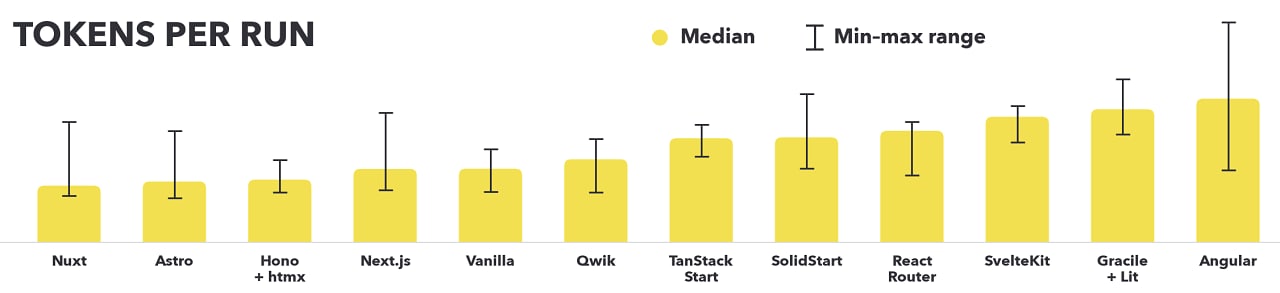
In a recent, highly influential study, developer and systems analyst Nolan Lawson posed a provocative question: If your code is written by an AI agent, does the "human-friendly" nature of your framework still matter? To find out, Lawson tasked Claude with building the exact same application across twelve different JavaScript stacks, aiming to uncover the hidden "AI cost" of our most popular tooling.
The Benchmark: Does "Developer Experience" Still Matter?
Lawson’s experiment was designed to challenge the industry-standard marketing claims that suggest certain frameworks are inherently "better for agents." By holding the application logic constant and rotating the underlying stack—ranging from lightweight libraries to heavy-duty meta-frameworks—Lawson created a controlled environment to measure performance and cost.

The results, while surprising to many, painted a complex picture. When analyzing the raw cost of token consumption for AI generation, the data revealed significant variance between individual runs. However, as noted by researcher Gautam Parab, the statistical reality was more sobering: for the vast majority of framework pairs, the observed cost ranges either overlapped or touched. In short, from a purely financial perspective, the AI doesn’t necessarily find one framework significantly more expensive to write than another.
The Real Cost: Browser Payload and Performance
While the "cost to write" may be nebulous, the "cost to serve" remains crystal clear. When the code was finalized and measured for the browser, the disparity was stark.
- Astro: 0KB (The clear leader in minimal overhead).
- Hono + htmx: 18KB.
- SvelteKit: 36KB.
- Next.js, React Router, and TanStack Start: 115KB to 142KB.
These figures suggest a critical disconnect. If we are moving toward a "hands-free" development lifecycle where human developers act more as project managers for AI agents, the historical trade-offs—such as choosing a feature-rich framework to save a developer an hour of typing—become irrelevant. If the AI can generate the boilerplate for a complex stack just as easily as a simple one, we must ask if we are continuing to ship unnecessary JavaScript to our users simply out of habit.
Chronology of the "Agentic" Shift
To understand how we arrived at this inflection point, one must look at the rapid evolution of the ecosystem over the last 18 months:
- Early 2025: Initial excitement builds around LLM-assisted coding. Developers begin using basic autocomplete tools to shave time off repetitive tasks.
- Mid-2025: The rise of "Agentic Workflows." Tools like Claude Code and specialized CLI agents emerge, capable of navigating entire file systems and refactoring codebases.
- Late 2025: The industry hits a "Framework Saturation" point. Developers begin to notice that the complexity of modern meta-frameworks is often a barrier to AI performance, as the agent must navigate increasingly dense dependency trees.
- October 2026: Lawson’s benchmark study is published, forcing a industry-wide conversation about the intersection of AI-generated code and core web performance.
The Optimization Paradox: Microsoft’s "Clarity.js" Lesson
The shift toward performance-first engineering is not just theoretical; it is already being practiced by industry giants. Microsoft recently provided a masterclass in this new reality while optimizing their clarity.js analytics script.
Microsoft engineers allowed an AI agent to run over 50 distinct size-optimization experiments on the script. The results were counter-intuitive. While the agent found that dropping import * namespace objects yielded a significant size reduction, it also discovered that certain "best practices"—such as extracting helper functions to keep code clean and modular—actually resulted in a larger gzipped output.

This highlights the "Optimization Paradox": human-centric clean code, which relies on abstractions and modularity for readability, can often lead to more bloat in the final production bundle. When the code is authored by an agent, the need for human-readable abstraction layers may diminish, potentially ushering in an era of "machine-native" code that is highly performant but less "clean" by traditional human standards.
Security Implications: The "One-Week" Rule
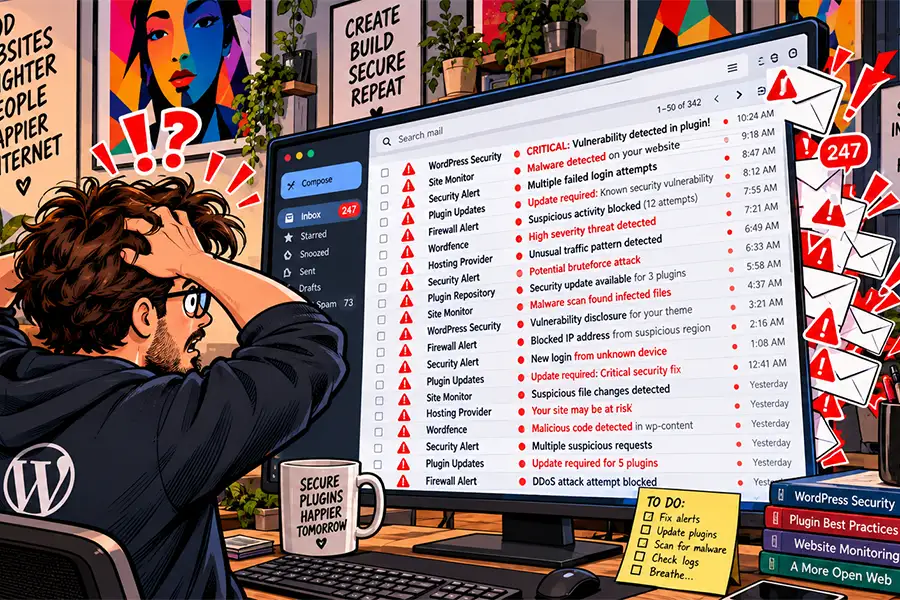
As the speed of code generation increases, so does the risk of supply-chain vulnerabilities. With AI agents capable of injecting dependencies at record speeds, the industry is witnessing a surge in package hijacking.
Bruno Jurković, in a widely discussed case study, noted that his company has implemented a "one-week cooling-off period" for all new package versions. Given that most malicious package takeovers are identified and neutralized within hours, this simple policy acts as a vital safety net. This represents a broader cultural shift: in the age of AI, we are moving from "move fast and break things" to "verify, pause, and deploy."
Industry Perspectives: The Death of the Traditional Interview
The integration of AI into the software development lifecycle has sparked a debate about the future of the human engineer. Laurie Voss, co-founder of npm, has argued that the traditional coding interview—the staple of technical hiring for decades—is effectively dead.
If an AI can pass a whiteboard challenge in seconds, the value of a candidate shifts away from syntax memorization toward architecture, problem decomposition, and—most importantly—the ability to verify and debug the outputs provided by the agent. The junior engineer of 2027 will not be a "coder," but an "editor" and "orchestrator" of machine intelligence.
Conclusion: The Path Forward
The data provided by Lawson, Microsoft, and the broader community suggests that we are at the end of the "framework wars" as we once knew them. The question is no longer "which framework makes me faster?" but rather "which framework is most transparent to the machine?"
The rise of local AI models, capable of running on private hardware and integrating directly into the terminal, further accelerates this trend. By keeping the AI "in the loop" locally, developers are finding that they can maintain code privacy while achieving unprecedented speeds in refactoring and deployment.
For the modern web developer, the imperative is clear: prioritize the end-user’s browser experience over the developer’s convenience. As agents take over the heavy lifting of code generation, the most valuable skill will be the ability to curate the output, minimize the bloat, and ensure that the final product remains as lean as the hardware that birthed it. The "AI cost" of our frameworks is real, but it is a cost we now have the tools to mitigate—provided we are willing to change the way we build.