








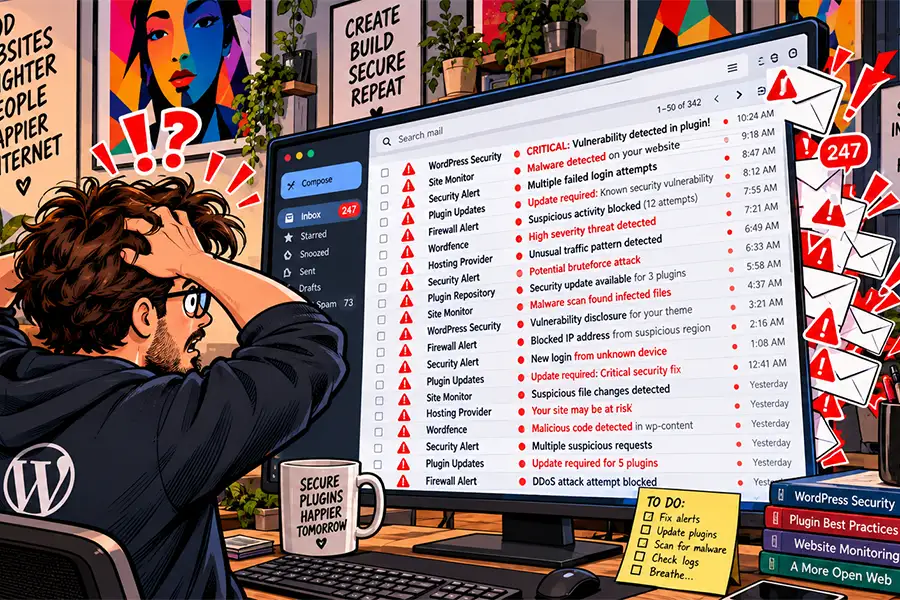
Artificial Intelligence (AI) has rapidly transitioned from a novelty to a fundamental pillar of modern web infrastructure. For developers, web hosts, and site owners, AI is no longer optional—it is a core tool used to optimize costs, streamline workflows, and enhance customer interactions. Yet, as the digital landscape evolves, nowhere is the impact of AI more profound, or more contentious, than in the realm of cybersecurity.
While AI empowers developers to build safer applications, it has simultaneously introduced a "security paradox." By accelerating both the discovery of vulnerabilities and the potential for sophisticated cyber-attacks, AI is forcing a complete re-evaluation of how web professionals manage risk.
The Evolution of AI in Security: A Chronology of Change
The integration of machine learning into security research represents a paradigm shift. Historically, vulnerability research was a labor-intensive, manual process. Security experts would spend weeks auditing codebases, manually tracing logic flows to identify potential entry points for malicious actors.
- The Manual Era (Pre-2020): Security research was constrained by human cognitive limits. Identifying deep-seated, multi-layer vulnerabilities required specialized knowledge and exhaustive manual review.
- The AI Integration Phase (2020–2024): Large Language Models (LLMs) began to be deployed to scan for syntax-level vulnerabilities and common code smells in languages like PHP and JavaScript.
- The Generative Shift (2025–Present): We have entered an era where AI doesn’t just look for "known bad" code; it simulates complex attack vectors. Initiatives like the WordPress plugin directory’s "Protect the Shire" program represent the industry’s attempt to institutionalize AI-driven security at the point of release.
Today, AI-powered scanners can process millions of lines of code in a fraction of the time it would take a human auditor, turning weeks of work into hours of automated analysis.
Making Connections Beyond Human Reach
One of the most compelling aspects of AI-assisted security is its ability to synthesize information across disparate modules. Human developers often struggle to see the "big picture" of a massive codebase. An individual function might appear perfectly secure in isolation, but when combined with a secondary plugin or a legacy database query, it may reveal a critical vulnerability.
AI excels at these non-linear connections. It essentially treats code as a logic puzzle. By analyzing the interplay between different software components, AI models can identify "logic bombs"—vulnerabilities that have existed for years, hidden in plain sight, waiting for the right sequence of events to be triggered.

A recent, high-profile case involving a long-standing backdoor that persisted for over a decade illustrates this perfectly. The vulnerability, which had evaded traditional human auditing, was identified through an AI-driven repository scan. This capability is a double-edged sword: while it allows defenders to patch long-forgotten flaws, it also provides malicious actors with a blueprint for exploitation.
Supporting Data: The Surge in Vulnerability Reporting
The efficiency of AI has led to a data explosion. Organizations that oversee bug bounty programs are witnessing a massive spike in reported vulnerabilities. Reports that previously numbered in the dozens per month have surged into the hundreds.
- Increased Visibility: Platforms like WordPress have reported significant increases in patch cycles as researchers leverage automated tools to find and disclose vulnerabilities faster than ever before.
- The Signal-to-Noise Ratio: This volume creates a new problem: "Vulnerability Fatigue." Security teams are currently drowning in a deluge of reports. Not every reported flaw is critical, but every report requires triage, analysis, and a decision on whether to patch or ignore.
- The Economic Impact: For freelancers and small agencies, this creates a constant state of emergency. When a security plugin flashes a "critical" warning every few days, the mental load—and the pressure on billable hours—becomes unsustainable.
Official Responses and Industry Stance
The consensus among major platform maintainers is that AI is an essential, albeit disruptive, partner. The WordPress community, for instance, has embraced a proactive posture. The "Protect the Shire" initiative is not just a policy; it is a technological infrastructure aimed at catching security holes before they are ever released into the wild.
However, official responses remain cautious. There is an implicit recognition that while AI can find bugs, it cannot determine the intent of a user or the business criticality of a specific site. Industry leaders emphasize that AI is an "augmented" tool—a force multiplier for human researchers—not a complete replacement for human oversight. The goal is to move from reactive patching to "secure-by-design" development, where AI acts as a permanent, real-time guardrail during the coding process.
Implications for Web Professionals
What does this "brave new world" mean for the everyday agency owner, freelancer, or webmaster? The implications are three-fold:
1. The Death of Manual Security Maintenance
The days of manual updates and occasional site check-ups are effectively over. The sheer volume of AI-discovered vulnerabilities means that security management must be automated. However, automated updates present their own risks, including potential site breakage. Professionals must now shift their focus from finding bugs to managing the automated deployment of patches.

2. A Shift Toward Hosting-Level Security
The burden of security is increasingly shifting away from the site owner and toward the infrastructure provider. If a vulnerability is found in a core component, waiting for the site owner to manually update it is too slow. Web hosts and CDNs (like Cloudflare or Akamai) are becoming the "front line," implementing edge-based security rules that can mitigate threats before they ever reach the website’s server.
3. The Need for Intelligent Triage
The most valuable skill for a web professional in the age of AI will be "contextual triage." It is not enough to know that a site has a vulnerability; one must understand the risk profile. Is this vulnerability reachable? Is it being actively exploited in the wild? Can it be mitigated by a WAF (Web Application Firewall) rule? Professionals must develop the ability to distinguish between "noise" and "catastrophe."
Conclusion: Preparing for the Future
AI has irrevocably changed the security landscape. It has made the web safer by unearthing vulnerabilities that human eyes missed for decades, but it has also increased the baseline level of stress and maintenance required to run a digital property.
The path forward requires a more integrated approach. We need standardized, scalable security layers that exist between the host and the application. We need AI-driven tools that don’t just report "a problem," but also provide "a solution" or "an automated mitigation."
Ultimately, the goal is to reach a state where the web is self-healing. Until then, agencies and developers must adapt. We are entering an era where our ability to manage the tools—and the information they generate—is just as important as the code we write. The robots have joined the security team; it is time we learned how to work with them before the flood of information washes away our ability to provide secure, stable services to our clients.