







The landscape of web development is undergoing a profound transformation. Driven by the dual forces of AI-assisted coding and a renewed focus on performance, the ecosystem is shifting away from monolithic, bloated architectures toward lean, specialized, and highly modular toolsets. From the evolution of long-standing utilities like npkill to the rise of experimental browser engines built entirely in TypeScript and WebAssembly, developers are currently navigating a "great cleanup" phase—an era defined by stripping away technical debt and rethinking how we build, test, and deploy applications.
Main Facts: The New Wave of Developer Productivity
The past few weeks have seen a surge in tooling designed to solve two primary problems: bloat and architectural inefficiency.
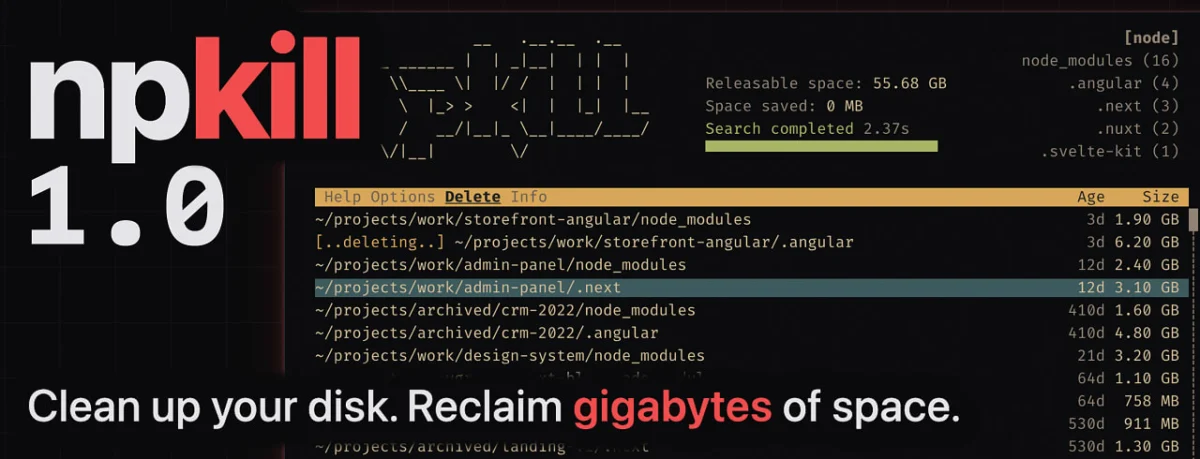
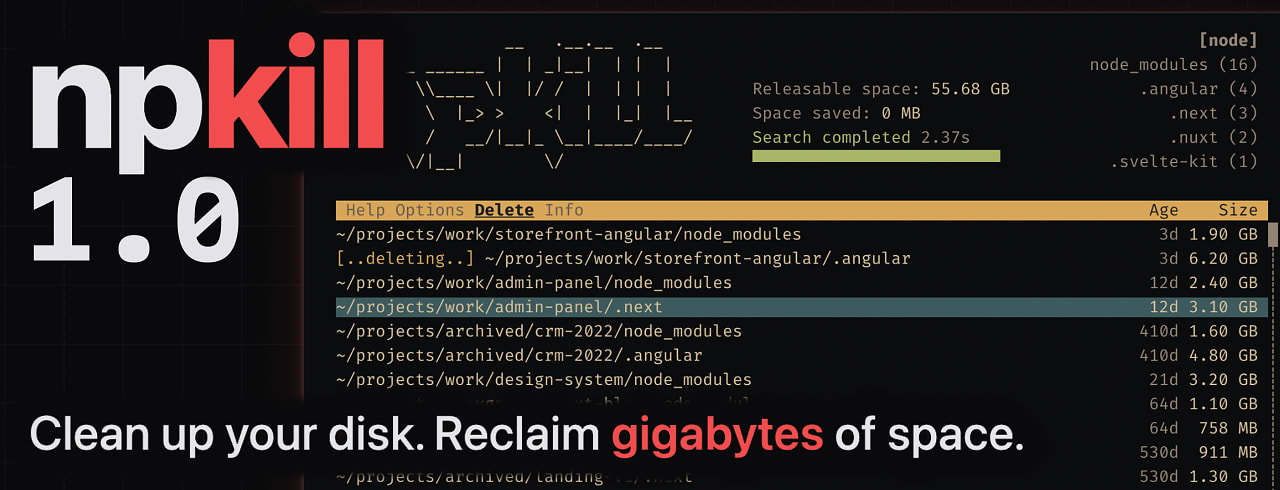
Central to this movement is the release of npkill 1.0, a milestone update for a tool that has long been a staple for space-constrained developers. What began as a simple utility to purge heavy node_modules folders has expanded into a comprehensive cleanup suite. It now supports over 20 ecosystem profiles, hunting down caches and build artifacts like .next and .turbo that frequently clutter local development environments.

Simultaneously, the industry is witnessing a consolidation of UI philosophy. Vercel and shadcn have introduced the UI SDK, a headless library providing over 50 low-level, accessible behaviors—such as roving focus and drag-and-drop—that can be composed across React, Vue, Svelte, and Solid. The underlying premise, as articulated by shadcn, is a shift away from opinionated UI components toward universal interface behaviors, which are essential for AI agents that need to generate accessible interfaces on the fly.
Chronology of Recent Innovations
The velocity of these developments is unprecedented. The following timeline captures the recent shifts that are redefining the developer experience (DX):
- Early November: The Chrome team publishes a definitive guide on the "Top 10 Things AI Gets Wrong in Web Development." This marked a turning point in the industry’s acceptance of AI, highlighting the dangers of relying on outdated techniques like manual focus traps when native APIs like
inertandpopoverexist. - Mid-November: BrowserPod 4.0 debuts, offering a Linux-like microVM environment that runs entirely in the browser using WebAssembly. This release effectively democratized access to server-side tooling like
git,bash, andnpmwithout the need for local infrastructure. - Mid-November (Continued): Cloudflare open-sourced "Kitesurf," an experimental browser engine designed specifically for headless agents. By utilizing V8 isolates and Rust-compiled WASM, it represents a departure from Chromium-heavy environments.
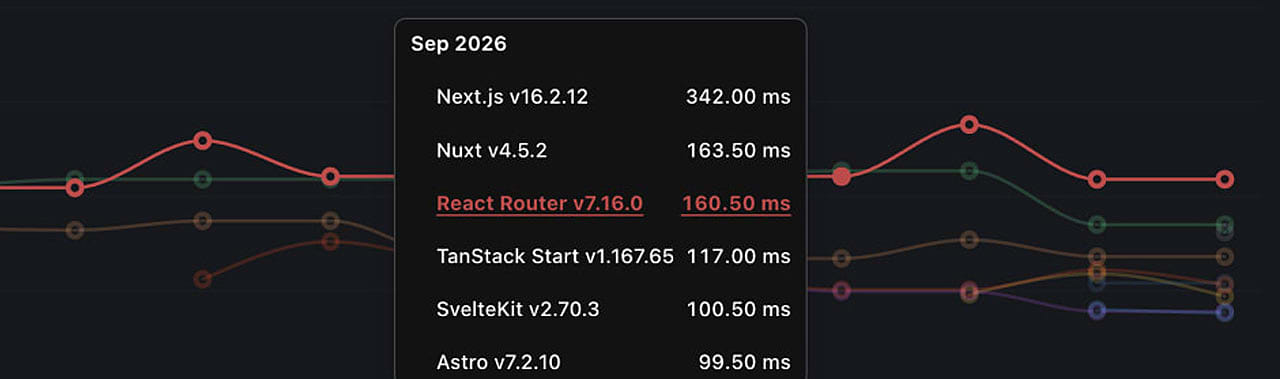
- Late November: The "Framework Performance Project" launched via E18E, signaling a collective industry effort to address the performance degradation that has plagued the web as frameworks have increased in complexity.
Supporting Data: The Cost of Modern Complexity
The necessity for these tools is backed by growing concerns regarding security and performance. The recent Polymarket security incident, involving a $2.6 million crypto theft, has highlighted the inherent risks of relying on third-party scripts. This has reignited interest in Content Security Policies (CSP) and Subresource Integrity (SRI) as non-negotiable standards for any production application.
Furthermore, technical debt remains a significant bottleneck. Data from recent migrations—such as the transition of 10,144 tests from Jest to Vitest in just three weeks—illustrates that developers are prioritizing speed and modern integration over maintaining legacy configurations. This trend is mirrored in the debugging space, where Gabor Koos recently exposed the "lying" nature of JavaScript error handling, demonstrating how common practices like JSON.stringify(err) often discard critical diagnostic data, leaving developers blind to the root causes of production failures.
Official Responses and Industry Shifts
The industry is currently divided between the "AI-agent-as-a-developer" model and the "AI-agent-as-a-burden" reality. While tools like Meticulous argue that developers are spending too much time "babysitting" agents—effectively becoming middle managers for their own code—others are building infrastructure to support the automation of the entire software development lifecycle (SDLC).
Cloudflare’s move to open-source Kitesurf is a direct response to the need for "agent-first" browsing. Unlike traditional browsers, Kitesurf does not need to render a complex UI for a human user; it is designed for machines to interact with the DOM, parse layouts, and execute scripts with maximum efficiency. This indicates a shift where the "browser" is no longer just a window for the user, but a runtime environment for the bot.

Implications for the Future of Web Development
The Rise of the "Headless" Paradigm
The transition toward headless UI SDKs suggests that we are entering a post-component-library era. By standardizing behaviors (focus, keyboard navigation, accessibility) rather than visual styles, developers can create systems that are more robust and less susceptible to the brittle nature of traditional component design. This is particularly crucial for AI agents that generate UI elements; they can now rely on a standard behavioral layer that guarantees accessibility regardless of the underlying framework.
The "MicroVM" Revolution
The success of BrowserPod and the "Unkernel" project—which allows users to boot a Linux kernel via npx unkernel—points toward a future where the local machine environment becomes secondary. If a full shell and build environment can run in the browser with sub-second boot times, the barrier to entry for contributing to open-source projects or spinning up testing environments drops to nearly zero. This shift could fundamentally change how we train developers and how we distribute software.
The Security-Performance Paradox
The ongoing reliance on AI agents for code generation presents a new attack vector. As the Chrome team noted, agents often lack the nuance to implement modern security features like passkeys or XSS defenses, favoring legacy code snippets found in their training data. The implication is clear: developers must become "security architects" who oversee the outputs of AI, rather than "code writers." The focus is shifting from writing code to auditing, validating, and securing code generated by machine learning models.
Conclusion: A Leaner, More Modular Web
The overarching theme of the current ecosystem is the pursuit of lean infrastructure. Whether it is npkill pruning local disk waste, or WASM-based microVMs replacing heavy local setups, the developer experience is being streamlined.
The industry is moving toward a model where "the web is enough." As Paul Ford recently emphasized, the web platform APIs are now so powerful that the need for bloated middle-ware is shrinking. With the combined help of AI to manage the complexity of these APIs, we are seeing a resurgence of high-performance, accessible, and secure web applications.
As we look toward 2026 and beyond, the developers who thrive will not be those who write the most code, but those who curate the best tooling. By adopting modular behaviors, embracing sandboxed environments, and maintaining a vigilant stance on security, the modern web developer is transitioning from a craftsman of individual functions to an orchestrator of sophisticated, autonomous, and highly performant digital ecosystems. The "great cleanup" is not just about deleting files; it is about deleting the unnecessary complexity that has held the web back for the better part of a decade.