




The release of PHP 8.6 marks a significant milestone in the evolution of the world’s most ubiquitous server-side scripting language. As the web ecosystem continues to shift toward asynchronous architectures and heightened security requirements, PHP 8.6 arrives with a suite of features designed to modernize the developer experience while tightening the defaults that protect end-users. From the long-awaited introduction of partial function application to improved stream handling and post-quantum cryptographic readiness, version 8.6 represents a mature, forward-looking iteration of the platform.
Main Facts: A Feature-Rich Update
PHP 8.6 is not merely a maintenance release; it is a feature-packed update that directly addresses some of the most frequent developer requests while hardening the language against common failure modes.
The marquee feature is Partial Function Application, a functional programming paradigm that allows developers to "pre-fill" arguments in a function, returning a closure that awaits the remaining parameters. This, combined with the new TimeDuration class—which offers nanosecond precision for measuring elapsed time without the overhead of timezones or clock shifts—positions PHP as a more capable language for high-performance, time-sensitive applications.
Additionally, the introduction of IoPoll provides a native, low-level polling API for event loops. By abstracting epoll, kqueue, and WSAPoll, PHP 8.6 provides a stable, performant foundation for asynchronous libraries like ReactPHP and AMPHP, moving the language closer to the performance characteristics of modern event-driven runtimes.
Chronology of Development
The path to PHP 8.6 was defined by a methodical approach to backward compatibility and performance tuning. Following the established release cycle, the PHP internals team prioritized the transition toward more expressive syntax while simultaneously identifying legacy code patterns that posed security risks.
- Early Design Phase: Initial RFCs regarding partial application were debated throughout the middle of the previous year, focusing on the syntax of the
?placeholder. - Alpha and Beta Cycles: Throughout the testing phase, the focus shifted from pure feature implementation to the rigorous auditing of standard library functions. Developers emphasized the need for consistent error reporting, leading to the overhaul of file-system operations.
- Security Audit Phase: The late-stage integration of post-quantum cryptography (X-Wing and ML-KEM-768) was a direct response to the global push for "quantum-resistant" communication standards, ensuring that PHP remains a viable choice for sensitive infrastructure.
- Final Release: With the stable release now live, the community has begun the transition phase, with major frameworks expected to provide patches for the updated session defaults in the coming weeks.
Supporting Data: Why the Changes Matter
The changes in PHP 8.6 are rooted in data-driven decisions regarding reliability and performance. The most notable impact on application stability comes from the revamped behavior of file I/O operations.
Failure Transparency
Historically, functions like fclose(), file_put_contents(), and copy() would occasionally fail silently, leading to data loss that went undetected by the application layer. By forcing these functions to return false on failure and introducing StreamException with structured error reporting, PHP 8.6 provides developers with the granularity required to build resilient systems. In a distributed environment where a network filesystem might disconnect, knowing exactly why a write failed is invaluable.
Security Defaults
The shift in session handling is arguably the most critical security change. By defaulting session.use_strict_mode and session.cookie_httponly to on, and setting session.cookie_samesite to Lax, the PHP team has effectively "secured by default" the most common entry points for session hijacking and CSRF attacks. While this may break legacy applications that relied on loose configurations, the trade-off is a significantly higher baseline of security for the entire ecosystem.
Type Safety and Modernization
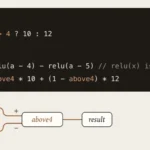
The introduction of the clamp() function, while seemingly minor, prevents common "off-by-one" or range-based logic errors in mathematical operations. Furthermore, the deprecation of legacy functions like is_double() and mb_ereg() demonstrates a clear move toward a more consistent, standard-compliant codebase. By favoring is_float() and PCRE, the language reduces the cognitive load on developers and aligns itself with modern programming standards.
Official Responses and Developer Sentiment
The release of PHP 8.6 has been met with a mixture of excitement and caution from the core maintainers and the broader PHP community.

"The goal of 8.6 was to make PHP feel less like a tool of the past and more like a modern, expressive language that happens to power the web," noted one of the primary contributors to the release. "By giving developers the tools to build custom event loops natively and hardening the session layer, we are ensuring that PHP remains the dominant force in server-side development for the next decade."
However, the community has voiced concerns regarding the deprecation cycle. With mbstring regex functions slated for removal, maintainers of older legacy systems face a significant refactoring hurdle. The official response from the PHP documentation team has been to emphasize that these changes are essential for long-term maintainability. "We cannot hold back progress because of the technical debt of the late 90s," said a spokesperson for the PHP Foundation. "The move to PCRE is not just about performance; it’s about ensuring that our regex engine remains maintained and secure."
Implications: The Road Ahead
The implications of PHP 8.6 are profound for the professional PHP ecosystem.
For Framework Maintainers
For developers of frameworks like Laravel, Symfony, and Laminas, PHP 8.6 provides a cleaner API surface to work with. The ability to leverage native IoPoll will likely lead to a new generation of asynchronous, high-concurrency plugins. Frameworks will need to update their session managers to comply with the new strict defaults, which will likely result in a wave of minor versions released across the ecosystem to ensure compatibility.
For Enterprise Systems
Enterprise-grade applications, which often rely on older versions of PHP, will face the "upgrade challenge." The changes to trim() and the new strict session defaults mean that a simple "drop-in" upgrade is not recommended. Organizations are advised to run their test suites in a staging environment to identify where legacy session handling or specific regex patterns may trigger deprecation warnings or logic errors.
For Security Professionals
The inclusion of post-quantum cryptography is a forward-thinking move that should not be overlooked. As quantum computing advances, standard encryption methods face obsolescence. By integrating X-Wing and ML-KEM-768 into the Sodium extension, PHP is providing the necessary primitives for developers to build future-proof communication layers today. This ensures that data encrypted today remains secure even against future computational threats.
The Deprecation Strategy
The deprecation of return in finally blocks is a subtle but vital change. By removing this behavior, the language prevents potentially confusing control-flow issues where the return value of a function is overwritten unexpectedly. This reflects the broader trend of the language: making it harder to write "clever" code that is prone to bugs and easier to write readable, predictable code.
Conclusion: A New Standard
PHP 8.6 is a testament to the resilience and adaptability of the language. By stripping away the cruft of legacy functions and introducing high-level abstractions like partial application and native event-loop support, the core team has ensured that PHP is not just surviving, but thriving.
The transition to version 8.6 will require effort, particularly for those maintaining legacy codebases, but the rewards—a more secure, performant, and syntactically elegant environment—are substantial. As we look toward the future of web development, PHP 8.6 provides the bedrock upon which the next generation of scalable, secure, and high-performance applications will be built. Developers are encouraged to review the official migration guide, audit their session configurations, and begin the process of upgrading to ensure they are taking full advantage of the latest advancements in the PHP ecosystem.