




By Pierluigi Paganini | November 19, 2026
The European Commission, the executive arm of the European Union and the primary engine of its legislative process, has been embroiled in a significant cybersecurity crisis that has crippled internal operations for over ten days. The incident, which began in mid-November 2026, has disrupted essential administrative infrastructure, ranging from payroll processing and staff leave management to sensitive medical reimbursement portals. As the dust begins to settle, the institution faces mounting pressure to provide clarity on the extent of potential data exfiltration and the sophistication of the threat actors involved.
The Nature of the Disruption
The digital assault targeted the core of the Commission’s administrative backbone. Among the systems impacted were Sysper, the central human resources platform used for managing payslips, timesheets, and leave requests; MyPMO, the system responsible for medical reimbursements; and the JSIS (Joint Sickness Insurance Scheme) portal, which handles staff health insurance.
The disruption was not merely a brief technical glitch but a sustained outage that forced the Commission’s Corporate Management Board—the highest internal crisis-response body—to convene in emergency sessions. Tech Commissioner Henna Virkkunen provided a formal briefing to the full College of Commissioners on November 18, underscoring the severity of the situation.
While the Commission has maintained that salary payments remained unaffected, the operational paralysis has caused significant friction for staff. Translation services, a vital component of the Commission’s multilingual workflow, were taken offline on November 17, with one anonymous official quipping that the inability to access essential tools had led to a surge in "swearing" among the ranks.
Chronology of the Incident
The timeline of the attack reveals a persistent struggle between the Commission’s IT security teams and the unidentified threat actors.
- Mid-November 2026: Initial indicators of compromise are detected within internal systems, triggering an immediate defensive posture by CERT-EU, the Computer Emergency Response Team for the European Union.
- November 17, 2026: Operational strain escalates as translation services are pulled offline to prevent further compromise.
- November 18, 2026: Commissioner Henna Virkkunen briefs the College of Commissioners. Sysper, which had seen a brief restoration of services earlier in the week, suffers a secondary crash, highlighting the volatility of the situation.
- November 19, 2026: Despite efforts to restore functionality, the JSIS staff health insurance portal remains inaccessible. The institution continues to operate under a cloud of uncertainty, with internal communication criticized by staff as being vague and overly cautious.
The "ARTEX" Connection: The Rise of AI-Powered Threats
One of the most alarming aspects of this incident is the involvement of ARTEX, an AI-powered penetration-testing framework. CERT-EU, in a technical advisory published on November 5, identified ARTEX as a potential weapon used by the attackers.
ARTEX represents a chilling evolution in cyber warfare. Unlike traditional malware, it is an autonomous system that utilizes AI agents to break down high-level objectives into granular, executable tasks. An operator provides a plain-language command—such as "gain access to the payroll database"—and the software autonomously navigates the network, identifies vulnerabilities, and deploys real-world hacking tools to exploit them.
Crucially, ARTEX does not contain its own Large Language Model (LLM); rather, it acts as a bridge, connecting to external AI models selected by the operator. While the original developers removed the project from public repositories in October 2026 following reports of widespread misuse, the open-source nature of the code means that independent copies remain in circulation. The use of ARTEX by the attackers highlights a paradigm shift: cybercriminals are increasingly leveraging AI to automate the "reconnaissance and exploitation" phase of attacks, allowing them to move faster than human defenders can react.
Official Responses and Internal Tensions
The European Commission’s communication strategy has drawn criticism from its own workforce. While spokesperson Thomas Regnier confirmed that "individual systems were targeted" and that the institution is following standard practice by informing affected individuals, many employees remain in the dark.
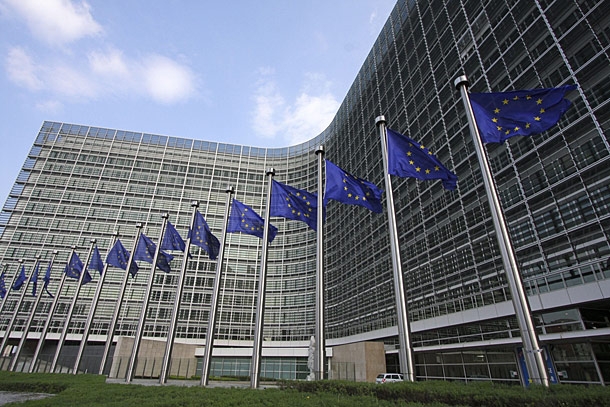
Internal IT communications regarding the Sysper outage initially cited "general technical issues," deliberately omitting the word "cyberattack." This lack of transparency has fueled speculation and anxiety regarding the potential loss of sensitive information. For an institution that prides itself on setting the global standard for data protection (via the GDPR and the specific EU Regulation 2018/1725), the discrepancy between public messaging and internal operational reality is a significant point of contention.
Data Security: The Unanswered Question
The most critical issue facing the Commission is the potential for data exfiltration. The fact that services have been restored does not imply that the environment is "clean" or that data remained untouched. Restoring a system simply proves that the service is functional, not that the integrity of the underlying data has been preserved.
The data at risk is highly sensitive. It includes:
- Personally Identifiable Information (PII): Full names, home addresses, and contact details.
- Financial Data: Salary structures, bank account details for reimbursements, and tax information.
- Health Information: Sensitive medical records linked to the JSIS insurance portal.
Under EU Regulation 2018/1725, the Commission is obligated to report a confirmed personal data breach to the European Data Protection Supervisor (EDPS) within 72 hours. However, this clock only begins ticking once the breach is confirmed. The Commission’s current investigative limbo—where they have restored systems but remain uncertain about the extent of the theft—allows them to avoid triggering these mandatory disclosure deadlines, a strategy that is increasingly coming under fire from privacy advocates.
Contextualizing the Breach: A Pattern of Vulnerability
This is not an isolated event. The Commission has faced a series of security setbacks in 2026, suggesting that the institution has become a primary target for sophisticated persistent threats:
- January 2026: A breach occurred within the management system for staff mobile devices. While the Commission successfully contained the incident within nine hours, the exposure of staff names and phone numbers was a significant lapse.
- March 2026: A far more severe incident involved the compromise of a software update for Trivy, a widely used security scanning tool. The attackers leveraged this supply-chain attack to gain entry into an Amazon Web Services (AWS) cloud environment, exfiltrating roughly 91.7 GB of compressed data. This breach was not limited to the Commission; it potentially affected at least 29 other EU institutions and bodies, exposing email content and sensitive internal communications.
Implications for the Future
The ongoing crisis highlights the inherent difficulty of defending a sprawling, interconnected bureaucracy against AI-augmented threats. The use of tools like ARTEX lowers the barrier to entry for attackers, enabling them to strike with greater speed and precision.
Furthermore, the incident raises existential questions about the resilience of EU institutions. If the Commission—an organization responsible for defining the continent’s digital policy—cannot secure its own internal HR systems, it faces a profound crisis of credibility.
As investigations continue, the focus must shift from mere restoration to forensic accountability. The Commission must address whether it has the internal expertise to counter AI-driven threats, or if it remains perpetually one step behind. Until the question of data exfiltration is answered, the staff of the European Commission remain in a state of professional uncertainty, and the EU’s reputation as a secure, data-conscious entity continues to face intense scrutiny.
The incident serves as a stark reminder: in the age of AI, the frontline of cybersecurity is no longer just about firewalls and passwords; it is about the ability to anticipate and neutralize autonomous agents designed to exploit the very complexity of our digital infrastructure.