










MUMBAI — A renewed, urgent conversation surrounding artificial intelligence (AI) sovereignty is rapidly gaining momentum across global tech hubs and government corridors. This global reassessment follows recent, sweeping restrictions on access to several of Anthropic’s most advanced artificial intelligence models. The regulatory crackdown has violently thrust long-simmering anxieties back into the spotlight, laying bare the profound geopolitical risks of heavy reliance on foreign-controlled technology platforms, datasets, and foundational infrastructure.
The incident has catalyzed domestic calls for technological self-reliance in emerging markets, most notably in India. Industry leaders, policymakers, and technologists argue that nations can no longer afford to outsource their technological destiny—or their cultural narratives—to Silicon Valley or other overseas jurisdictions where national security edicts and geopolitical posturing can cut off access overnight.
Main Facts
The core of the unfolding controversy centers on a series of sudden regional access restrictions placed on Anthropic’s flagship frontier AI systems, specifically the Fable 5 and Mythos 5 models.
According to reports, these restrictions were enacted following a direct directive from the United States government, which subjected the advanced models to tighter, highly restrictive export-control requirements. These mandates were enforced primarily on national security and strategic competition grounds, aimed at preventing certain capabilities from proliferating unchecked across international borders.
While Anthropic complied with the regulatory order, the company publicly distanced itself from the underlying risk assessments, signaling that the move was an external government imposition rather than a commercial choice. However, the operational reality for international users—particularly in tech-reliant developing nations—was immediate: critical AI capabilities vanished without warning.
This sudden lockout has re-energized the global debate over AI sovereignty, defined as a nation’s ability to independently build, deploy, and govern its own artificial intelligence infrastructure, foundational models, and data ecosystems.
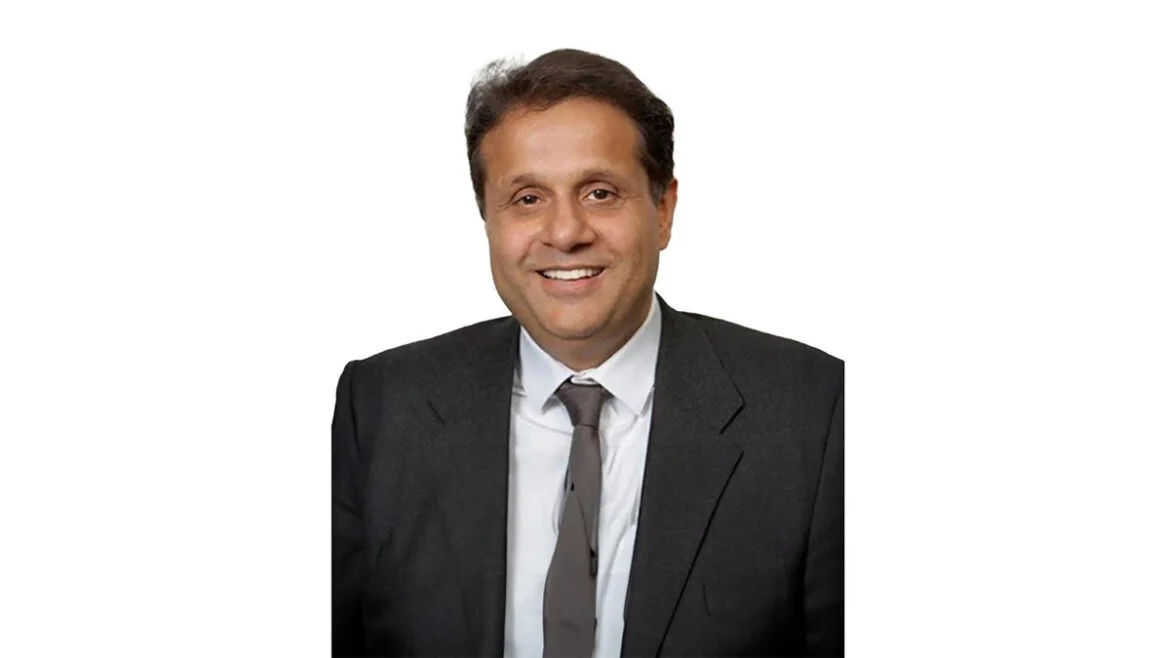
Prominent voices, such as Kishore Lulla, founder and executive chairman of Eros Innovation, have seized upon the disruption to warn that depending on foreign-controlled AI ecosystems is an unacceptable structural vulnerability. Lulla and other proponents of domestic technology argue that when a country’s cultural expression, commercial infrastructure, and intellectual output rely on platforms governed outside its borders, those platforms will invariably prioritize the geopolitical agendas and regulatory mandates of their home nations over the needs of foreign users.
Chronology of Events
To understand how a localized regulatory decision in the West rapidly transformed into a global debate on technological self-determination, it is necessary to examine the timeline of events leading up to the crisis.
- Phase 1: The Rise of Frontier Capabilities (Late 2024–Early 2025):
Anthropic and other leading Western AI laboratories release increasingly sophisticated frontier models—such as the Fable 5 and Mythos 5 systems—capable of advanced reasoning, multimodal processing, and complex cultural synthesis. These tools are rapidly integrated by global enterprises, creative industries, and research labs worldwide. - Phase 2: The U.S. Security Directive (Mid-2025):
Under mounting pressure from national security hawks and export control regulators, the U.S. government issues new compliance frameworks targeting advanced generative and analytical models. These frameworks mandate rigorous oversight and geographic access limitations to safeguard perceived American technological advantages. - Phase 3: Sudden Service Restrictions and Regional Lockouts (Recent Weeks):
Complying with the federal directives, Anthropic abruptly curtails access to Fable 5 and Mythos 5 for users in several international jurisdictions, including India. The sudden blackout catches developers and enterprises off guard, causing immediate workflow disruptions. - Phase 4: Immediate Blowback and the Call for Sovereign Alternatives (Present Day):
Regional tech leaders publicly condemn the dependency trap. Industry executives like Kishore Lulla point to the blackout as the realization of long-held fears, accelerating local efforts—such as India’s Eros LCM initiative—to fast-track homegrown AI foundational models built on domestically governed data infrastructure.
Supporting Data and Strategic Vulnerabilities
The disruption of Anthropic’s models is not an isolated event; it represents a symptom of a broader, systemic vulnerability in the global digital economy. For decades, the dominant narrative of the tech sector was one of borderless globalization—seamless cloud computing, open-source codebases shared globally, and access to the world’s most powerful compute clusters regardless of geography.
However, as artificial intelligence evolves into the primary engine of global economic growth, national security, and cultural influence, the era of frictionless technological globalization is giving way to a fragmented, neomercantilist reality.
Data compiled by technology policy think tanks indicates that over 85% of global foundational AI models are currently trained, hosted, and maintained by entities headquartered in just two countries: the United States and China. For emerging tech powerhouses like India—which boasts one of the world’s largest developer ecosystems and digital consumer bases—this creates a profound asymmetry:
- Dependency on Foreign Compute: Domestic startups often rely on cloud infrastructure owned by foreign hyperscalers, exposing them to sudden shifts in pricing, service terms, or geopolitical compliance mandates.
- Cultural and Contextual Misalignment: Foreign models trained predominantly on Western or Eurocentric datasets frequently fail to capture the nuanced linguistic, historical, and cultural complexities of diverse populations, leading to subtle biases or systemic blind spots.
- The Volatility of Access: As demonstrated by the Anthropic episode, access to cutting-edge tools can be revoked overnight due to regulatory changes formulated thousands of miles away, completely outside the control of local users.
Official Responses and Industry Perspectives
The fallout from the export-control mandates has triggered a wave of reactions from industry leaders, academic institutions, and policy architects.
Kishore Lulla, speaking on the structural implications of the blackout, pulled no punches regarding the inevitability of the crisis:
"I have said this before and I will say it again, this was inevitable. When a nation’s cultural expression depends on foreign platforms, foreign models, and foreign infrastructure, those platforms will always make decisions that reflect their own priorities, not ours," Lulla stated.
"Claude restricting access to Indian users is not a surprise. It is a consequence of a structural dependency that India must urgently address."
Highlighting proactive domestic measures, Lulla pointed to Eros Innovation’s own contributions to the ecosystem. The company’s Eros LCM family of models has emerged as a cornerstone of India’s push toward sovereign AI. Developed with recognition from India’s Ministry of Electronics and Information Technology (MeitY) and anchored at the prestigious Indian Institute of Technology (IIT) Madras, the initiative relies entirely on datasets owned, curated, and managed within the country.
"This is precisely why we built the Eros LCM family as a sovereign AI initiative," Lulla emphasized. "India cannot afford to be a consumer of AI built elsewhere. Every time a foreign platform restricts access, changes terms, or simply decides that India is not a priority, we are reminded of what is at stake."
Academic institutions and government bodies have echoed these sentiments, stressing that indigenous innovation must be paired with massive investments in domestic data centers, sovereign silicon (chips), and open-source foundational research.
Long-Term Implications for Global Technology
The implications of the Anthropic access restrictions extend far beyond India or any single regional market. They signal a permanent structural shift in how nations view artificial intelligence.
1. The Geopolitization of AI Infrastructure
For years, technology was treated as a commercial commodity governed by market forces. Today, frontier AI is universally recognized as a matter of high national security. As governments increasingly weaponize trade controls, compute restrictions, and export licenses, access to leading-edge models will be dictated as much by geopolitics as by commercial utility. Consequently, nations that fail to build their own foundational models risk finding themselves technologically disenfranchised.
2. Acceleration of Regional and "Sovereign" AI Ecosystems
The incident will undoubtedly act as a catalyst for governments worldwide to funnel billions of dollars into domestic AI infrastructure. Programs modeled after India’s sovereign AI push will likely proliferate across Europe, the Middle East, Southeast Asia, and Latin America. These initiatives will prioritize data localization, culturally aligned training sets, and locally owned compute grids designed to insulate domestic economies from external political shocks.
3. The Fragmentation of the Global Tech Stack
The vision of a unified, global internet and AI ecosystem is rapidly fracturing into regional spheres of influence. Just as data localization laws (such as GDPR in Europe) reshaped cloud storage, export controls and sovereignty mandates will permanently alter how AI models are distributed, deployed, and updated globally. Compliance, data sovereignty, and local regulatory alignment will become non-negotiable operational requirements for any enterprise operating across borders.
Conclusion
The sudden restriction of Anthropic’s advanced models serves as a watershed moment for the global technology landscape. It shatters the illusion that developing nations can sustainably build their digital futures on the rented infrastructure and fluctuating goodwill of foreign technology giants.
As Kishore Lulla aptly summarized:
"Sovereign AI is not a policy ambition. It is a national necessity. India has the data, the talent, the institutions, and the government commitment to build it. The question is urgency. I hope this moment accelerates it."
For India and other emerging tech superpowers, the path forward is clear. Artificial intelligence is no longer merely a tool for commercial efficiency or consumer convenience; it is the fundamental bedrock of modern national sovereignty. As AI becomes inextricably woven into the fabric of commerce, culture, governance, and industry, the ability to independently create, govern, and control foundational technologies will define the geopolitical winners and losers of the twenty-first century.



