Inside the AI Engine Room: The High-Stakes Detective Work of NVIDIA Validation Engineering
Main Facts
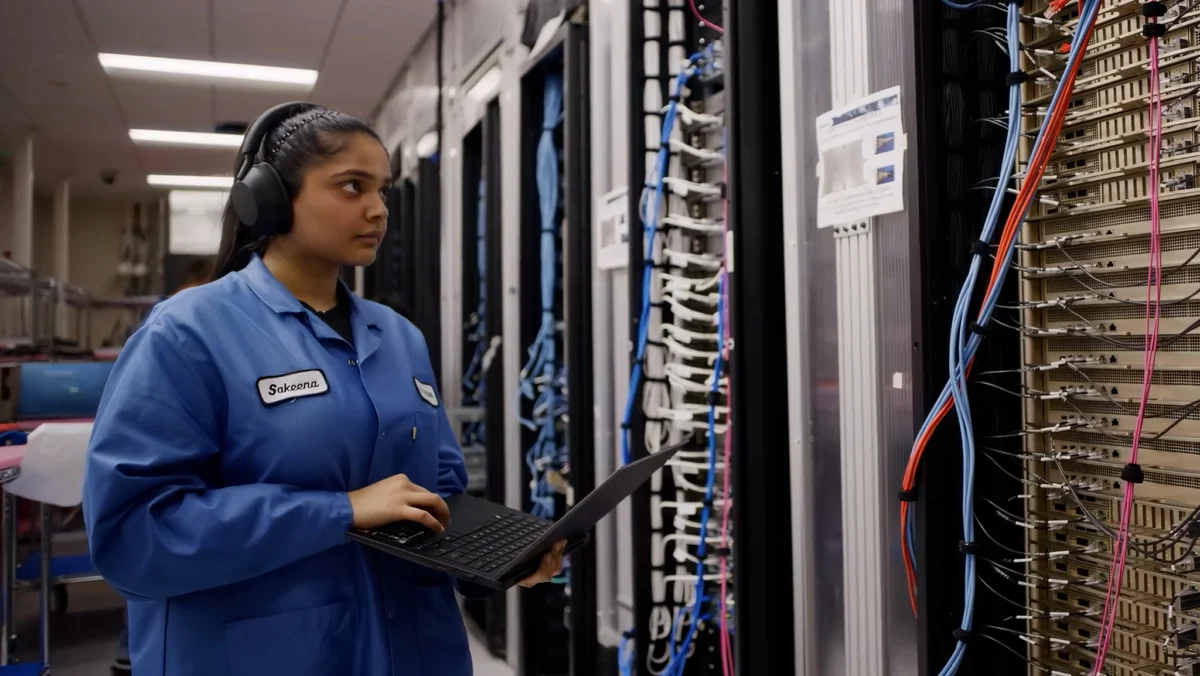
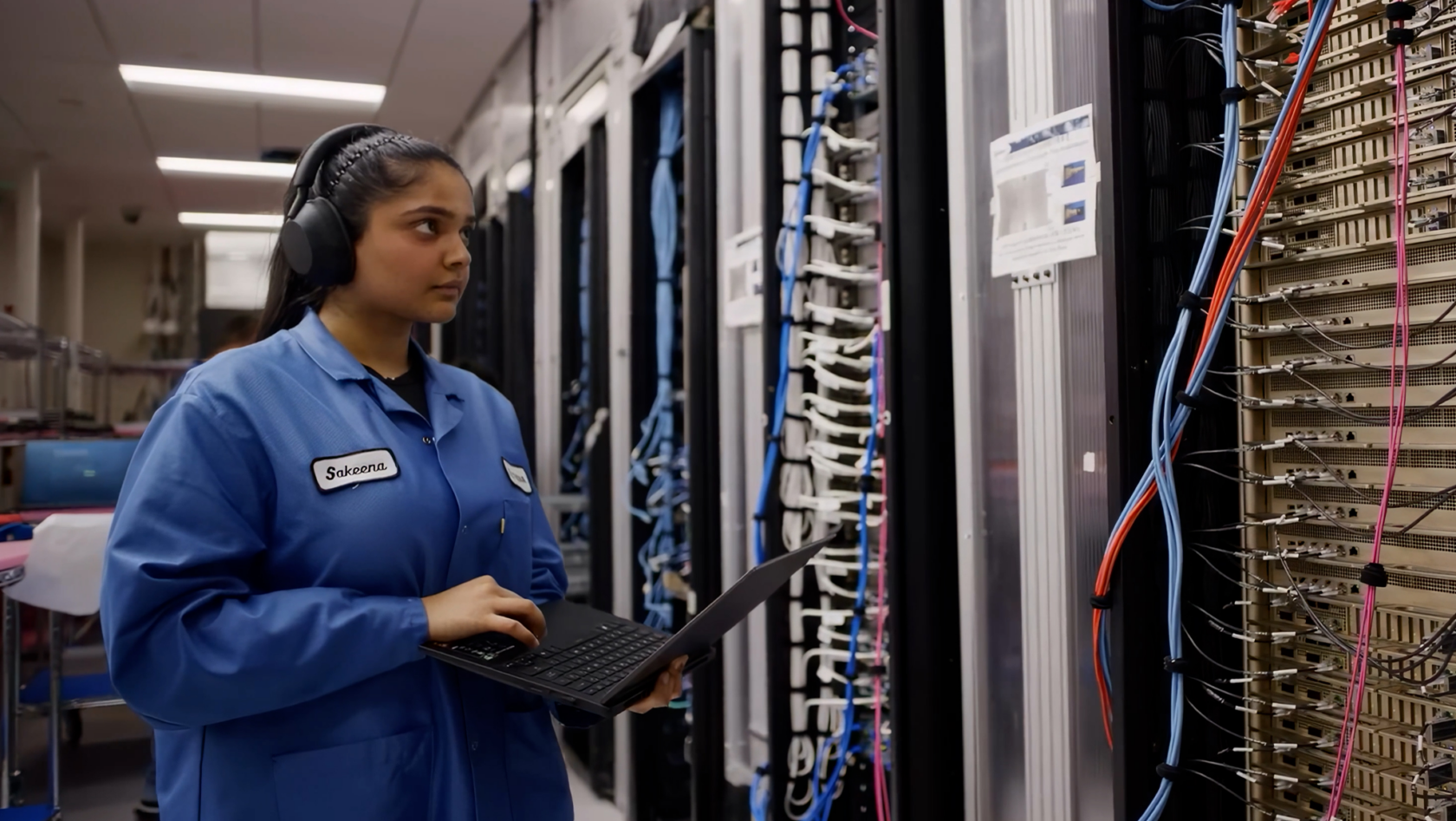
In the high-stakes world of artificial intelligence infrastructure, technological leaps are rarely born fully formed. Long before cutting-edge AI accelerators power massive data centers or train foundational models, they must survive the gauntlet of the engineering lab. At NVIDIA, this crucial baptism by fire is overseen by validation engineers like Sakeena Fiza—professionals who operate at the critical intersection of hardware, software, firmware, and thermal design.
Describing her daily reality in terms more befitting a forensic detective novel than a semiconductor testing facility, Fiza treats every new system architecture as a complex mystery waiting to be solved. Her primary objective is clear yet daunting: act as the ultimate line of defense by trying to break systems before they ever reach a customer’s hands.
Working in the data center systems engineering lab, Fiza and her peers are the very first people outside of core design teams to power on NVIDIA’s next-generation architectures. Their mandate is to stress-test these massive, complex machines under extreme operational conditions, hunting down micro-scale anomalies and macro-scale design flaws alike. From evaluating high-speed signaling margins and power integrity across multi-node racks to investigating something as seemingly mundane as localized dust accumulation, the validation team ensures that the engines powering the global AI revolution are robust, resilient, and ready for deployment at scale.
Chronology
From Dubai to Silicon Valley: A Lifelong Fascination with Systems
Fiza’s journey to the forefront of AI hardware engineering spans continents and decades, driven by an unyielding curiosity about how complex systems function. Growing up in Dubai, her earliest exposure to computer science came through the Logo programming language, sparking an early interest in software logic.
As her technical ambitions matured, that interest expanded naturally into physical systems and hardware design. During her high school years, she honed her engineering instincts by building Mars rovers at specialized robotics camps. This hands-on foundation paved the way for her undergraduate studies at the University of California, Irvine, where she pursued a bachelor’s degree in computer science and engineering. While at UC Irvine, Fiza expanded her repertoire further by designing and working on unmanned aerial vehicles (UAVs), deepening her comprehension of the intricate choreography required to make disparate mechanical and electrical components operate in unison.
The "Bring-Up" Ritual: First Signs of Life
Upon graduating, Fiza joined NVIDIA, drawn specifically to data center systems engineering because it offered a rare vantage point: the opportunity to work with the entire machine.
Her career has since been defined by pivotal milestones, chief among them the "bring-up" phases of revolutionary hardware. One of her most cherished professional memories is witnessing the first-ever system-level activation of the NVIDIA Rubin GPU.
The process of a hardware bring-up is famously electric. Boards are integrated one by one, power is applied for the first time, firmware and software teams swarm the lab, and engineers hold their breath watching for telemetry signals. For the Rubin GPU launch, the moment of truth arrived quietly via a text readout on a monitor: "NVIDIA Corporation Device."
According to Fiza, the room erupted into cheers and celebrations. It marked a historic milestone—the very first time globally that a Rubin GPU successfully enumerated at a system level. Yet, as exhilarating as those initial sparks of life are, they represent merely the opening act of the validation lifecycle.
Supporting Data
The Microscopic and Macroscopic Scale of Modern AI Hardware
To truly grasp the magnitude of validation engineering, one must comprehend the staggering scale of the hardware powering contemporary AI factories. A single modern server board can house tens of thousands of individual components, while a fully integrated rack-scale architecture can approach half a million distinct parts.
These components must do far more than simply coexist on a circuit board; they must function harmoniously under extreme computational stress, continuous high-thermal output, and intense electrical loads.
The validation process systematically scales across multiple tiers:
Tray & Rack Level: Ensuring signal integrity, managing thermal dissipation limits, and verifying power delivery networks.
Cluster Level: Testing communication fabrics, multi-node scaling, and software-hardware cohesion.
Production & Customer Level: Stress-testing hardware against real-world deployment variables, manufacturing tolerances, and environmental factors.
The Diagnostic Playbook
When a system failure occurs during testing, it generates a mountain of diagnostic data—kernel logs, scope shots, and telemetry feeds. Fiza’s role requires her to act as a general practitioner of engineering, drawing on multiple disciplines:
Electrical Engineering: Probing high-speed traces and checking voltage regulation modules.
As Fiza notes, the root cause of a failure can range from invisible high-frequency signal jitter to something as physical and unexpected as an over-tightened screw or environmental particulate levels in a customer facility. Sorting through these variables demands a disciplined methodology: following legitimate telemetry clues while aggressively filtering out engineering red herrings.
Official Responses
Perspectives from the Lab Floor
NVIDIA’s engineering culture heavily emphasizes cross-functional collaboration during the high-pressure phases of product development. Fiza frequently compares a major product bring-up to cinematic moments of team synchronization.
"I always like to think of it as a mystery to solve,"Sakeena Fiza explains, reflecting on her investigative approach to hardware anomalies. "Validation engineers look in the shadows and shine a light into every corner. Every time we get a system, our first thought is: how can it break?"
This preemptive skepticism is not rooted in pessimism, but in a rigorous commitment to reliability. By intentionally trying to break devices in controlled lab environments, the validation team shields end-users from potential field failures.
"The goal is to always catch issues before customers catch them," Fiza emphasizes. "Validation makes us the first customers for the product, exercising hardware to its limits in a range of real-world conditions before anyone else has to depend on it."
Furthermore, the multidisciplinary nature of the work provides engineers with rare creative and technical agility.
"I get to be a mechanical engineer when I want to be," Fiza remarks on the breadth of her role. "I get to be an electrical engineer when I want to be. I get to be a firmware engineer when I want to be."
Above all, the sheer complexity of modern AI systems fosters a deep sense of community among NVIDIA engineers. Reflecting on the collaborative atmosphere within the Santa Clara offices and labs, Fiza points out:
"One thing I know when I come to work is I’m never alone. Bring-up is like the Avengers assembling—architects, designers, software engineers, firmware engineers, validation engineers, all in the room, racing toward a working system."
Implications
Why Validation is the Unsung Hero of the AI Era
As artificial intelligence transitions from a transformative technology into the foundational infrastructure of the global economy, the stakes for hardware reliability have never been higher. Modern AI factories operate continuously, processing immense workloads where even a fraction of a percent in systemic downtime can result in massive financial and computational losses.
The work performed by validation engineers like Sakeena Fiza carries profound implications for the broader technology landscape:
Accelerating Time-to-Market: By aggressively identifying and resolving edge-case architectural flaws during the lab phase, validation teams prevent costly delays during mass manufacturing and large-scale data center rollouts.
Ensuring Infrastructure Resilience: As AI clusters scale to hundreds of thousands of interconnected GPUs, hardware stability at the rack and cluster level is paramount. Rigorous validation ensures that power integrity and thermal management can withstand continuous peak-performance operations.
Paving the Way for Future Innovations: Every resolved failure mode, mysterious log error, and thermal anomaly contributes to an invaluable repository of engineering knowledge. This data directly informs the design of subsequent generations of AI accelerators.
Looking toward the horizon, Fiza remains profoundly optimistic about the hardware pipeline currently in development at NVIDIA. For an engineer who spends her days hunting down digital ghosts and electrical anomalies, the motivation is ultimately anchored in real-world impact.
"With the products we have in the pipeline, I’m so excited," Fiza concludes. "They’re going to change the world."