










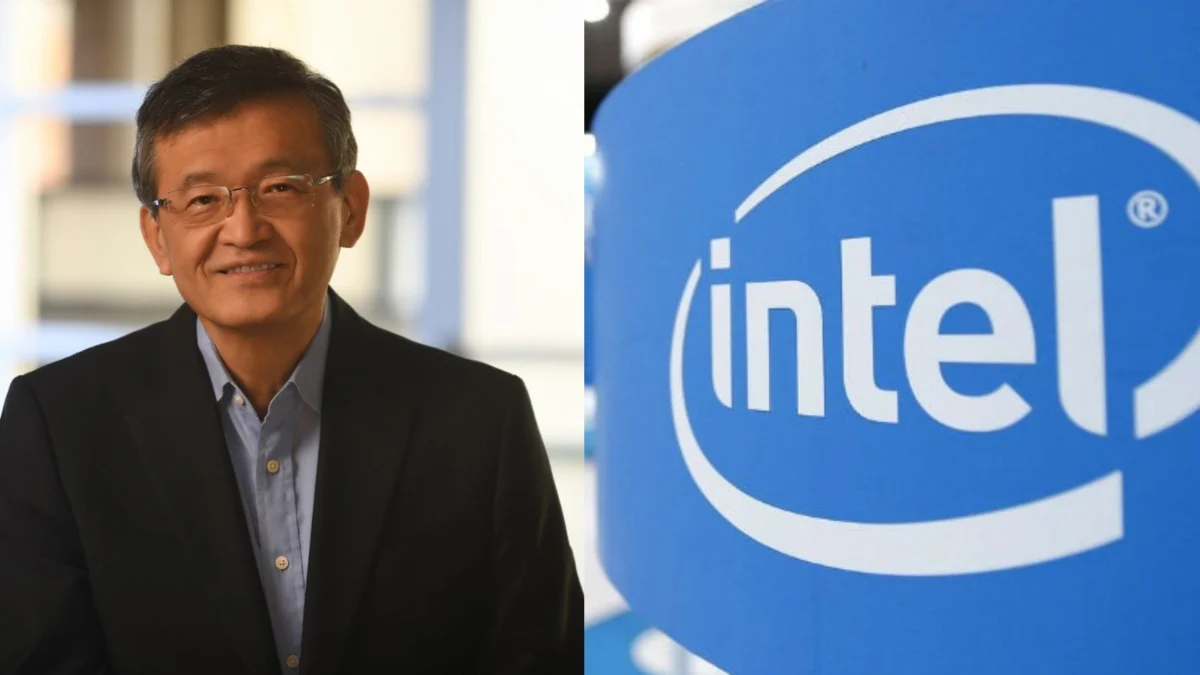
New Delhi — In a wide-ranging assessment of the global technology landscape, Intel Chief Executive Officer Lip-Bu Tan has highlighted the rapid adoption and striking cost-efficiency of Chinese frontier artificial intelligence models. Speaking at an exclusive panel discussion organized by financial institution DBS on Monday, Tan pointed to the surging momentum of alternative AI ecosystems originating from China, emphasizing that their operational metrics are reshaping how global markets view scalability, token economics, and open-source development.
The remarks from the head of the legacy semiconductor giant arrive at a critical juncture for the global technology sector. As Western and Eastern firms compete fiercely for dominance in generative AI, compute infrastructure, and next-generation hardware architectures, Tan’s commentary underscores a pragmatic shift toward recognizing alternative paradigms that challenge traditional Silicon Valley monopolies. Beyond current-generation large language models (LLMs), the Intel CEO also gazed into the technological horizon, projecting that quantum computing could transition from academic laboratories to mainstream enterprise deployment within the next three to five years.
1. Main Facts
The core takeaways from Lip-Bu Tan’s appearance at the DBS-organized panel center on the shifting economics of artificial intelligence and the accelerating timeline of foundational computing breakthroughs:
- Cost and Adoption Metrics: Tan observed that the token costs associated with Chinese frontier AI models are notably lower than many Western counterparts, which has fueled a "very fast" rate of adoption across markets.
- Performance Validation: Highlighting prominent Chinese AI players such as DeepSeek, Moonshot AI’s Kimi, and Zhipu AI’s GLM, Tan stated that their performance capabilities are "good enough" to handle demanding enterprise and consumer use cases.
- Open-Source Advocacy: Reaffirming his strategic philosophy, Tan declared himself a "strong believer in open source," arguing that open ecosystems represent the most effective vehicle for driving efficiency and innovation. He noted that the market will ultimately dictate which models best serve specific operational requirements.
- Quantum Computing Horizons: Looking beyond binary computing, Tan forecasted that quantum computing is on track to become mainstream within three to five years, stressing that specialized software will be paramount in optimizing the complex infrastructure required to run quantum systems.
2. Chronology of Events and Industry Context
To fully understand the weight of Tan’s commentary, it is essential to contextualize the timeline of developments leading up to his Monday address:
- Early 2024 – Late 2025: The Emergence of Cost-Disruptive Models: The global AI community experienced a paradigm shift when Chinese labs began releasing highly optimized models that achieved competitive benchmarks at a fraction of the training and inference costs of U.S.-based flagships. Platforms like DeepSeek V3 and R1 captured global attention by proving that high-level reasoning could be achieved without exorbitant capital expenditures on energy and hardware.
- Leadership Transitions at Intel: Lip-Bu Tan assumed the helm at Intel during a turbulent period of strategic restructuring, foundry spin-offs, and competitive catch-up in the AI accelerator market. His mandate has focused heavily on operational efficiency, ecosystem partnerships, and realigning Intel’s product roadmap with fast-moving market demands.
- Monday Panel Discussion (October 12, 2026): Speaking at the DBS-hosted panel in New Delhi, Tan offered unvarnished insights into the global AI race. Rather than framing the technology landscape as a zero-sum game defined purely by proprietary Western architectures, he acknowledged the undeniable economic pull of efficient, lower-cost Asian models.
- Post-Panel Reactions: Financial analysts, semiconductor investors, and software architects immediately began dissecting Tan’s remarks, interpreting them as a signal that the future of enterprise AI will likely be multi-model, open-source-leaning, and highly cost-sensitive.
3. Supporting Data and Market Dynamics
The economic realities underpinning Lip-Bu Tan’s observations are supported by shifting trends in token pricing, infrastructure utilization, and open-source contributions.
The Economics of Token Generation
In the generative AI economy, the "token" is the fundamental unit of currency—representing words or sub-words processed during inference. Historically, Western frontier models commanded premium pricing per million tokens, reflecting the massive amortized costs of high-end NVIDIA GPU clusters and expensive electricity grids. However, architectural innovations pioneered by Chinese labs—such as Mixture-of-Experts (MoE) optimizations, multi-head latent attention, and algorithmic efficiencies—have drastically lowered the compute footprint required per inference query.
Tan’s observation that Chinese token costs are lower directly reflects these breakthroughs. When businesses can achieve comparable reasoning capabilities at a fraction of the cost per API call, the financial barrier to enterprise-wide AI deployment plummets, accelerating adoption curves exponentially.
The Rise of DeepSeek, Kimi, and GLM
- DeepSeek: Renowned for achieving state-of-the-art performance in coding and mathematical reasoning while utilizing significantly fewer computational resources during training.
- Kimi (Moonshot AI): Celebrated for its ultra-long-context window capabilities, allowing users to ingest and analyze massive text repositories simultaneously.
- GLM (Zhipu AI): Backed by robust academic and corporate funding, GLM series models have consistently pushed the envelope in bilingual and multilingual processing efficiencies.
The Open-Source Multiplier
Tan’s explicit endorsement of open-source frameworks aligns with a broader industry realization: closed gardens cannot out-innovate a global community of developers. By lowering the friction of access, open-source models allow regional enterprises to fine-tune weights locally, ensuring data sovereignty while drastically reducing dependency on any single vendor.
4. Official Responses and Industry Reactions
Reactions to Lip-Bu Tan’s statements have reverberated across global financial and technological capitals, drawing commentary from industry analysts, software developers, and geopolitical observers.
Semiconductor and Hardware Ecosystems
As the CEO of a foundational semiconductor entity, Tan’s acknowledgment of efficient Chinese models carries unique weight. Competitors and partners alike noted that hardware manufacturers can no longer rely solely on brute-force scaling (adding more chips to a cluster) to maintain pricing power. Instead, software-hardware co-design—optimizing silicon to run lean, highly efficient model architectures—is becoming the definitive battleground.
Software Developers and Enterprise Leaders
Enterprise software architects welcomed Tan’s emphasis on software-driven infrastructure efficiency. Many corporate IT leaders have voiced fatigue over escalating cloud compute bills associated with proprietary AI tools. Tan’s validation of alternative, cost-effective models provides validation for CIOs looking to diversify their AI vendor portfolios and incorporate open-source alternatives into their hybrid cloud strategies.
Geopolitical and Market Analysts
Market observers pointed out that Tan’s commentary highlights the porous nature of global technology adoption. Despite export controls and regulatory friction designed to wall off technological ecosystems, economic gravity—driven by the undeniable appeal of lower costs and high performance—continues to integrate global AI utility.
5. Strategic Implications
Lip-Bu Tan’s projections carry profound implications for the trajectory of the technology sector over the remainder of the decade. These can be broken down into three critical vectors:
A. The Commoditization of AI Inference
As frontier performance becomes "good enough" across a wider array of low-cost models, proprietary LLMs face intense downward pricing pressure. Companies will struggle to justify exorbitant subscription fees if regional open-source models deliver 95% of the performance at 10% of the cost. This commoditization will force AI providers to compete on service integration, security guarantees, and specialized domain tuning rather than raw intelligence metrics alone.
B. Open Source as the Default Enterprise Standard
Tan’s belief in open source as the ultimate driver of efficiency signals a maturation in how businesses view risk and reward. Closed-source APIs, while convenient for rapid prototyping, present long-term lock-in and cost risks. The proliferation of robust open-source alternatives from both Western and Eastern developers empowers enterprises to host models on-premises or within private clouds, ensuring compliance with strict data residency regulations.
C. The Quantum Horizon: Software-Defined Infrastructure
Perhaps the most forward-looking element of Tan’s address was his timeline for quantum computing. Predicting mainstream commercial viability within three to five years shifts quantum mechanics from theoretical physics into the realm of practical engineering. However, as Tan emphasized, quantum hardware is useless without sophisticated software orchestration.
Traditional binary computers cannot simply run quantum algorithms natively; a massive paradigm shift in middleware, compilers, and error-correction software will be required. Intel and other major technology firms are expected to aggressively invest in hybrid classical-quantum software stacks to capture this impending market wave.
Conclusion
Lip-Bu Tan’s remarks at the DBS panel serve as a timely reminder that the global technology landscape is defined by relentless optimization, economic pragmatism, and rapid decentralization. By recognizing the cost efficiencies and high adoption rates of Chinese AI models like DeepSeek, Kimi, and GLM, the Intel CEO has bridged a perceptual gap in the Western tech narrative. Combined with his aggressive timeline for quantum computing, Tan’s vision points toward a future where efficiency, open-source collaboration, and advanced software infrastructure dictate the next era of human technological capability.



