










By Global Tech & Policy Desk
Published: October 2026
Introduction: The Vanishing of an Offline Lifeline
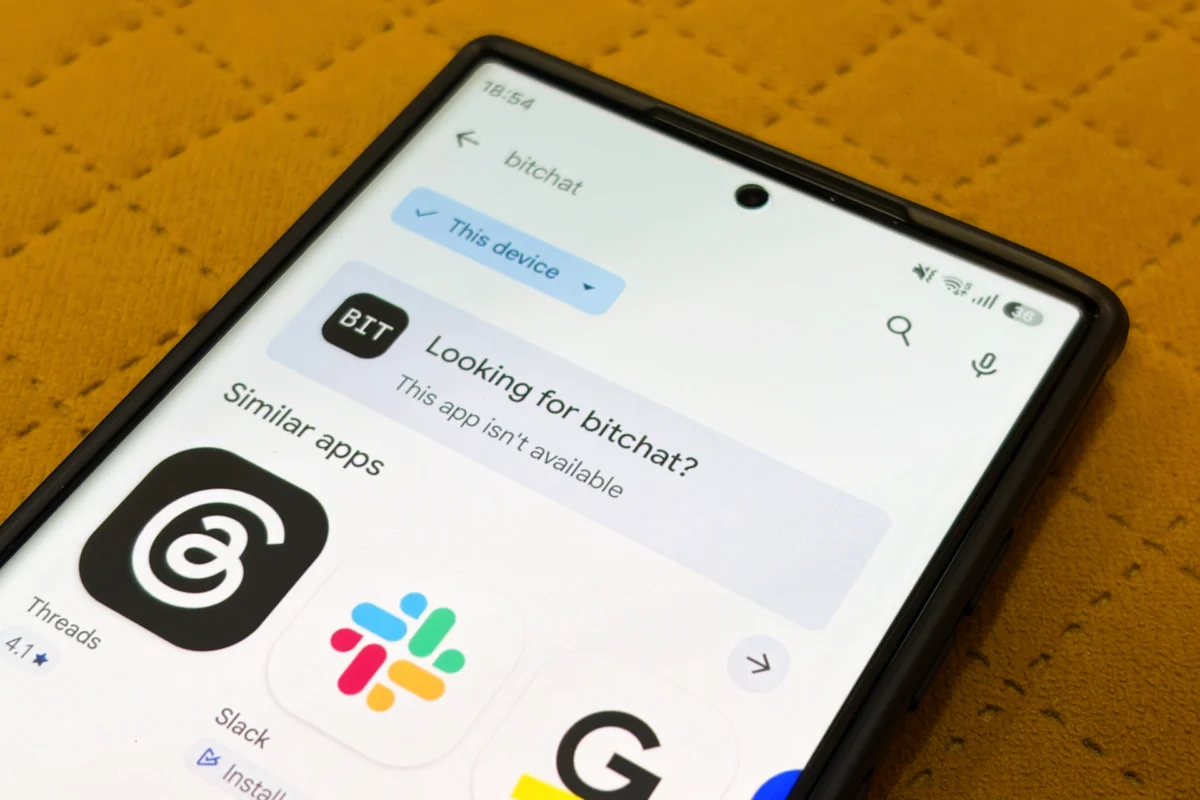
In a sweeping escalation of digital censorship, Bitchat—the decentralized, open-source messaging application championed by tech entrepreneur Jack Dorsey—has entirely vanished from both the Apple App Store and Google Play Store within India. The removal of the app marks a dramatic climax in an ongoing regulatory and legal battle between New Delhi and decentralized communication platforms. Bitchat’s core innovation lies in its ability to operate completely independently of traditional cellular networks, internet infrastructure, or centralized servers, relying instead on Bluetooth mesh networking to connect nearby devices.
The disappearance of the application from major mobile marketplaces is not merely a technical removal; it represents a profound flashpoint in the global debate over state sovereignty, surveillance, and digital civil liberties. As youth-led protests rock the streets of New Delhi over contested voter rolls and authorities increasingly deploy localized internet blackouts to quell dissent, the suppression of Bitchat highlights the delicate and often volatile intersection of emergent technology, authoritarian intervention, and human rights.
Main Facts: The Deplatforming of Bitchat in India
The sudden unavailability of Bitchat across mainstream distribution channels in India was confirmed over the weekend, following a directive issued by the federal government.
- The Apple Directive: On Saturday, Jack Dorsey publicly shared a notice he received from Apple via social media platform X (formerly Twitter). The document revealed that India’s Ministry of Electronics and Information Technology (MeitY) had formally ordered Apple to scrub Bitchat from its Indian App Store. The mandate was invoked under Section 69A of the Information Technology Act, India’s primary legal mechanism for government-ordered online content blocking and censorship.
- Scope of the Block: According to Apple’s notice, while Bitchat will remain accessible on its App Store in jurisdictions outside India, local users are entirely barred from downloading it. Furthermore, access to the application via Apple’s TestFlight beta-testing framework has also been forcefully severed within the country.
- Google and ISP Complicity: Independent checks conducted by technology analysts on Saturday confirmed that Bitchat was similarly absent from the Google Play Store for Indian users. Concurrently, the official Bitchat website was rendered entirely inaccessible across multiple major Internet Service Providers (ISPs) throughout the nation. Unlike the explicit directives issued to Apple, it remains unclear whether Google and local ISPs received formal, direct orders from federal agencies or acted preemptively to avoid regulatory penalties.
- Official Silence: As of Sunday, representatives for Apple, Google, and India’s Ministry of Electronics and Information Technology have declined to respond to repeated requests for comment from major media outlets regarding the sudden purge.
Chronology: A Timeline of Escalating Restrictions
The suppression of Bitchat did not happen overnight; it is the culmination of a months-long chess match between the Indian state and the developers of decentralized, censorship-resistant software.
July 2025: The Birth and Rise of Decentralized Mesh Messaging
Bitchat was officially launched to the public, offering a revolutionary paradigm for secure communication. By utilizing Bluetooth mesh networking protocols, the app enabled users in close geographical proximity to pass encrypted packets of data peer-to-peer. This architecture rendered traditional internet access and cellular towers obsolete for local communication, positioning it as an indispensable tool for privacy advocates.
July 2026: The GitHub Crackdown
The friction between Indian authorities and the app’s ecosystem intensified significantly in July 2026. Jack Dorsey revealed publicly that Indian regulators had issued an takedown order targeting GitHub repositories associated with Bitchat’s open-source codebase. This move stunned legal experts and digital rights organizations, as it marked a rare instance of a government attempting to suppress the underlying source code of a software project purely based on its functional capabilities.
The government’s rationale at the time centered on intermediary liability laws, arguing that the app’s decentralized architecture actively frustrated law enforcement agencies by making message interception and user tracing nearly impossible—especially during state-mandated internet shutdowns.
October 2026: The App Store Purge and Street Protests
Following months of simmering tension, the regulatory framework shifted to Section 69A of the IT Act. This legal pivot enabled the state to compel mobile app marketplaces to completely remove the software from circulation. The enforcement coincided precisely with a fresh wave of Gen Z-led demonstrations in New Delhi, where citizens took to the streets to protest alleged manipulations of the country’s voter rolls and to demand the resignation of the chief election commissioner. In response to the unrest, state authorities clamped down on digital communications, deploying localized internet suspensions around sensitive protest hubs like Jantar Mantar.
Supporting Data: Usage Surges and State-Mandated Blackouts
Quantitative data underscores why Indian authorities view decentralized mesh applications as a direct threat to their information control protocols.
Market intelligence data compiled by Sensor Tower revealed a dramatic, unprecedented spike in Bitchat adoption within India during the height of political unrest earlier this year. Between July 17 and July 23, 2026, India accounted for approximately 85% of Bitchat’s total global downloads. This figure represents an astronomical leap from the mere 1% baseline the app maintained in the country over the preceding 30 days.
This surge directly correlates with government-imposed communications blackouts. During demonstrations earlier in the year, civil rights monitors documented that protestors—facing sudden internet cuts and pervasive digital surveillance—fled traditional messaging platforms (like WhatsApp and Telegram, which require active data connections or are subject to localized server throttling) in favor of mesh networks like Bitchat and its rival, Briar.
The pattern repeated itself this weekend: as police detained dozens of demonstrators in New Delhi on Saturday, authorities enforced a 12-hour total internet suspension around Jantar Mantar, demonstrating the state’s reliance on connectivity blackouts as a crowd-control measure—and the exact vulnerability that Bitchat was engineered to bypass.
Official Responses and Legal Critiques
The government’s aggressive posture has drawn fierce rebukes from constitutional scholars, legal experts, and civil society organizations who argue that the state is overstepping its constitutional bounds.
The Internet Freedom Foundation (IFF), a prominent New Delhi-based digital rights advocacy group, issued a scathing public statement labeling the latest app store ban as overtly unconstitutional. The IFF argued that Section 69A of the Information Technology Act is legally designed to empower the government to block specific instances of "unlawful information" that threaten public order or national security. However, the organization contended that using this provision to ban an entire, multi-purpose messaging software simply because it possesses offline, anti-blackout capabilities is a gross abuse of executive power.
Furthermore, the IFF criticized the opaque nature of the enforcement, noting that neither the full text of the blocking order nor the specific instances of illegal content allegedly hosted or transmitted via Bitchat have been made transparently available to the public or the developers.
Digital rights advocates point out a dangerous legal precedent: if software can be banned merely because its architecture prevents state surveillance or functions during a blackout, virtually all forms of end-to-end encryption, virtual private networks (VPNs), and peer-to-peer protocols could theoretically be targeted next under the guise of national security.
Implications: The Future of Sovereign Firewalls and Digital Resistance
The eradication of Bitchat from Indian app stores carries profound implications that extend far beyond the borders of South Asia, signaling a new chapter in the global battle for cyber-sovereignty.
- The Rise of "Splinternets" and App Store Compliance: Apple and Google’s swift compliance with MeitY’s directives illustrates the profound leverage authoritarian and semi-authoritarian states hold over multinational tech conglomerates. Eager to protect their market share in burgeoning economies like India, Big Tech firms routinely bend to local censorship demands, transforming app stores into localized digital gated communities governed by domestic political imperatives rather than global free speech norms.
- The Arms Race Between States and Mesh Networks: Bitchat’s suppression proves that traditional network-level censorship (such as firewall blocking of domains and IP addresses) is evolving into device-level app store purges. However, because Bitchat is open-source and decentralized, blocking official app store downloads cannot entirely erase software already installed on user devices, nor can it stop advanced users from sideloading updates. This dynamic points toward an escalating technological arms race: states will attempt to scrub digital marketplaces clean, while developers and activists will engineer increasingly creative methods of peer-to-peer distribution.
- Information Control as a Governance Tool: As public discontent rises globally over economic pressures, democratic backsliding, and electoral integrity, governments are increasingly viewing internet access not as a fundamental human right, but as a dynamic valve that can be turned on and off at will. By targeting tools designed to maintain social cohesion during digital darkness, states are signaling that uninterrupted control over the narrative takes precedence over constitutional protections for free assembly and expression.
Ultimately, the silencing of Bitchat in India serves as a stark warning to the global tech community. As long as decentralized tools provide citizens with a means to circumvent state-sanctioned information blackouts, they will remain primary targets in the ongoing struggle between government control and individual liberty in the digital age.



