







By Danielle Torrie | Updated July 9, 2026 | 16-Minute Read
Main Facts
Demo requests are down, sales teams are pointing fingers at marketing over lead volume and quality, and marketing departments respond by throwing more ad spend at the problem—yet the results stubbornly refuse to improve. According to industry insights shared by B2B experts in 2026, one of the most fundamental mistakes digital marketers make is treating a "Request a Demo" call-to-action (CTA) like a low-friction interaction. Asking a prospective buyer to book a direct calendar slot with a sales representative is an exponentially heavier commitment than downloading a top-of-funnel PDF guide, registering for a webinar, or navigating to a static product page.
Data from the Dreamdata 2025 LinkedIn Ads benchmark report highlights that the average B2B customer journey spans a grueling 211 days and comprises approximately 88 distinct touchpoints. High-investment software decisions require nurturing, trust-building, and extensive internal alignment. Yet, many go-to-market teams still aggressively push high-friction demo requests before buyers have gathered enough research, validated their options, or decided if they are ready for a sales conversation.
The success of a SaaS demo landing page starts long before a prospective buyer actually arrives on the URL. Most software companies reflexively blame their landing page layout when conversion rates slump, but the root cause is almost always misaligned, cold traffic. Unqualified visitors do not magically transform into high-intent buyers simply because a prominent CTA is placed in front of them.
Chronology and The Buyer’s Journey Evolution
To understand why traditional demo page strategies are failing in 2026, it helps to examine how the modern B2B buying cycle has evolved.
- Phase 1: Early Research (Days 1–50): The buyer recognizes a operational bottleneck. They engage with broad industry content, blog posts, and foundational educational frameworks.
- Phase 2: Solution Exploration (Days 51–150): The buyer maps out alternative solutions, reviews software review aggregators, and evaluates whether a platform fits their tech stack. This is where frameworks like Tas Bober’s "Core Four" landing page ecosystem become vital.
- Phase 3: Shortlisting and Validation (Days 151–210): The buyer has narrowed down their options to two or three vendors. They look closely at pricing pages, case studies, and feature differentiators.
- Phase 4: The Conversion Point (Day 211+): The buyer is warm, well-researched, and actively looking for a path to evaluate the product firsthand via a demo or interactive tour.
Historically, marketers treated the demo page as a catch-all net meant to capture anyone browsing the website. However, modern advertising landscapes—influenced heavily by search engine algorithmic shifts and rising privacy regulations—penalize websites that fail to match user intent.
By 2025, search engine quality models began rewarding landing pages that cleanly align with specific search queries and provide clear navigational escape routes to other relevant resources. This historical shift forced marketing teams to abandon the old tactic of stripping away all navigation elements. Today, successful SaaS brands implement structured anchor navigation and thoughtful footers, giving hesitant buyers a way to self-qualify through the rest of the brand’s core content ecosystem instead of bouncing back to search engines.
Supporting Data and Benchmarks
Current conversion benchmarks outline a stark reality for digital marketers. According to Unbounce’s comprehensive conversion benchmark reports and ongoing 2026 B2B optimization studies led by conversion rate optimization (CRO) specialists like Tas Bober, SaaS landing pages convert at a median rate of roughly 3.1% to 3.8%.
This puts the realistic benchmark squarely in the low single digits. However, conversion efficiency varies wildly depending on traffic temperature:
- The 3–5% Rule: Only about 3% to 5% of a total addressable market (TAM) is actively in a buying cycle at any given time.
- Form Field Drop-Off: Conversion data from 2026 indicates a sharp drop-off in form submissions based on field counts. Conversion rates hover near 17% for forms with five fields, drop to 11% for seven fields, and plummet below 7% for forms containing ten or more fields.
- Interactive Impact: Companies that pivot away from standard static forms to interactive product tours often see dramatic improvements. For instance, data from software evaluation case studies highlights that replacing traditional text-heavy forms with interactive experiences ("Take a Tour") can boost pay-per-click (PPC) conversion rates by up to 33% while slashing customer acquisition costs (CAC) in Account-Based Marketing (ABM) campaigns.
Official Responses and Industry Frameworks
Industry thought leaders and platform executives have increasingly emphasized the importance of traffic quality over sheer volume.

Landing page strategist Tas Bober emphasizes that a demo landing page should never be the first piece of collateral a prospect encounters. Instead, it must serve as the final destination in a structured sequence of pages designed to educate, prove credibility, and build trust over weeks or months.
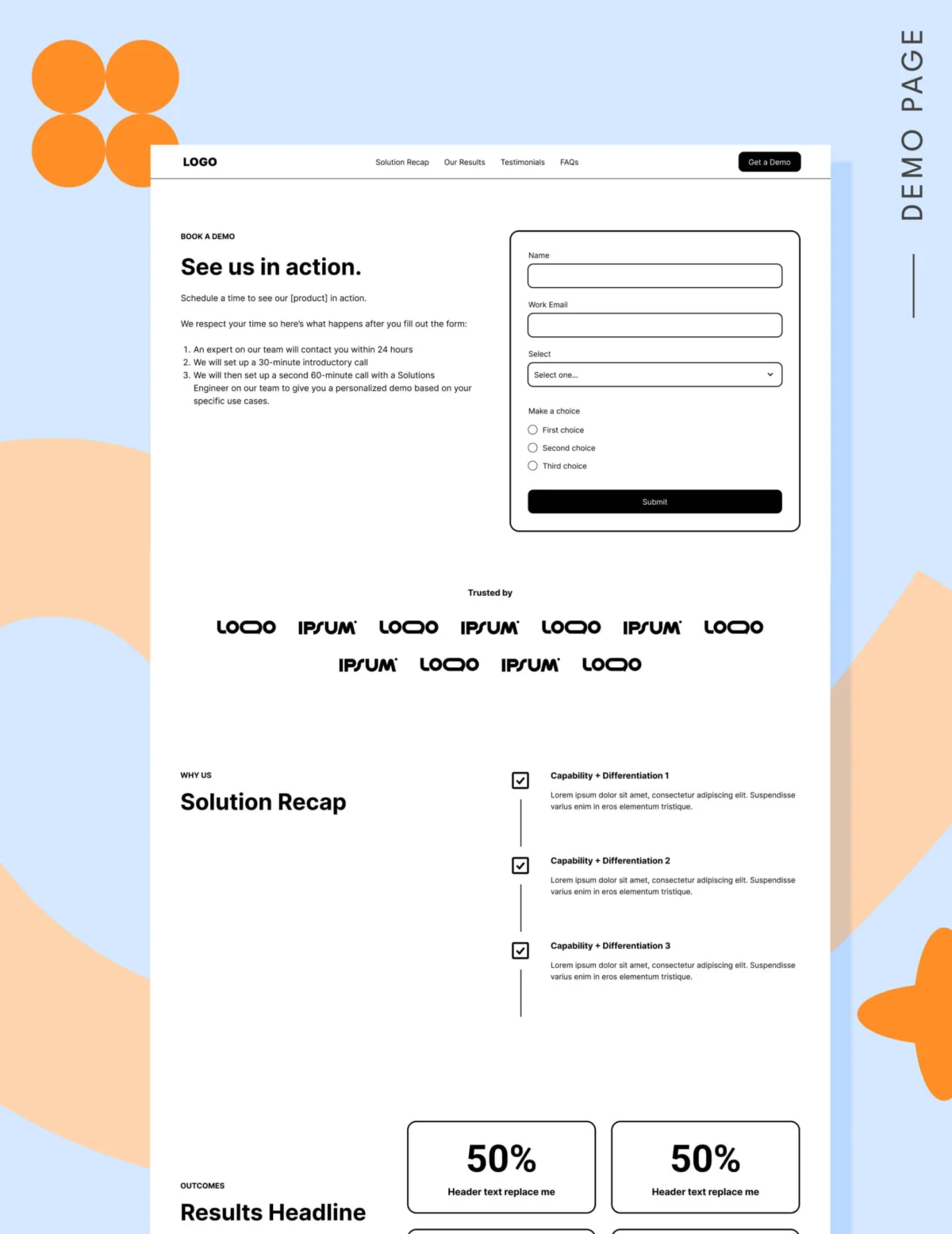
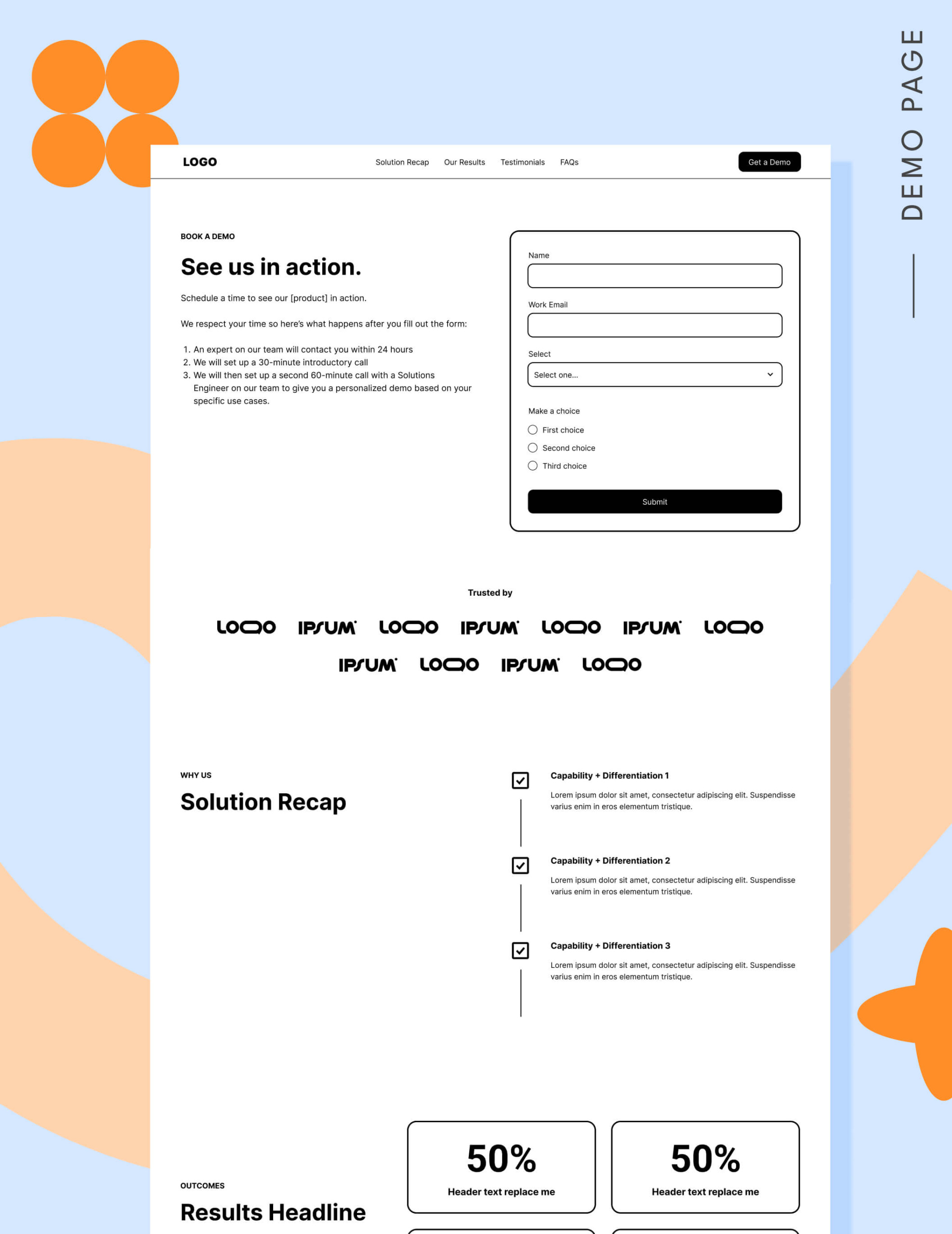
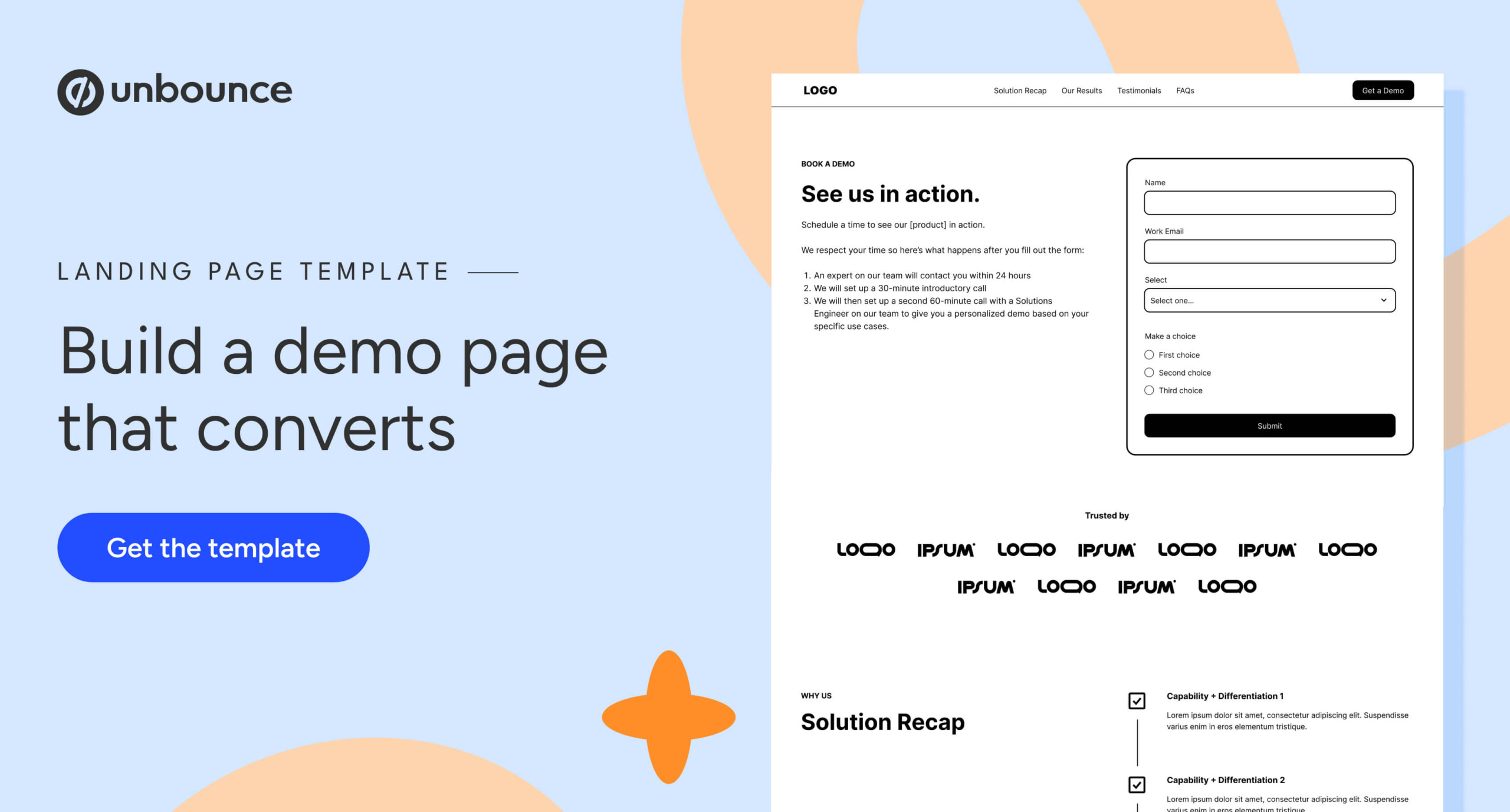
When analyzing the anatomy of a high-converting demo landing page, optimization experts recommend a specific, block-by-block layout:
- The Navigation: Implement an anchor navigation menu to help visitors jump to relevant sections instantly, paired with a minimalist footer linking back to foundational product, pricing, and resource pages.
- The Hero Section: Uniquely, the demo page is one of the few places where placing the form above the fold makes sense. However, it must be paired with clear micro-copy explaining precisely what happens after submission to alleviate the fear of aggressive sales calls.
- Logo Gardens & Testimonials: Stack social proof. If enterprise logos are unrecognizable to your target demographic, use punchy, two-line customer testimonials. Volume matters—aim for at least three robust reviews, scaling up to twelve if possible.
- Solution Recap & Results: Reiterate your primary differentiators and back them up with quantifiable, measurable customer results (e.g., "Increased pipeline velocity by 42%").
- Frequently Asked Questions (FAQs): Address the top three to four objections your sales team hears on discovery calls, alongside logistics about implementation timelines.
- Transparent Pricing: Even sales-led SaaS companies benefit from showing a starting price range (e.g., "Starting at $X/month") or a condensed pricing grid to filter out misaligned budget tiers before they waste sales reps’ time.
Implications for Marketers and Sales Leaders
The implications of these findings stretch across organizational silos, forcing a necessary alignment between marketing and sales departments.
- Ending the Lead Volume Myth: Marketing teams must shift their key performance indicators (KPIs) away from raw lead counts toward pipeline quality and customer acquisition velocity. Generating hundreds of unqualified demo requests creates "calendar chaos" for sales reps and frustrates buyers.
- Rethinking the Call-to-Action: Phrases like "Request a Demo" carry baggage—often signaling to a buyer that they are about to be cornered by an aggressive sales rep. Transitioning to softer, lower-friction CTAs like "Take an Interactive Tour," "Watch a Recorded Walkthrough," or "Book a 15-Minute Technical Consult" can dramatically widen the top of the qualified sales pipeline.
- Fixing the Foundation First: Before a marketing team spends thousands of dollars testing button colors, headline copy variations, or form field lengths, they must audit their traffic sources. If cold, low-intent traffic is being channeled to a high-commitment demo page, no amount of on-page optimization will save the campaign.
By aligning paid media targeting with the realities of a 211-day buyer journey, structuring demo landing pages with radical transparency, and respecting the buyer’s need for autonomy, organizations can repair the friction between marketing and sales—turning their demo landing page into a predictable engine for sustainable revenue growth.