









NEW DELHI — In a significant secondary-market transaction highlighting the growing maturation and profitability of India’s B2B logistics tech ecosystem, venture capital major Accel has offloaded a portion of its early-backed investment in digital freight platform BlackBuck. Accel India, acting through its affiliate entity Accel India IV (Mauritius), successfully divested 27 lakh equity shares of the logistics unicorn via an open-market block deal, raking in approximately INR 155.5 crore.
According to bulk and block deal data released by the National Stock Exchange (NSE), the transaction was executed at an average price of INR 576.05 per share. The shares, which suddenly flooded the market during the trading session, were swiftly lapped up by prominent domestic institutional asset management firm Abakkus Investment Managers, reflecting strong institutional appetite for profitable, tech-enabled logistics plays in India.
The move by Accel is primarily aimed at booking timely profits. It comes amid a notable, healthy uptick in BlackBuck’s share price, driven by successive quarters of improving financial health, expanding operational revenues, and surging net profits. Following the transaction, Accel’s overall shareholding in the company has seen a reduction, down from the 7.17% stake it held at the close of June 2026.
Main Facts & Transaction Breakdown
The transaction details underscore a calculated maneuver by one of India’s most prolific venture capital firms to capitalize on the public market valuation of a portfolio company.
- Total Shares Sold: 27,00,000 (2.7 million) equity shares.
- Total Transaction Value: INR 155.5 crore.
- Price Per Share: INR 576.05, representing an 8.4% discount to BlackBuck’s previous closing price of INR 629.05 on the Bombay Stock Exchange (BSE) on Friday.
- Stake Diluted: Approximately 1.5% of BlackBuck’s total paid-up equity.
- Seller Entity: Accel India IV (Mauritius).
- Buyer Entity: Abakkus Investment Managers.
- Pre-Deal Holding: Accel held a 7.17% equity stake in BlackBuck at the end of June 2026.
Despite the discount offered on the spot price—a customary practice in large-scale block deals to incentivize institutional buyers—the transaction underscores the deep liquidity now available for mature Indian tech startups following their public market debuts. The rapid absorption of the 2.7 million shares by Abakkus Investment Managers points to continued confidence from domestic institutional investors in asset-light, platform-driven logistics models.
Chronology of BlackBuck’s Growth and Market Journey
To understand the significance of Accel’s partial exit, it is vital to trace the developmental trajectory of BlackBuck since its inception over a decade ago.
Foundation and Early Years (2015–2018)
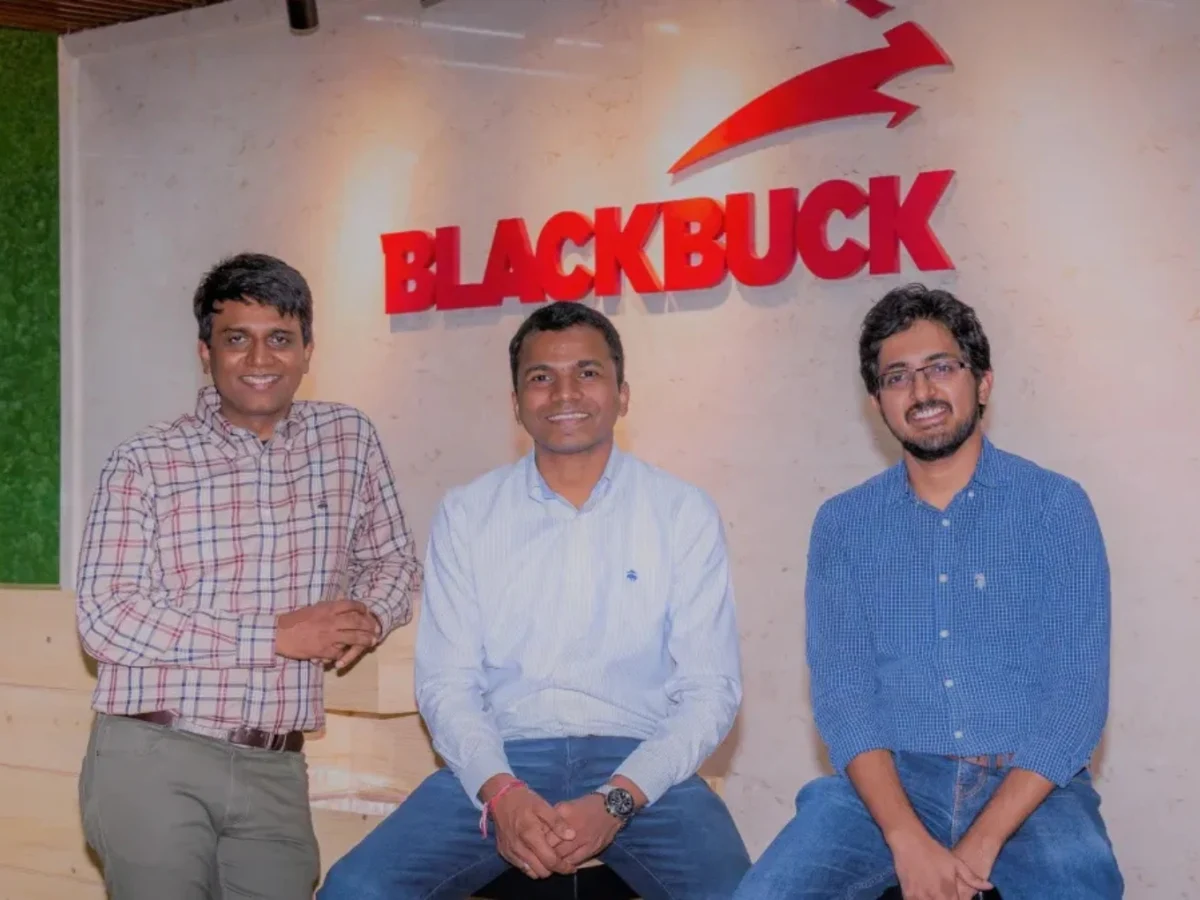
BlackBuck was founded in 2015 by a triumvirate of visionary entrepreneurs: Rajesh Kumar Naidu Yabaji, Chanakya Hridaya, and Ramasubramanian Balasubramaniam. Recognizing the deep inefficiencies, fragmentation, and opacity plaguing India’s traditional inter-city logistics network, the founders set out to build a digital backbone for freight transportation.
In its early formative years, the startup quickly caught the eye of top-tier venture capitalists. Recognizing the massive addressable market of India’s heavy transport sector, Accel India stepped in as an early backer, seeding the company with capital and strategic guidance to scale its operations across key industrial corridors.
Scaling Operations and Expanding the Tech Stack (2019–2023)
As the company matured, it evolved from a pure-play digital freight matching platform into an integrated ecosystem for truck operators. BlackBuck expanded its offerings well beyond basic load matching to include critical operational tools:
- Telematics Solutions: Providing GPS and IoT-enabled tracking devices to help fleet owners monitor vehicle health, driver behavior, and fuel efficiency in real-time.
- Vehicle Financing: Bridging the massive credit gap in India’s commercial vehicle sector by offering customized financing solutions, working capital loans, and FASTag management services to truck drivers and small fleet owners.
During this expansion phase, the company attracted capital from a marquee roster of global and domestic investors, including Flipkart’s subsidiary Quickroutes, Peak XV Partners (formerly Sequoia Capital India), and other institutional heavyweights.
The Public Markets and Rebound Phase (2024–2026)
Like many tech-first companies, BlackBuck navigated global macroeconomic headwinds, tightening venture debt markets, and the push for path-to-profitability. Having successfully streamlined its business model, the company strengthened its financial fundamentals.
Over the past three months leading up to this block deal, BlackBuck’s stock experienced a strong rebound, surging nearly 18% on the bourses. Although the stock remains down roughly 7.6% on a year-to-date (YTD) basis due to broader market fluctuations earlier in the year, its consistent operational delivery has restored investor confidence. On the final trading session prior to the block deal, BlackBuck shares closed 7.46% higher at INR 629.05 on the BSE.
Supporting Financial and Operational Data
The timing of Accel’s partial divestment is firmly anchored in BlackBuck’s robust financial scorecard. The logistics giant has successfully transitioned from a cash-burning growth startup into a profitable enterprise exhibiting strong unit economics.
Q1 FY27 Financial Performance
According to regulatory filings and financial disclosures for the first quarter (Q1) of the fiscal year 2026-27 (FY27):
- Net Profit: BlackBuck reported a stellar 25% year-on-year (YoY) jump in its net profit, touching INR 42.2 crore, up from INR 33.7 crore in the corresponding quarter of the previous fiscal year.
- Revenue from Operations: Top-line growth remained exceptionally strong, with operating revenue zooming 42% YoY and 10% QoQ to INR 204.2 crore during the quarter under review.
Operational Reach and Customer Metrics
BlackBuck’s platform metrics reflect deep market penetration within India’s fragmented trucking landscape:
- Total Customers Served: The company claimed to have served an expansive 8.83 lakh customers in Q1 FY27 alone.
- Cross-Service Adoption: Monthly transacting customers utilizing two or more services (such as load matching combined with telematics or fuel financing) rose by 20% YoY to reach 4.6 lakh users.
These metrics illustrate a powerful "network effect." As more truck operators and shippers join the platform, BlackBuck’s ability to cross-sell value-added financial and technological services increases, expanding its margins and solidifying its competitive moat against emerging logistics tech rivals.
Strategic Implications of the Block Deal
The block deal between Accel and Abakkus carries profound implications for the stakeholders involved, as well as for the broader Indian startup and venture capital ecosystem.
1. For Venture Capitalists (The Exit Cycle):
For early-stage investors like Accel, open-market secondary transactions represent a critical mechanism for returning capital to Limited Partners (LPs). While venture funds often maintain long-term horizons, the ability to systematically trim stakes in listed tech companies ensures risk mitigation and real-time realization of returns. Accel’s move demonstrates that Indian tech initial public offerings (IPOs) and subsequent public markets are increasingly providing viable, high-volume exit routes—a vital reassurance for institutional investors funding early-stage ventures today.
2. For Domestic Institutional Investors (DIIs):
The acquisition of BlackBuck shares by Abakkus Investment Managers underscores a broader trend: domestic mutual funds and AMCs are increasingly stepping up to absorb large tranches of tech stocks being sold by early foreign VCs. This structural shift means that price discovery and stewardship of India’s new-age digital economy are increasingly being anchored by domestic capital pools.
3. For BlackBuck’s Market Standing:
While large secondary sales can sometimes trigger short-term downward price pressures due to increased supply, the seamless absorption of INR 155.5 crore worth of shares by a major AMC signals underlying market resilience. It shows that institutional investors are willing to look past short-term volatility and focus on BlackBuck’s fundamental growth drivers, margin expansions, and dominant position in B2B trucking.
Industry Context and Outlook
India’s logistics sector—traditionally accounting for a disproportionately high percentage of the nation’s GDP due to inefficiencies—is undergoing a structural digital transformation. Platforms like BlackBuck, which digitize the inter-city full truck load (FTL) market, are at the epicenter of this economic evolution.
By integrating freight marketplaces with financial technology and telematics, BlackBuck has transformed a historically unorganized sector into a data-driven, transparent ecosystem. The steady increase in its net profits and operating revenues proves that technology-driven supply chain platforms can achieve sustainable, long-term unit economics in emerging markets.
As BlackBuck continues to scale its customer base—currently servicing close to 900,000 customers quarterly—market analysts will closely monitor whether the company can maintain its stellar growth trajectory through subsequent quarters of FY27. Meanwhile, for Accel, this timely profit-booking exercise marks yet another successful chapter in identifying, scaling, and successfully harvesting value from category-defining Indian technology enterprises.