










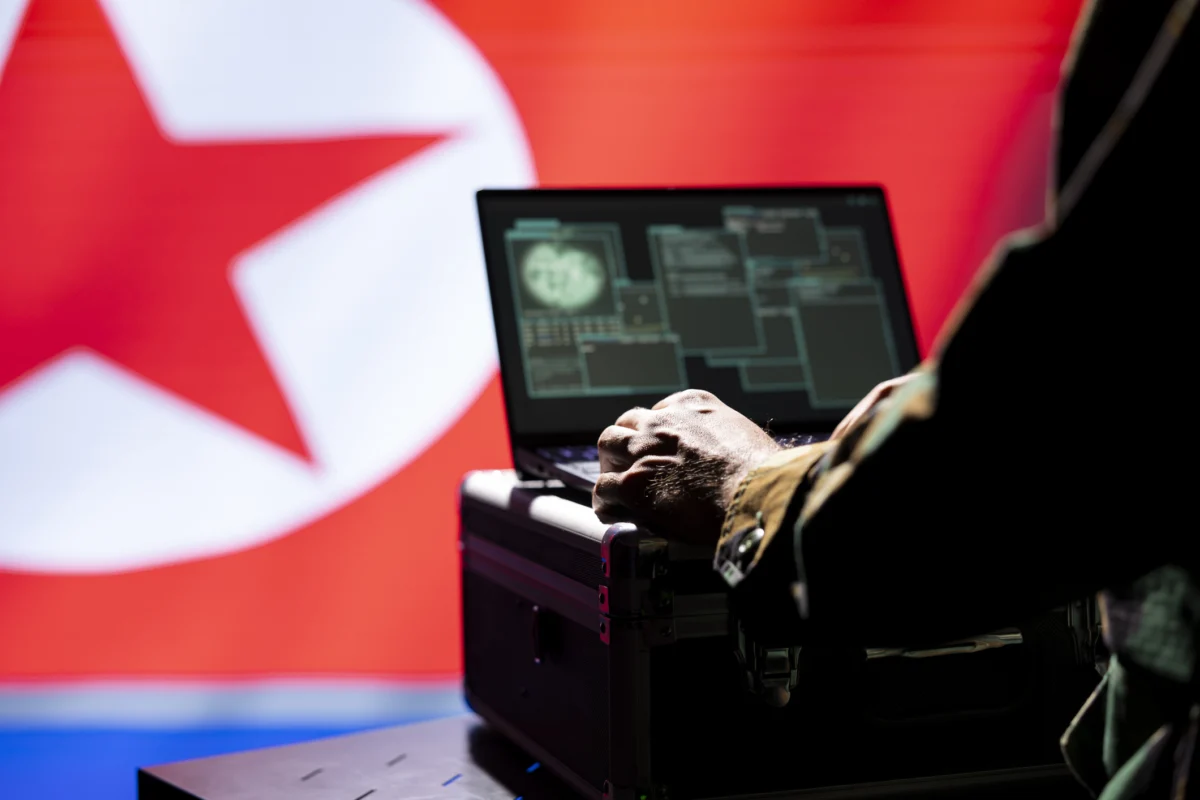
WASHINGTON — In a sweeping coordinated crackdown highlighting the deep vulnerabilities hidden within the modern remote-work economy, federal law enforcement authorities have charged 14 individuals and seized approximately 187 computers. Dubbed Operation Lonestar Roundup, the multi-agency initiative represents a major escalation in the ongoing U.S. campaign to dismantle illicit overseas revenue streams funnelling millions of dollars directly back to Pyongyang to finance North Korea’s prohibited weapons programs.
The operation, detailed in an indictment unsealed Tuesday in the U.S. District Court for the Northern District of Ohio, targets an insidious global conspiracy. North Korean state-sponsored actors have systematically leveraged stolen and fabricated U.S. identities to secure lucrative remote information technology (IT) jobs, subsequently routing their earnings back to the regime in violation of international economic sanctions.
Main Facts
The core of the indictment centers on a sprawling, transnational fraud network operating from 2019 through 2025. According to court documents, 14 individuals—including two U.S. citizens, 10 foreign nationals located in China, and two additional unnamed defendants—managed to infiltrate remote IT positions at more than 70 U.S. companies. Through these fraudulent employment vectors, the conspirators amassed approximately $3 million in wages.
The operation relied heavily on domestic "laptop farms"—covert residential setups located primarily in Texas and Pennsylvania where local accomplices maintained employer-issued computers online around the clock. This setup allowed overseas North Korean engineers to log into corporate networks seamlessly from abroad, masking their true geographic locations.
Key figures identified in the Ohio indictment include:
- Michael James Bostelle of Pennsylvania, accused of providing his name and a fraudulent driver’s license to help an overseas worker secure a remote position.
- Juan Cecilio Pena Carrillo of Texas, who allegedly hosted multiple company laptops at his residence under various pseudonyms, raking in roughly $190,000 across five employers.
- Trey Michael Nolte, an Ohio resident named as a key co-conspirator who allegedly kept roughly two dozen company laptops running continuously, installed remote-access software, and moved over $320,000 through fraudulent bank accounts.
To sustain the charade, the conspirators filed reams of fraudulent employment documentation—including falsified tax, immigration, and social security records—with the Department of Homeland Security (DHS), the Internal Revenue Service (IRS), and the Social Security Administration (SSA), utilizing the stolen identities of more than 25 American victims.
Chronology of an Evolving Threat
The exploitation of remote work arrangements by North Korean IT workers is not entirely new, but the sophistication of the tactics has evolved dramatically over the past decade.
- 2019–2025 (The Fraudulent Employment Era): Conspirators systematically establish domestic proxy networks, recruiting financially vulnerable U.S. citizens to act as local hubs for foreign IT workers. During this period, millions of dollars are funneled through shell accounts to the regime.
- 2024 (Regulatory and Law Enforcement Awakening): Federal agencies begin issuing joint advisories and executing targeted indictments against domestic facilitators aiding North Korean remote workers, recognizing the activity as a national security threat rather than mere corporate white-collar crime.
- Late 2024 / Early 2025 (Widened Infiltration): U.S. and allied governments warn that North Korean threat groups—specifically elements linked to the Munitions Industry Department’s 313 General Bureau—expand their operations. Moving beyond IT job applications, operatives begin posing as prospective employers (such as AI firms) to compromise tens of thousands of job seekers’ networks, harvesting sensitive data and cryptocurrency.
- May 2025 onward (Advanced Evasion Tactics): Pressured by tighter detection tools, threat actors deploy increasingly complex technical obfuscation methods. According to cybersecurity firm CrowdStrike, operatives begin spoofing device identifiers—such as using video capture cards to mimic webcams—and reusing identical disguised device configurations across multiple unrelated jobs.
- Present Day (Operation Lonestar Roundup): The DOJ unseals the Ohio indictment, executing simultaneous searches across more than 40 residences in Texas and seizing nearly 200 computers.
Supporting Data and Technical Insights
The mechanics behind North Korean remote work schemes have grown increasingly gritty and coercive. According to an updated advisory released concurrently by the Federal Bureau of Investigation (FBI), the regime has adapted its recruitment and operational models to counter improving corporate detection capabilities:
- Proxy Interviews and Drug Tests: Under mounting scrutiny, North Korean engineers increasingly pay domestic U.S. proxies to handle physical checkpoints, including sitting through live video interviews, taking mandatory drug tests, and managing multi-factor authentication checks.
- Third-Country Freelancers: In some cases, the schemes have expanded to outsource the actual coding and IT labor to unwitting or complicit freelancers in countries like Pakistan, India, and Nigeria, further obfuscating the ultimate beneficiaries of the labor.
- Coercion and Intimidation: The FBI warned that operators have resorted to sharper, more aggressive tactics when employment relationships sour. This includes threatening former corporate managers after terminations, making data-extortion demands backed by stolen company files, and dispatching paid local helpers to physically intimidate businesses.
- Technical Spoofing: Cybersecurity provider CrowdStrike, which aided federal law enforcement during the investigation, noted that actors routinely mask their digital footprints by mimicking normal remote-work device signatures, making automated detection exceptionally difficult without comprehensive, layered behavioral monitoring.
Official Responses
Federal prosecutors and national security officials emphasized that the disruption of these laptop farms strikes directly at the financial engine powering North Korea’s illicit military ambitions.
"This investigation is about far more than fraud," said Ryan Raybould, a U.S. attorney in the Northern District of Texas, during a press briefing. "It is about a hostile foreign regime infiltrating American companies through stolen identities and covert access points inside our own borders. Every laptop farm we dismantle shuts down a revenue stream that the North Korean government relies on to fund weapons programs that threaten global stability. Operation Lonestar Roundup sends a clear message: we will not allow enemies of the United States to exploit our businesses or compromise our national security."
Cybersecurity analysts, however, urge a pragmatic view of the enforcement actions. While operations like Lonestar Roundup deal temporary localized blows to Pyongyang’s network infrastructure, private-sector experts remain realistic about the enduring nature of the threat.
In a public advisory, CrowdStrike researchers noted: "While disrupting a laptop farm will likely only yield a limited impact on Famous Chollina [the threat cluster] centered mostly on the geolocation of the takedown, these operations send a clear signal to the adversary that law enforcement and CrowdStrike have visibility into their infrastructure and are actively tracking their movements."
Amplifying the international pushback, the U.S. Department of State’s Rewards for Justice program has announced a bounty of up to $5 million for actionable information leading to the disruption of financial mechanisms, networks, or key individuals supporting North Korea’s overseas IT worker operations.
Implications for Corporate Security and National Defense
Operation Lonestar Roundup serves as a stark wake-up call for human resources departments, corporate compliance officers, and IT security teams across the United States.
The convergence of remote work culture and global cyber threats means that insider threats no longer originate solely from disgruntled employees already inside the perimeter. Instead, hostile foreign intelligence and procurement arms are actively manufacturing internal access by weaponizing the hiring process itself.
For businesses, the operational takeaways are profound:
- Enhanced Verification: Standard background checks and remote video interviews are no longer sufficient. Companies must implement rigorous, continuous identity verification and behavioral analytics to ensure that the individual hired is the exact person performing the daily work.
- Hardware Integrity: Allowing employees to operate indefinitely without corporate-managed hardware controls or relying exclusively on unverified personal devices creates gaping blind spots.
- The Balancing Act: Security experts caution against overly blunt keyword filters or crude automated screening tools during hiring, which risk weeding out legitimate, highly qualified international applicants while failing to catch sophisticated proxy networks.
Ultimately, Operation Lonestar Roundup underscores that corporate cybersecurity is no longer just about protecting data from ransomware or preventing perimeter breaches—it is a critical frontline defense in protecting the United States and its allies from the proliferation of weapons of mass destruction.



