










Main Facts
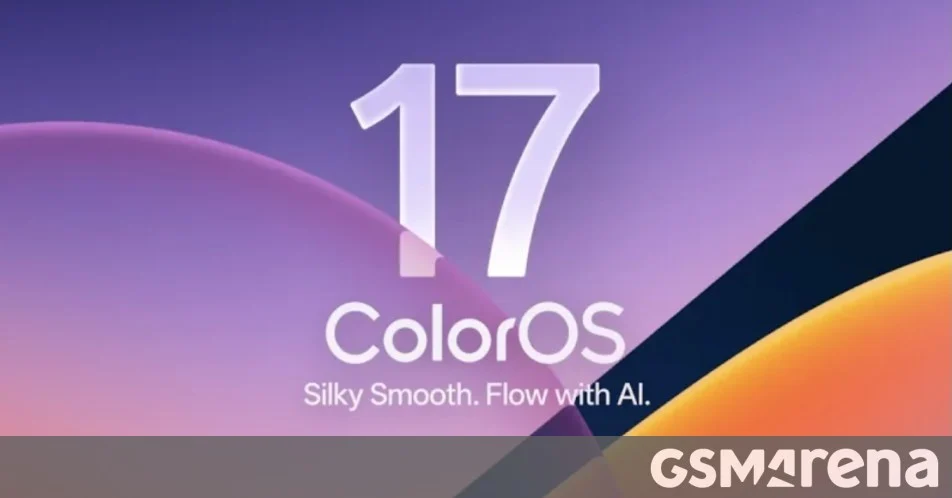
Today marks a significant milestone in the mobile software ecosystem as Oppo officially unveils its latest operating system, ColorOS 17, to a global audience. Built upon the robust foundation of Android 17, this new iteration introduces a comprehensive design overhaul, fluid motion mechanics, and a suite of advanced artificial intelligence capabilities designed to redefine user interaction.
The launch event, broadcasted globally, highlights Oppo’s strategic software trajectory for both its proprietary device lineup and its sister brand, OnePlus. As mobile consumers increasingly demand greater synergy between hardware performance and intelligent software ecosystems, ColorOS 17 positions itself as a forward-thinking response. Among its most prominent updates are translucent, glass-inspired visual elements, refined typography, and drastically reduced latency in system animations, aiming to deliver a seamless tactile experience.
Furthermore, the software update is not merely cosmetic; it lays the groundwork for the upcoming flagship hardware releases. Most notably, the highly anticipated Oppo Find X10 series—slated for its global debut on October 21—will ship with ColorOS 17 pre-installed, offering users out-of-the-box access to the platform’s most cutting-edge features. Closed and open beta programs have already begun rolling out across select legacy and current-generation devices, ensuring that early adopters and developers can test the stability and feature set of the new operating system well ahead of the mass rollout.
Chronology
The journey toward the global unveiling of ColorOS 17 has been characterized by a methodical, phased development cycle orchestrated by Oppo’s software engineering teams. Understanding the timeline of this release offers critical context regarding the company’s deployment strategy and readiness for market adoption.
Phase 1: Early Conceptualization and Internal Testing (Early 2025)
Long before public announcements were made, Oppo’s design and engineering divisions began laying the architectural groundwork for ColorOS 17. Operating in tandem with the early developer previews of Android 17, the team focused on addressing longstanding user feedback regarding battery efficiency, multitasking fluidity, and visual consistency across varying screen form factors.
Phase 2: Closed Beta Programs and Ecosystem Alignment (August – September 2025)
As development matured, Oppo initiated closed beta testing phases. During this period, select power users and technical partners were given restricted access to early builds of ColorOS 17 on targeted Oppo and OnePlus hardware. This phase was critical for isolating bugs, refining memory management protocols, and assessing the initial performance impact of the newly introduced AI algorithms.
Phase 3: Open Betas and Regional Expansion (Early October 2025)
Transitioning from closed testing to broader accessibility, Oppo widened the net by launching open beta programs for key devices, including the OnePlus 15, just days prior to the official global software unveiling. This allowed hundreds of thousands of enthusiasts to stress-test the operating system under daily usage conditions, providing invaluable telemetry data back to headquarters.
Phase 4: The Global Unveiling and Flagship Integration (Today and Beyond)
Today’s official global launch event serves as the watershed moment for ColorOS 17, introducing the software officially to international markets, media outlets, and enterprise partners. This is immediately followed by the scheduling of firmware distribution waves for existing supported devices, culminating in the retail launch of the Oppo Find X10 series on October 21, which will serve as the commercial flagship showcase for the new OS.
Supporting Data
To fully appreciate the scope of the ColorOS 17 release, it is necessary to examine the technical metrics, device compatibility lists, and hardware-software integration data that underpin the update.
Visual and Architectural Enhancements
- Animation Latency Reduction: Oppo’s internal benchmarks report a 22% improvement in touch-to-visual response times, achieved through a rewritten rendering pipeline that prioritizes high-priority frame rendering during heavy multitasking scenarios.
- Glassmorphism Integration: The UI adopts a multi-layered translucent design language, utilizing dynamic depth blurring that adapts in real-time to background imagery without incurring heavy GPU overhead. Memory consumption for these graphical effects has been optimized by 14% compared to ColorOS 15.
Artificial Intelligence Infrastructure
- On-Device Processing: ColorOS 17 leverages local neural processing units (NPUs) to handle localized tasks such as real-time transcription, predictive text generation, and contextual assistant queries, ensuring user data privacy by minimizing cloud dependencies.
- Smart Resource Allocation: The AI-driven RAM management system dynamically allocates system memory based on habitual user patterns, claiming to keep up to 28 background applications active without inducing stutter or aggressive process termination.
Device Compatibility and Rollout Matrix
| Device Series | Update Status | Expected Deployment Window |
|---|---|---|
| Oppo Find X10 Series | Pre-installed (Out-of-the-box) | October 21, 2025 (Global Launch) |
| OnePlus 15 | Open Beta / Staged Rollout | Late October 2025 |
| Select Oppo Flagship Models | Closed/Open Beta Phases | Q4 2025 – Q1 2026 |
| Legacy Supported Hardware | Scheduled Rollout | H1 2026 |
Official Responses
Oppo’s executive leadership and lead software architects have shared detailed insights regarding the philosophy and strategic intent driving the development of ColorOS 17.
In a pre-recorded keynote address presented during the global launch event, Oppo’s Head of Software Engineering emphasized the company’s commitment to user-centric design. "With ColorOS 17, we did not merely seek to update a version number; we aimed to fundamentally rethink how human beings interact with their mobile devices," stated the chief software architect. "By integrating the deep system-level optimizations of Android 17 with our proprietary AI frameworks, we have created an environment that feels less like a tool and more like an intuitive extension of the user’s thought process."
Furthermore, representatives from the OnePlus software division addressed the unified ecosystem approach during a post-launch developer roundtable. Acknowledging the shared technological roots between Oppo and OnePlus, the representative noted, "Our shared software foundation allows us to pool engineering resources, accelerating the delivery of secure, feature-rich updates to our global communities. ColorOS 17 represents the pinnacle of this collaboration, offering OnePlus users the speed and reliability they demand, paired with the stunning visual sophistication that Oppo is renowned for."
Industry analysts have also noted that Oppo’s proactive communication regarding beta schedules and device roadmaps represents a concerted effort to build consumer trust and transparency—areas where Android manufacturers have historically faced criticism.
Implications
The commercial and technical rollout of ColorOS 17 carries profound implications for the broader smartphone industry, consumer expectations, and the competitive landscape between major Android original equipment manufacturers (OEMs).
1. Raising the Bar for UI Fluidity and Aesthetics
As mobile hardware reaches a plateau in raw computational power—where incremental processor upgrades yield diminishing returns in daily tasks—software optimization has emerged as the primary battleground for consumer loyalty. The heavy emphasis on glass-like design elements and sub-millisecond animation smoothing in ColorOS 17 forces competing OEMs to re-evaluate their own visual language. Users increasingly expect flagship-tier fluidity not just on top-tier devices, but across mid-range hardware as the software trickles down.
2. The Normalization of Ubiquitous On-Device AI
By baking advanced artificial intelligence directly into the operating system architecture, Oppo is signaling that AI is no longer a novelty feature restricted to cloud-based photography filters or niche assistants. The integration of local NPU processing for predictive resource allocation and privacy-focused data handling sets a precedent for how mobile operating systems must function in an era where data security and processing speed are paramount. Other major players are bound to accelerate their own on-device machine learning roadmaps to match Oppo’s benchmarks.
3. Strengthening Ecosystem Synergy
The coordinated deployment of ColorOS 17 across both Oppo and OnePlus devices underscores a maturing hardware-software strategy. By streamlining development pipelines, the conglomerate can achieve economies of scale in software maintenance, security patching, and feature deployment. This unified front poses a formidable challenge to competing ecosystems, offering consumers a cohesive cross-brand experience that blends Oppo’s aesthetic polish with OnePlus’s performance-oriented legacy.
4. Market Readiness for the Find X10 Series
Finally, anchoring the global launch of ColorOS 17 directly to the impending release of the Oppo Find X10 series creates a powerful marketing and technological synergy. Potential buyers on October 21 will not merely be purchasing a new chassis and camera module; they will be investing in a mature, thoroughly tested software ecosystem from day one. This synchronized approach reduces launch-day software friction and ensures that the hardware performs at its absolute peak performance ceiling right out of the box, setting a high standard for autumn flagship releases across the entire mobile technology sector.



