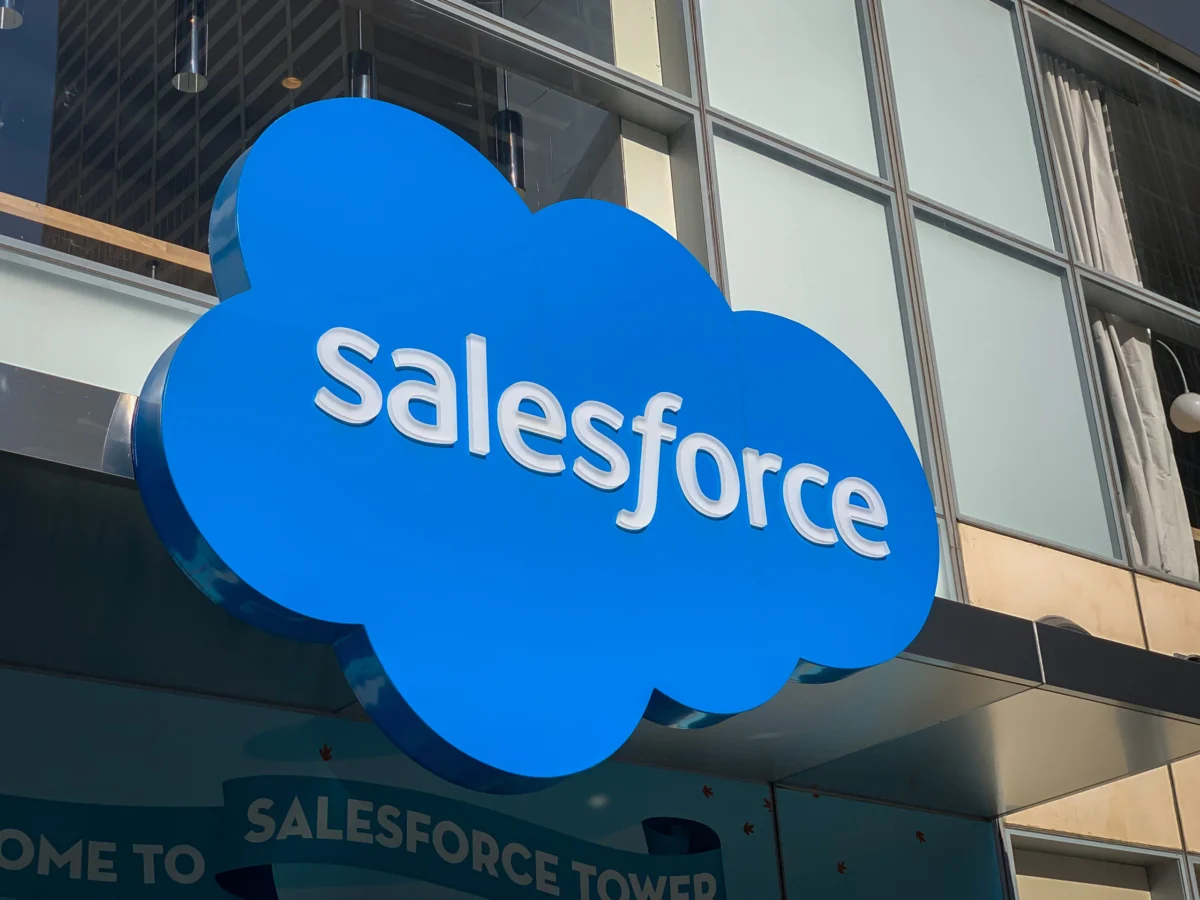
In a move that signals a seismic shift in the customer relationship management (CRM) landscape, Salesforce has officially announced a definitive agreement to acquire Braze for $5.66 billion. This high-stakes acquisition, unveiled on October 20, 2026, represents one of the most significant consolidations in the marketing technology sector this decade. By folding Braze’s real-time, AI-driven engagement capabilities into its expansive ecosystem, Salesforce aims to bridge a long-standing gap in its Marketing Cloud, effectively enabling brands to interact with consumers with unprecedented precision and immediacy.
The Financial Framework of the Acquisition
Under the terms of the agreement, Salesforce will acquire all outstanding shares of Braze for $47.50 per share in cash. This price point represents a substantial 58% premium over the company’s closing stock price on October 19, underscoring Salesforce’s aggressive valuation of Braze’s proprietary technology and its massive active user base.
The transaction is currently slated to close during Salesforce’s fiscal 2028, a window spanning February 1, 2027, through January 31, 2028. As with any deal of this magnitude, finalization is subject to standard regulatory scrutiny and the approval of Braze shareholders. Despite the hefty price tag, Salesforce leadership has signaled that the acquisition is not expected to materially alter its fiscal 2027 financial guidance, reflecting the company’s robust balance sheet and its strategic focus on long-term AI integration.
A Chronology of the Strategic Expansion
Salesforce’s path toward this acquisition has been defined by a relentless, year-long campaign to fortify its AI portfolio. The strategy is clear: transition from a static repository of customer data to an active, predictive engine capable of executing autonomous tasks.
- September 2026: Salesforce successfully closed its $3.6 billion acquisition of Fin, a startup focused on AI agents designed to automate customer service inquiries. This set the precedent for integrating "agentic" AI into the core CRM workflow.
- Late September 2026: The company moved to acquire Contentful for approximately $1.5 billion, aiming to streamline personalized content delivery across digital touchpoints.
- October 2026: Prior to the Braze announcement, Salesforce entered an agreement to acquire Listen Labs, a boutique firm specializing in AI-driven customer feedback analysis.
- October 20, 2026: The landmark announcement of the $5.66 billion deal for Braze, marking the culmination of a series of targeted acquisitions aimed at dominating the AI-marketing interface.
The Braze Value Proposition: Why Now?
Braze has established itself as the gold standard for "live" customer engagement. Unlike traditional marketing platforms that rely on batch-processed data, Braze specializes in cross-channel personalization—spanning mobile apps, email, and websites—in real time.
According to data shared by Braze co-founder and CTO Jon Hyman, the platform’s scale is staggering. The system manages approximately 9 billion monthly active users and facilitated roughly 4.5 trillion consumer interactions in 2025 alone. This massive volume of data serves as the training ground for "BrazeAI," a suite of predictive, generative, and agentic tools that allow brands to optimize the timing, channel, and content of every interaction.
For Salesforce, which counts 78 of North America’s "Top 2000" online retailers among its clients—retailers that collectively generated over $192.60 billion in web sales in 2025—the acquisition provides a critical missing layer. It moves Salesforce from a platform where data is stored to a platform where data is acted upon the moment a user clicks, browses, or abandons a cart.
Official Responses and Strategic Vision
The leadership at both organizations has been vocal about the synergy this deal creates. Patrick Stokes, president of applications and marketing at Salesforce, described the acquisition as the key to unlocking "wow moments" in customer interactions.
"Braze was built to turn live customer behavior into personalized engagement at scale," Stokes stated. "Bringing that capability together with Salesforce Marketing Cloud, CRM, and Data 360 will allow our customers to move beyond static campaigns and into truly fluid, real-time conversations."
Bill Magnuson, CEO and co-founder of Braze, echoed this sentiment while providing clarity on the organizational future. "Salesforce’s global reach and partner network provide the perfect engine to bring our vision of intelligent, real-time engagement to a broader market, sooner," Magnuson said in a LinkedIn update. He confirmed that he will remain at the helm of Braze, which will continue to operate as a distinct, albeit integrated, entity within the Salesforce portfolio.
Implications for Retailers and Marketers
The integration of Braze into the Salesforce ecosystem is poised to disrupt how retailers approach digital marketing. Currently, many brands struggle with fragmented data and the "latency gap"—the time it takes for a customer action to be registered and a response to be triggered.
Case Study: The Power of Real-Time Personalization
The efficacy of the Braze platform is already well-documented among major retailers:
- Grove Collaborative: After facing system instability with a previous provider, the sustainability retailer integrated Braze with its Shopify storefront. The result was a sophisticated automation engine that triggered personalized product suggestions for "window shoppers." This shift led to a 10% checkout rate and a 41% add-to-cart rate, proving that real-time relevance drives conversion.
- E.l.f. Beauty Inc.: By leveraging Braze to revitalize its "Beauty Squad" loyalty program, the brand saw a 125% increase in mobile app usage over a six-month period. Furthermore, the use of automated, personalized push notifications resulted in a 58% year-over-year increase in loyalty offer redemptions in 2024.
With the backing of Salesforce’s massive data infrastructure, these capabilities will move from being niche optimizations to standard features for any enterprise using the Salesforce stack.
The Future: Integrating Braze with Agentforce
The most significant long-term implication of this deal is the convergence of BrazeAI and Agentforce. While Braze handles the "engagement layer"—the actual messaging and interaction—Agentforce provides the "decision-making layer."
In the near future, a retailer using the combined Salesforce-Braze stack will not just be able to send an automated email based on a browsing history. They will be able to deploy an AI agent that analyzes the entire customer journey across sales, service, and commerce. If a customer has a pending support ticket, an AI agent could dynamically pause marketing emails to prevent frustration, or conversely, offer a discount on a product the customer has viewed multiple times, all without human intervention.
A New Era for Marketing Technology
Shay Boloor, chief market strategist at Futurum Equities, noted that this deal solves a historic weakness for Salesforce. "Salesforce has long been a powerhouse in CRM and data, but it has historically lacked a robust, real-time engagement layer that operates at the speed of modern consumer expectations," Boloor told Reuters.
By acquiring Braze, Salesforce is signaling that the future of marketing is not just about having the best data, but about having the fastest, most intelligent response mechanism. As the company continues to integrate these technologies, the definition of a "personalized customer experience" will likely be rewritten.
For the thousands of enterprises that rely on Salesforce to run their businesses, this transition will be closely watched. If the integration of Braze proves as seamless as the leadership anticipates, Salesforce will not only maintain its market dominance but will set a new, high-water mark for what an enterprise software company can provide in the age of generative and agentic AI.
As the fiscal year 2028 approaches, the industry waits to see how competitors—such as Adobe, Oracle, and HubSpot—will respond to this massive consolidation. One thing is certain: the era of static, delayed marketing is rapidly coming to an end, replaced by a new, real-time paradigm that puts the customer experience at the center of every digital interaction.