










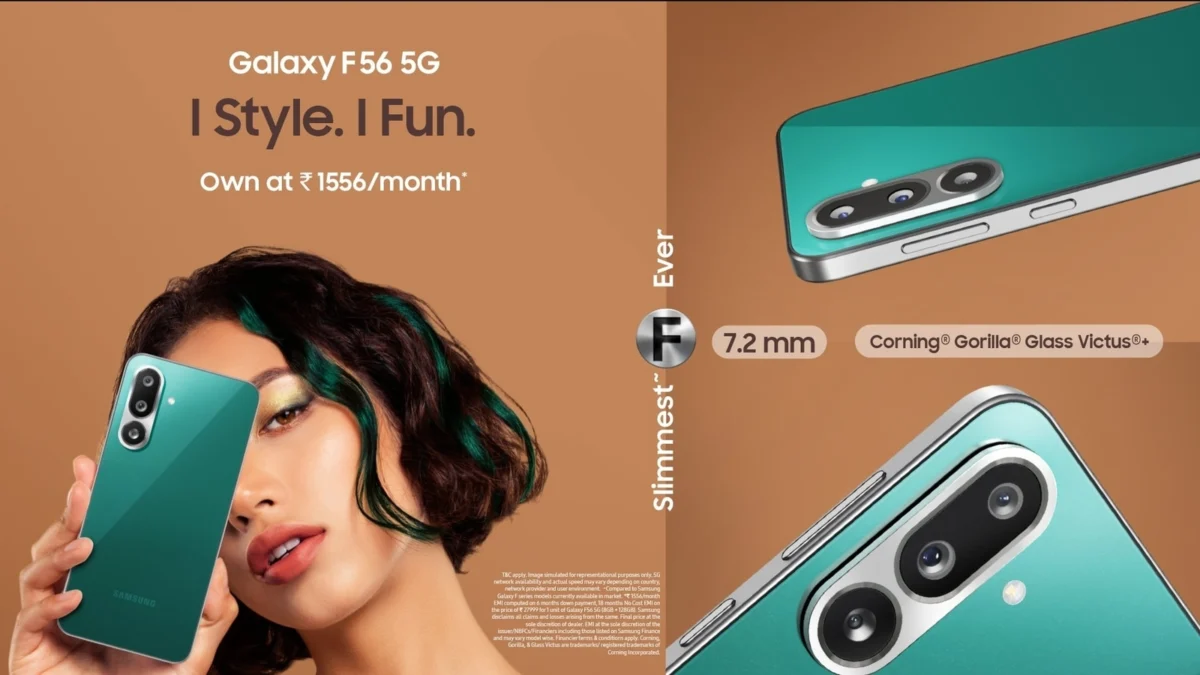
Samsung has officially expanded its footprint in the highly competitive Indian mid-range smartphone market with the launch of the Galaxy F56. Positioned as a direct challenger to established rivals in the sub-₹30,000 segment, the device blends aesthetic elegance with robust internal hardware. By integrating high-end display technology, a capable chipset, and a future-proof software commitment, Samsung aims to capture the hearts of value-conscious consumers who refuse to compromise on premium experiences.
Main Facts: At the Intersection of Style and Performance
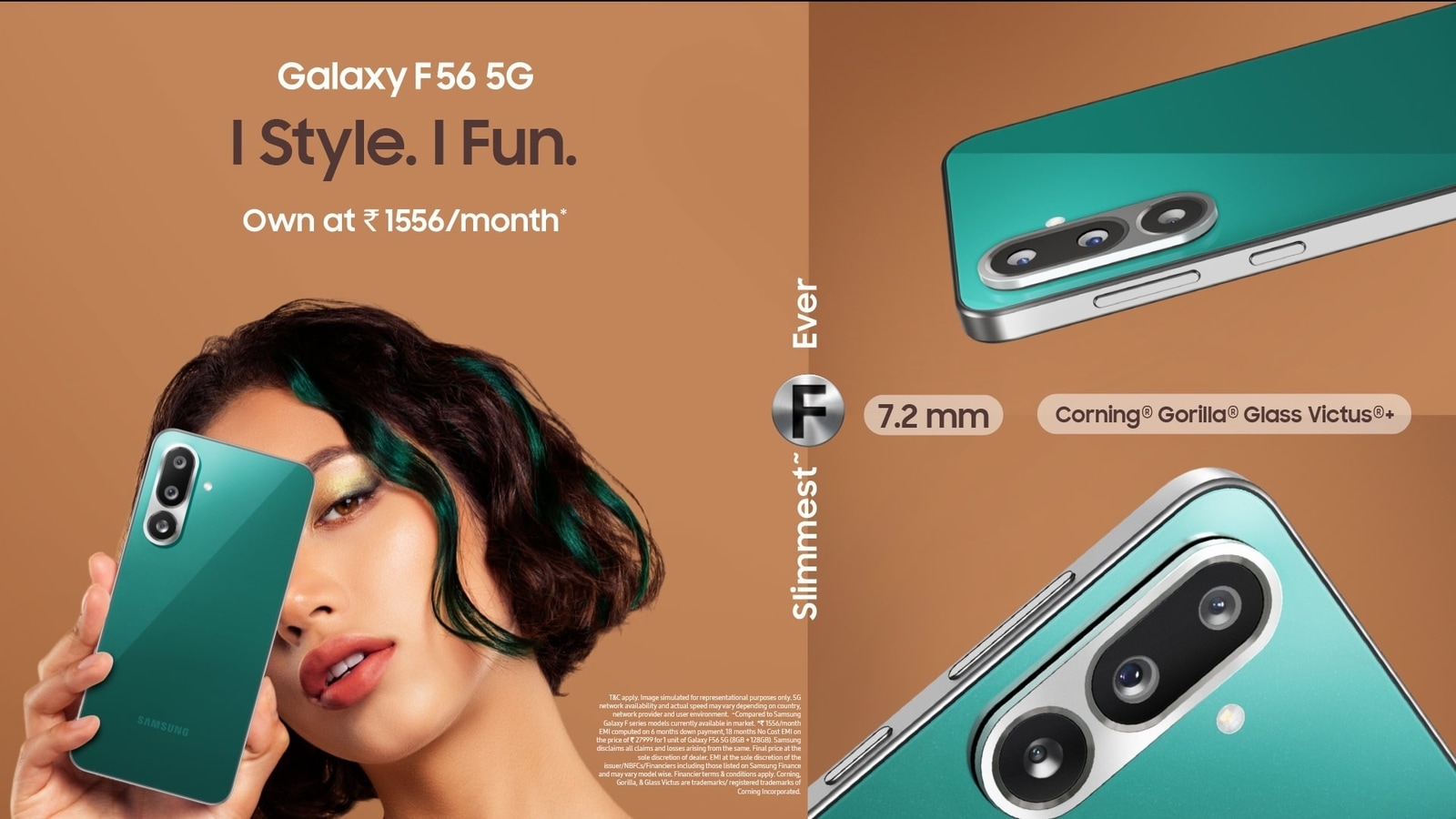
The Galaxy F56 arrives as a refined iteration of Samsung’s popular F-series lineage. The most immediate draw is its ultra-slim 7.2mm profile, a design choice that differentiates it from the bulkier, battery-heavy devices often found in this price bracket. Despite its thin chassis, the device manages to house a substantial 5000mAh battery, suggesting significant advancements in internal engineering and power management.
Under the hood, the device is powered by the Exynos 1480 processor, coupled with LPDDR5X RAM, ensuring that multitasking and high-intensity tasks remain fluid. The optics department is anchored by a 50MP primary sensor equipped with Optical Image Stabilization (OIS), a critical feature for mobile photography enthusiasts. With a starting price point of ₹27,999, the Galaxy F56 is clearly gunning for the “best value” crown in the current market landscape.
The Chronology: A Strategic Launch Roadmap
Samsung’s strategy for the F56 follows a deliberate rollout pattern designed to maximize visibility during a peak shopping season.
- Pre-Launch Teasers: The initial buzz began weeks ago with cryptic social media posts highlighting the “ultra-slim” design and “pro-grade” camera capabilities, successfully generating anticipation among tech enthusiasts.
- The Unveiling: Samsung held a synchronized digital launch, targeting the tech-savvy demographic that predominantly shops via e-commerce platforms like Flipkart and Amazon, alongside their proprietary web store.
- Market Availability: Immediate availability was confirmed across both digital and physical retail channels, reinforcing Samsung’s massive distribution advantage in India compared to purely online-only brands.
- Post-Launch Support: The announcement of a 6-generation OS upgrade policy was timed to address common consumer pain points regarding device longevity and software obsolescence.
Technical Specifications: A Deep Dive into the Hardware
The Visual Experience
The F56 sports a 6.7-inch Full HD+ Super AMOLED display. With a 120Hz refresh rate, users can expect buttery-smooth scrolling and transitions. The 1200nits peak brightness in High Brightness Mode (HBM) ensures that the screen remains legible even under direct, harsh sunlight—a vital feature for the Indian climate. Furthermore, the inclusion of Gorilla Glass Victus+ provides a level of durability typically reserved for flagship models, offering superior scratch and impact resistance.
Performance and Processing
The Exynos 1480 processor represents a significant jump in efficiency and thermal management. By utilizing the LPDDR5X RAM standard, the phone facilitates faster data throughput, which is essential for gaming and high-resolution video processing. Whether it is switching between multiple heavy applications or rendering content, the F56 is built to handle the rigors of a modern digital lifestyle.
Imaging Capabilities
The triple-camera array is versatile, if not revolutionary. The 50MP OIS-enabled primary sensor excels in low-light conditions, minimizing motion blur and sharpening images. Complementing this is an 8MP ultra-wide lens for expansive landscapes and a 2MP macro sensor for close-up detail work. On the front, the 12MP selfie camera captures crisp portraits. Samsung has bolstered this hardware with AI-powered software, including "Object Eraser" and "Edit Suggestions," allowing users to clean up their photos without needing third-party editing applications.
Power Management and Charging
The 5000mAh battery is the engine of the device. While it supports 45W "Super Fast Charge 2.0," Samsung has moved to a sustainable—albeit controversial—policy of excluding the charger from the box. This move aligns with global environmental initiatives, though it requires users to either own or purchase a compatible USB-PD charger separately.
Software Commitment: The Six-Generation Promise
Perhaps the most compelling argument for the Galaxy F56 is its software longevity. Shipping with One UI 7 based on Android 15, Samsung has committed to providing 6 generations of OS upgrades and regular security updates. This is a bold move that effectively future-proofs the device for half a decade. In a segment where many competitors stop support after two or three years, Samsung is signaling that the F56 is a long-term investment rather than a "use and discard" handset.
Implications for the Indian Smartphone Market
The arrival of the Galaxy F56 carries several implications for the competitive dynamics of the Indian mobile landscape:
- Increased Pressure on Mid-Range Challengers: Brands that rely solely on raw specifications (often at the cost of software support or build quality) will find it harder to compete against Samsung’s brand equity and comprehensive update policy.
- The Shift Toward "Premium-Lite": Samsung is successfully blurring the lines between its mid-range F-series and the more premium A-series. By introducing features like Gorilla Glass Victus+ and long-term OS support to a device under ₹30,000, they are forcing the entire industry to raise their baseline standards.
- Financial Accessibility: Through aggressive EMI options (starting at ₹1556 per month) and instant bank discounts, Samsung is lowering the barrier to entry. This indicates a strategic focus on expanding their user base among young professionals and students who prioritize affordability without sacrificing prestige.
Official Stance and Consumer Sentiment
In official statements, Samsung emphasized that the F56 was developed based on user feedback specifically from the Indian market—noting a demand for thinner designs, better battery efficiency, and software that stays relevant.
Early feedback from tech analysts has been largely positive, particularly regarding the display quality and the commitment to software updates. However, some critics have pointed to the lack of an in-box charger as a potential point of friction for consumers who are accustomed to full-package bundles. Despite this, the combination of Samsung’s vast service network and the reliability of One UI is expected to mitigate concerns.

Pricing and Availability: The Final Word
The Samsung Galaxy F56 is positioned to be a significant volume driver for the company. Available in two distinct colors—Green and Violet—the device caters to both conservative and trend-oriented buyers.
- 8GB+128GB: ₹27,999
- 8GB+256GB: ₹30,999
Samsung is also offering a ₹2,000 instant bank discount, which effectively brings the entry-level price down to ₹25,999. Given the current market trends, this price point, when paired with the promise of six years of updates, represents arguably one of the most balanced offerings in the current mid-range ecosystem.
Conclusion
The Samsung Galaxy F56 is not just another smartphone; it is a tactical response to a market that is becoming increasingly sophisticated. By prioritizing build quality, software longevity, and a refined user interface, Samsung has crafted a device that appeals to the "rational buyer." While it may not feature the absolute highest benchmark scores in every category, it succeeds where it matters most: delivering a reliable, long-lasting, and aesthetically pleasing experience that justifies its price tag.
For those currently navigating the crowded waters of the sub-₹30,000 segment, the Galaxy F56 stands out as a reliable anchor. It avoids the gimmicks of its peers in favor of a robust foundation that will serve the user well into the next several years. As the industry continues to evolve, Samsung’s commitment to the F56 suggests that the mid-range segment is where the real battle for consumer loyalty is currently being fought—and with this launch, Samsung has fired a very effective shot.



