










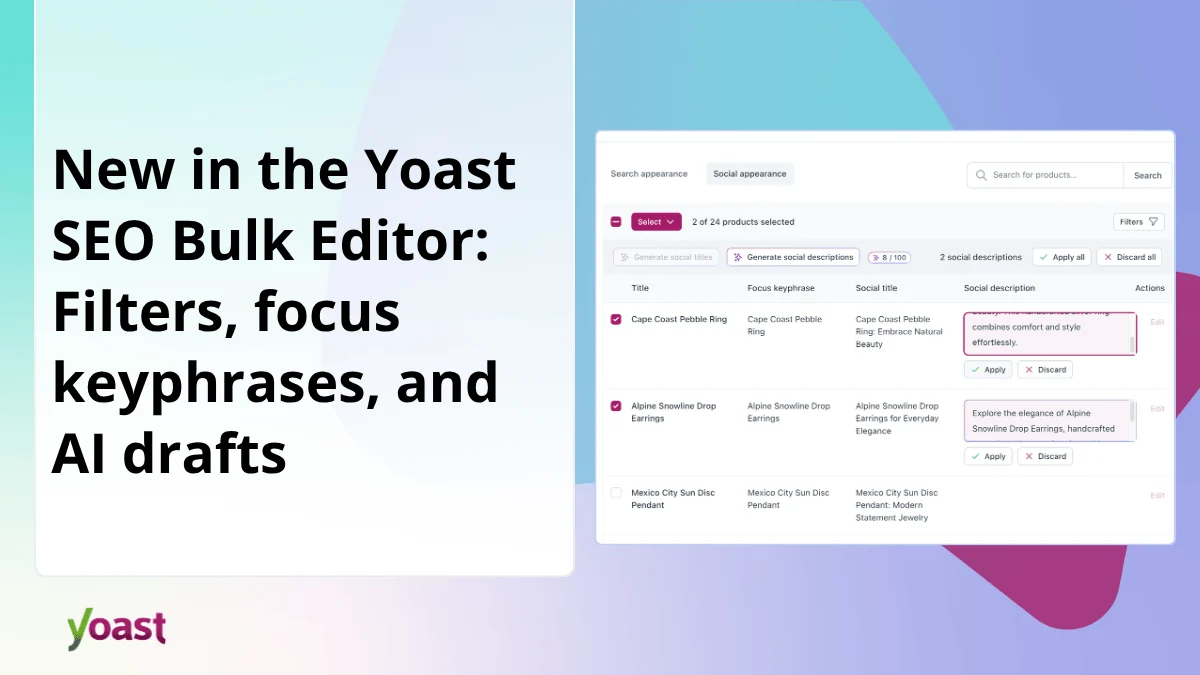
In the fast-paced world of digital marketing, the adage "time is money" has never been more relevant. For website administrators, SEO specialists, and e-commerce managers, the sheer scale of modern web content often turns basic maintenance—such as updating titles, meta descriptions, and focus keyphrases—into a logistical nightmare. Today, Yoast has unveiled a significant overhaul to its Bulk Editor, promising to transform a historically tedious manual chore into a streamlined, AI-assisted workflow.
By integrating advanced filtering, content-type specific views, and generative AI capabilities, Yoast is positioning this update as the definitive solution for site owners managing anywhere from fifty to thousands of pages. This development marks a pivotal shift in how WordPress users maintain their search engine presence, moving away from fragmented, page-by-page editing toward a centralized, high-efficiency command center.
Main Facts: What’s Changing in the Yoast Bulk Editor?
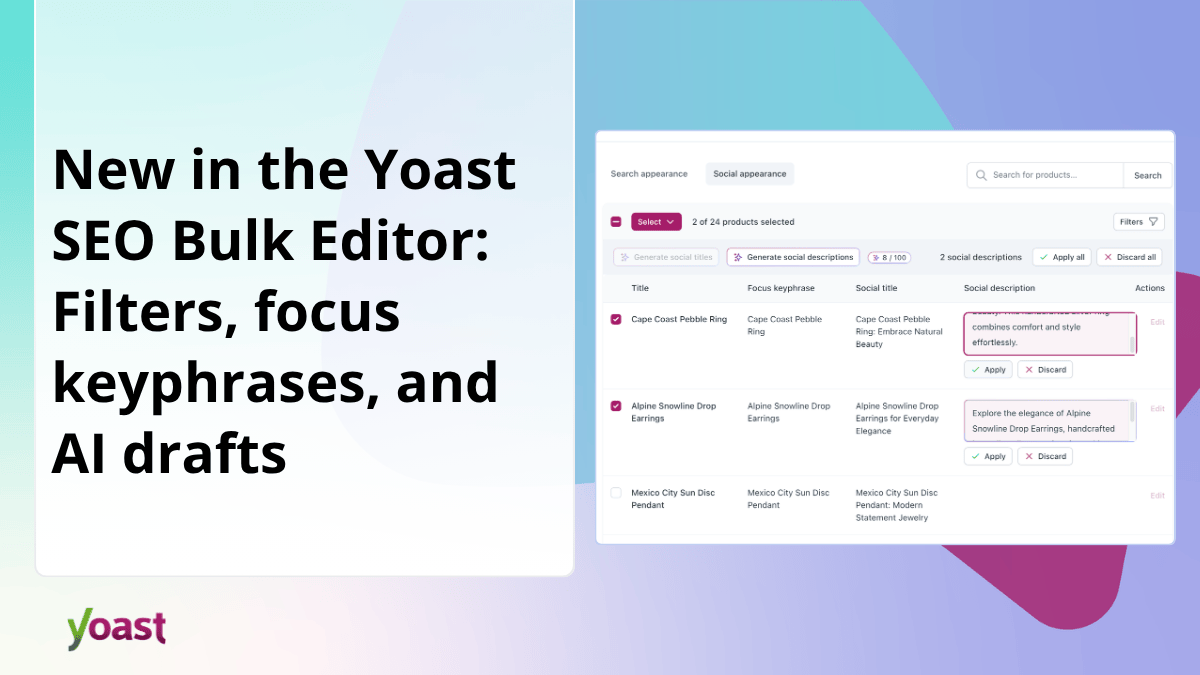
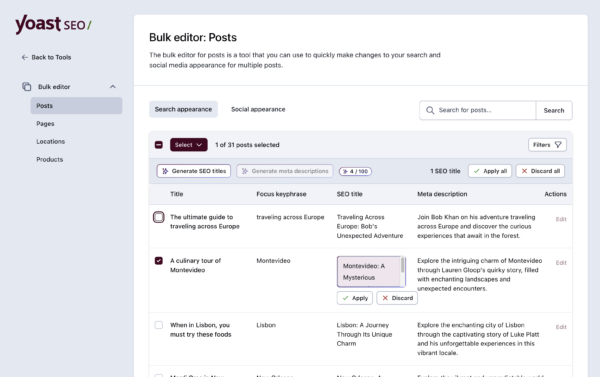
The core of this update lies in the transformation of the Yoast SEO Bulk Editor from a simple spreadsheet-like tool into a robust management console. While previous iterations allowed for basic title and meta description updates, the new release introduces four critical enhancements:
- Expanded Data Fields: The editor now includes "Focus Keyphrases" alongside titles and meta descriptions, providing a holistic view of the most critical on-page SEO elements.
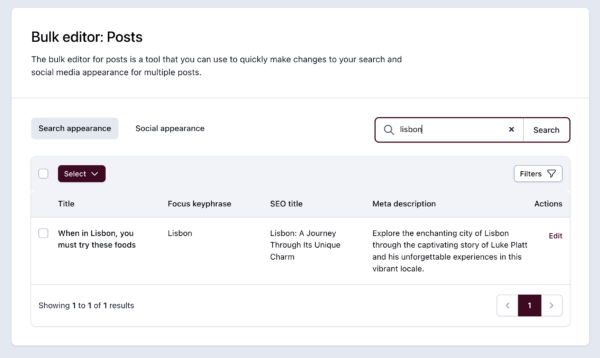
- Granular Filtering: Users can now deploy sophisticated search and status filters. This allows for the immediate identification of "low-hanging fruit," such as pages missing descriptions, draft posts that require optimization, or specific content targeting underperforming keywords.
- Dedicated Content Views: Recognizing that the needs of a blog differ from those of an e-commerce store, the editor now organizes data by post type. Whether it is a standard page, a blog post, a product, or a custom post type, users can toggle between dedicated views to maintain focus.
- AI-Drafted Metadata: Perhaps the most significant addition is the integration of generative AI. Users on premium plans can now request AI-generated metadata suggestions, which can be reviewed, edited, or discarded in bulk, ensuring the final output remains under human control.
Chronology of the Update
The evolution of the Bulk Editor is part of Yoast’s broader strategy to reduce the friction inherent in SEO maintenance.
- The Baseline: For years, the Bulk Editor existed as a functional, albeit limited, utility designed to prevent the monotony of clicking into every individual WordPress post to edit a meta description.
- The Early 2024 Transition: Yoast began exploring ways to integrate its AI+ suite more deeply into the user experience, identifying the Bulk Editor as the primary bottleneck for power users.
- The July 2026 Release: The current update represents the culmination of this roadmap. By merging the efficiency of bulk editing with the creative speed of AI, Yoast has created a workflow that allows for the optimization of an entire site’s metadata in a fraction of the time previously required.
- Future Outlook: The company has indicated that this is not a final state. Future iterations are expected to further automate the "review" process, potentially allowing for more intelligent keyword suggestions based on search volume data integration.
Supporting Data: Why Scale Matters
The necessity for such a tool is grounded in the reality of modern web architecture. Research suggests that websites with optimized, unique meta descriptions experience significantly higher Click-Through Rates (CTR) from search engine results pages (SERPs). However, the manual effort required to write these for a site with 5,000 products is astronomical.
Consider the "SEO Baseline" scenario: An agency inherits a client site with 1,000 pages, all lacking meta descriptions. Manually opening each page to input a unique description—assuming one minute per page—would require over 16 hours of focused labor. With the new Bulk Editor, a user can filter for "missing descriptions," generate AI suggestions for the entire list, review them in a single sitting, and publish the updates. This process reduces the time investment by roughly 70–80%, allowing marketing teams to pivot toward strategy rather than data entry.
Furthermore, the "Status Filters" address a major pain point: technical debt. By isolating drafts, pending reviews, and private posts, managers can ensure that only high-quality, public-facing content is optimized, preventing wasted resources on internal documentation or abandoned content projects.
Official Responses and Strategic Vision
Beth Parker, Product Marketing Manager at Yoast, emphasizes that this update is not about replacing the human element, but empowering it. "The goal is to eliminate the ‘heavy lifting’ while maintaining the final say," Parker stated. "We understand that site owners are protective of their brand voice. By providing AI-drafted metadata that can be tweaked or discarded, we provide the efficiency of automation without sacrificing the quality control that professional SEOs demand."
The strategy here is twofold:
- Retention: By adding these features to Yoast SEO Premium, the company provides clear value to its subscriber base, making the paid upgrade essential for power users and agencies.
- Market Leadership: By extending AI drafting to WooCommerce via the Yoast WooCommerce SEO and Yoast SEO AI+ plans, Yoast is positioning itself as the premier SEO solution for the e-commerce sector, which is notoriously difficult to manage at scale.
Implications: The Shift Toward "SEO Operations"
The release of this tool has profound implications for the digital marketing landscape.
1. The Death of the "Slow" SEO Audit
Historically, SEO audits were periodic, high-effort events. The ability to filter and edit in bulk means that "continuous optimization" is now a reality. Site owners can run a quick scan every week to identify pages that have fallen behind, effectively turning SEO maintenance into a background task rather than a quarterly project.
2. E-Commerce at Scale
For e-commerce stores, the implications are even more dramatic. Managing a catalog of thousands of products often results in duplicate or missing metadata, which can lead to "thin content" penalties from search engines. With the new dedicated product views, a store owner can generate unique, SEO-friendly descriptions for an entire product category in minutes. This is critical for seasonal peaks, such as Black Friday or holiday sales, where inventory changes rapidly.
3. The Human-AI Hybrid Model
The industry is moving toward a "Human-in-the-loop" (HITL) model. The fear that AI would fully automate SEO has been replaced by the realization that AI is a force multiplier for human expertise. By keeping the "approve/discard" control in the hands of the user, Yoast is acknowledging that while AI is excellent at drafting, it is not yet a replacement for brand strategy and nuance.
4. Accessibility for Beginners
For small business owners who lack a dedicated SEO team, this update lowers the barrier to entry. They no longer need to understand the intricacies of metadata optimization on a deep technical level; they simply need to navigate the filter, select the AI generation tool, and approve the output. This democratizes high-level SEO tactics, allowing smaller players to compete more effectively with larger, better-funded competitors.
Final Thoughts: A New Standard for WordPress
As the web continues to grow in complexity, tools that simplify management are not just "nice to have"—they are essential infrastructure. Yoast’s latest update to the Bulk Editor is a clear indicator that the future of SEO is not just about rankings, but about the efficiency of the workflow that achieves them.
By combining the structural power of filters and dedicated content views with the generative capability of AI, Yoast has provided a comprehensive answer to the problem of site-wide optimization. Whether you are a small business owner looking to improve your local search visibility or an enterprise-level manager overseeing a massive e-commerce catalog, the message is clear: the era of manual, page-by-page metadata management is coming to an end. In its place, we are seeing the rise of a more agile, data-driven, and AI-supported approach to SEO operations.
For those who have struggled with the sheer volume of content on their sites, this release provides a long-awaited path to regaining control. It allows the user to stop scrolling, start filtering, and finally let the technology handle the tedious work, so they can get back to what matters most: growing their business.



