










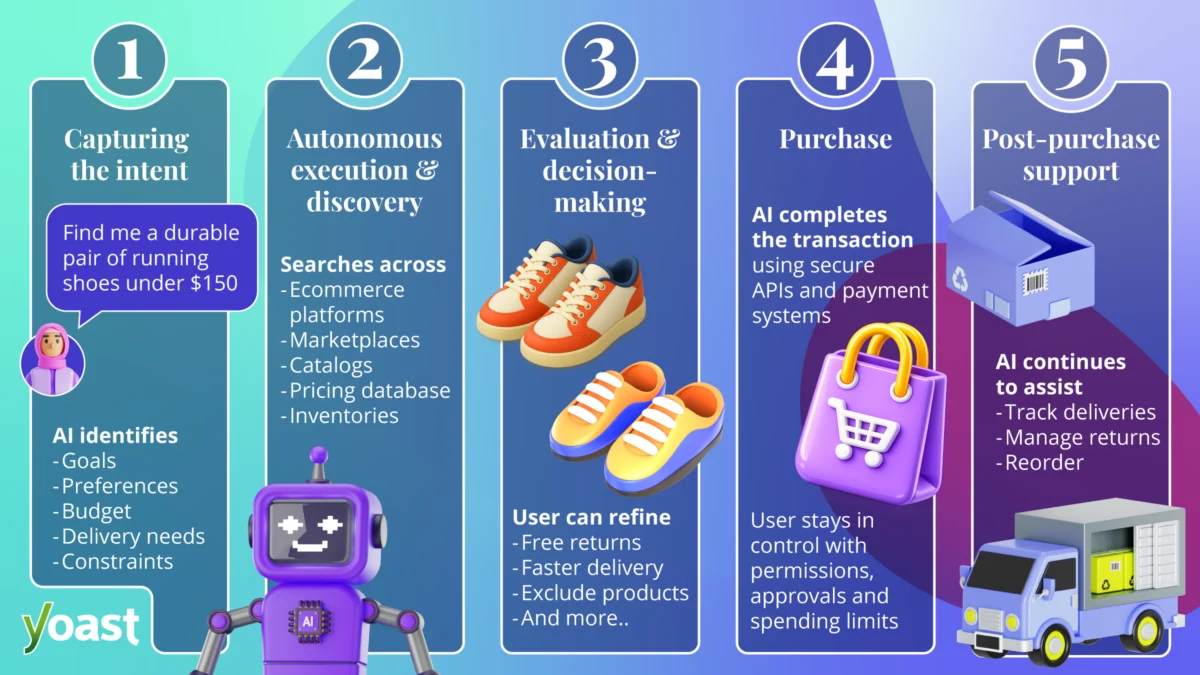
The history of commerce is a chronicle of removing friction. From the localized markets of antiquity to the emergence of the department store, and eventually the borderless, hyper-connected world of ecommerce, each evolution has aimed to bring the product closer to the consumer. Today, we stand on the precipice of the most significant shift since the advent of the internet: the rise of agentic commerce.
Unlike traditional ecommerce, which requires users to navigate websites, compare tabs, and manually input payment details, agentic commerce introduces a digital proxy. These AI agents act as autonomous decision-makers, navigating the vast expanse of the web to research, evaluate, and execute purchases on behalf of the consumer.
The Core Concept: From Passive Search to Autonomous Action
At its simplest, agentic commerce transforms the consumer from a manual shopper into a high-level director. Instead of a user spending hours comparing specifications, reading user reviews, and hunting for the best price, they simply provide an intent—such as, "Find me a pair of running shoes under $150 that are water-resistant and sustainably sourced"—and the agent handles the rest.

As Alex Moss noted on the SEO Unplugged podcast, this is a fundamental paradigm shift. The AI agent becomes an extension of the user, capable of research and execution. While the user retains ultimate authority through approval workflows, the "heavy lifting" of the buying journey is offloaded to the machine.
A Chronology of the Shift
The transition to agentic commerce has not occurred overnight; it is the culmination of years of iterative AI development:
- 2020–2022 (The Informational Era): AI tools primarily served as chatbots or search assistants. They could answer questions about products but rarely had the agency to complete a transaction.
- 2023–2024 (The Rise of LLMs): The explosion of Large Language Models (LLMs) enabled machines to understand complex, conversational intent rather than just keyword strings.
- 2025–2026 (The Agentic Breakthrough): The industry began developing standardized protocols like the Model Context Protocol (MCP) and the Agentic Commerce Protocol (ACP). These frameworks allowed AI to "speak" to ecommerce platforms, securely access APIs, and execute payments, effectively moving from "chatting" to "doing."
Supporting Data: Why the Market is Pivoting
The shift toward agentic commerce is backed by significant data points that indicate a massive change in consumer behavior and market potential:

- The Disruption of Search: According to McKinsey & Company, over 70% of AI-powered search users now ask high-level questions about categories rather than specific brand names. This suggests a shift away from traditional search-engine-driven traffic, with analysts predicting that 20–50% of web traffic could shift toward AI-guided discovery models over the next decade.
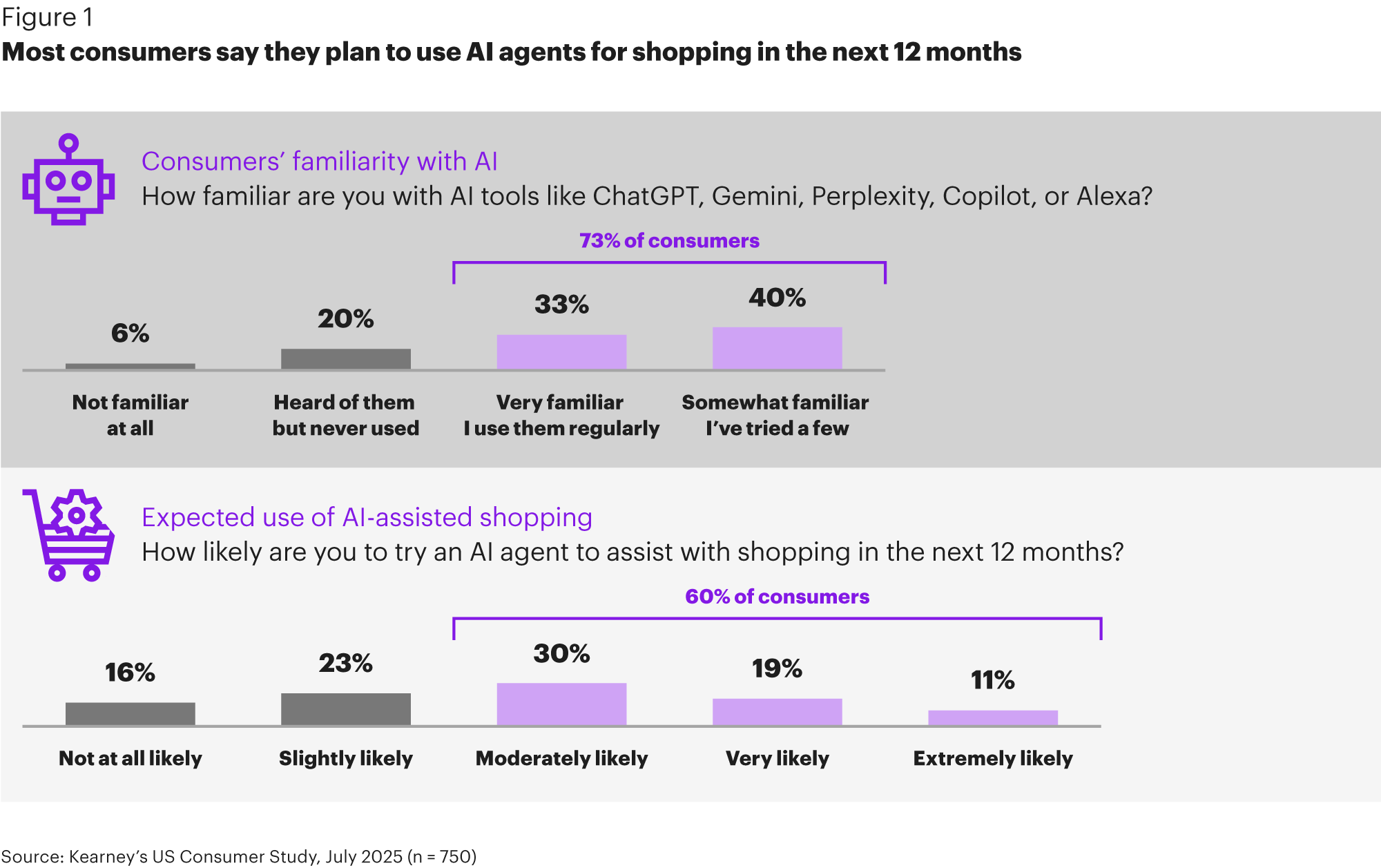
- Consumer Readiness: A 2025 Kearney report found that more than 60% of shoppers expect to utilize agentic AI by 2026. This data underscores a growing preference for speed, convenience, and objective pricing over traditional brand loyalty.
- Economic Impact: The financial implications are staggering. McKinsey estimates that by 2030, agentic commerce could unlock an orchestrated revenue opportunity of $900 billion to $1 trillion in the U.S. B2C retail market alone, with global figures projected to reach $3–5 trillion.
Official Industry Responses and Standardization
The infrastructure for this transition is being built through open standards, driven by major tech and finance players. Because AI agents cannot build one-to-one integrations with every retailer on earth, the industry has rallied around three critical pillars:
1. Agentic Commerce Protocol (ACP)
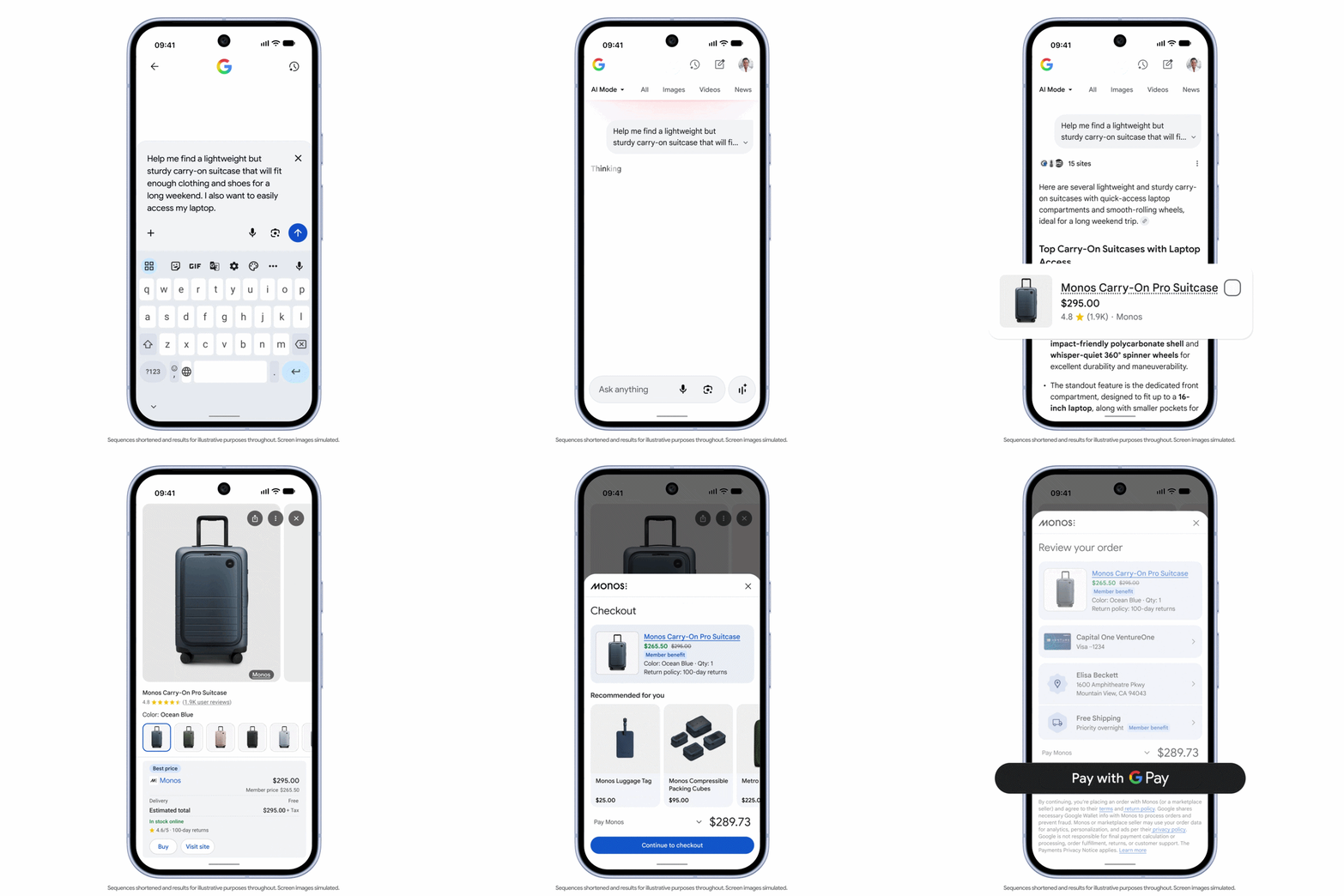
Collaboratively developed by Stripe and OpenAI, the ACP acts as the "bridge" between an AI model and a merchant’s checkout system. It enables a secure, standardized way for a chatbot to initiate a purchase. Current implementations, such as those seen on platforms like Etsy, allow for seamless checkout without the user ever leaving the AI interface.
2. Universal Commerce Protocol (UCP)
Google’s UCP addresses the problem of scale. By creating a common, machine-readable language for product metadata, inventory, and logistics, UCP allows AI agents to interact with thousands of retailers simultaneously. With support from giants like Shopify, Wayfair, and Mastercard, this protocol aims to ensure that no matter the platform, the agent can understand the offer and execute the order.
3. Mastercard Agent Pay
Security remains the primary barrier to adoption. Mastercard Agent Pay is a critical development that provides a secure, authorized "handshake" between the AI agent and the financial institution. It ensures that the AI cannot access unauthorized funds or fall victim to fraud, maintaining the trust that consumers demand when delegating financial decisions.
Implications: A New Competitive Landscape
The rise of agentic commerce poses profound questions for the future of business strategy, search engine optimization (SEO), and consumer privacy.
The Death of Traditional SEO?
If users are no longer clicking through to websites—and are instead getting their products selected by an AI agent—the traditional "top of search" position becomes less valuable. Businesses must now optimize for "AI Discoverability." This means providing highly structured, machine-readable data, transparent pricing, and robust API access that allows an agent to "read" their catalog as easily as a human would.
The Loss of Brand Loyalty
When an agent is tasked with finding the "best" product, it may prioritize objective data—price, delivery speed, and durability—over a consumer’s historical brand preference. Companies that rely on brand prestige may find themselves losing market share to lesser-known competitors that offer superior value metrics that the AI can easily verify.
Privacy and Security Risks
Delegating purchasing power to an agent requires an unprecedented level of trust. Who is liable if an agent makes a fraudulent purchase? How will user data be protected when it is being shared across multiple agents and protocols? These are the questions that regulators and corporations are only beginning to address.
Challenges and Future Outlook
Despite the excitement, the path to mass adoption is fraught with obstacles. Many consumers remain hesitant to cede control of their wallets to an algorithm. There is also the "complexity trap"—does adding an autonomous agent simplify the buying journey, or does it simply create another layer of software that can fail, glitch, or malfunction?
Furthermore, businesses face a daunting investment requirement. Transitioning to an AI-ready commerce stack requires significant capital expenditure in API development, data structuring, and security compliance. For many small-to-medium enterprises, the barrier to entry may be prohibitively high unless they leverage standardized, low-cost integrations.
Conclusion
Agentic commerce is not merely a feature update; it is a fundamental reconfiguration of how society interacts with the global economy. As AI agents evolve from passive assistants to active participants, the lines between shopping, research, and payment will blur into a single, continuous, and highly personalized experience.
For the modern enterprise, the directive is clear: the future belongs to those who make their products "agent-friendly." For the consumer, a future of frictionless, efficient, and intelligent shopping is on the horizon—provided that the industry can balance this radical convenience with the essential requirements of security, trust, and human oversight. The next decade will determine whether this technology truly empowers the consumer or simply creates a more opaque and automated marketplace.



