










As the artificial intelligence landscape accelerates at a pace that often feels dizzying, the line between experimental technology and daily business operations is blurring. From the boardroom to the creative studio, the tools at our disposal are undergoing a radical evolution. This week’s dispatch covers the critical updates from the industry’s major players, practical workflows for creative professionals, and the strategic implications of a market now dominated by "always-on" AI agents.
The Core Developments: A Week of Breakthroughs
The past seven days have been marked by a significant shift in how tech giants deploy their models. The focus has moved beyond simple chatbots toward efficiency, multimodality, and agentic workflows—systems capable of performing complex tasks autonomously.
Chronology of Major Releases
- Anthropic’s Efficiency Play: Anthropic kicked off the week by launching Claude Sonnet 5.5. Engineered for speed and cost-effectiveness, this model represents a 30% increase in response velocity compared to its predecessor.
- Google’s Multimodal Expansion: Google has been aggressive, rolling out Gemini 3.8 Live with interactive visual avatars and the Gemini 3.8 Flash TTS suite for high-fidelity, customizable voice generation.
- OpenAI’s DevDay Pivot: In a massive move at DevDay 2026, OpenAI unveiled over 20 updates, fundamentally transitioning ChatGPT from a conversational interface into a persistent, agent-driven platform.
- The GPT-6 Expansion: Following the DevDay announcements, OpenAI introduced the Sol and Luna models, designed to bring GPT-6-level intelligence to professional workflows at a 50% reduction in API costs.
Practical Application: Bridging the Gap Between AI and Output
While headlines capture the imagination, the true value of AI lies in its application. For the modern marketer or business owner, the "AI-in-a-box" approach is being replaced by integrated, cross-platform workflows.
Designing Print Materials with ChatGPT and Canva
One of the most persistent hurdles for small teams is the "everything-to-everyone" syndrome, where strategy, analytics, and graphic design fall on the same shoulders. Current workflows suggest a "brief-first" methodology for AI:
- The Professional Brief: Treat ChatGPT like a high-end design agency. Input your brand guidelines, specific content requirements, and technical print specs (bleed, resolution, etc.) before requesting a layout.
- Iterative Art Direction: Use ChatGPT’s visual editing tools to refine the draft. Rather than accepting the first output, use the interface to mark specific areas for deletion, adjust layouts, or request stylistic modifications.
- Final Polish: Port the draft into Canva’s Magic Layers. This allows you to treat the AI-generated output as a collection of modular elements, making it possible to fix font shifts and adjust spacing, ensuring the file is ready for a professional print house.
The Rise of "Portable Systems"
A key lesson from industry expert Nicole Leffer is the necessity of "system portability." When platforms like Claude or ChatGPT experience downtime, users with brittle workflows often stall. The modern standard is to build a platform-agnostic workflow—using universal file formats and modular prompts—so that if one service fluctuates, the work moves to another without friction.
Professional Video Strategy in the Era of Gemini Omni
The technical barrier to entry for high-quality video production has effectively evaporated. With tools like Gemini Omni, creators can now execute tasks that previously required a full film crew.

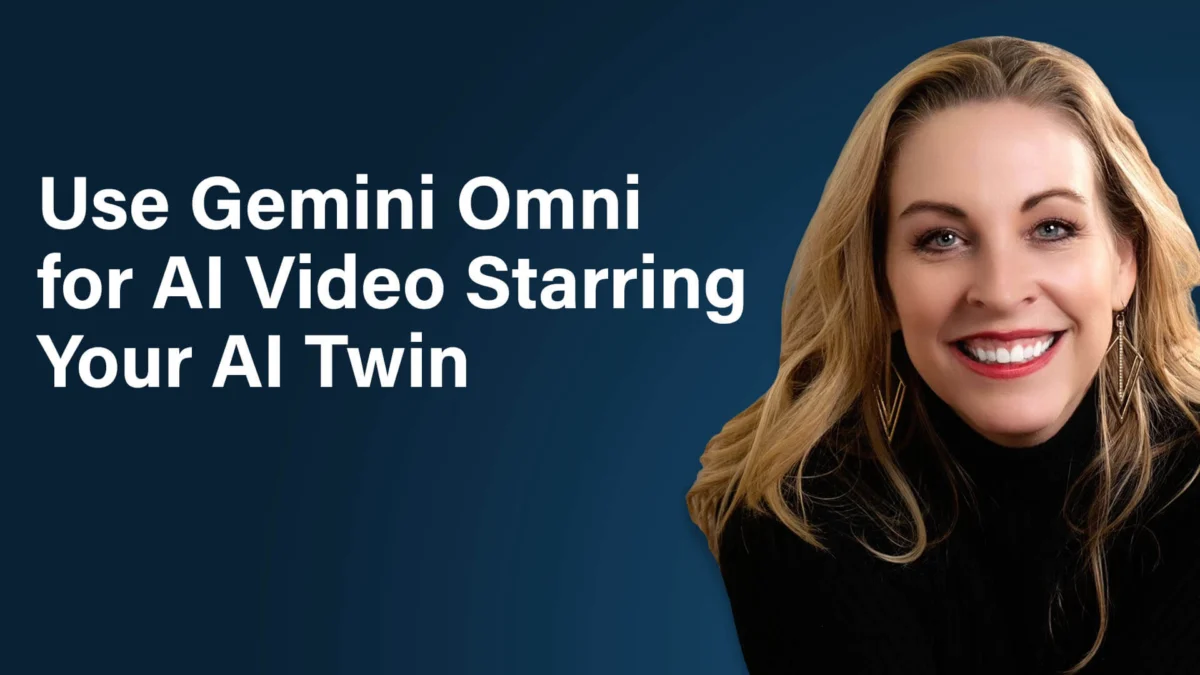
- The AI Twin: Users can now generate realistic avatars that mirror their likeness. The secret, according to video strategist Eve Whitaker, lies in avoiding common recording errors that force the AI to "hallucinate" gaps in the user’s movement or facial expressions.
- Directorial Intelligence: Success in AI video is increasingly about "camera placement" logic. By prompting AI to think like a television director, users can ensure their content maintains the emotional resonance required to stop the scroll.
- Seamless Editing: One of the most significant advancements is the ability to modify existing footage. Users can now change the season, adjust backgrounds, or add motion graphics to previously filmed content using simple natural language prompts, eliminating the need for expensive post-production software.
Supporting Data and Technical Implications
The industry is currently seeing a "commodity" shift in AI pricing. OpenAI’s decision to cut API prices by 50% for its new Sol and Luna models signifies a move toward mass adoption. When costs decrease, the feasibility of "always-on" AI agents increases.
Key Performance Metrics
- Claude Sonnet 5.5: Generates responses 30% faster than previous iterations while utilizing significantly fewer tokens per task.
- Google Gemini 3.8: Supports 97 languages with multimodal capabilities, allowing for simultaneous background tool execution.
- OpenAI Ecosystem: The platform now supports a staggering 1.2 billion weekly users, creating a massive incentive for developers to build within the "ChatGPT Space" for teams.
Official Responses and Strategic Shifts
The industry giants are clear: the future is not just about intelligence; it is about integration.
Google’s expansion of Connected Apps—integrating Gemini directly into Airtable, Linear, Adobe, and Webflow—shows a strategic move to become the "operating system" for the modern office. Users are no longer expected to copy-paste between windows; instead, the AI acts as a connective tissue between disparate productivity suites.
OpenAI’s DevDay, meanwhile, signaled the end of the "chat-only" era. With the introduction of Dots agents—always-on entities that can handle persistent, multi-step tasks—OpenAI is competing directly with enterprise software platforms. The shift toward "Sign in with ChatGPT" further cements the company’s intent to own the identity and workflow layer of the internet.

Implications: The Human-in-the-Loop Necessity
As these technologies advance, the role of the human operator is shifting from "creator" to "architect."
The Shift in Professional Roles
- From Execution to Strategy: As AI handles the "how"—the actual design, the video editing, and the data synthesis—the professional’s value is increasingly tied to the quality of their brief and the clarity of their brand vision.
- The Risk of Over-Reliance: With the ease of creating AI-generated content, the market is likely to see an influx of "hollow" media. Experts warn that the winning strategy is to use AI to handle the heavy lifting while reserving the "human touch" for emotional nuance, ethical oversight, and strategic decision-making.
- The Imperative of Continuous Learning: The recurring theme of this week’s news is that tools are ephemeral, but systems are permanent. Whether it is attending a hands-on conference like AI Business World or building a library of modular workflows, the competitive advantage now belongs to those who understand how to use the tools, not just which tools to use.
Looking Ahead
The velocity of these releases suggests that the next six months will be defined by "agentification." Businesses that build their internal systems on the assumption that AI will eventually manage their calendars, draft their emails, design their collateral, and edit their video content will be the ones that scale.

As we close out the week, consider this: the tools are no longer the bottleneck. The bottleneck is the imagination and the operational discipline to integrate these powerful, rapidly evolving models into a cohesive, portable, and human-centric strategy.
For those looking to stay at the cutting edge, the AI Business Society remains a vital resource for navigating these shifts in real-time. Whether you are automating your marketing or rethinking your entire production pipeline, the foundation you build today will determine your efficiency in the months to come.



