








By the Editorial Desk
Updated July 21, 2026
For decades, business leaders have treated sales and marketing alignment as a cultural hurdle—something that could be smoothed over with a weekly touchpoint, a shared Slack channel, or a pep talk from the executive suite. But a comprehensive new study from Unbounce suggests the problem is far more structural, systemic, and costly than previously understood.
Surveying over 500 small-to-medium-sized business (SMB) go-to-market (GTM) professionals, the 2026 Anatomy of Aligned Go-to-Market Teams report reveals a striking paradox: While 87% of teams expect better sales and marketing alignment to directly lift performance, only 56% describe themselves as highly aligned.
Authored in part by Josh Gallant, founder of organic growth consulting firm Backstage SEO, the report peels back the corporate gloss to expose where modern revenue engines actually break down—and what top-performing organizations are doing differently to close the gap.

Main Facts: The Great GTM Disconnect
Misalignment between sales and marketing rarely presents itself as a catastrophic, headline-grabbing strategy failure. Instead, it manifests in quiet, insidious operational frictions: marketing campaigns that produce "qualified" leads that sales openly distrusts, advertising messaging that sales reps know nothing about, and a top-line pipeline that looks healthy until closed-won revenue abruptly flattens.
According to the Unbounce data, the cracks in the GTM foundation stem from four primary root causes:
- Operational inefficiencies (cited by 53% of teams)
- Goal and incentive mismatches (43%)
- Cultural divides (40%)
- Structural silos (34%)
Rather than suffering from a lack of willingness to collaborate, modern revenue teams are hampered by an invisible operational lag—one that widens every time the organizational chart expands or a new software tool is added to the tech stack.
Chronology and Evolution: How Alignment Broke Down
To understand how modern SMBs arrived at this juncture, one must look at how go-to-market strategies evolved over the past decade.

- Phase 1: The Siloed Era. Historically, marketing was tasked strictly with brand awareness and top-of-funnel lead generation (MQLs), while sales was handed the responsibility of closing deals (SQLs). Communication was transactional, occurring almost exclusively during quarterly reviews or crisis meetings.
- Phase 2: The Tech Bloat Era. As digital marketing matured, organizations rushed to solve communication gaps by purchasing software. CRMs, marketing automation platforms, and intent-data providers flooded the market. However, instead of unifying teams, these tools often created localized data silos. Sales tracked deals in rep-owned pipelines, while marketing measured success via traffic and form-fills, leading to diverging realities.
- Phase 3: The Current Reality (2026). Today, organizations recognize that mere communication frequency—such as mandatory weekly syncs—is failing to move the needle. Industry data shows that 54% of GTM teams prioritize communication frequency as their primary alignment strategy, yet operational chaos persists because the underlying operating models, data sources, and compensation structures remain fundamentally disconnected.
Supporting Data: The Perception Gap and Financial Toll
The numbers compiled in the Unbounce report paint a vivid picture of a deeply fractured operational environment. Most notably, a massive perception gap exists between executive leadership and front-line workers:
- 69% of executives report strong sales and marketing alignment.
- Only 47% of non-executives agree with that assessment.
Functional lines are similarly divided. While 62% of sales professionals feel highly aligned with their marketing counterparts, only 53% of marketers share that sentiment.
The Cost of Misalignment
When alignment fails, the initial casualty is employee morale—29% of GTM professionals cite internal frustration as the primary symptom. However, the financial and operational fallout quickly compounds:
- Delayed Follow-ups: 32% of marketers flag slow lead response times from sales as a major hurdle (compared to 22% of sales professionals).
- Duplicated Work and Wasted Budgets: Teams frequently run redundant campaigns or target ill-defined audiences due to a lack of shared customer profiles.
- Falling Win Rates: Marketing counts lead volume; sales counts closed revenue. When these numbers diverge, organizations are left scrambling to explain why revenue is dropping while lead generation metrics look pristine.
Official Responses and Industry Insights
Experts contributing to the Unbounce report emphasize that fixing lead definitions—such as redefining what constitutes a Marketing Qualified Lead (MQL) versus a Sales Qualified Lead (SQL)—is merely treating a symptom rather than the disease.
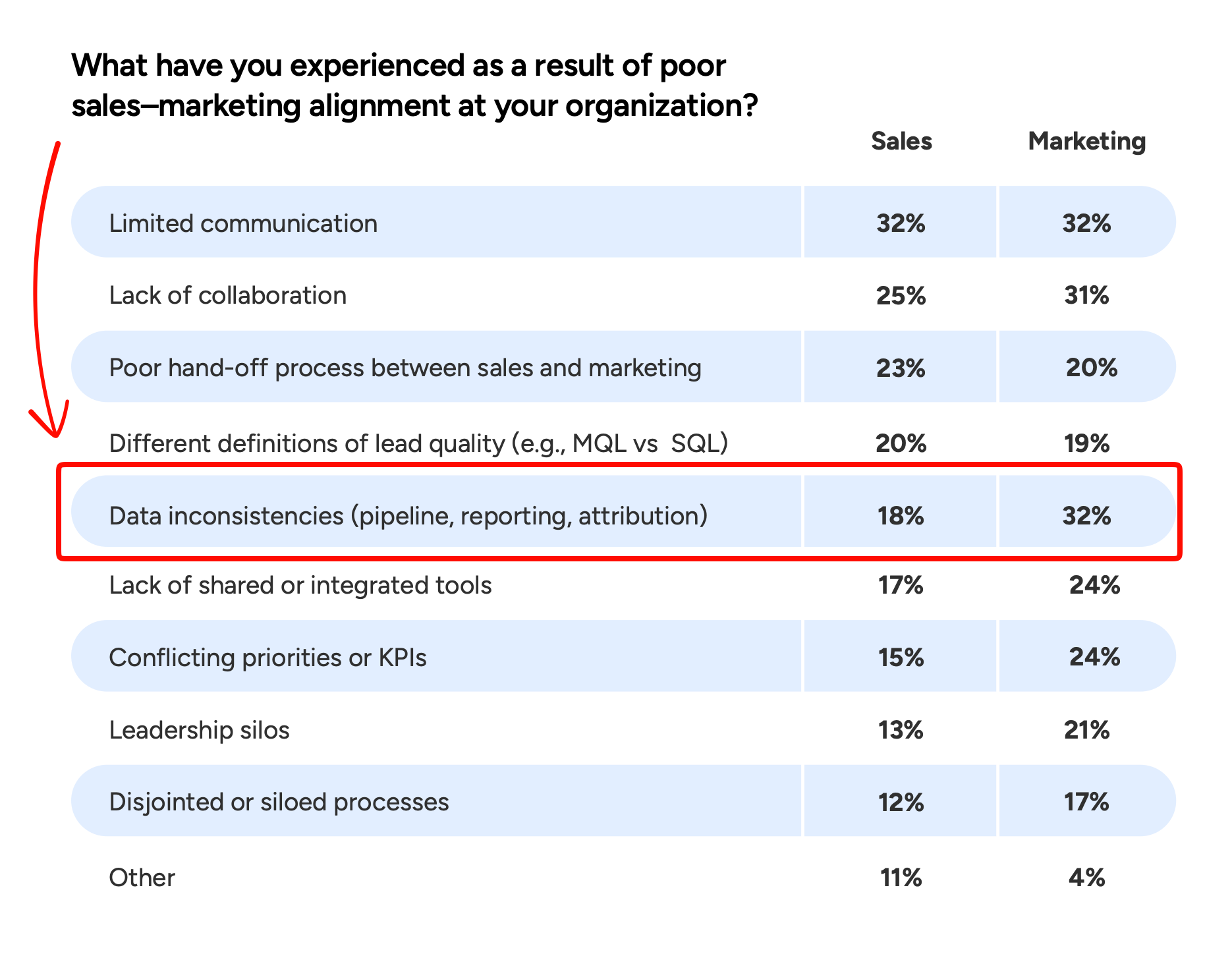
"The definition is a symptom, not the solution itself," notes the report. When 23% of sales professionals cite a poor handoff process as a primary barrier, it becomes clear that structural qualification gaps are sinking win rates.
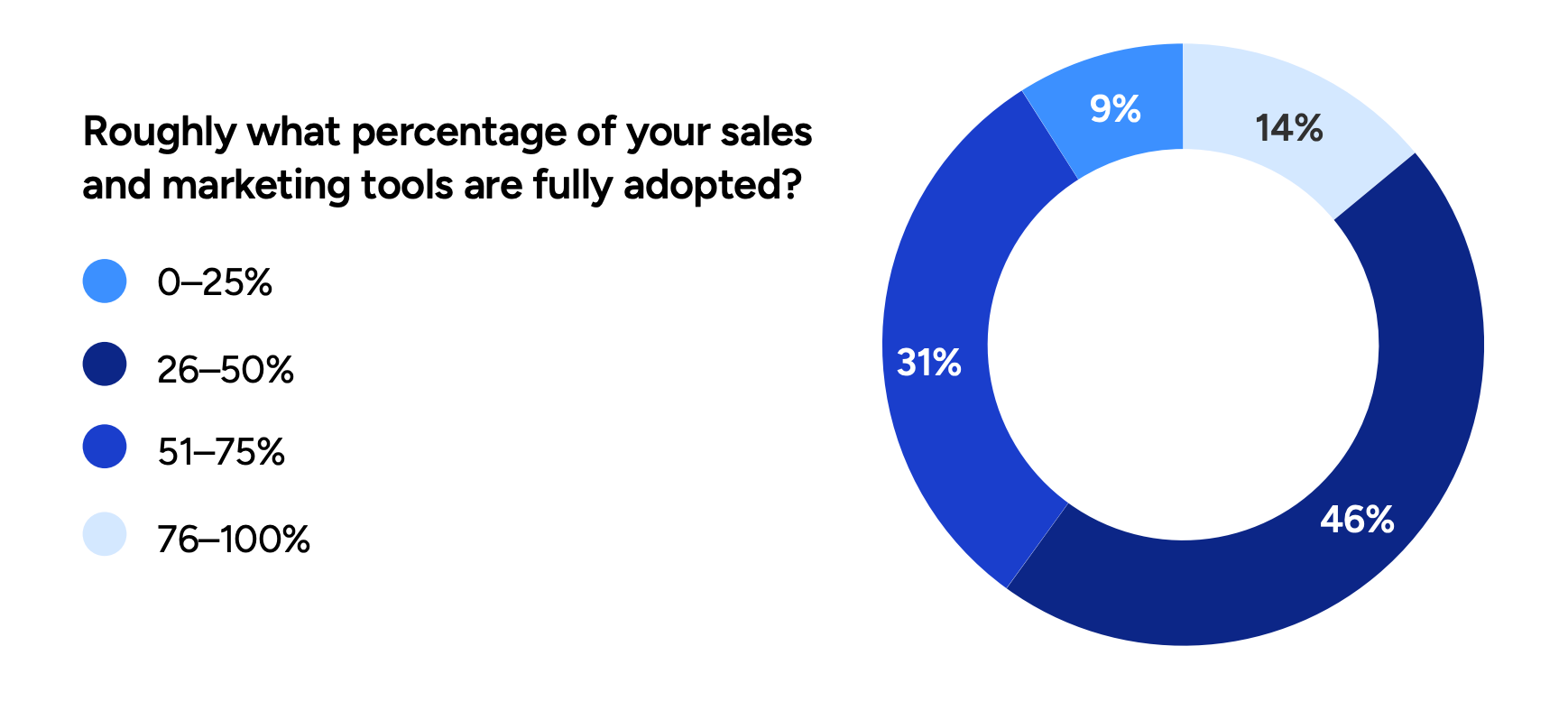
Furthermore, technology adoption remains a massive hurdle. 56% of GTM professionals cite tool bloat as an ongoing issue, with 60% of organizations utilizing less than half of their purchased software stack. Unused tools generate maintenance overhead and fragment data further.
Conversely, the data highlights a powerful antidote to tech bloat: Teams that significantly consolidate their tech stacks are twice as likely to rate lead quality as "excellent" (55% vs. 20%). Leaner, highly adopted tool collections consistently outperform sprawling, disconnected ecosystems.
Implications: What Top Performers Do Differently
The 56% of organizations classified as "highly aligned" in the study do not rely on luck or endless meetings. They differentiate themselves through deliberate, systemic operational changes:
1. Unified Data and Infrastructure
Aligned teams are 3.5x more likely to have strong cross-functional data sharing (59% vs. 16%). Rather than allowing marketing and sales to pull reports from entirely different databases, they anchor their operations to a single source of truth. When customer data, pipeline definitions, and conversion signals flow from a shared infrastructure, communication shifts from a debate over whose numbers are right to a strategic decision-making layer.
2. Shared Buyer Personas and SLAs
High performers treat buyer personas and Service Level Agreements (SLAs) as joint artifacts. By incorporating sales call insights and customer objection data directly into marketing campaign messaging before launch, these teams eliminate message drift and ensure that prospects experience a seamless transition from first click to discovery call.
3. Streamlined Handoffs and Shared KPIs
Ultimately, alignment cannot outrun bad incentives. Top-performing organizations tie metrics and compensation models together, replacing siloed goals with shared key performance indicators like customer acquisition cost (CAC) and blended conversion rates.
As the report underscores, true go-to-market alignment is built directly into the operating model—because no amount of meetings can fix a system designed to produce conflicting answers.