In the rapidly accelerating era of artificial intelligence and cloud computing, the physical backbone of the internet—the global network of hyperscale datacenters—is undergoing a profound transformation. Microsoft Azure, a titan in this space, is navigating a complex operational paradigm: how to meet the insatiable global demand for compute power while simultaneously reducing the environmental footprint of its massive hardware lifecycle. The company’s strategy rests on a two-pronged approach: maximizing the efficiency of every watt consumed and mastering the circular economy of hardware decommissioning.
Main Facts: The Dual Mandate of Modern Infrastructure
Every new generation of cloud infrastructure creates a double-edged responsibility. First, there is the engineering imperative to deploy more capable, high-density systems to support complex AI models and enterprise workloads. Second, there is the environmental and logistical imperative to manage the decommissioned hardware that these new systems inevitably replace.
These activities, while largely invisible to the end-user, are central to the performance and sustainability of Microsoft Azure. By optimizing hardware from the silicon level up to the rack, Microsoft is essentially decoupling its compute growth from its energy consumption. Simultaneously, by treating decommissioned equipment as a resource rather than waste, the company is injecting valuable materials and components back into the supply chain, fostering a more resilient and cost-effective operational model.
Chronology: The Evolution of Circularity
The commitment to hardware circularity did not happen overnight; it is the culmination of years of integrated design and operational refinement.
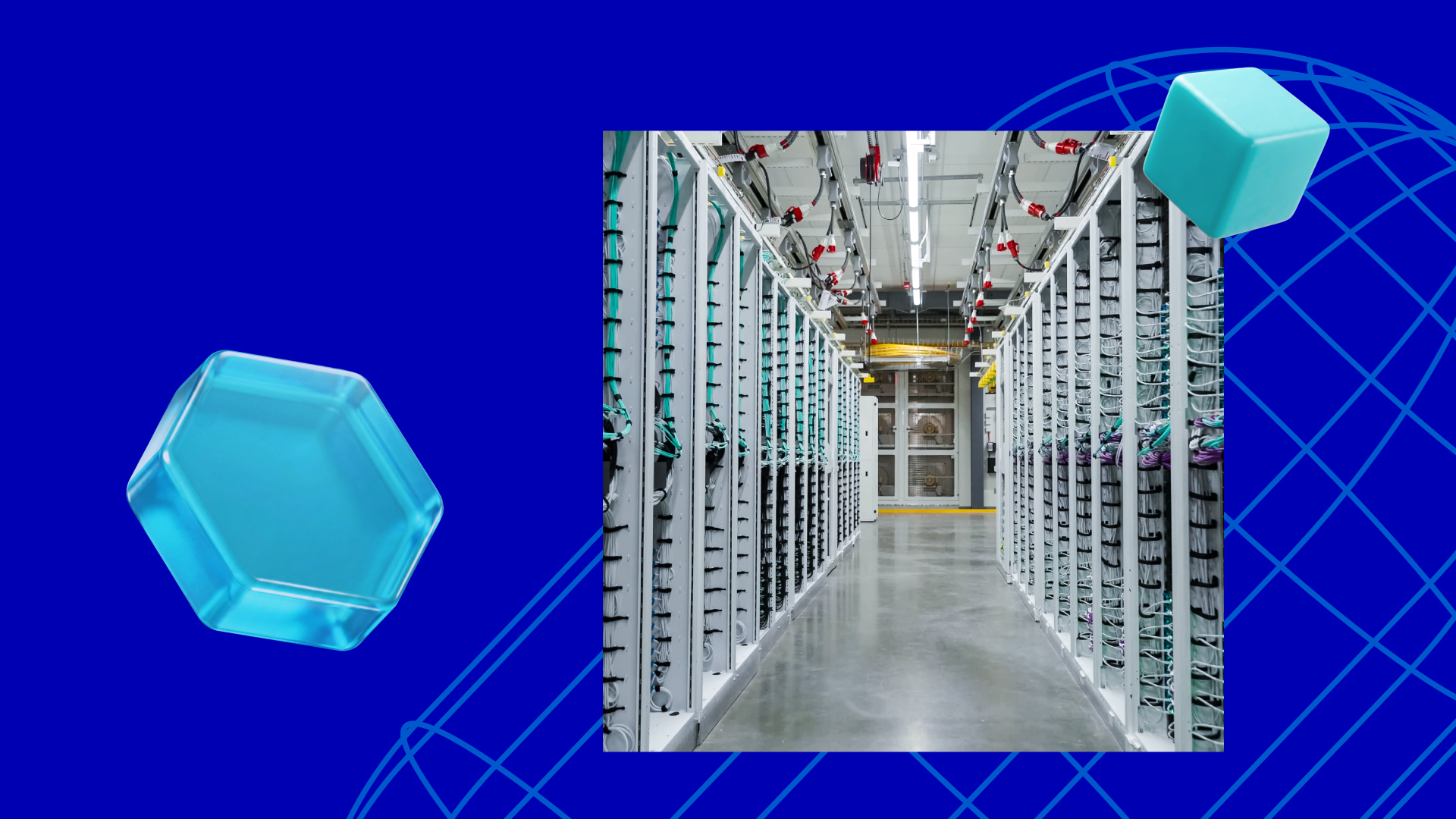
- Pre-2014: The foundational years of Azure infrastructure were focused on scaling out. The industry standard was general-purpose hardware, which was effective but lacked the extreme efficiency metrics seen in today’s bespoke systems.
- 2014–2020: Microsoft began its aggressive shift toward vertical integration. By designing its own servers, storage, and networking, the company gained granular control over power consumption and heat dissipation.
- 2021–2023: Recognizing that the rate of hardware replacement would accelerate with the AI boom, Microsoft formalized its "Circular Center" initiative. The goal was to establish a standard process for the reuse, refurbishment, and recycling of decommissioned equipment.
- 2024–2025: The network of Circular Centers reached critical mass. With the recent expansion into Newport, Wales, and Sydney, Australia, the program now provides global coverage across North America, Europe, and the Asia-Pacific region.
- Late 2025 and Beyond: Microsoft is currently integrating AI-driven robotics and autonomous material handling into these centers to further accelerate the recovery of components, with a new facility in San Antonio, Texas, already in the planning stages.
Supporting Data: Efficiency and the Law of Diminishing Power
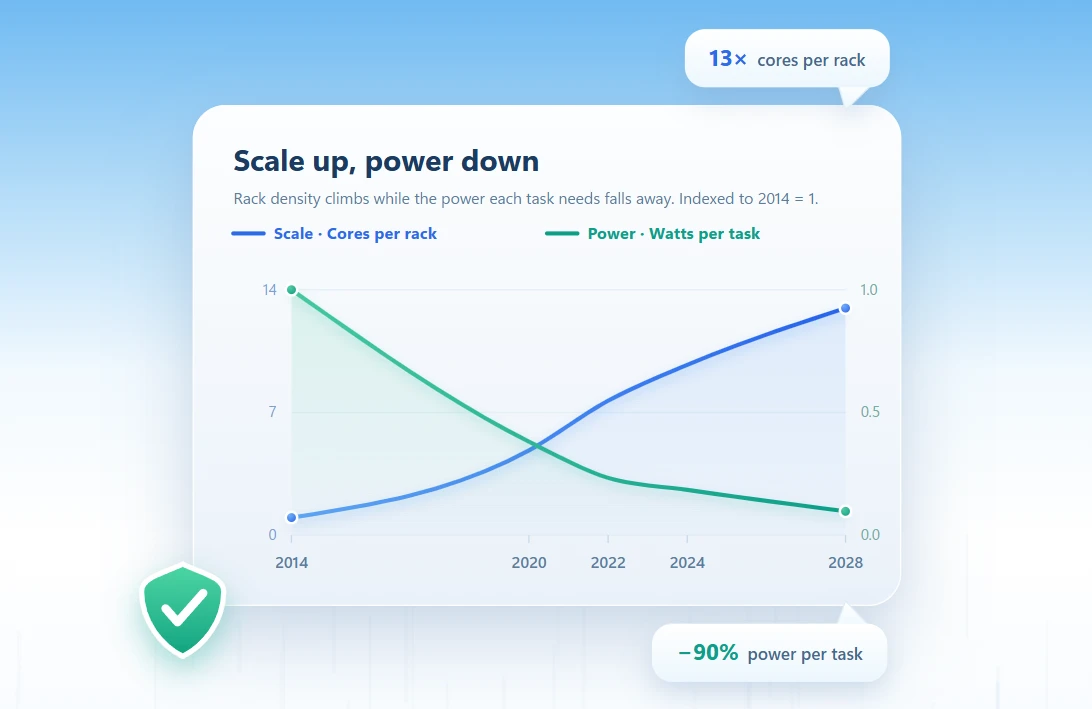
The effectiveness of this strategy is best illustrated by the drastic improvements in compute density and power efficiency over the last decade. Microsoft’s internal data reveals a striking trend: since 2014, the number of processor cores per rack has increased approximately 13-fold.
Perhaps more impressively, the power required to complete a baseline computational task has plummeted by roughly 90%. For instance, a common workload such as code compilation that required 100 watts of power on earlier hardware systems can now be processed using less than 10 watts. This shift is not merely incremental; it represents a fundamental change in the efficiency of the silicon itself.
The Cobalt Breakthrough
A primary driver of this efficiency is the Azure Cobalt processor line. By controlling the entire stack—from silicon design and networking to the software layer—Microsoft has achieved a level of optimization that off-the-shelf components cannot match. The latest iteration, Cobalt 200, provides a 50% performance improvement over the Cobalt 100, while simultaneously incorporating advanced security and storage protocols. This allows Microsoft to pack more "useful work" into every square foot of its datacenter footprint, deferring the need for physical expansion while keeping up with the relentless pace of AI development.
Official Responses and Strategic Vision
Microsoft leadership describes the Circular Center network as a "connected global ecosystem." Each facility acts as a triage point where decommissioned hardware is evaluated. The goal is to move equipment through a hierarchy of utility:
- Redeployment: Can the system be used internally in Microsoft labs, training environments, or test beds?
- Repurposing: Can components like memory, processors, or networking cards be used as spare parts to extend the life of existing systems elsewhere in the network?
- Donation/Sale: Can the hardware be provided to academic institutions or qualified buyers to help narrow the digital divide?
- Recycling: Only when the hardware has exhausted its functional life is it disassembled for base materials, ensuring that rare-earth metals and other components return to the global supply chain.
"Last year, we achieved a 92% reuse and recycling rate for decommissioned servers and components," a company representative stated. "However, at our scale, this is not just about a recycling bin. It is about a complex, secure, and highly technical data-wiping and recovery operation that ensures zero data leakage while maximizing the lifecycle of every component."
Implications: The Future of Cloud Sustainability
The implications of this strategy extend far beyond Microsoft’s own balance sheet. As the global cloud industry faces scrutiny over its massive water and energy consumption, the ability to demonstrate a "circular" operational model becomes a competitive advantage.
Automation and the Future of Disassembly
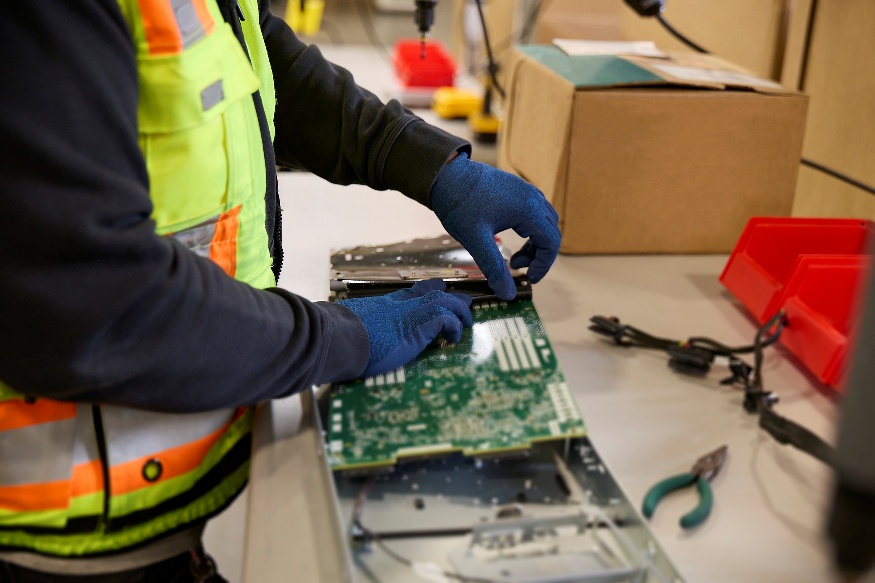
The next frontier for Microsoft is the application of AI to the decommissioning process. Manual disassembly is time-consuming and prone to human error. By deploying robotic disassembly and AI-powered sorting systems, Microsoft intends to move from a semi-automated model to a fully autonomous one. This will allow for the recovery of microscopic components that were previously deemed too difficult to salvage, thereby increasing the yield of recycled materials.
Economic and Environmental Synergy
The economic argument for this strategy is compelling. As the demand for raw materials—particularly those needed for high-end semiconductors—continues to outstrip supply, recovering these materials from retired servers provides a hedge against supply chain volatility. By treating old hardware as an "urban mine" of precious resources, Microsoft is reducing its dependency on raw material extraction.
Furthermore, as businesses worldwide align their operations with ESG (Environmental, Social, and Governance) goals, the sustainability of the cloud provider they choose has become a primary procurement metric. Microsoft’s investment in the Circular Center network provides its customers with a lower-carbon cloud, effectively allowing them to outsource their compute needs without compromising their own environmental mandates.
Conclusion: Closing the Loop
The rapid growth of the AI era requires a new kind of infrastructure—one that is as sustainable as it is powerful. By viewing the lifecycle of a server as a continuous loop rather than a linear path to a landfill, Microsoft is setting a new benchmark for the tech industry.
The strategy of "getting more from every rack and every watt" is no longer just a technical aspiration; it is an operational necessity. As the company continues to scale its global network of Circular Centers, it demonstrates that innovation in silicon design and responsible resource management are not mutually exclusive. Instead, they are two sides of the same coin, essential to building the resilient, efficient, and sustainable cloud infrastructure that the future of global technology demands.
As we look toward the future, the lessons learned in these centers—and the efficiency gains achieved through custom silicon—will likely define the next decade of datacenter operations, proving that high performance and high responsibility can exist in perfect harmony.